
“The modern gym bag has transitioned from a mere utility sack into a sophisticated piece of performance gear, designed to bridge the gap between the professional workplace, high-intensity training, and the demands of global travel.”

In an era where the boundaries between work, fitness, and personal life are increasingly blurred, the equipment we use to navigate these spaces must be more versatile than ever. For the modern professional or athlete, a gym bag is no longer just a place to store a change of clothes; it is a mobile headquarters that must protect expensive technology, organize nutritional supplements, and withstand the rigors of a daily commute or a weekend excursion. The shift toward multi-functional designs—ranging from hybrid backpack-duffles to tactically-inspired rucking packs—reflects a broader cultural movement toward efficiency and high-performance living.

As fitness culture evolves, the market for gym bags has responded with unprecedented material innovation and architectural complexity. Leading the charge in the high-end hybrid category is the Lululemon 2-in-1 Travel Duffle Backpack. At a 45-liter capacity, this bag is engineered for the individual whose lifestyle demands a seamless transition from the gym floor to an airport terminal. Constructed from water-repellent fabric consisting of recycled nylon and thermoplastic polyurethane (TPU), it addresses the primary concern of the urban commuter: protection against the elements. The design’s brilliance lies in its hidden straps, which allow it to morph from a traditional duffle into an ergonomic backpack. This versatility is complemented by a padded laptop sleeve, ensuring that the "work" in work-life balance is never compromised by the "workout."

For those who prioritize organizational precision above all else, the KNKG Core Duffel represents a paradigm shift in internal architecture. While many bags offer a cavernous main compartment that leads to a "black hole" effect, the KNKG design utilizes ingenious, non-flimsy dividers. This allows users to create a customized internal ecosystem where running shoes, lifting belts, and post-workout supplements like creatine remain separated and secure. Built from 500D nylon with a PVC backing, the bag is designed to endure the friction of daily use while providing the user with the psychological benefit of a decluttered experience. This focus on "organizational architecture" is a recurring theme in high-end fitness gear, where reducing the friction of finding equipment can actually improve workout consistency.

On the other end of the spectrum, the FocusGear Ultimate Gym Bag 2.0 proves that high-level utility does not always require a premium price tag. Despite its accessible price point, the bag features ten distinct compartments, including a dedicated wet pocket for sweaty towels or swim trunks. A critical feature for athletes is the oversized shoe compartment, which accommodates sizes up to a men’s 14—a common pain point in standard bag designs. By offering two bottle holders—one for pre-workout hydration and another for post-workout recovery—FocusGear acknowledges the specific nutritional rituals of the dedicated gym-goer.

The intersection of fashion and fitness is perhaps most evident in the Dagne Dover Landon Neoprene Carryall. Neoprene, a material traditionally used in wetsuits, offers a unique combination of high-tech water resistance and a smooth, sophisticated aesthetic. This bag is designed for the user who refuses to carry a traditional "gym sack" into a corporate boardroom. Beyond its sleek exterior, it includes thoughtful additions such as a dedicated shoe bag and a dust bag to protect clean clothing from the grime of fitness equipment. The fact that the entire unit is machine washable addresses the often-overlooked issue of hygiene in long-term gear maintenance.

For athletes who view the commute as part of the training itself, the GORUCK Rucker 5.0 brings tactical-grade durability to the civilian market. Inspired by the equipment used by Special Forces, GORUCK utilizes 1000D Cordura, a material known for its extreme resistance to abrasions and punctures. The Rucker is unique in its dual-purpose design; it serves as a standard gym backpack while doubling as a specialized pack for "rucking"—the act of walking with weight to build strength and endurance. With built-in lumbar support and a slot for signature pack weights, it is a tool for those who treat their daily movement with the seriousness of a military operation. This "over-engineered" approach ensures that the bag can withstand any environment, from a suburban CrossFit box to a rain-slicked city street.

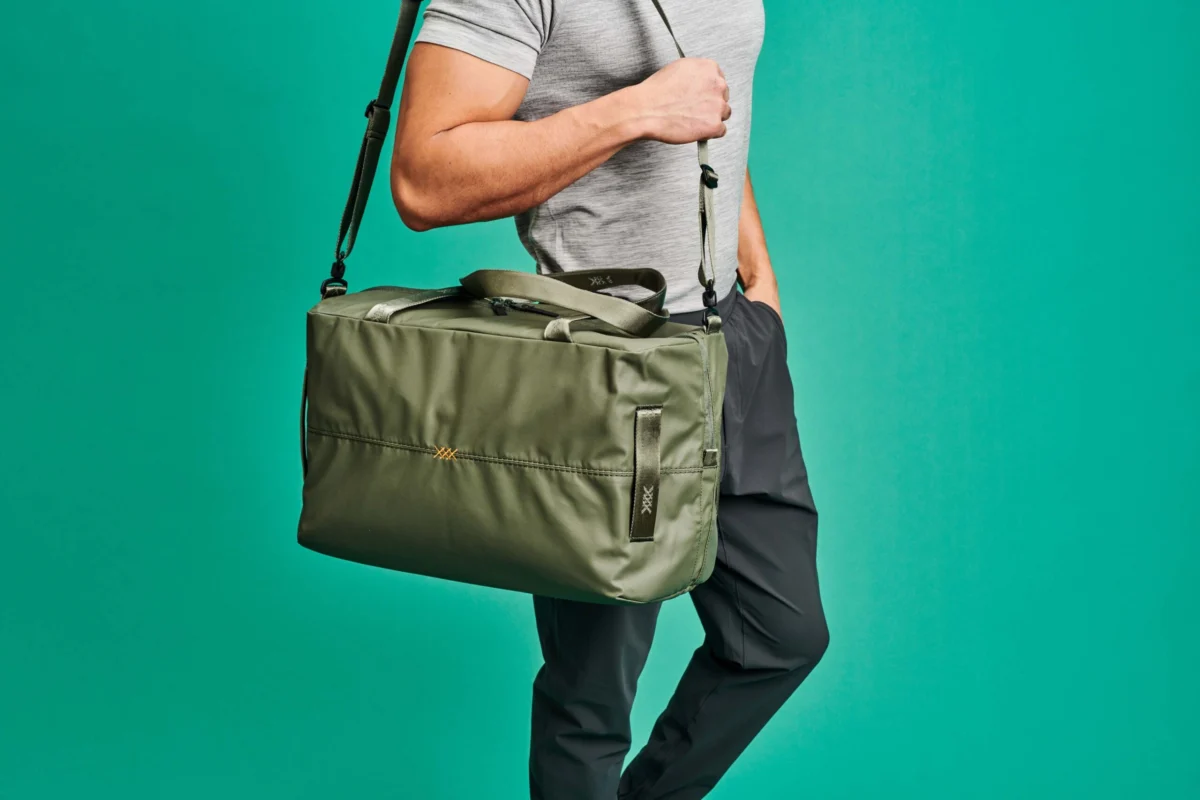
Sustainability has also become a cornerstone of the modern gear industry. The Mack Weldon Atlas Duffle utilizes a 100% recycled poly canvas shell, proving that environmental responsibility can coexist with high performance. The Atlas Duffle is particularly noted for its ventilated shoe compartment, a crucial feature for preventing the bacterial growth and odor buildup associated with damp footwear. Furthermore, the inclusion of an insulated side pocket for snacks and drinks reflects the needs of athletes on a strict meal-prep schedule or those catching a red-eye flight immediately after a training session.

As urban living spaces become more compact, there is a growing demand for "sleek" designs that minimize bulk without sacrificing functionality. The Gymshark Sleek Backpack and the Lululemon 3-in-1 Gym Duffle (30L) are prime examples of this trend. The Gymshark offering utilizes waterproof polyurethane to create a rigid, scrape-resistant shell that protects laptops and meal-prep containers alike. Its slim profile is designed to fit against the back perfectly, making it ideal for navigating crowded subways or busy city sidewalks. Similarly, Lululemon’s 30-liter 3-in-1 design is praised for its ability to fit into standard cube-sized gym lockers—a small but vital detail for the daily gym-goer.
The testing process for these bags, led by experts like Charles Thorp and Christian Gollayan, emphasizes that the "best" bag is entirely dependent on the user’s specific "mission profile." A powerlifter needs the structural integrity and space of a KNKG duffle, while a digital nomad might require the hybrid versatility of the Lululemon 45L. However, several universal truths have emerged: water resistance is no longer optional, dedicated shoe compartments are a necessity for hygiene, and the ability to transition between carrying styles (backpack, crossbody, or handheld) is the new standard for ergonomic health.
Ultimately, the evolution of the gym bag reflects a deeper understanding of the athlete’s journey. It is no longer just about the hour spent under the squat rack; it is about the hours spent getting there and the hours spent recovering afterward. By integrating advanced materials like 1000D Cordura and recycled TPU with thoughtful features like insulated meal pockets and lumbar support, manufacturers are creating more than just luggage. They are creating essential infrastructure for a high-performance lifestyle. Whether it is a $29 value pick or a $265 tactical rucksack, the modern gym bag is a testament to the fact that in fitness, as in life, preparation is the foundation of success.
