
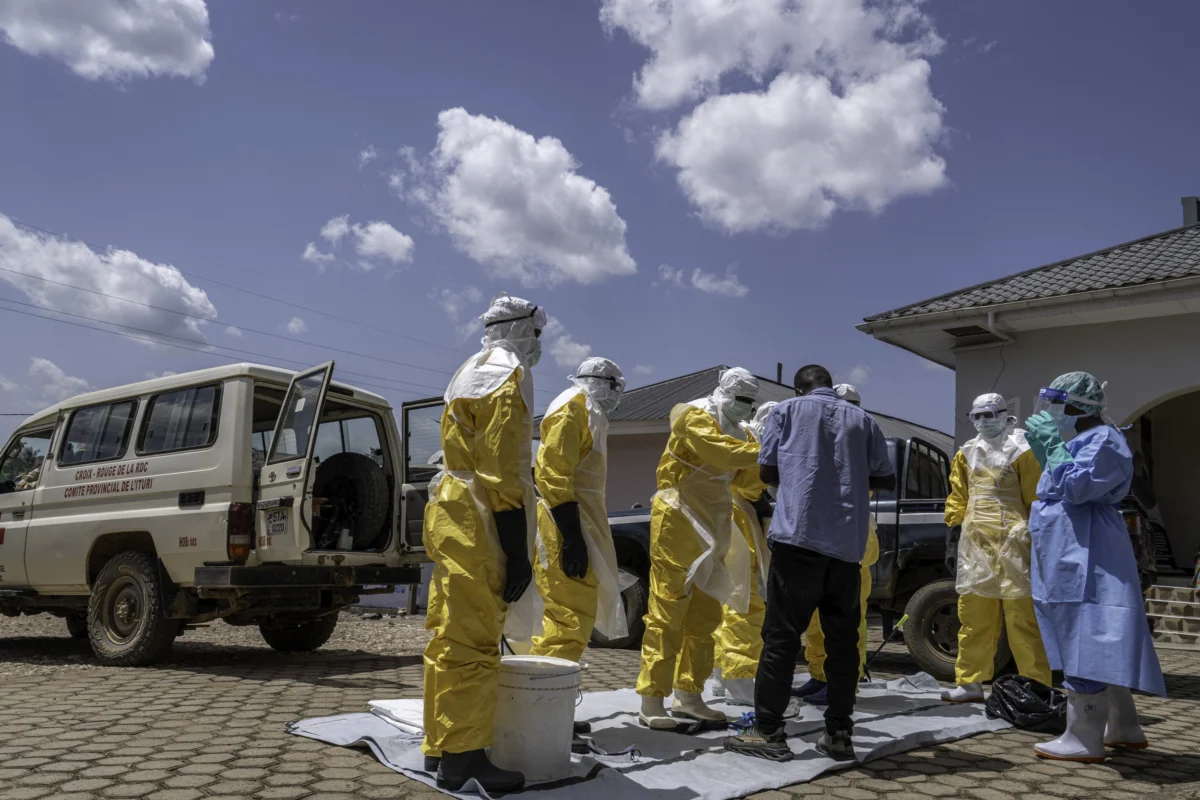
"Kenya’s confirmation of its first Ebola case, originating from the Democratic Republic of Congo and passing through Uganda before reaching Nairobi, underscores the critical interconnectedness of global health security and the potential for rapid spread in a major travel hub."
The detection of the Bundibugyo virus in Kenya marks a significant development in the ongoing Ebola outbreak, raising concerns due to Nairobi’s status as a vital East African transit point. This case highlights the challenges in containing an epidemic when infected individuals traverse international borders, potentially exposing numerous contacts and necessitating swift, coordinated public health responses. The patient’s travel route, from the Democratic Republic of Congo (DRC) to Uganda and then by air to Kenya, illustrates how quickly a localized outbreak can reach distant urban centers, emphasizing the need for robust surveillance and preparedness measures across multiple countries.
The confirmation of Kenya’s first Ebola case, identified as the Bundibugyo virus, has sent ripples through the global health community. The patient, a Kenyan national who had been residing in the Democratic Republic of Congo, embarked on a journey that tragically concluded in Nairobi, the capital of Kenya, where he succumbed to the illness after testing positive. This development positions Kenya as the fourth nation to report a case in the current outbreak, joining the ranks of the DRC, Uganda, and France. The patient’s itinerary involved overland travel from Beni in eastern Congo to Kampala, Uganda, on October 2nd, followed by a commercial flight to Nairobi on October 3rd. Upon arrival, he underwent standard airport health screening before being taken to Nairobi Hospital by a relative, where his condition rapidly deteriorated.
Initial suspicions at Nairobi Hospital pointed towards a viral hemorrhagic fever due to the onset of symptoms including fever, chills, and subcutaneous bleeding. Subsequent laboratory tests confirmed the presence of the Ebola Bundibugyo virus, a strain that has been a significant concern in the ongoing epidemic. Kenyan Health Cabinet Secretary Aden Duale officially announced the diagnosis, and the patient was subsequently buried in accordance with stringent safety protocols designed to prevent further transmission. The details surrounding the patient’s prolonged stay in the DRC vary slightly in reports, with some indicating seven years of residence and others eleven, and his illness preceding his return by approximately a month. Health Ministry Director-General Dr. Patrick Amoth emphasized the rigorous monitoring of 28 identified contacts in Kenya, comprising relatives and healthcare workers, who will remain in isolation for a mandatory 21-day period. They will be released only after consistently testing negative for the virus.
The implications of this case are amplified by Nairobi’s role as a major international air travel hub. The patient’s travel route through multiple countries and ultimately to a city with extensive global connectivity underscores the ease with which infectious diseases can spread in our interconnected world. Health officials are actively tracing 23 passengers and four crew members from the flight that transported the patient from Kampala to Nairobi, a crucial step in mitigating potential community transmission. The Centers for Disease Control and Prevention (CDC) has assessed the overall risk to the American public and travelers as low, with no reported cases of this outbreak in the United States thus far. However, the potential for an outbreak to reach new urban centers via established travel networks necessitates continued vigilance and preparedness.
The current Ebola outbreak has already proven to be exceptionally severe. As of the CDC’s update on October 5, 2026, the Democratic Republic of Congo had recorded a staggering 8,603 confirmed cases and 4,148 confirmed deaths across seven of its provinces, indicating a case fatality rate of approximately 48%. Uganda has reported 20 confirmed cases and two deaths, while France has documented one confirmed case, which has since recovered. Kenya’s proactive measures in anticipation of such an event are noteworthy. Since the outbreak was declared in May, the country has implemented extensive screening of over 652,000 travelers, tested 267 suspected samples, and provided training to approximately 5,000 healthcare workers. Despite these efforts, the fact that the patient passed through airport screening highlights the inherent challenges in detecting every potential case, particularly in the early stages of illness when symptoms can be subtle.
Currently, no vaccine or specific treatment is approved solely for the Bundibugyo virus. However, the broader fight against Ebola has seen the development and deployment of vaccines against other Ebola virus strains. MedicalDaily previously reported on the DRC’s initiative to test an existing Ebola vaccine against Bundibugyo in frontline health workers, a critical step when confirmed cases surpassed 7,600. The transmission dynamics of Ebola are well-understood: it does not spread through airborne particles like influenza. Instead, the virus is transmitted through direct contact with the blood or other bodily fluids of an infected person or animal, or with objects and surfaces contaminated with these fluids. Importantly, individuals are not contagious before the onset of symptoms, making the identification and monitoring of close contacts paramount in containing an outbreak.
The United States has implemented entry measures primarily targeting travelers from the DRC and its neighboring countries. Individuals who have been in the DRC within the preceding 21 days are prohibited from boarding U.S.-bound commercial flights. Travelers arriving from Uganda and South Sudan are subject to enhanced screening at designated airports. Kenya is not currently among the countries with these stringent entry restrictions, though such measures are subject to change based on evolving epidemiological assessments. For American households, the direct risk associated with this outbreak remains minimal. However, it is prudent for families with relatives traveling through East Africa to consult the CDC’s travel advisories and to exercise caution by avoiding contact with sick individuals in affected regions. Anyone experiencing symptoms such as fever, severe headache, muscle pain, vomiting, diarrhea, or unexplained bleeding within 21 days of travel to an Ebola-affected area is strongly advised to contact a healthcare provider or emergency room before arrival, allowing medical staff to implement appropriate protective measures.
The next 21 days will be critical for Kenyan health officials as they monitor the contacts of the confirmed case. The primary concern lies with relatives and healthcare professionals who had close contact with the patient prior to his isolation. Further updates are anticipated from Kenya’s Ministry of Health and the World Health Organization (WHO) as the situation evolves. The key questions that will guide the public health response in the coming weeks are whether any secondary cases emerge within Nairobi and the successful tracing and monitoring of all passengers and crew from the patient’s flight. The ability to swiftly identify and isolate any new cases, coupled with effective contact tracing, will be instrumental in preventing a wider dissemination of the virus within Kenya and potentially beyond. The global health community remains united in its commitment to supporting Kenya’s efforts to contain this outbreak and protect public health.
