

"We’re facing a national epidemic of violence against healthcare workers, a reality that is fueling strikes and demanding urgent attention. The core of the issue lies in the dangerous nexus of understaffing, inadequate training, and a system struggling to balance cost-cutting with essential safety measures for its frontline caregivers."
The hallways of hospitals, once seen as sanctuaries of healing, are increasingly becoming battlegrounds for healthcare professionals. Nurses and other medical staff, accustomed to confronting physical trauma, are now experiencing alarming levels of violence directed at them by patients and, in some instances, visitors. This surge in workplace aggression, encompassing everything from verbal abuse and shoving to severe physical assaults like biting and punching, has precipitated widespread labor actions. From Louisiana to New York, Pennsylvania to Rhode Island, and extending to Michigan where nurses have been on picket lines for months, the distress signal is clear: the safety of healthcare workers is in jeopardy, and the current systemic responses are proving insufficient.
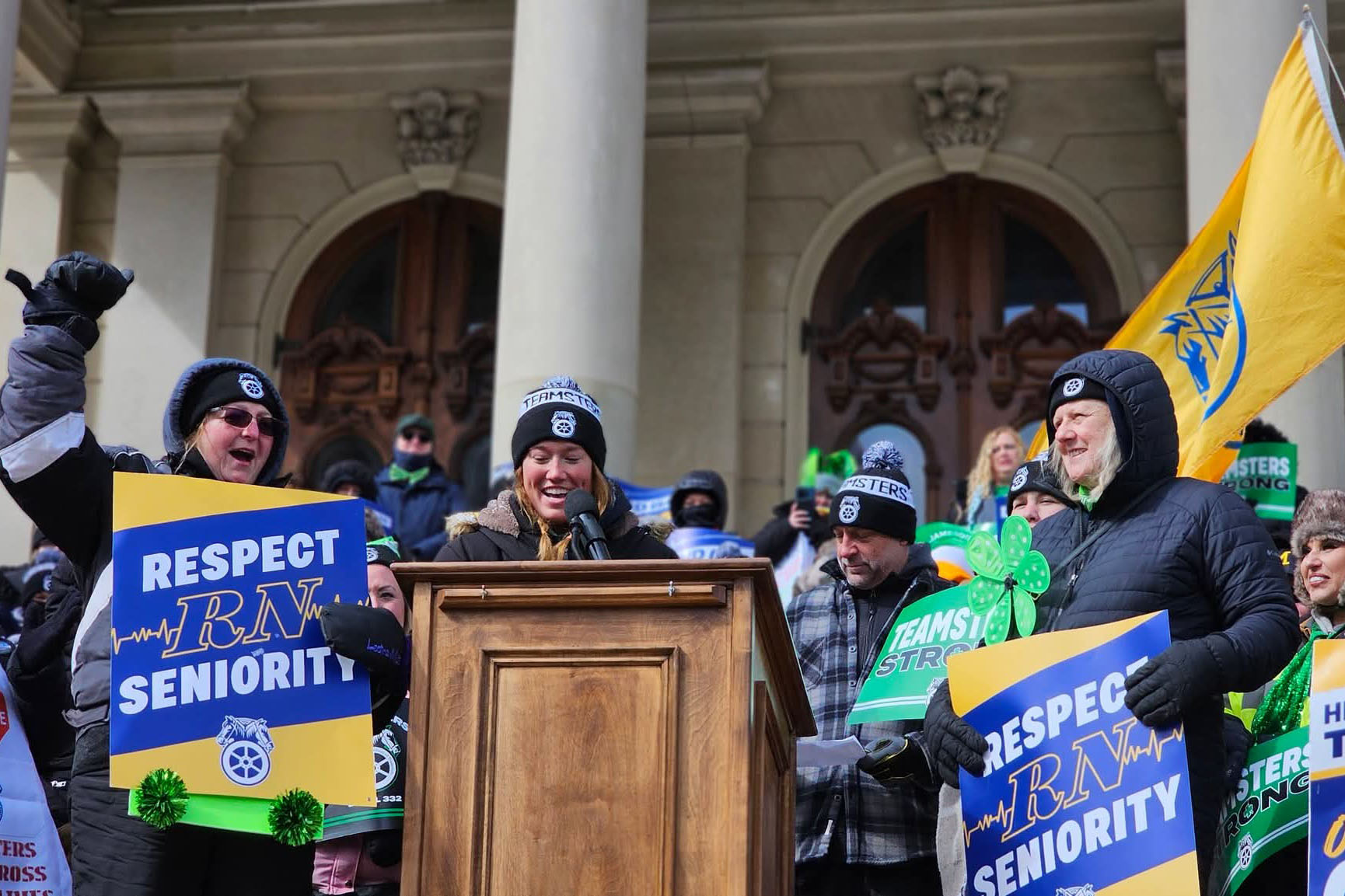
Nurse Crystal Dhooghe, a veteran of the emergency room at Henry Ford Genesys Hospital in Grand Blanc, Michigan, articulates a sentiment shared by countless colleagues. "I’ve seen nurses get shoved, pushed, scratched. The biggest one is bitten," she stated, highlighting the grim reality of her profession. Dhooghe, who has been on strike since Labor Day of the previous year, grapples with the disheartening question, "Why are you still working in a place if you’re treated like this?" Her response, however, is a stark indictment of the broader healthcare landscape: "It’s the same everywhere I go." This pervasive issue has not only led to strikes but also to a growing recognition of a "national epidemic" of violence against healthcare workers, as acknowledged by Henry Ford Health spokesperson Dana Jay. While the hospital system points to measures like metal detectors, armed security, and de-escalation training as evidence of their commitment to safety, they maintain that the current strike is driven by economic factors rather than a lack of safety protocols.
The statistics paint a grim picture. According to the most recent data from the Bureau of Labor Statistics, hospital workers are seven times more likely to be injured on the job due to violent acts than the general working population. This stark reality is at the heart of a complex debate, pitting healthcare workers’ demands for better compensation and adequate staffing against hospital administrators’ pressure to manage costs. The situation has reached a critical point, with some experts likening emergency rooms to "powder kegs," where volatile incidents, often termed "code grays," can erupt with little warning.
Rachel Odes, an assistant professor at the University of Wisconsin-Madison School of Nursing, observes that while spontaneous outbursts are difficult to predict, research consistently links an increased risk of violence to understaffing and insufficient training or experience among hospital employees. This was tragically illustrated by the experience of Andrew Kimball-Mirzaie, a mental health worker at Butler Hospital in Providence, Rhode Island. In February 2024, while monitoring a patient in a back room, Kimball-Mirzaie was punched in the face, sustaining a concussion and a broken nose. His injuries, documented in the hospital’s incident log, were attributed not to malicious intent from the patient, who was severely ill, but to a systemic failure. "We should have had at least another staff member with us," he asserted, "and I should have been adequately trained on the unit."
This assault galvanized Kimball-Mirzaie to join approximately 700 other unionized Butler workers in a protracted strike during the spring and summer of 2025. The strike, which led to the closure of nearly half of the hospital’s beds, was ultimately declared a victory by Service Employees International Union 1199 New England. The agreement included wage increases designed to improve staff recruitment and retention, financial support for workers injured on the job, and the establishment of a joint "time bank" to supplement compensation for extended recovery periods. However, the underlying problem of violence persisted. Just five months later, a nurse supervisor at Butler had to call 911 after an unarmed patient in the emergency room assaulted staff, leaving two nurses, a security guard, and a police officer injured by the time of the patient’s arrest.
Butler’s president and chief operating officer, Mary Marran, acknowledged the importance of proactive safety measures, stating that hospital leadership engages in regular reviews of safety protocols to "strengthen protection for everyone." The patient in the latter incident faced charges of felony assault, including against the two nurses. The American Hospital Association has been actively lobbying Congress to make assaulting healthcare workers a federal crime, proposing penalties of up to 10 years in prison. This aligns with existing laws in at least 45 states, including Michigan and Rhode Island, which have enacted similar legislation. Nevertheless, workplace safety experts express skepticism regarding the efficacy of punitive measures alone, noting a lack of evidence that such laws have demonstrably reduced the incidence of violence in healthcare settings.
In response to the escalating crisis, striking healthcare workers nationwide have increasingly prioritized demands for "safe staffing" over calls for stricter punishments for perpetrators of violence. The Joint Commission, the accreditation body for a significant majority of U.S. hospitals, has recognized the gravity of the situation and implemented national performance goals that took effect in January. These goals mandate that hospitals maintain adequate staffing levels and ensure staff are trained to provide safe, high-quality care.
Despite these efforts, a critical gap remains: there is no federal law that caps the number of patients a nurse can attend to across various healthcare settings. The National Nurses United, the nation’s largest nurses’ union, has been advocating for a national staffing standard since 2018, arguing that appropriately staffed units enable nurses to provide the necessary care before patients become agitated or disoriented. Jane Thomason, lead industrial hygienist for National Nurses United, emphasizes that safe staffing is crucial for preventing adverse patient outcomes and ensuring the well-being of caregivers.

A few states have taken the initiative to enact their own staffing laws. California, for instance, has implemented broad mandatory nurse staffing ratios, which studies have indicated are associated with lower mortality rates and improved staff retention. Oregon has also introduced staffing legislation, albeit with notable exceptions. While legislative efforts for similar laws are underway in states like Massachusetts and New Jersey, they have yet to gain sufficient traction to pass floor votes.
The American Hospital Association, however, remains opposed to mandatory minimum nurse staffing ratios. Spokesperson Colleen Kincaid argues that such mandates would undermine "real-time clinical judgment and flexibility," exacerbate existing staffing shortages, and potentially lead to hospitals turning away patients or delaying essential care. The association points to California’s experience, where new emergency nurse staffing ratios for psychiatric hospitals have reportedly resulted in bed closures in several counties, forcing individuals in mental health crises into overcrowded emergency departments.
Alternative strategies for mitigating workplace violence are championed by experts like Jordan Barab, a former deputy assistant secretary of labor for OSHA. Barab suggests that hospitals could significantly enhance safety by implementing measures such as comprehensive de-escalation training for staff, installing metal detectors, and maintaining a dedicated contingent of specially trained security personnel. These measures, he contends, would empower staff to manage incidents effectively without the delay of waiting for law enforcement.
Debbie Berkowitz, a worker safety and health policy expert at Georgetown University, voices concern that upcoming federal budget proposals could squeeze hospital finances, potentially leading to the deprioritization of worker protection initiatives. As funding becomes constrained, the safety of healthcare workers may become an early casualty, further exacerbating an already critical situation. The ongoing struggle for a safer healthcare environment is a testament to the dedication of frontline workers and the urgent need for systemic reforms that prioritize their well-being alongside patient care.
