
"The decision to end a pregnancy for medical reasons, often the most loving choice a parent can make in unimaginable circumstances, is frequently shrouded in silence and misunderstanding. A crucial shift in terminology and public discourse is needed to validate this unique form of grief and provide compassionate support for thousands of families."
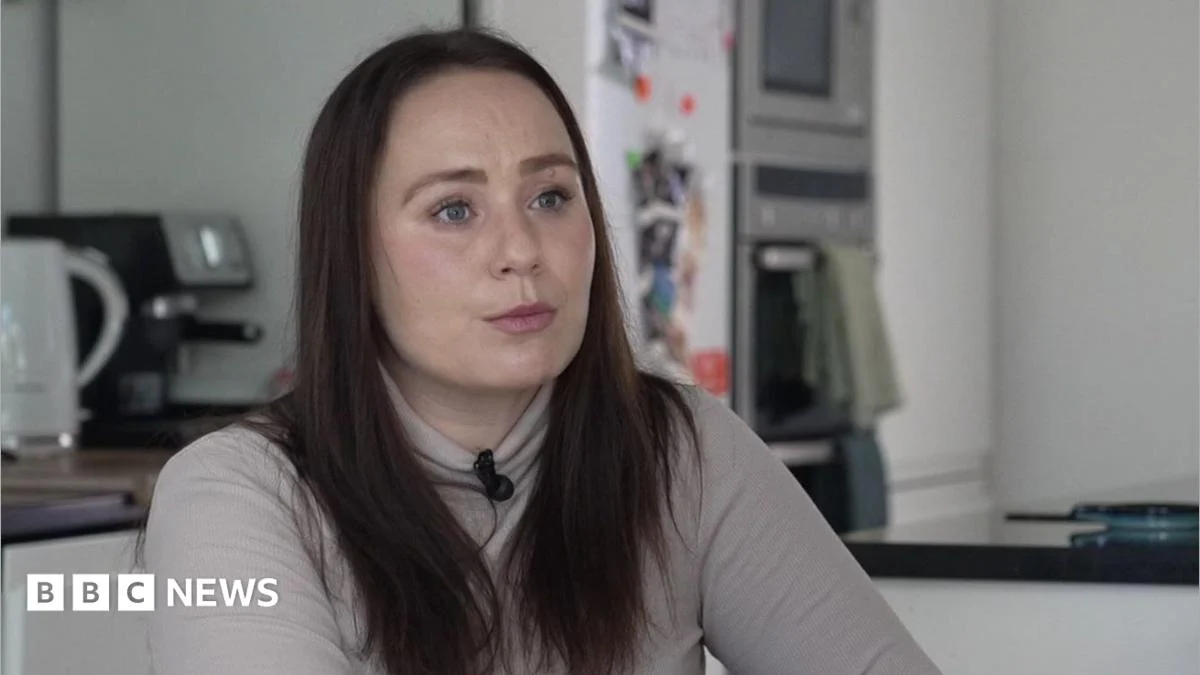
For many expectant parents, the journey of pregnancy is filled with hope and anticipation. However, for a significant number, this journey takes an unforeseen and heartbreaking turn when a severe medical diagnosis for their unborn child necessitates an agonizing decision: a Termination for Medical Reasons (TFMR). This deeply personal and often traumatic experience, while medically necessary, is frequently compounded by a profound lack of societal understanding, appropriate terminology, and adequate support, leaving parents feeling isolated and their grief invalidated. Rosanna Brown, a woman from Waterlooville, Hampshire, who bravely faced this impossible choice, is now campaigning tirelessly to shine a light on this hidden grief and advocate for systemic change.
Rosanna’s personal ordeal began in 2023 when her son, William, was diagnosed with Chaos syndrome, a rare and life-threatening medical condition. Faced with the devastating reality that continuing the pregnancy would endanger both her and William’s lives, Rosanna and her husband made the heart-wrenching decision to end the pregnancy. This decision, made out of profound love and an impossible medical necessity, was not an act of choice in the conventional sense but a tragic response to circumstances beyond their control. Yet, Rosanna found the subsequent experience made even more difficult by what she perceived as a critical lack of training and awareness surrounding medically-advised abortions within the healthcare system and broader society.
The emotional landscape of TFMR is uniquely complex. Unlike a miscarriage, which is often framed as a "natural" loss, or a voluntary abortion, TFMR occupies a difficult middle ground that often falls prey to the contentious pro-life and pro-choice debate. Rosanna articulates this struggle poignantly, explaining, "Because it’s a type of abortion, you have the pro-life pro-choice argument, you are thrown into the middle of that. You have this feeling that your grief isn’t as valid because you’ve chosen [it]." This perception of "choice" in a situation where there are no good options can create an immense burden of guilt and shame, making open grieving incredibly challenging. For many parents, as Rosanna highlights, "termination is the most loving thing they could offer" their child, sparing them from prolonged suffering and giving them a peaceful end.
One of the most significant barriers to healthy grieving and receiving appropriate support, Rosanna discovered, is the prevalent use of inaccurate and often euphemistic terminology. On her son William’s forms, her loss was described as a "late miscarriage" rather than a "Termination for Medical Reasons." This seemingly minor linguistic detail had a profound impact. "I made a choice here, I didn’t naturally lose my baby," Rosanna asserts, emphasizing the active, albeit agonizing, decision she had to make. Mislabeling such a loss as a "miscarriage" not only silences the unique nature of the experience but also denies parents the opportunity to connect with others who have faced similar circumstances. Rosanna herself didn’t encounter the term TFMR until months after William’s loss, delaying her search for community and understanding. This hesitation to use the correct medical term, she suspects, sometimes stems from medical professionals’ concerns about offending patients, inadvertently causing further harm.
Jane Fisher, chief executive of the ARC Charity, an organization dedicated to supporting parents through antenatal screening and its consequences, underscores the critical importance of accurate terminology. "It describes the reality of the situation," Fisher explains, adding that this is vital "both for parents to accept what happened but also for us to break the stigma and taboo around this particular loss." Without this linguistic clarity and validation, grieving in a healthy way becomes incredibly difficult. The euphemism of "late miscarriage" or "stillbirth" for a TFMR obscures the unique emotional and ethical dimensions of the decision, leaving parents adrift in their grief without a recognized narrative or community.
The scale of this issue is substantial. Approximately 5,000 women annually are offered a TFMR in the UK, a number that surpasses those who experience stillbirth and neonatal death combined. This statistic highlights that TFMR is not an isolated occurrence but a significant and widespread form of baby loss, yet it remains largely invisible in public discourse and support networks due to the pervasive stigma. The silence surrounding TFMR means that thousands of parents are navigating their grief in isolation, unable to share their full story for fear of judgment or misunderstanding.
While the NHS and the Department of Health and Social Care state that "comprehensive support for women whose unborn baby is diagnosed with a serious health condition" is offered, and that "all major abortion providers offer counselling and advice on the options available," Rosanna’s experience, and that of many others, suggests a gap between policy and practice. The provision of generic mental health support for baby loss, while essential, may not adequately address the specific psychological and emotional nuances of a TFMR. There is a pressing need for specialized training for healthcare professionals to understand the unique grief associated with TFMR, to use appropriate language, and to signpost parents to specific support groups and resources tailored to their experience. Such training would empower medical staff to communicate with compassion and clarity, ensuring that parents feel seen, heard, and supported, rather than further silenced by ambiguous terminology.
Driven by her own experience and a profound desire to help others, Rosanna has become a passionate advocate for change. Her campaign includes pushing for the proper and consistent use of the term TFMR by medical professionals. She has also channeled her grief and advocacy into writing and publishing a compassionate guide for others, titled "The Silence Of TFMR," ahead of Baby Loss Awareness Week (9-15 October). Through her book, Rosanna confronts common, yet unhelpful, advice often given to grieving parents, such as "don’t let this define you." She takes offense to this, explaining, "your identity changes, your whole life changes. I am defined [by it] and am quite happy to be. I need to find ways to keep tapping into that identity of parent to him because that’s the only way he gets to exist, in this world." This powerful assertion underscores the enduring parental bond and the need for society to acknowledge and validate this identity, even in the context of loss.
Rosanna and her husband have since welcomed a daughter, bringing new joy into their lives. However, William is not forgotten; they actively speak about their "big brother" and have created a memorial garden in his honour. This demonstrates that new life does not erase the love and memory of a child lost, and that healthy grieving often involves integrating the loss into one’s ongoing life and identity.
Ultimately, Rosanna Brown’s courageous campaign calls for a profound shift in how society perceives and supports parents facing TFMR. It is a plea for empathy, for accurate language, and for a recognition that sometimes, the most loving and courageous act a parent can undertake is to make an impossible choice to spare their child suffering. By breaking the silence and challenging the stigma, Rosanna hopes to pave the way for a more compassionate and understanding world for all families navigating the complex and often unseen grief of termination for medical reasons.
