
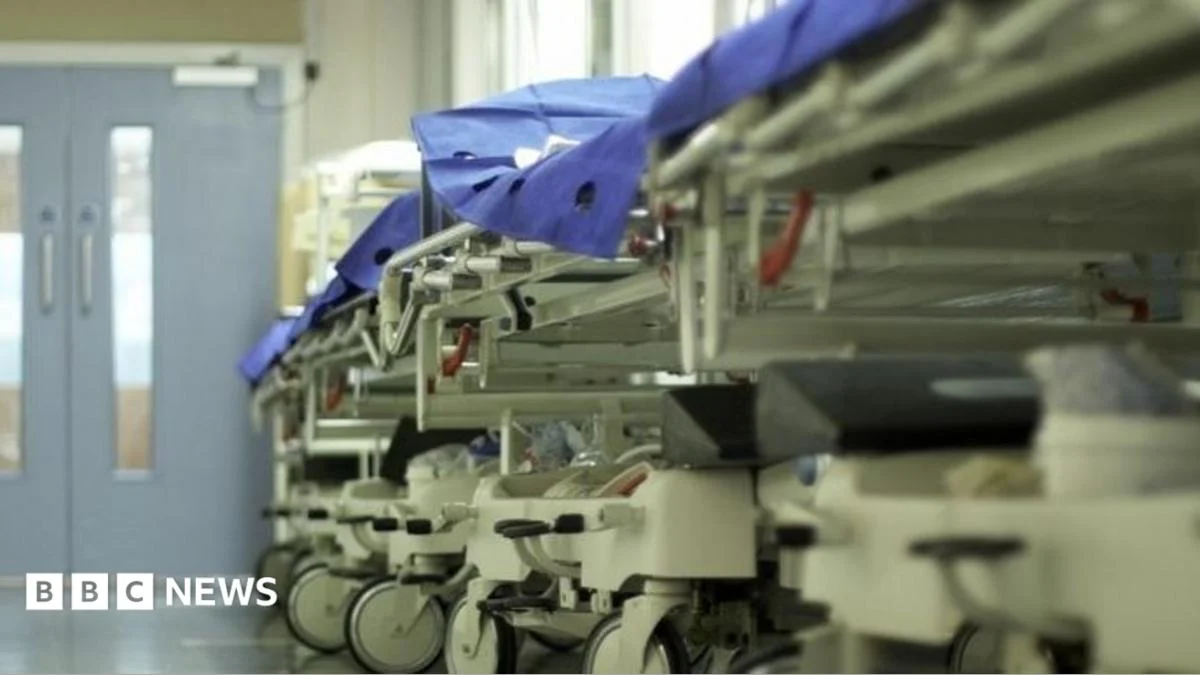
"Ominous early signs of winter pressure are already straining NHS England, with record demand and soaring waiting lists revealing a system pushed to its limits even before the coldest months begin."
This urgent declaration from senior health leaders encapsulates the profound challenges currently confronting NHS England. Despite heroic efforts by frontline staff to deliver unprecedented levels of planned care over the summer, the health service finds itself simultaneously grappling with a dramatic surge in demand for both routine and emergency treatments. This dual pressure highlights a systemic challenge where efforts to reduce historical backlogs are being outpaced by new patient referrals and an unusually early onset of seasonal illnesses, casting serious doubt on the feasibility of crucial government targets and portending an exceptionally difficult winter ahead.
The National Health Service in England is navigating what senior health leaders describe as "ominous signs" that the perennial pressures typically associated with winter are already acutely affecting its services. This stark warning coincides with the release of new data revealing a concerning rise in the waiting list for routine hospital treatment, marking the second consecutive monthly increase.
At the close of August, an estimated 7.37 million treatments were pending across England, impacting a staggering 6.24 million individual patients. This figure represents one of the highest tallies in recent history, reigniting intense scrutiny over the government’s ambitious target to treat 92% of patients within 18 weeks by 2029. The persistent growth of this backlog, even as the NHS works at an accelerated pace, underscores the depth of the challenge.
Paradoxically, this surge in waiting lists comes despite the NHS in England delivering what has been hailed as record levels of planned, elective care throughout the summer months. Over June, July, and August, the service completed a remarkable 4.7 million planned treatments, procedures, and appointments—a volume unsurpassed in any previous summer period. This impressive output, however, has been insufficient to stem the tide of new referrals and the relentless growth in overall demand, which has also reached its highest-ever recorded levels. The system appears to be running faster merely to stand still, or in this case, to fall further behind.
The escalating strain is not confined to elective care; emergency services are also bearing the brunt of unprecedented demand. Both Accident & Emergency (A&E) departments and ambulance services recorded their highest-ever patient numbers for the month of September. This early surge in emergency presentations, ahead of the traditional winter peak, is particularly concerning for health officials.
Professor Frankie Swords, NHS England’s national medical director, articulated the gravity of the situation, stating, "Staff are already seeing the ominous early signs of pressure, with more patients coming to A&E with flu and other respiratory viruses than usual for this time of year, and unfortunately many people are still waiting longer than we would like them to." Her comments highlight a worrying confluence of factors: a system already stretched thin, an early onset of seasonal illnesses, and persistent issues with patient flow.
The implications of these figures for government targets are significant. The NHS Alliance, which represents NHS trusts across the country, has expressed profound skepticism regarding the government’s ability to achieve its manifesto promise of hitting the 18-week hospital waiting time target by the end of the current parliamentary term in 2029. This target, a long-standing benchmark of NHS performance, has not been consistently met for a decade, signaling a deeply entrenched problem that predates recent crises.
Further corroborating this assessment, a separate analysis conducted by the Health Foundation, a leading independent think tank, concluded that progress on reducing waiting times has effectively stalled over the past year. Their research indicates that referrals onto the waiting list are increasing at a significantly faster rate than the number of patients being treated, creating a perpetual uphill battle for the service.
Sir Ciarán Devane, chief executive of the NHS Alliance, underscored the relentless nature of the demand, remarking, "The NHS continues to respond to record demand for care, but the relentless growth in demand for services is putting NHS staff under real pressure." This sentiment is echoed by Francesca Cavallaro of the Health Foundation, who noted, "Thanks to the hard work of staff, the NHS has made progress in bringing down waiting times, but a rise in referrals mean that the service is having to run faster just to stand still and the prospects of meeting the government’s pledge are receding." She further pointed to the ongoing political challenge, suggesting that future administrations will face critical decisions on whether to prioritize the 18-week target with the same intensity as previous commitments.
Adding to the complexity, the pressures of a long, hot summer appear to have transitioned almost seamlessly into the early onset of winter-like conditions. More patients, including a noticeable increase in children, have been arriving at A&E departments presenting with flu and other respiratory viruses, a trend typically observed later in the year. This early viral circulation places additional strain on already overstretched emergency services.
Performance metrics for emergency departments reflect this escalating crisis. The proportion of patients seen within the crucial four-hour target in A&Es last month dipped to 74.4%, a decrease from 75.0% in August. More alarmingly, the number of individuals enduring waits of more than 12 hours in A&E departments from the decision to admit to actual admission—a practice ominously referred to as "corridor care"—soared to 50,582 in September, a significant jump from 44,951 in August. This represents a substantial human cost, with thousands of vulnerable patients left waiting in undignified and often unsafe conditions.
Dr. Vicky Price, president of the Society for Acute Medicine, voiced profound concern over these figures. "A 13% year-on-year rise in 12-hour emergency department waits as winter approaches should set alarm bells ringing," she warned. "More than 50,000 patients waited over 12 hours from the decision to admit to admission in September – 1,686 people every day. These are not just numbers. They represent vulnerable people who are waiting far too long for a bed and staff trying to deliver safe care in overcrowded emergency departments." Her words powerfully underscore the profound impact on both patient welfare and the morale of dedicated healthcare professionals.
In response to these mounting concerns, the government maintains that the 18-week target remains achievable. It highlights ongoing investments in NHS buildings and equipment, intended to enhance productivity and streamline services. Furthermore, officials pointed to disruptions caused by strikes by resident doctors, a dispute which has since been settled, as a contributing factor to recent setbacks. While the resolution of industrial action offers some relief, the underlying systemic pressures are clearly not solely attributable to such disputes.
The strain evident across NHS services in September, a month traditionally considered part of the calmer autumn period, serves as a stark warning. The fact that the system is already exhibiting signs of severe distress before winter has truly taken hold will undoubtedly be a cause for significant concern among both NHS leaders and their political counterparts. The coming months are poised to test the resilience of the health service and the resolve of policymakers like never before, as they confront a crisis that threatens to define the immediate future of healthcare in England. Addressing these deeply rooted issues will require not just increased investment, but also fundamental reforms to workforce planning, social care provision, and the overall patient pathway to ensure the NHS can meet the evolving health needs of the nation.
