
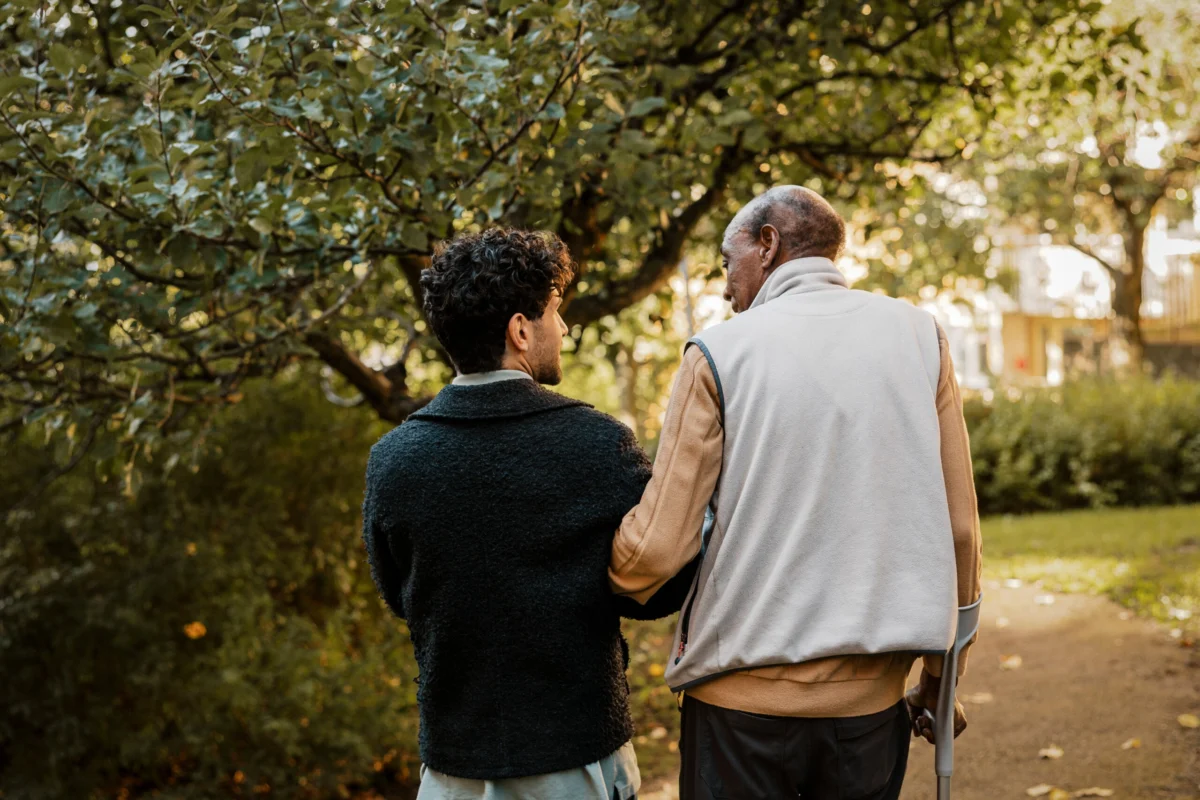
"As traditional family structures shift, a growing number of older adults are finding crucial support not just from relatives, but from the strong bonds forged with friends and neighbors, redefining the very essence of caregiving."
The demographic tapestry of aging is undergoing a profound transformation, moving beyond the long-held assumption that care for the elderly rests solely on the shoulders of family. A confluence of societal changes – including increasing rates of singlehood, divorce, and childlessness among older generations, coupled with geographic mobility and familial estrangement – is creating a burgeoning need for alternative sources of support. In this evolving landscape, friendships and neighborly connections are emerging as vital pillars of eldercare, stepping in to fill the gaps left by traditional familial structures. This shift highlights a growing reliance on social networks, where the definition of "family" in times of need is expanding to encompass the care and commitment offered by friends.
In the quiet streets of Sausalito, California, a testament to this evolving paradigm unfolds between Nicole Straight, a 53-year-old retired chef, and her 93-year-old neighbor, Patricia Wood. Their relationship, initially characterized by polite greetings and occasional coffee, deepened dramatically when Wood suffered a serious fall last October, resulting in a broken neck and a three-month rehabilitation. Upon her return home, Wood found herself reliant on assistance for mobility, particularly for navigating stairs. This vulnerability catalyzed a profound shift in their neighborly dynamic.
Straight, now a consistent presence in Wood’s life, visits weekly, bringing not only comforting lattes and freshly baked cookies but also delicious leftovers from her own meals. Her practical support extends beyond culinary offerings; Straight’s husband has installed essential safety features in Wood’s bathroom, including grab bars, and has undertaken minor but crucial home maintenance tasks like changing light bulbs and smoke detector batteries. The ease of communication is evident in their frequent text exchanges, with Straight often proactively inquiring about grocery needs before her own shopping trips, enabling Wood, who no longer drives, to provide her list.
Wood, a retired insurance executive, expresses her profound gratitude, describing Straight as "a gift from heaven." She reflects on the deep conversations they share, a mix of poignant tears and abundant laughter, admitting, "I never thought I’d have a new best friend at this time of my life." Their bond illustrates a growing trend where social connections are becoming as vital as familial ties in ensuring the well-being of aging individuals.
This phenomenon is not an isolated anecdote but a reflection of broader demographic shifts. Sociologist Deborah Carr of Boston University, who has extensively studied these trends, notes the increasing number of older adults who are unmarried or divorced, leading to a greater proportion of individuals aging alone. Furthermore, the declining birth rates mean fewer adult children are available to provide care, and geographic distances or strained family relationships further complicate the traditional eldercare model. These factors collectively underscore the necessity for friends and neighbors to assume more significant caregiving roles.
Research is beginning to quantify the extent of this evolving caregiving landscape. A study recently published in JAMA Network Open, spearheaded by researchers at the University of Michigan, examined the role of friends and neighbors in providing care to older adults. Utilizing data from the National Health and Aging Trends Study, which surveyed over 2,600 older individuals (average age 79) with health limitations, the study found that while family members remained the primary caregivers, approximately 14% of participants identified friends, including neighbors, as providers of help. This translates to an estimated 2.4 million caregiving friends nationwide.
Complementary findings emerge from a national survey conducted by AARP and the National Alliance for Caregiving, which indicated that 11% of caregivers support individuals who are not related to them. Karen Fingerman, a gerontologist at the University of Texas-Austin and co-author of a commentary accompanying the JAMA Network Open study, emphasizes that "Friends are among the auxiliary caregivers who have not been acknowledged. We neglect the sacrifices they make."
The University of Michigan study further illuminated the distinct ways in which friends function as caregivers compared to relatives. Unlike family members, friends are less likely to live with the individual they are assisting and rarely serve as the sole caregiver. On average, friends provide approximately 18 hours of care per month, a stark contrast to the roughly 67 hours provided by family caregivers, according to lead author Yee To Ng, a gerontologist.
The nature of the assistance also differs. Friends are more commonly involved in providing transportation, with two-thirds of caregiving friends driving their companions. Other frequent tasks include shopping, accompanying individuals outdoors, meal preparation, and attending medical appointments. While these roles are crucial, there are certain intimate caregiving tasks that friends may be less equipped or comfortable providing. Personal care, such as bathing and dressing, remains largely the domain of family members, as these activities can be deeply personal and potentially impact an individual’s self-esteem when performed by non-relatives.
The study also identified demographic characteristics of those receiving care from friends. Individuals who named friends as caregivers tended to be younger than those relying solely on relatives and were more likely to hold college degrees. Sociologist Deborah Carr suggests that individuals with higher education levels often cultivate larger and more diverse social networks, which can translate into a greater pool of potential caregiving friends. Unsurprisingly, those assisted by friends were also less likely to be married and more apt to live alone, mirroring the situation of Ann Greenwater, an 84-year-old resident of rural Humboldt County, California.
Greenwater, who lives independently in a mobile home park, experienced a period of severe back pain that left her bedridden for nearly three months. Although she has since regained mobility, she acknowledges that her recovery is not complete. As she is single with limited family connections and no longer drives, a close-knit group of friends from a nearby Zen Buddhist center has stepped in to provide essential support. Milli Quam, 86, manages Greenwater’s laundry and picks up prescriptions, while another friend, aged 73, assists with computer tasks and accompanies her grocery shopping, with several others contributing to this effort. A local volunteer organization also provides transportation to medical appointments.
Quam expresses her deep affection for Greenwater and the satisfaction she derives from being able to help, stating, "I love Ann, and I’m happy there’s something concrete I can do. I hope I can keep doing it for a long time." This sentiment highlights the reciprocal nature of these friendships, where support is offered and appreciated with genuine warmth.
The advantages of friends as caregivers are manifold. Carr points out that friends, often being of similar age, share a common understanding of life experiences and may possess greater empathy and practical knowledge gained from their own life journeys. Their involvement can also serve to alleviate the burden on family caregivers, offering a crucial layer of supplementary support.
However, the stability of friendship-based caregiving can present challenges. Neighbors may move away, and the dynamics of friendships can shift under the weight of caregiving demands. Strains can arise if the care recipient becomes overly reliant or if guilt develops over accepting extensive help, potentially disrupting the egalitarian expectations inherent in friendships. Research led by Carr has indicated that such strains can exacerbate depression in individuals with physical limitations.
Furthermore, policy support for these non-familial caregiving relationships remains limited. The federal Family and Medical Leave Act, for instance, generally does not provide job-protected leave for individuals caring for friends with serious health conditions, as noted by labor and employment lawyer Laura Lawless. While familial relationships often carry an implicit expectation of enduring support, "through thick and thin," friendships, by their nature, can be more transient. The stigma associated with family estrangement is significant, yet the natural attrition of friendships is often perceived as more commonplace.
Back in Sausalito, Wood playfully tells Straight she is "not allowed to move until I die," a lighthearted remark that underscores the depth of their bond. In Humboldt County, Greenwater’s friends have also remained steadfast. However, as they are also aging, the long-term sustainability of this support system is a growing concern. Quam, at 86, acknowledges that her own ability to drive may diminish in the future. Greenwater voices this shared anxiety, wondering, "I’m wondering what will happen when these friends aren’t able to come to me. I guess we’ll deal with it when it comes." This poignant reflection highlights the ongoing challenges and uncertainties faced by individuals relying on friendship networks for eldercare, a critical issue as society navigates the evolving realities of aging in the 21st century.
