
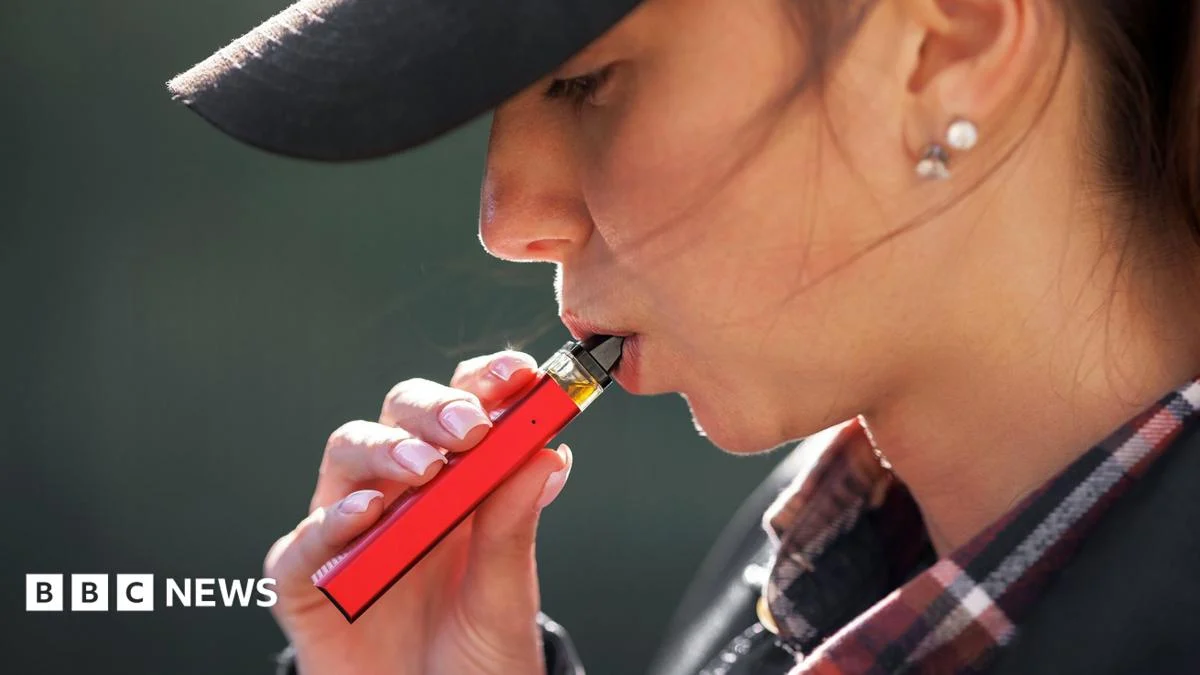
"Initially repulsed by vaping, I eventually succumbed to its pervasive presence among my peers," recounts Gracey Mungulu, echoing the experience of a growing demographic who, despite never smoking, find themselves entangled in a daily nicotine habit. This unintended outcome challenges vaping’s original purpose and raises significant public health concerns about widespread addiction among young adults.
The rise of vaping among individuals who have never smoked cigarettes presents a complex public health challenge, shifting the narrative from a smoking cessation tool to a potential gateway for nicotine addiction in a new generation. What began as a perceived safer alternative for smokers seeking to quit has evolved into a ubiquitous habit, particularly among young adults, with significant implications for individual health and societal well-being. This phenomenon is driven by a confluence of social normalization, aggressive marketing, and the inherent addictive nature of nicotine, creating a landscape where non-smokers are increasingly exposed to and adopting e-cigarettes as a regular part of their lives.
Gracey Mungulu, now 21, vividly recalls her initial disdain for vaping when it first emerged at her school. "I literally used to tell people like, ‘Er, why are you doing that?’" she recounts, reflecting a common sentiment of apprehension. However, the sheer ubiquity of the habit among her classmates proved to be a powerful force. By the age of 16, despite a first attempt that left her coughing, Gracey had joined their ranks. This trajectory from repulsion to regular use underscores the potent influence of social environments. "The more you see it, the more you start trying it a bit more," Gracey explains, illustrating the insidious nature of normalization that eventually led her to integrate vaping into her daily routine. Today, she purchases a refillable vape every day, reaching for it whenever her hands are idle during her work as a hairdresser and in a school setting.
Gracey’s experience is far from isolated. She is representative of a significant and expanding demographic in the UK. Recent data from the Office for National Statistics (ONS) reveals that over one million individuals in the UK, who self-identify as never having smoked traditional cigarettes, now regularly vape. This figure marks a concerning year-on-year increase, highlighting a fundamental deviation from vaping’s initial market positioning. When electronic cigarettes were first introduced, they were largely heralded as a revolutionary harm reduction tool, designed to help established smokers transition away from the far more damaging habit of combustible tobacco.
While the NHS acknowledges that vaping nicotine, a highly addictive substance, is considerably less harmful than smoking cigarettes, a crucial caveat remains: the long-term health effects of e-cigarette use are not yet fully understood or clear. This ambiguity, coupled with the rising numbers of non-smoker vapers, prompts a critical question: why are individuals like Gracey, who have no history of smoking, increasingly adopting this habit?
For Gracey, a Londoner, vaping has become intertwined with managing social anxiety. She describes it as "the hand action," a coping mechanism involving "just having something in your hand, just having something in your mouth." This physical ritual provides a perceived sense of comfort or distraction. Like traditional cigarettes, Gracey’s vape contains nicotine, a potent psychoactive substance known for its highly addictive properties. When nicotine levels in the body drop, withdrawal symptoms can manifest, including increased irritability, anxiety, and difficulty concentrating, creating a cycle that perpetuates its use. Gracey admits that vaping has become a "mindless action" for her. She recounts a recent instance while speaking with BBC News, where she unconsciously found herself lying in bed, vape in one hand, scrolling Instagram with the other.
This habitual, almost unconscious aspect of regular vaping resonates strongly with Dr. Helen Wall, a General Practitioner who frequently encounters such patterns among her patients. Dr. Wall identifies this as a "psychological dependence on something else to almost regulate their emotions," suggesting that vaping can serve as a substitute for other coping mechanisms or as a perceived emotional crutch.
Malin Andersson, a domestic abuse campaigner and former Love Island contestant, shares a similar narrative. She vaped until recently and, like Gracey, observed a strong link between her vaping habit and "doomscrolling" – passively consuming negative news or social media content. Malin had experimented with cigarettes but never considered herself a smoker. At 33, she falls within the 25-34 age range, which the ONS report identifies as the most likely demographic to vape in the UK, with nearly one in six individuals in this group using e-cigarettes daily or occasionally. Malin started vaping during a particularly stressful break-up, seeking solace and comfort. She firmly believes it was the physical action, the ritual, that truly hooked her. "It’s a dopamine hit," Malin explains, likening it to "an adult’s version of a dummy." She found that vaping dulled her senses and left her feeling demotivated. The pervasive presence of her banana ice-flavoured vape became a source of immense frustration, leading her to quit in May of this year. "It was annoying me so much that it was always in my hand that I’d end up throwing it across the room," she admits.
Alex, a 26-year-old from Manchester who preferred not to disclose her last name, also describes a gradual progression into a vaping habit. Her journey began with occasional vaping during nights out, which eventually transitioned into bringing vapes home. The habit became so ingrained that she would work "lying in my bed with my laptop in front of me and then my vape on my chest," illustrating how deeply integrated it became into her daily life.
The growing number of non-smokers taking up vaping presents a complex dilemma for public health experts. Professor Sarah Jackson, from the University College London Alcohol and Tobacco Research Group, acknowledges that while the recent ONS figures might trigger "alarm bells," the situation is nuanced. She posits that a subset of these new vapers might have otherwise initiated smoking if vaping hadn’t been an option. "In which case, vaping has diverted them away from a more harmful behaviour, which is good news," she states. However, she quickly adds a critical counterpoint: "On the other hand, there will be people that are being exposed to more risk than they would have otherwise." Professor Jackson points to a 2024 study by UCL researchers that observed an increase in nicotine use among young adults in England, even as cigarette smoking rates continued to decline. From this, she infers that "some of the people who are vaping wouldn’t have smoked otherwise."
The broader context in the UK indicates a significant shift in nicotine consumption patterns. The ONS report states that approximately 5.4 million people aged 16 and over vape in Britain, while the number of smokers of all ages continues its steady decline, with around 4.9 million adults currently smoking. The UK government is committed to further reducing smoking rates and, crucially, to curtailing the appeal of vaping, particularly among children and young people.
A key area of concern is the marketing of vapes, which has historically featured vibrant colours and an extensive array of sweet flavours. These strategies are widely believed to enhance their attractiveness, especially to younger demographics. A recent government consultation on new measures to regulate vape marketing is currently underway, with a response expected in due course. Hazel Cheeseman from the charity Action on Smoking and Health emphasizes this point, suggesting that within the 1.1 million vapers who never smoked, "there probably is a group who would not be vaping [without] the marketing of vaping which is very prominent."
The official guidance from the NHS is unequivocal: non-smokers and individuals aged 17 and under are strongly advised never to vape. Furthermore, it remains illegal for anyone under 18 to purchase vapes. In an effort to curb the surge in youth vaping, particularly linked to their accessibility and appeal, disposable vapes were banned last year.
Dr. Wall believes that the aggressive marketing of vapes in recent years has significantly contributed to a widespread "misconception" that they are "safe and not addictive." This perception often overshadows the inherent risks and the highly addictive nature of nicotine. Gracey, reflecting on her own experience, advocates for vapes to be sold in the same standardized plain packaging as cigarettes, arguing that such a presentation "looks scary" and would reduce their allure. "With vapes, they have all these flavours, all these pretty colours – it’s just making us more attracted to it," she observes. While she acknowledges that vaping is generally perceived as far more socially acceptable among her generation than smoking, Gracey finds her own habit problematic and has seriously considered quitting, motivated in part by the substantial financial burden of approximately £35 a week.
However, just like quitting smoking, giving up vaping can prove to be a significant struggle, often requiring substantial willpower and support. For Alex, her attempt to quit vaping ironically led her down a different, equally concerning path. She successfully managed to abstain from vaping while travelling for several months, where access to e-cigarettes was limited. However, in their absence, she began smoking traditional cigarettes for the first time, a stark illustration of how nicotine dependence can manifest in different forms.
Experts unequivocally state that cigarettes are neither a healthy nor a helpful method to stop vaping. The NHS strongly and consistently advises against smoking, which remains the leading cause of preventable illness and premature death across the UK. For those seeking to quit vaping, the NHS offers practical advice, including gradually reducing the nicotine strength of the vape liquid, increasing the time intervals between vaping sessions, or transitioning to suitable nicotine replacement therapy (NRT) products like patches or gum.
Despite the growing need, professional support for vaping cessation remains inconsistent and often patchy. A recent survey highlighted this gap, finding that fewer than half (45%) of healthcare providers in England offered specific vaping cessation support. The landscape of support services across the rest of the UK presents an equally mixed picture.
While the overall decline in smoking rates is undoubtedly a positive development for public health, Dr. Wall underscores a critical point regarding individuals like Gracey who move directly to vapes without a smoking history. She believes that a crucial part of the public health messaging has been missed. "Vaping was only intended [by the NHS] to be a replacement for cigarettes," she reiterates, emphasizing the original harm reduction strategy that has, for a new generation, inadvertently become a pathway to nicotine dependence.
