
"The approval of Bemotrizinol marks the first major advancement in American UV filter technology in over two decades, bridging a long-standing gap between U.S. sunscreens and superior international formulations."

For the first time since 1999, the U.S. Food and Drug Administration (FDA) has expanded the toolkit available to American sunscreen manufacturers by approving Bemotrizinol (BEMT), a highly efficient, broad-spectrum UV filter. While consumers in Europe, Asia, and Australia have benefited from this ingredient for nearly thirty years, its arrival in the United States signals a pivotal shift in public health and cosmetic chemistry, offering a more stable and aesthetically pleasing solution to UV-induced skin damage.
The Decades-Long Stagnation of American Sunscreen
To understand the significance of Bemotrizinol, one must first look at the regulatory landscape that has governed American skincare for the last quarter-century. While the global skincare market evolved rapidly, the U.S. sunscreen market remained largely frozen in time. The primary reason for this discrepancy is that the FDA classifies sunscreens as over-the-counter (OTC) drugs rather than cosmetics. This classification requires rigorous safety and efficacy testing that can take years—or in the case of BEMT, decades—to complete.

Until this year, the last time the FDA approved a new sunscreen filter was in 1999. In the intervening years, dermatologists and skincare enthusiasts often looked toward international markets with envy. European and Asian formulations utilized modern filters that were more photostable, less irritating, and lacked the notorious "white cast" associated with American mineral sunscreens. The approval of Bemotrizinol represents more than just a new product on the shelf; it is the breaking of a 25-year regulatory drought that has historically left American consumers with fewer options for protecting their skin against the leading cause of skin cancer.
What is Bemotrizinol (BEMT)?
Bemotrizinol, often referred to by its trade name Tinosorb S, is a chemical UV filter designed to provide broad-spectrum protection. Unlike older chemical filters that may only target specific segments of the UV spectrum, BEMT is a "hero ingredient" because of its ability to absorb both UVA and UVB rays effectively.

UVA rays are primarily responsible for the early signs of aging, including fine lines, wrinkles, and "age spots," and they play a significant role in the development of skin cancers by penetrating deep into the dermis. UVB rays, on the other hand, are the primary cause of surface-level damage and sunburn. By covering the entire spectrum, BEMT provides a comprehensive shield that few other single ingredients can match.
Perhaps the most critical characteristic of Bemotrizinol is its photostability. Many common American chemical filters, such as avobenzone, are notorious for breaking down quickly when exposed to sunlight. This degradation means that the longer a person stays outside, the less effective their sunscreen becomes, necessitating frequent reapplication. BEMT does not break down under UV exposure; in fact, it often helps stabilize other, more volatile filters in the same formula, making the entire product more durable and reliable.

The First Mover: La Roche-Posay Anthelios UVDefense
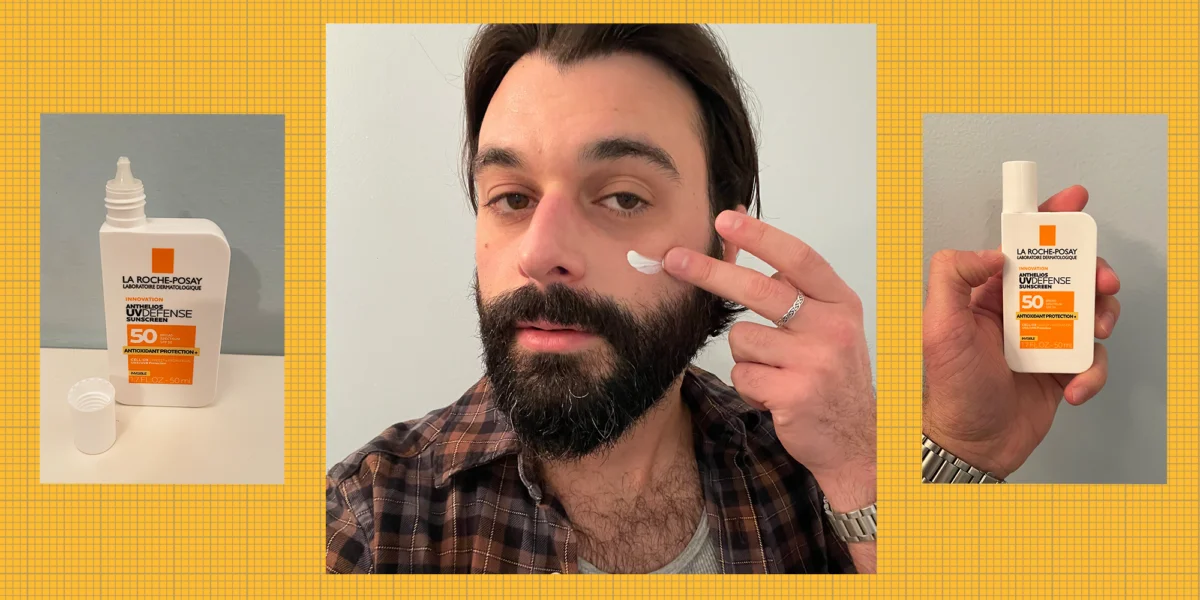
With the regulatory gates finally open, La Roche-Posay has become one of the first major brands to launch a BEMT-integrated product in the U.S. market: the Anthelios UVDefense Sunscreen SPF 50. Priced at approximately $39.99, it sits at a premium price point compared to standard drugstore options, but its formulation justifies the cost for those seeking the latest in dermatological science.
The Anthelios UVDefense formula does not rely on BEMT alone. Instead, it utilizes the new filter to enhance a "quartet" of traditional chemical ingredients: avobenzone, homosalate, octisalate, and octocrylene. This synergistic approach ensures that the product meets the high SPF 50 threshold while maintaining the lightweight, elegant feel that modern consumers demand.

Beyond UV filters, the product incorporates skin-nourishing agents such as glycerin and soybean oil. Glycerin acts as a humectant, drawing moisture into the skin, while soybean oil provides emollient properties that help maintain the skin barrier. Importantly for those with reactive skin, the formula is fragrance-free, adhering to the brand’s long-standing reputation for being "sensitive-skin safe."
Performance and User Experience
The primary deterrent to daily sunscreen use is often the "feel" of the product. Traditional American sunscreens are frequently criticized for being greasy, heavy, or leaving a chalky residue. The integration of BEMT addresses these cosmetic concerns directly.

In practical application, the Anthelios UVDefense with BEMT behaves more like a high-end daily moisturizer than a traditional sunblock. It possesses a milky, fluid texture that spreads easily across the skin. One of the most impressive feats of this formulation is its absorption speed. While many mineral sunscreens require several minutes of vigorous rubbing to disappear, this BEMT-based formula is fully absorbed within roughly 15 seconds.
For the user, this means no white cast—a significant benefit for individuals with darker skin tones who have historically struggled to find high-SPF products that do not leave a ghostly appearance. The finish is invisible, leaving the skin looking natural rather than oily. In fact, the product is so lightweight that users may find it difficult to remember if they have applied it at all, a stark contrast to the heavy, "masked" feeling of older generations of SPF.

Limitations and Considerations
While BEMT is a significant leap forward, it is not a universal solution for every activity. The La Roche-Posay Anthelios UVDefense is designed for daily wear—office commutes, running errands, and casual outdoor time. However, it is not labeled as water-resistant or sweat-resistant.
For athletes or those spending the day at the beach, this specific formulation may not be the ideal choice, as moisture will cause the filters to wash away. In these scenarios, consumers should still look toward dedicated "sport" sunscreens that are formulated to adhere to the skin during physical exertion. Nevertheless, for the 90% of daily life that does not involve swimming or heavy sweating, the BEMT formula offers a level of comfort that encourages consistent, daily compliance—which is the most important factor in preventing long-term skin damage.

The Clinical Impact: Why Now Matters
The introduction of BEMT comes at a critical time for American public health. Skin cancer remains the most common form of cancer in the United States, with millions of cases diagnosed annually. Experts agree that the best way to lower these numbers is through consistent UV protection.
The "sunscreen gap" between the U.S. and the rest of the world has long been a point of frustration for dermatologists. By providing filters that are more stable and more pleasant to wear, the industry is removing the barriers to usage. When a sunscreen feels like a luxury moisturizer rather than a medicinal chore, people are far more likely to apply it every morning.

Clinical observations of BEMT-based products have shown remarkable efficacy in preventing the "flushing" or redness associated with UV exposure, particularly in fair-skinned individuals. Because BEMT is highly effective at neutralizing UVA rays, it also serves as a potent anti-aging tool, preventing the collagen breakdown that leads to premature wrinkling and skin laxity.
The Future of the American Skincare Market
The approval of Bemotrizinol is likely the first of many changes to come. Now that a path has been cleared for modern filters, other manufacturers are expected to follow suit, potentially bringing other popular international filters like Uvinul T 150 or Mexoryl XL to U.S. shores.
As more brands integrate BEMT into their lines, we can expect to see a wider range of price points and formulations, including tinted versions, matte finishes for oily skin, and perhaps eventually, water-resistant sport versions. For now, La Roche-Posay’s Anthelios UVDefense stands as a flagship for a new era. It proves that American consumers no longer have to choose between high-level protection and a comfortable, invisible finish. The "glimmer of progress" seen this year suggests that the U.S. is finally catching up to the global standard, one application at a time.
