

"A year after states and local governments began distributing billions in opioid settlement funds, a KFF Health News investigation reveals a significant portion is being spent on initiatives with tenuous ties to addiction, raising concerns about the funds’ intended purpose: to heal communities devastated by the opioid crisis."
State and local governments disbursed approximately $3.7 billion in opioid settlement funds last year, a sum that eclipses the combined annual income of 42,000 American families. This substantial financial infusion originates from legal settlements with companies held accountable for aggressively marketing painkillers and contributing to the nation’s devastating opioid crisis. While a significant portion of these funds has been directed towards critical areas like addiction treatment, recovery housing, and other initiatives widely supported by public health experts and affected families, a concerning trend has emerged: a notable amount is being allocated to expenditures with questionable relevance to addiction and its remediation. This widespread disbursement, meticulously tracked through a year-long investigation, highlights a critical need for greater transparency and oversight in how these crucial funds are utilized.
The investigation, a collaborative effort between KFF Health News, the Johns Hopkins Bloomberg School of Public Health, and Shatterproof, a national nonprofit dedicated to addressing addiction, meticulously examined approximately 17,500 expenditures. This comprehensive analysis involved extensive public records requests and diligent scouring of government websites. The collected data was then systematically categorized into areas such as treatment, prevention, and other uses, culminating in the creation of the most extensive national database to date detailing the allocation and expenditure of opioid settlement money in 2025. This wealth of information underscores the complex landscape of opioid settlement fund distribution and the challenges in ensuring these funds effectively address the opioid crisis.
The total anticipated payout from these settlements is projected to reach a staggering $60 billion over nearly two decades. This vast sum is divided among state governments, counties, cities, and, in some instances, specially established opioid settlement councils. While settlement agreements do outline some spending guidelines, a significant degree of flexibility remains. This flexibility, coupled with a perceived vacuum in leadership and oversight, has led to considerable disparities in how these funds are managed and tracked by the public. The lack of robust, uniform tracking mechanisms makes it difficult to ascertain the full impact and effectiveness of these expenditures.
A significant portion of the questionable spending, encompassing items from law enforcement technology to routine municipal needs, originates at the county and city level. Local leaders, often lacking specialized knowledge in addiction policy, may find themselves susceptible to various pressures and requests for funding. According to OpioidSettlementTracker.com, local decision-makers control nearly half of the settlement money. Proponents of local control argue that these officials possess a unique understanding of their communities’ needs and are best positioned to address the crisis at its root. However, as instances of what are perceived as dubious expenditures accumulate, a growing number of recovery advocates question whether these local officials are adequately equipped to manage such a transformative, once-in-a-generation opportunity.

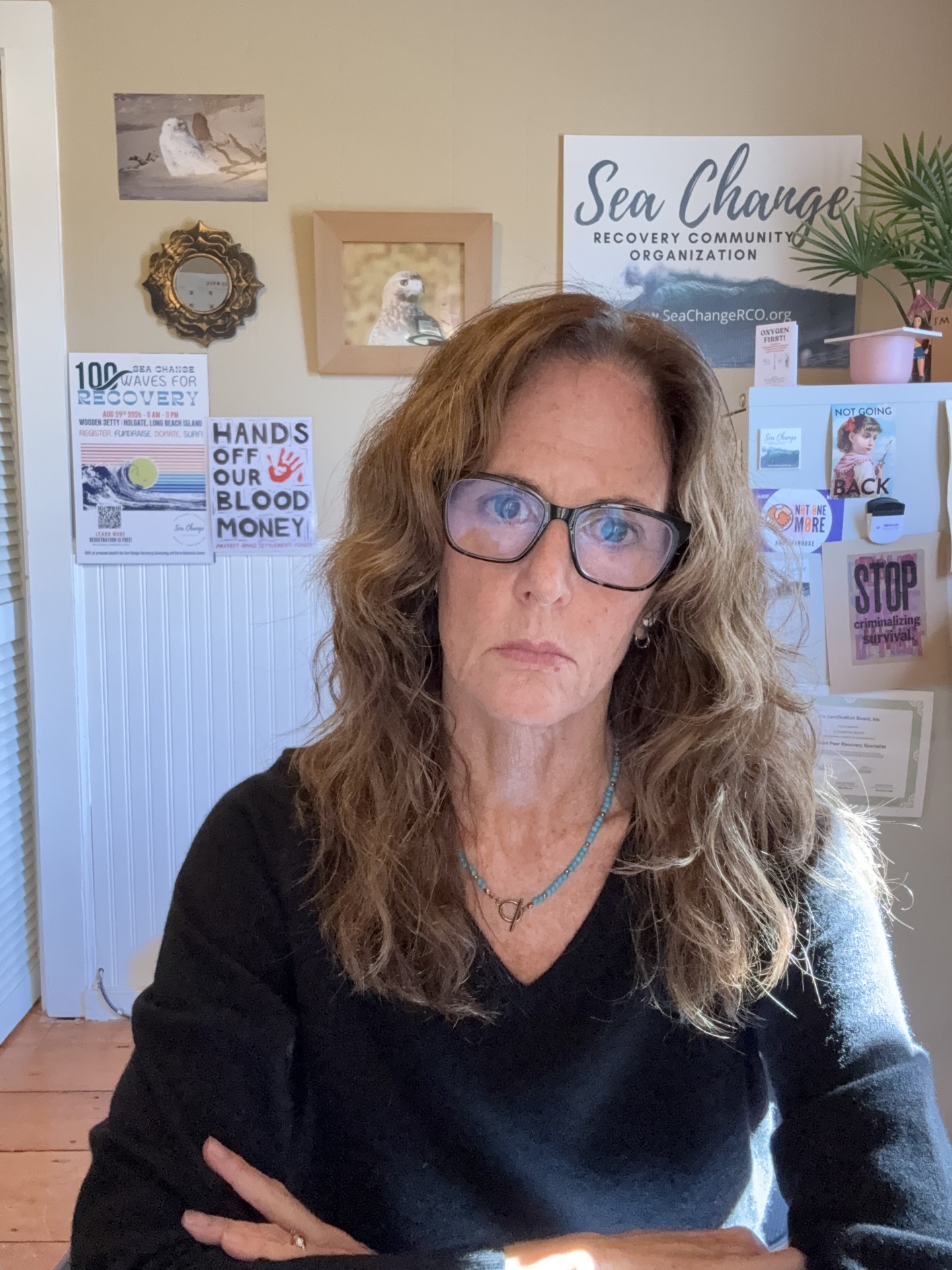
Elizabeth Burke Beaty, executive director of the Sea Change Recovery Community and Harm Reduction Center in Ocean County, New Jersey, and a person in recovery herself, voiced a sentiment shared by many affected by the crisis: "It shouldn’t be run by these politicians." She emphasized that individuals directly impacted by addiction possess the most profound understanding of the gaps in local care systems and, consequently, are best suited to determine the most effective allocation of these funds. "This whole opioid settlement should be run by the people who’ve lost everything," she stated, highlighting the personal stakes involved. Burke Beaty’s advocacy stems from witnessing the daily struggles of those affected, including individuals who have lost multiple family members to addiction, underscoring the profound human cost of the crisis. She poignantly described the settlement money as "money from dead people and people left behind," a stark reminder of the tragedy that underpins these financial settlements.
While many local officials have also experienced personal losses due to the opioid crisis and are genuinely committed to utilizing the funds responsibly, they often operate with limited resources and expertise compared to state-level counterparts who have access to dedicated health departments and policy experts. Local officials may juggle multiple roles, making it challenging to dedicate the necessary time and attention to complex policy decisions. Furthermore, they can be targeted by aggressive sales tactics from vendors who view the settlements as a lucrative opportunity, creating a "gold rush" mentality. These officials face the dual challenge of maximizing the impact of opioid settlement funds while simultaneously managing essential public services like schools and infrastructure. Burke Beaty, recognizing these challenges, actively engages with local leaders, offering guidance and submitting detailed feedback on fund allocation, though she laments when these efforts appear to be ignored, questioning whether the decisions stem from a lack of knowledge or a lack of commitment to the cause.
The question of who should ultimately control these substantial funds is complex. While the emergence of questionable local spending might suggest a preference for state-level oversight, a historical parallel offers a cautionary tale. The Tobacco Master Settlement of 1998, which saw tobacco companies pay billions to states, largely bypassed local involvement. Over two decades, a mere fraction of these funds was directed toward anti-smoking programs, with much of the money being used to fill general budget gaps. Philip Rutherford, who leads substance use strategy at the National Council for Mental Wellbeing, acknowledges that no single model for fund allocation is likely to be flawless. However, he points out that distributing funds to local governments can offer advantages, including reduced administrative costs, greater agility in responding to evolving drug trends, and opportunities to pilot innovative approaches.
Annie Qing, who oversees health and human services at the National Association of Counties, notes that it is not uncommon for local officials to make decisions in areas outside their direct expertise. She draws an analogy to county commissioners making decisions about road construction without being civil engineers. Their role, she explains, is to leverage subject matter experts, combine that knowledge with their understanding of community needs, and identify investments that offer the greatest benefit to their constituents. To aid in this process, local officials can access resources from universities, county associations, and national public health and policy organizations.
The challenge lies in bridging the gap between academic research and the practical realities of fund distribution. The case of automated external defibrillators (AEDs) exemplifies this disconnect. In the past year, approximately 100 local jurisdictions across 20 states allocated $3.7 million in opioid funds to purchases including AEDs, cardiac monitors, and related accessories. While many local leaders perceived these purchases as life-saving measures in the context of the opioid crisis, scientific evidence does not strongly support this rationale. For instance, Southfield, Michigan, invested roughly $350,000 in cardiac monitors, with Mayor Kenson Siver explaining that the increasing complexity of overdose responses, often involving mixed substances, necessitates preparedness for a range of medical emergencies. He argued that cardiac monitors can help emergency responders assess breathing effectiveness and identify complications requiring further treatment.
However, emergency medical responders offer a different perspective. Dalton Barrett, a paramedic in Edgecombe County, North Carolina, and overseer of the county’s opioid settlement funds, states that AEDs and cardiac monitors are primarily used in cardiac emergencies and are rarely employed in opioid overdose situations. In cases of opioid overdose, individuals typically stop breathing and require interventions like oxygen or naloxone, a life-saving overdose reversal medication. AEDs are designed to deliver an electrical shock in specific cardiac arrhythmias, which are not commonly observed in overdose victims. Barrett suggests that the purchase of AEDs with opioid dollars may, in some instances, be a way to address general budget shortfalls for essential ambulance equipment rather than a direct response to the opioid crisis. He advocates for prioritizing funds towards hiring personnel dedicated to post-overdose follow-up, connecting individuals with treatment, housing, and other vital resources, emphasizing that people struggling with addiction seek trust and support, not just advanced medical equipment.
Some advocates are calling for increased state intervention to regulate local spending. However, this approach faces resistance, as states are often reluctant to exert control over local funds, and some legal agreements may even preclude such oversight. Jennifer Tourville, executive director of a University of Tennessee initiative providing guidance on opioid fund allocation, explains that her team is not authorized to dictate local spending choices but focuses on offering guidance that aligns with the intended purpose of the funds and maximizes community impact.
A few states have implemented "unallowable lists" to guide spending, generally prohibiting the use of funds for law enforcement tools like body cameras and drones, as well as general medical supplies such as first aid kits and gloves. However, the enforcement of these lists can be weak. For example, Spencer County, Indiana, purchased eight AEDs for its sheriff’s department, despite AEDs appearing on Indiana’s unallowable list. The Indiana Commission to Combat Substance Use Disorder characterized the list as merely guidance, stating that state statute does not grant enforcement authority over local fund expenditures. Similarly, Van Buren County, Iowa, used $1,000 in opioid funds to contribute to a recreational site, arguing it would provide youth-focused activities and prevent opioid misuse. While this justification has been used to support a wide range of expenditures, including ice skating rinks and concerts, the Iowa Attorney General’s office, which collects county reports, does not evaluate or approve these uses.
These instances have fueled frustration among advocates who feel they are the primary watchdogs for these funds. Burke Beaty notes that some localities perceive the settlement money as "really easy money," and even if their spending appears inappropriate, they are legally permitted to do so. She expresses hope that a bill recently introduced in New Jersey, which would require the state Department of Human Services to review county and city reports and mandate repayment of misused funds, could establish a much-needed oversight mechanism. Without such measures, there is a palpable fear that the nation risks repeating the financial mismanagements seen with the tobacco settlement and could foreshadow similar challenges with emerging social media settlements.
The meticulous data compiled for this report, including the methodology and downloadable data, is available through KFF Health News. The collaborative effort involved contributions from Rachel Spears (KFF Health News), Kristen Pendergrass, Kelly Collins, and Mary Coyne (Shatterproof), and Abigail Winiker, Benjamin Eidman, Olivia Allran, Katibeth Blalock, Isha Desai, Saathvika Diviti, Joseph Olasupo, Veronica Steck, Amy Lund Stone, Erin Wang, and Lillian Williams (Johns Hopkins Bloomberg School of Public Health). The Johns Hopkins Bloomberg School of Public Health has been instrumental in guiding state and local governments on opioid settlement fund utilization, developing principles endorsed by numerous organizations. Shatterproof, a national nonprofit, actively works to address substance use disorder through policy advocacy, stigma reduction, and community education. While Shatterproof partners with some states on settlement-funded projects, the KFF Health News, Johns Hopkins Bloomberg School of Public Health, and the Shatterproof team involved in this report maintain independence from those initiatives.
