
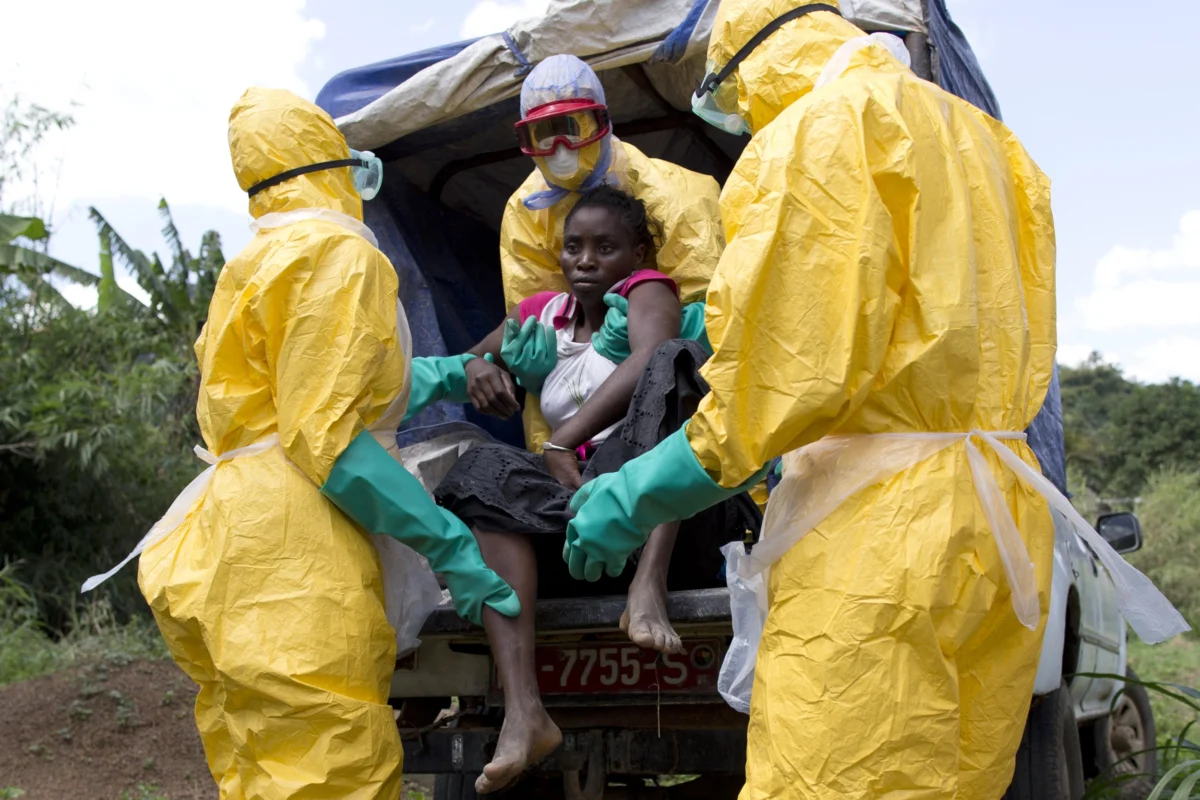
"A second Ebola death in Kenya, a close relative of the first patient, underscores the virus’s persistent threat and highlights a widening international investigation into potential transmission routes, including a critical focus on travel hubs like Uganda’s Entebbe International Airport."
Kenya has confirmed its second fatality from the Ebola virus, a 65-year-old woman who was a close relative of the country’s initial patient. The woman reportedly began exhibiting symptoms approximately ten days prior to her death on Friday evening, October 23, 2026, while already under quarantine. This development brings the total number of confirmed Ebola cases in Kenya to nine. The remaining seven patients are currently receiving treatment in two designated isolation facilities, and authorities reported no new infections on Friday. Simultaneously, an international investigation is intensifying its scrutiny into how the virus may have traversed borders, with a particular focus on transit points such as Uganda’s Entebbe International Airport. This growing concern over international travel links has prompted new entry requirements for the United States, aiming to bolster public health defenses against imported cases.
The emergence of a second Ebola death in Kenya, coupled with an expanding international investigation into potential transmission pathways, paints a stark picture of the ongoing threat posed by the virus. The deceased, a 65-year-old woman, was a close relation to Kenya’s index Ebola case, underscoring the virus’s capacity to spread within familial and close-contact networks. Her death, occurring while she was already in quarantine, indicates the critical importance of stringent isolation protocols and the challenges in containing an outbreak once it has taken root. Kenya has now recorded a total of nine confirmed cases, with seven individuals currently undergoing treatment. The focus of health officials has broadened beyond immediate containment to encompass the complex international dimensions of the outbreak, particularly the potential role of major transit hubs.
Central to this widening investigation is the Africa Centers for Disease Control and Prevention’s (Africa CDC) examination of a possible link between the first Ebola patients identified in Kenya and Nigeria. Both individuals are reported to have transited through Uganda’s Entebbe International Airport on October 3, 2026. Officials are meticulously reviewing whether these two patients may have shared equipment or had any other form of contact during their time at the airport. While emphasizing that no definitive connection has yet been established, the airport scenario represents one of several possibilities under active review by investigators. This line of inquiry is of significant consequence for international travel, particularly for American travelers, as busy transit points can serve as conduits for infectious diseases to spread globally. In response to these evolving concerns, the U.S. Centers for Disease Control and Prevention (CDC) has implemented a new passenger attestation order, mandating that all individuals boarding international flights to the United States after 11:59 p.m. Eastern time on November 3, 2026, must attest that they have not been in the Democratic Republic of Congo (DRC) within the 21 days preceding their flight.
The specific circumstances surrounding Nigeria’s first confirmed Ebola case provide further context to the international investigation. The patient, a 42-year-old woman born in Uganda and married to a Swiss diplomat in Abuja, returned to Nigeria on October 3, 2026, following a stay of approximately two and a half weeks in Uganda. She began exhibiting symptoms on October 7 and subsequently tested positive for Ebola. In Nigeria, health authorities have placed 44 individuals identified as high-risk contacts under quarantine. Meanwhile, Kenya’s first patient, a 40-year-old Kenyan man who had been residing in the DRC, also traveled through Uganda before flying into Nairobi on October 3. He died on October 5, the same day he tested positive for the virus. Kenya’s contact tracing efforts identified 135 individuals, with 118 of them placed in quarantine. Among those quarantined, eight later tested positive, including four healthcare workers and four close family members.
Nigerian Health Minister Muhammad Pate has indicated that the country’s Ebola infection appears to be closely linked to the initial case in Kenya, while acknowledging that further findings could refine the understanding of its transmission. Wessam Mankoula, head of health emergencies at the Africa CDC, described the potential airport encounter as one of several hypotheses being explored. He urged caution against premature conclusions, stating, "Let’s avoid anticipating the investigation," as reported by Health Policy Watch. This cautious approach is vital in ensuring the integrity of the ongoing inquiry. Medical Daily had previously reported Nigeria’s confirmation of a Bundibugyo virus case in an Abuja woman, at which point the mode of infection had not been identified. The subsequent developments in Kenya, including the second death and the pinpointing of a specific location and date for investigation, have added critical new dimensions to the understanding of the outbreak’s spread.
The epicenter of the current Ebola outbreak remains the Democratic Republic of Congo (DRC). As of October 21, 2026, the DRC had reported a staggering 9,704 confirmed cases and 4,687 confirmed deaths, according to data from the CDC. Despite these high numbers in the DRC, no cases directly linked to this outbreak have been reported in the United States. The CDC maintains that the overall risk to the American public and travelers "remains low." In a separate assessment published on October 23, 2026, the European Centre for Disease Prevention and Control (ECDC) also concluded that the overall risk to the European population is very low and did not recommend travel restrictions to or from Kenya or Nigeria.
Current U.S. entry regulations are primarily focused on travelers arriving from the DRC. Individuals, including American citizens, who have been in the DRC within 21 days of their flight are prohibited from boarding commercial flights to the United States. Certain foreign travelers who have recently been in Uganda or South Sudan may face temporary entry restrictions. U.S. citizens returning from Uganda or South Sudan after a recent stay are required to enter through designated airports where enhanced screening measures are in place. Kenya and Nigeria are not currently subject to these specific entry restrictions.
The therapeutic landscape for the Bundibugyo virus, a strain of Ebola, remains limited. There is no FDA-licensed or authorized vaccine specifically for the Bundibugyo virus, nor is there an FDA-approved treatment for the disease it causes, as detailed in a CDC health advisory. The licensed U.S. Ebola vaccine targets a different species of the virus. Consequently, intensive supportive care, including fluid replacement and management of symptoms, remains the cornerstone of treatment for infected individuals.
The risk of Ebola infection is most concentrated among healthcare workers directly involved in patient care, relatives attending to sick family members, and individuals involved in the handling of deceased individuals. For the vast majority of U.S. households, the practical risk of exposure to Ebola remains exceedingly small. The virus is transmitted through direct contact with the blood or other bodily fluids of an infected person who is sick or has died from the disease, or through contact with objects contaminated with these fluids. Ebola does not spread through airborne transmission. Symptoms of Ebola can manifest between 2 and 21 days after exposure and typically include fever, body aches, weakness, vomiting, diarrhea, and unexplained bleeding.
Travelers returning from East or Central Africa who develop a fever within 21 days of their return are advised to contact a healthcare provider by phone before seeking in-person medical attention, providing details about their recent travel history. The next critical steps in managing this evolving situation include the release of Kenyan contacts who have successfully completed their 21-day quarantine period without developing symptoms. Furthermore, genetic sequencing will be employed to compare the Kenyan and Nigerian infections, potentially revealing crucial insights into the transmission dynamics. The implementation of the U.S. passenger attestation rule on November 3 is a significant preventative measure designed to mitigate the risk of imported cases. The ECDC has committed to reassessing the threat level as new information becomes available, demonstrating a dynamic and responsive approach to the global health challenge posed by Ebola.
Timeline of Key Events:
- October 23, 2026: Kenya reports its second Ebola death. The ECDC publishes a new threat assessment regarding the importation of Ebola cases into Kenya and Nigeria.
- October 22, 2026: Africa CDC announces that both the first patients in Kenya and Nigeria transited through Entebbe Airport on October 3. The CDC announces its passenger attestation order for international flights to the U.S.
- October 21, 2026: Nigeria confirms its first case of the Bundibugyo virus in Abuja.
- May 15, 2026: The Ministry of Health in the Democratic Republic of Congo confirms the ongoing Bundibugyo Ebola outbreak.
Key Questions Addressed:
- Who died of Ebola in Kenya this week? A 65-year-old woman, identified as a close relative of Kenya’s first Ebola patient, died on October 23, 2026. She began showing symptoms while in quarantine.
- Did Kenya’s and Nigeria’s patients meet at the airport? Investigators are actively examining this possibility. Both patients passed through Entebbe International Airport in Uganda on October 3, 2026, and the Africa CDC is investigating potential contact between them.
- Is Ebola spreading in Kenyan communities? Currently, Kenya has reported no evidence of community transmission. All nine confirmed cases in Kenya are linked to the country’s index patient.
- What changes for U.S. air travelers? Effective November 3, 2026, at 11:59 p.m. Eastern time, all passengers boarding international flights to the United States must attest that they have not been in the Democratic Republic of Congo within the preceding 21 days.
- Is there a vaccine for Bundibugyo Ebola? No FDA-licensed vaccine currently exists for the Bundibugyo virus. Treatment for the disease primarily consists of intensive supportive hospital care.
