
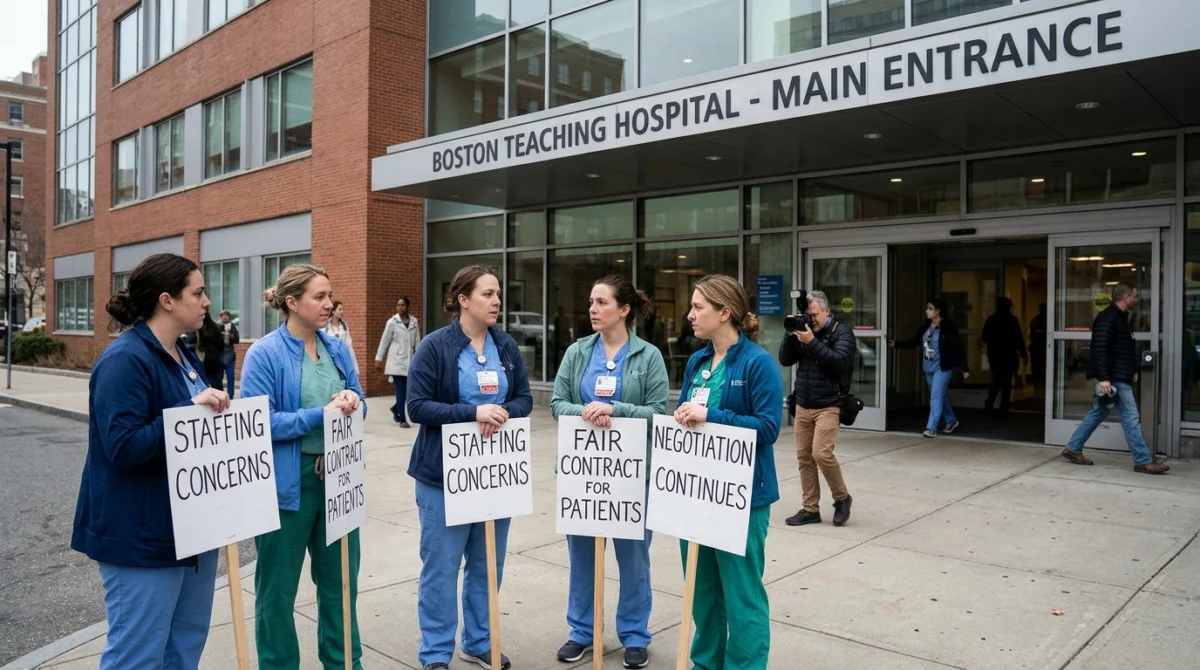
"Nurses at Brigham and Women’s Hospital have decisively rejected Mass General Brigham’s ‘last, best, and final’ contract offer, signaling a continued commitment to advocating for fair wages and improved working conditions. This rejection keeps the possibility of a strike alive, although no new walkout date has been announced, providing a critical window for renewed negotiations."
Boston, MA – In a significant development for patient care and healthcare labor relations in Massachusetts, registered nurses at Brigham and Women’s Hospital have voted to reject the "last, best, and final" contract offer presented by Mass General Brigham (MGB). The announcement, made by the Massachusetts Nurses Association (MNA) on October 23, 2026, signifies a deepening of the labor dispute that has been ongoing for months. While the vote does not immediately trigger a strike, it keeps the option open and underscores the nurses’ dissatisfaction with the terms proposed by the hospital system.
The MNA, representing over 4,000 nurses at the prestigious Brigham and Women’s Hospital, did not disclose the specific vote count but confirmed that the membership’s overwhelming sentiment was to reject the offer. Following the vote, the union has formally requested that hospital management return to the negotiating table to seek a resolution that addresses the core concerns of the nursing staff. This move comes after nurses engaged in extensive rallies and discussions regarding the proposed contract, highlighting the gravity of the situation for both the healthcare providers and the patients they serve.
For patients with scheduled surgeries, ongoing cancer treatments, or upcoming births at the Brigham, the timing of any potential strike is a critical factor. Under labor laws, any new strike action would necessitate a 10-day notice period. This provision ensures that patients and their families receive advance warning, allowing them to make necessary arrangements and minimize disruption to critical medical care. The current status of negotiations means that all scheduled appointments and procedures are proceeding as normal, but the possibility of future disruptions remains a concern.
The two-day voting period, held on October 22 and 23, allowed nurses to voice their opinions on the hospital’s latest proposal. Kelly Morgan, the bargaining committee chair and a labor and delivery nurse, emphasized the democratic principles guiding the union’s actions, stating, "a foundational principle of our union is that every nurse’s voice matters." This sentiment was echoed by union spokesperson Joe Markman, who commented to Boston.com, "The nurses spoke in their vote, and MGB needs to get back to the table." The MNA’s bargaining committee was scheduled to convene this week to deliberate on the next strategic steps in their advocacy efforts.
The current strike authorization, overwhelmingly approved by nurses in a September 24 vote, remains active. In that vote, approximately 93% of participating nurses, a tally of 2,986 to 215, cast their ballots in favor of authorizing an open-ended strike. While union leadership has not yet announced a new strike date, they maintain that their obligation was to allow members to vote on the hospital’s offer, regardless of the union’s recommendation. This process highlights the union’s commitment to member empowerment and transparency.
Mass General Brigham expressed disappointment with the vote’s outcome, reiterating its commitment to providing safe, high-quality patient care. In a statement reported by WBUR, a hospital spokesperson indicated that the rejected offer "reflected the hospital’s commitment to investing in our nurses while supporting long-term sustainability" and aimed to maintain Brigham nursing pay at the upper echelon of the market.
At the heart of the dispute lies the issue of wages. Brigham nurses currently benefit from a structured pay scale that includes 5% annual raises for the first 20 years of service. The hospital’s rejected offer proposed two additional 2.5% raises for nurses at the highest end of the pay scale. However, it did not include an across-the-board increase, which the union has been advocating for to keep pace with the rising cost of living and inflation. The proposed contract, which was set to run through September 2028, also included provisions related to health insurance, a key priority for the MNA.
Mass General Brigham has consistently argued that it cannot financially accommodate the raises initially requested by the nurses. The health system has confirmed that cost-saving measures, including some job reductions, are being implemented, as reported by WBUR. Despite these efforts, senior nurses at Brigham are reported to earn annual salaries of $220,000 or more, a figure that highlights the already competitive compensation structure. Union leaders, however, have leveled accusations of "union busting" against the hospital. Kelly Morgan, in a social media post cited by WBUR, asserted that the employer "wants to eradicate us from their institution," reflecting a deep-seated mistrust and animosity between the two parties.
The current impasse has been a protracted struggle, extending back to the summer. On October 10, following a marathon 13-hour bargaining session, the union made the decision to postpone a planned open-ended strike, enabling members to review and vote on the hospital’s offer. This was not presented as a tentative agreement, but rather as management’s final proposal, which the union put to its members without an explicit endorsement. Previous coverage by MedicalDaily had detailed the proposed wage increases and insurance terms, but the rejection of this latest offer marks a new and critical juncture in the negotiations.
The dispute’s roots trace back several months. On July 8, approximately 4,000 nurses participated in a one-day strike, which was then the largest nurses’ strike in Massachusetts history, as noted by WBUR. Following the strike, the hospital implemented a four-day lockout, citing contractual obligations with temporary nursing staff. In August, the union reported that a federal mediator had indicated the hospital viewed the negotiations as being at a "practical impasse," suggesting a significant hurdle in reaching a mutual agreement.
In a separate but related development within the Boston healthcare landscape, nearly 2,000 nurses at Boston Medical Center, represented by a different union, recently ratified a contract that successfully averted a planned strike, demonstrating varying outcomes in the region’s labor negotiations.
For patients with existing appointments or scheduled care at Brigham and Women’s Hospital, the immediate advice remains to proceed as planned. No strike notice has been issued, and the hospital is operating under normal conditions. Patients are encouraged to remain informed and to contact their care teams directly if a strike notice is formally issued. This 10-day warning period will provide ample opportunity to confirm the status of procedures, infusions, or planned births.
During the July strike, the hospital utilized replacement nurses to ensure continuity of care. Patients may wish to inquire about staffing levels on their units if a strike does occur, to understand the resources available. Those undergoing active cancer treatment, individuals with high-risk pregnancies, and older adults with frequent medical appointments could potentially experience the most significant disruptions if care arrangements need to be adjusted. It is advisable for these patients and their families to proactively discuss backup plans with their healthcare providers and maintain readily accessible medication lists and medical records.
It is crucial to note that emergency medical services are not impacted by this contract dispute. In the event of a medical emergency, individuals should immediately call 911 or proceed to the nearest emergency department. MedicalDaily will continue to provide updates on any resumption of negotiations, the issuance of strike notices, and any potential agreements reached between the MNA and Mass General Brigham.
Key Questions Answered
What did Brigham nurses vote on?
Brigham nurses voted on Mass General Brigham’s "last, best, and final" contract offer and subsequently rejected it, as announced by the union on October 23, 2026. The specific vote tally was not released by the union.
Is a strike currently scheduled?
No, a strike is not currently scheduled. While the strike authorization vote from September remains active, any new strike action would require a minimum of 10 days’ notice to be provided to the hospital.
What is the primary point of contention in the negotiations?
The main disagreement revolves around wages. The hospital’s offer included raises for nurses at the top of the pay scale but did not propose an across-the-board increase, which the union considers essential to address inflation and the cost of living.
What is the hospital’s perspective on the contract offer?
Mass General Brigham maintains that its offer reflects a commitment to investing in its nurses while ensuring long-term financial sustainability. The hospital states that the proposed compensation keeps Brigham nursing pay among the highest in the market and that its primary focus remains on providing safe, high-quality patient care.
Should patients cancel their appointments?
No, patients should not cancel their appointments at this time. All healthcare services are continuing as normal. However, patients are advised to stay informed and check with their care team if a strike notice is issued.
What are the next steps in this labor dispute?
The union has formally requested to resume negotiations with hospital management. The MNA’s bargaining committee is scheduled to meet this week to discuss and plan their strategy moving forward.
