
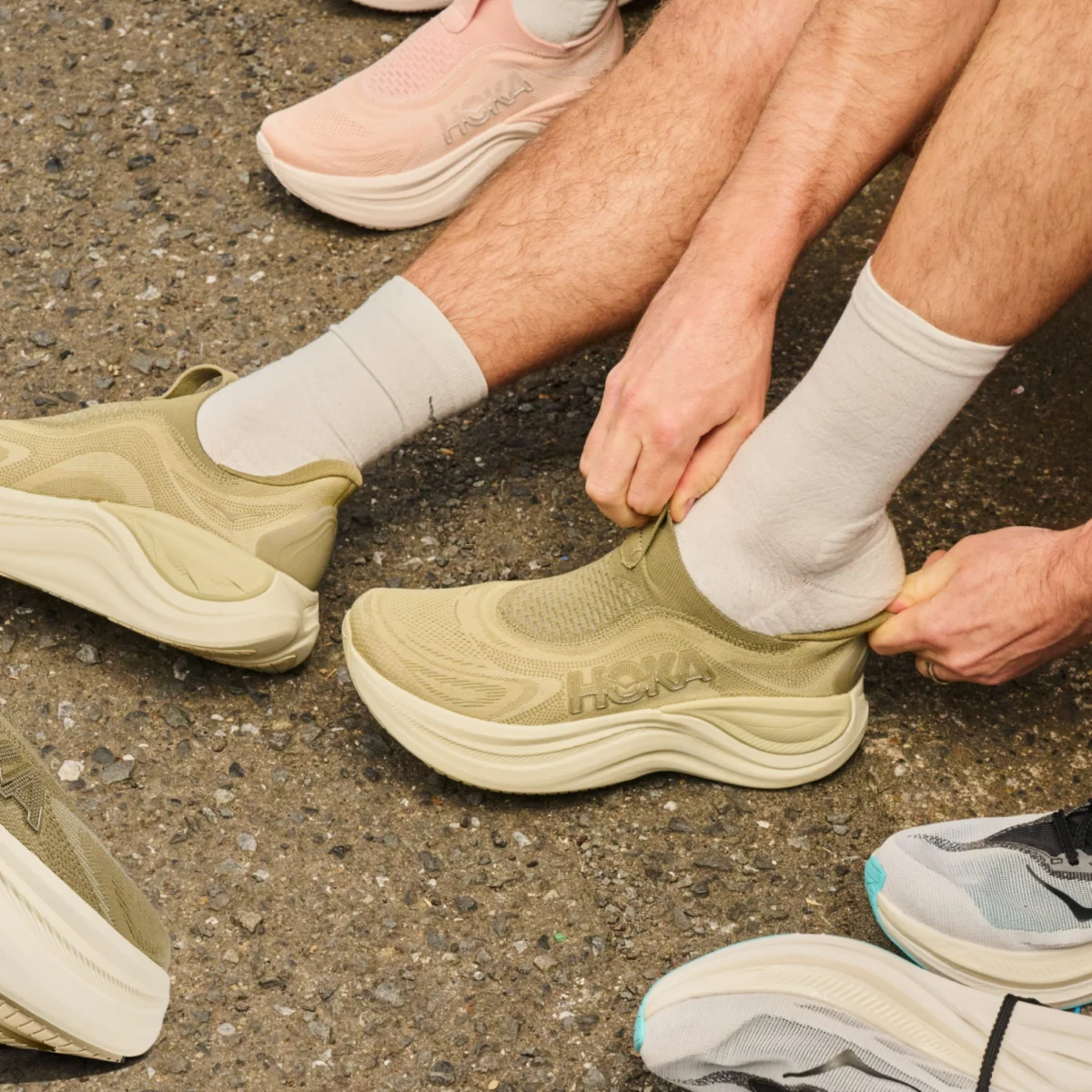
"The modern slip-on has transcended its reputation for casual lounging, integrating elite foam technologies and adaptive fit systems to provide the same biomechanical support as traditional lace-up performance sneakers. This shift represents a broader movement in footwear engineering where accessibility and high-level performance are no longer mutually exclusive."

For decades, the distinction between a "serious" athletic shoe and a "slip-on" was defined by the presence of laces, which provided the necessary lockdown for high-impact activities. However, recent advancements in materials science—ranging from high-rebound foams to elasticated engineered knits—have allowed manufacturers to create footwear that offers both the ease of a hands-free entry and the structural integrity required for long-distance walking and recovery. This evolution is driven by a consumer demand for "low-friction" lifestyle gear that supports joint health and foot mechanics without the time-consuming ritual of manual adjustment.
The Engineering of the Performance Slip-On
To understand the current landscape of slip-on footwear, one must look at the specific technologies being migrated from elite marathon shoes into daily-wear silhouettes. Brands are no longer simply removing laces; they are redesigning the entire upper to act as a dynamic tension system.

Take, for example, the On Cloud 6. Priced at approximately $160, this shoe serves as a benchmark for the category. It utilizes On’s proprietary Zero-Gravity CloudTec, a system of hollow pods designed to compress horizontally and vertically. This provides a soft landing followed by a firm takeoff. The inclusion of a "Speedboard"—a liquid-injected plate of thermoplastic polymer—ensures that despite the shoe’s lightweight nature (roughly 9.4 oz), it maintains a level of energy return that pushes the wearer forward. The "speed" laces used here are not merely aesthetic; they are elasticated to maintain a snug fit across the midfoot while allowing the wide collar to accommodate the foot during entry.
However, high-performance features often come with specific maintenance trade-offs. The hollow pods of the CloudTec system, while excellent for weight reduction and shock absorption, are known to trap small stones and debris. For the urban walker, this is a minor inconvenience, but for those on gravel paths, it is a design factor to consider.

Accessibility and Inclusivity in Design
One of the most significant impacts of the slip-on revolution is in the realm of "EasyOn" technology, popularized by brands like Nike. The Nike Pegasus 42 EasyOn ($103) is a prime example of universal design. By utilizing a collapsible heel that snaps back into place, Nike has created a shoe that serves both the general population looking for convenience and individuals with limited mobility who may struggle with traditional laces.
The Pegasus 42 EasyOn does not compromise on the internal "guts" of the shoe. It features ReactX foam, which provides 13% more energy return than previous React iterations, and a signature Air Zoom unit for responsiveness. With a 10mm heel-to-toe drop, it is engineered for those who strike with their heel, providing ample cushioning to protect the posterior chain. The bungee lacing system allows for a "set it and forget it" adjustment, ensuring that once the tension is dialed in, the user never has to touch the laces again.

The Budget Frontier: Quality Under $100
Historically, "budget" slip-ons often meant a sacrifice in midsole longevity. Adidas has challenged this with the Cloudfoam Cuxxion Sock Shoes, often found for under $50. The use of Cloudfoam—an EVA (ethylene-vinyl acetate) compound—provides a plush underfoot feel that mimics higher-end orthotics.
The primary innovation here is the engineered knit upper. Unlike traditional mesh, which can be rigid, engineered knit is woven with varying levels of tension to provide support where needed (the arch and heel) and breathability where it isn’t (the toe box). This "sock-like" construction is ideal for those with narrow feet, though the tight elastic collar may prove restrictive for individuals with wider ankles or high insteps.

Stability and Support: Overcoming the Slip-On Stigma
A common criticism of laceless shoes is the lack of lateral stability. Hoka, a brand synonymous with maximalist cushioning, addresses this with the Skyward Laceless ($175). Stability shoes are traditionally heavy and stiff, designed to prevent overpronation (the inward rolling of the foot). Hoka manages to integrate stability into a laceless format by using a deep footbed and a triple jacquard knit upper that "hugs" the foot more aggressively than a standard sneaker.
At 9.9 oz and featuring a 6mm drop, the Skyward Laceless is designed for a natural gait. The lower drop encourages a midfoot strike, which can reduce stress on the knees and hips. This makes it a preferred choice for long-shift workers or fitness walkers who require consistent support over several hours.

Hybridization: From Performance to Recovery
The market has also seen the rise of "hybrid" sneakers, such as the Under Armour SlipSpeed Mega ($150). This shoe features a unique "speed mode" and "slip mode" via a collapsible heel, effectively turning a gym-ready trainer into a recovery slipper.
Under Armour’s integration of the BOA fit system—a micro-adjustable dial used in professional cycling and snowboarding boots—replaces traditional laces with a 12-point tension wire. This allows for a precision fit that no elastic lace can match. However, this level of mechanical integration adds weight; at 11.7 oz, it is one of the heavier options in the category, a factor that may lead to leg fatigue during extended aerobic walks.

The Science of Active Recovery
Footwear isn’t just about the journey; it’s about what happens after the workout. The Kane Footwear Active Recovery Shoe ($80) is built from "RestoreFoam," a bio-based material derived from sugarcane. Unlike traditional "lifestyle" clogs, the Kane Revive is orthopedically designed with a slight rocker shape to ease the transition from heel to toe.
The interior of the shoe is lined with raised nodes intended to stimulate blood flow in the feet—a process akin to a constant, low-level massage. For athletes dealing with plantar fasciitis or general foot fatigue, this stimulation can accelerate the removal of metabolic waste from the muscles. Its water-resistant, ventilated design also makes it a hygienic choice for post-gym environments.

Rugged Utility and Classic Engineering
For those requiring more than a "gym" aesthetic, the Merrell Jungle Moc ($110) remains a staple. Merrell has utilized a suede upper and a high-traction outsole to create a shoe that bridges the gap between a casual loafer and a light hiking shoe.
The Jungle Moc features a 12mm heel-to-toe drop, the highest in this selection. A high drop is often recommended for those with Achilles tendonitis, as it reduces the stretch required of the tendon during the walking cycle. While the suede provides excellent water resistance and durability, it lacks the breathability of the knit uppers found in Nike or Adidas models, making it better suited for cooler climates or outdoor chores.

The Aesthetic Shift: The Modern Clog
Finally, the transition of the clog from a "kitchen shoe" to a fashion-forward lifestyle choice is exemplified by the Crocs Dylan Clog ($55). By using a single piece of Croslite material textured to mimic pebbled leather, Crocs has created a water-resistant, durable slip-on that fits into more formal settings than their perforated "Classic Clog."
The Dylan Clog incorporates a deep heel cup, which is essential for laceless footwear to prevent "heel slip," a common cause of blisters. While it lacks the advanced foam energy return of the Hoka or On models, its simplicity and ease of cleaning make it a practical choice for low-impact daily activities. The trade-off is breathability; the solid upper traps heat, which may be a deterrent for those in warmer climates.
Conclusion: Choosing the Right Tool
The diversification of the slip-on market means that consumers must now choose their footwear based on specific biomechanical needs rather than just style. Whether it is the high-tech energy return of the On Cloud 6, the inclusive accessibility of the Nike Pegasus EasyOn, or the therapeutic nodes of the Kane Revive, the "lazy shoe" has officially retired. In its place is a new generation of performance gear that respects the wearer’s time as much as their physical health. As materials continue to lighten and "step-in" technologies become more robust, the reliance on the traditional shoelace may soon become the exception rather than the rule in daily fitness.
