
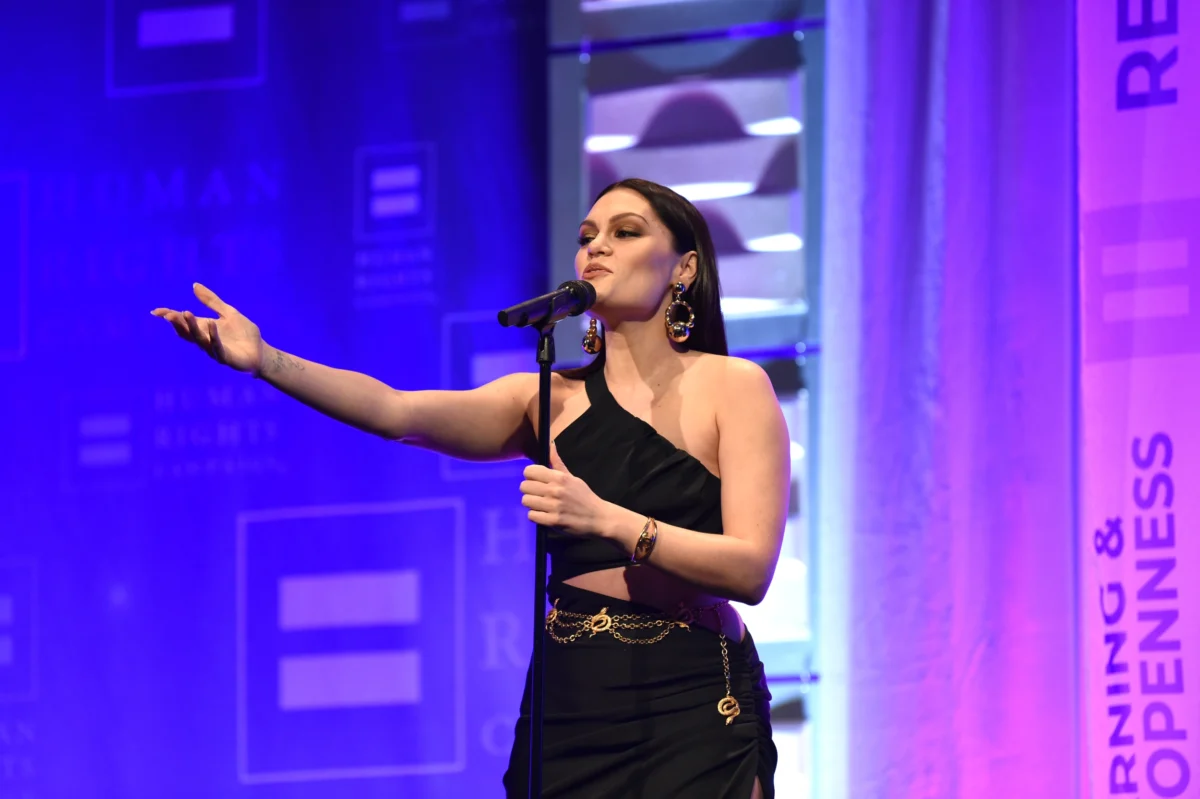
"Jessie J’s return to social media with an update on her second breast reconstruction surgery after cancer treatment underscores that recovery is a multi-stage journey, often extending beyond initial treatment and involving nuanced personal healing."
Singer Jessie J has offered her fans a candid glimpse into her recovery process following her second breast reconstruction surgery, an update shared more than a year after her initial breast cancer diagnosis. The British artist posted a series of personal moments on Instagram on October 25th, including hospital photos and intimate glimpses with her young son, marking a significant return to public life after a period dedicated to her health and family. This latest update arrives months after Jessie, 38, announced in May 2026 that she was cancer-free, a milestone achieved after undergoing treatment that included a mastectomy. While her current post offers a deeply personal account of her recovery, she has not publicly detailed the specifics of the reconstructive procedure or provided a definitive medical timeline for her healing. For patients navigating the aftermath of breast cancer surgery, recovery is a comprehensive process that extends far beyond the initial operation. Common experiences can include swelling, soreness, profound fatigue, and necessary restrictions on daily activities. The duration required to resume normal routines is intrinsically linked to the chosen surgical technique and the individual patient’s unique circumstances.
Jessie J Returns to Social Media with a Comprehensive Recovery Update
In her October 25th Instagram post, Jessie shared poignant recovery photographs, including a powerful image of herself in a hospital gown, offering a simple yet optimistic thumbs-up. The accompanying caption, "to healing," served as a brief but positive affirmation, deliberately omitting detailed medical disclosures. Alongside these personal reflections, the singer also shared tender moments with her three-year-old son, Sky. This update followed a previously announced social media hiatus in September, during which she explained her intention to prioritize rest, recovery, and quality family time after an exceptionally demanding period.
According to reports from People magazine detailing her recovery journey, Jessie had previously indicated her preparedness for another reconstruction procedure. Her most recent update confirms that this surgery has indeed taken place and, as she had earlier announced, has progressed favorably. Jessie first disclosed her breast cancer diagnosis in June 2025, a revelation that sent ripples through her fanbase. Subsequently, she underwent a mastectomy, a critical step in her treatment. By May 2026, she shared the heartening news of being cancer-free, supported by reassuring results from a follow-up MRI, as confirmed by various published reports. It is crucial to emphasize that her latest surgery should not be misconstrued as an indication that her cancer has recurred. Breast reconstruction is an entirely separate, albeit integral, component of comprehensive breast cancer care, often involving additional procedures aimed at restoring or refining the aesthetic appearance of the breast following a mastectomy.
The Multifaceted Nature of Breast Reconstruction: Why More Than One Surgery is Common
The fundamental objective of breast reconstruction is to meticulously rebuild the shape and contour of the breast after it has been altered or removed due to mastectomy or other related surgical interventions. This reconstructive process can be performed concurrently with the mastectomy itself (immediate reconstruction) or at a later stage (delayed reconstruction), with the timing dictated by a patient’s overall treatment plan, personal preferences, and evolving medical circumstances.
The National Cancer Institute outlines two primary approaches to breast reconstruction: implant-based reconstruction, which utilizes silicone or saline implants, and autologous tissue reconstruction, which employs tissue harvested from another area of the patient’s body, such as the abdomen, back, or buttocks. In some instances, temporary tissue expanders are used to gradually stretch the skin and underlying tissue before a permanent implant is inserted. Autologous tissue reconstruction, while offering a more natural feel, necessitates a healing process at both the reconstructed breast site and the donor site from which the tissue was taken.
Furthermore, breast reconstruction is rarely a singular event. It often involves a series of procedures to fine-tune the breast’s shape, achieve symmetry with the contralateral breast, and reconstruct the nipple and areola complex. The number and timing of these operations are highly variable, meaning that undergoing a second or even subsequent procedure does not, in isolation, signify a complication or an unsuccessful initial surgery. The American Cancer Society provides extensive guidance on breast reconstruction, encouraging patients to engage in thorough discussions with their healthcare teams regarding the merits and implications of immediate versus delayed reconstruction. These decisions are often influenced by the comprehensive cancer treatment plan, including the necessity of adjuvant therapies like radiation. Jessie has not publicly disclosed the specific reconstructive technique employed in her latest surgery, making it challenging to pinpoint the exact recovery milestones or restrictions applicable to her individual situation.
Understanding the Recovery Trajectory After Breast Reconstruction
The recovery period following breast reconstruction is a dynamic phase characterized by a range of physical sensations and functional adjustments. Common experiences include varying degrees of soreness, bruising, swelling, and generalized fatigue. The intensity and duration of these symptoms are influenced by a multitude of factors, including the specific surgical technique utilized, the patient’s overall health status, and whether multiple surgical sites were involved (e.g., the breast area and a donor site for tissue-based reconstruction).
The American Cancer Society’s comprehensive recovery guidelines suggest that many patients begin to experience a noticeable improvement in their comfort levels within a couple of weeks post-surgery. Recovery following implant-based reconstruction may generally be less protracted than that associated with tissue-flap reconstruction, which involves the healing of a secondary surgical site. Upon discharge from the hospital, some patients may have temporary drains in place to facilitate the removal of excess fluid from the surgical area. Adherence to wound-care instructions and the use of supportive surgical garments or bras are typically recommended to aid the healing process. These drains are usually removed by the medical team once the volume of fluid drainage has sufficiently diminished.
The gradual resumption of everyday activities is a pivotal aspect of the recovery continuum. Patients are generally advised to refrain from engaging in activities involving heavy lifting, strenuous exercise, and certain movements that require significant overhead arm extension for a period determined by their surgeon. The American Cancer Society notes that a significant portion of patients can anticipate returning to their normal routines within approximately six to eight weeks, although this timeline is not universally applicable and can vary considerably. Swelling and bruising may persist for several weeks, gradually subsiding over time, while the final aesthetic outcome of the reconstructed breast can take considerably longer to fully manifest and settle. It is imperative for patients to adhere to their personalized discharge instructions rather than comparing their progress to that of others.
Vigilance for Warning Signs and the Importance of Ongoing Follow-Up Care
While discomfort and swelling are expected sequelae of surgery, the emergence of certain symptoms necessitates prompt medical attention. The Mayo Clinic’s guidance on breast reconstruction highlights several critical warning signs that warrant immediate consultation with a healthcare professional. These include the development of a fever, a significant worsening of pain, increasing or uncontrolled bleeding, any signs of discharge from an incision site, or sudden, unexpected changes in the size or shape of the breast.
Regular follow-up appointments are indispensable for surgeons to meticulously assess wound healing, monitor for any potential complications, and provide patients with tailored advice on when it is safe to resume specific activities. Depending on the chosen reconstruction method, ongoing monitoring may also extend to the condition of implants or the donor site utilized for tissue-based reconstruction. The National Cancer Institute cautions that complications can, in some instances, manifest months or even years after the initial reconstruction. Certain patients may benefit from specialized rehabilitation or physical therapy, particularly if the surgery has impacted shoulder mobility or strength.
Crucially, follow-up care remains a vital component of a patient’s health journey even after they have been declared cancer-free. Reconstruction itself does not serve as a determinant of cancer recurrence, nor does it negate the necessity of adhering to recommended cancer surveillance protocols. The appropriate schedule for diagnostic examinations and imaging tests is meticulously determined based on an individual’s specific treatment history and the guidance of their medical team. Patients should proactively contact their care team if they experience any concerns regarding pain, swelling, changes in their surgical wounds, or their overall recovery progress. Delaying seeking medical advice due to a symptom appearing different from another patient’s experience is strongly discouraged.
The Uniquely Personal Nature of Recovery, Even Post-Treatment
Jessie J’s recent update offers a valuable window into a critical phase of breast cancer care that often extends beyond the immediate period of active cancer treatment. Her announcement of being cancer-free in May 2026 marked a significant and joyous milestone, yet the journey of reconstructive surgery and its subsequent recovery represents a distinct and ongoing chapter in her personal health narrative.
For individuals contemplating or undergoing breast reconstruction, the decision-making process extends well beyond the anticipated physical outcome. A comprehensive discussion with a qualified surgical team should encompass a thorough exploration of recovery timelines, the potential for complications, the schedule of follow-up appointments, the emotional and psychological adjustment to altered body image, and the possibility of requiring additional procedures. The American Society of Plastic Surgeons strongly advises patients to diligently follow their surgeon’s individualized instructions and to attend all scheduled follow-up visits as their healing progresses.
While Jessie has not provided sufficient medical detail to establish a precise timeline for her current recovery, her update powerfully illustrates a fundamental truth for individuals navigating breast cancer treatment: healing is not a standardized process with a fixed schedule. Furthermore, achieving a cancer-free status does not automatically signify the conclusion of all aspects of treatment and recovery. The path to wholeness is often multifaceted and deeply personal.
