
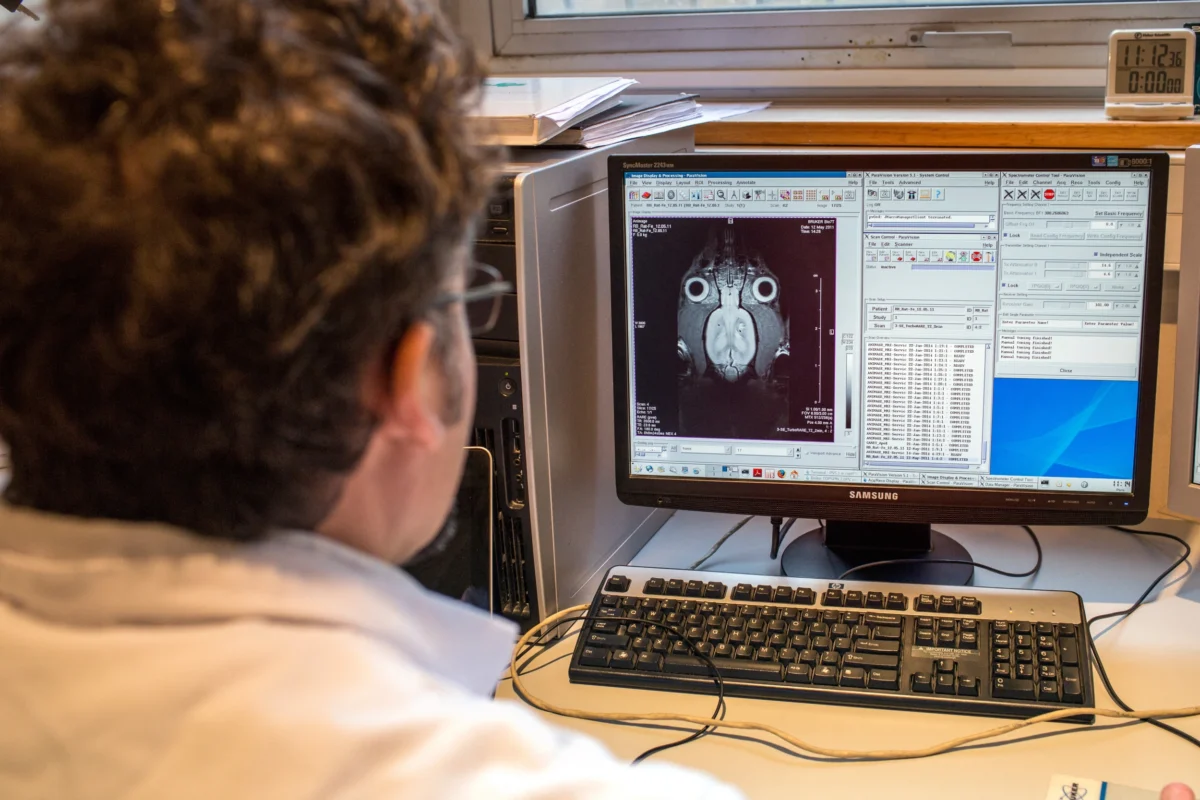
"Resting brain scans can reveal patterns in healthy adults that indicate a higher likelihood of future decline toward Alzheimer’s disease, even years before symptoms manifest, offering a potential window for earlier intervention."
Stanford Medicine-led research has unveiled a novel scoring system derived from resting-state functional MRI scans that can identify healthy adults at increased risk of developing Alzheimer’s disease. This innovative tool, named the Alzheimer’s resilience-vulnerability connectome (ARC) score, analyzes the intricate communication patterns between different brain regions. Published in Science Advances, the study demonstrates that individuals whose brain activity patterns more closely resemble those of Alzheimer’s patients are more prone to experiencing memory and cognitive decline, an accumulation of amyloid plaques, and eventual diagnosis of mild cognitive impairment or Alzheimer’s. While currently a research tool and not available for clinical use, the ARC score holds significant promise for understanding the preclinical stages of Alzheimer’s and potentially guiding future therapeutic strategies.
The quest to identify individuals at risk for Alzheimer’s disease, a progressive neurodegenerative disorder affecting millions worldwide, has long been a focus of intense scientific investigation. Early detection is crucial, as interventions may be more effective when initiated before significant neuronal damage occurs. Traditional methods for diagnosing Alzheimer’s, such as cognitive assessments and the detection of biomarkers like amyloid and tau proteins, often become definitive only after considerable disease progression. This new research from Stanford Medicine offers a tantalizing glimpse into the possibility of identifying risk years in advance by examining the fundamental connectivity patterns of the brain at rest.
The ARC score was developed by meticulously comparing the functional connectomes of two distinct groups: "super-agers" and individuals diagnosed with Alzheimer’s disease. Super-agers, defined as individuals aged 75 and older who exhibit memory capabilities akin to those of a 45-year-old, represent a benchmark of exceptional cognitive resilience. By analyzing resting-state fMRI scans, which capture brain activity when an individual is not engaged in any specific task, researchers mapped the functional connectivity – how different brain regions coordinate their activity. This detailed mapping allowed them to create a distinct signature for both the resilient super-ager brain and the compromised Alzheimer’s brain. The ARC score quantifies how closely an individual’s brain activity patterns align with these two archetypes.
The research team, led by senior author Yu Zhang, an assistant professor of psychiatry and behavioral sciences at Stanford, deliberately chose to compare super-agers with Alzheimer’s patients rather than with average older adults. This strategic decision was made because the biology of average older adults is highly variable, making it a less precise benchmark for identifying resilience or vulnerability. "That’s why identifying the super-ager brain resilience pattern is a critical component," Zhang explained. By establishing a clear contrast between extreme cognitive health and significant decline, the researchers could more effectively isolate the neural signatures associated with Alzheimer’s vulnerability.
The ARC score demonstrated remarkable accuracy, distinguishing between super-agers and Alzheimer’s patients with approximately 85% precision. A lower ARC score indicates brain activity more aligned with super-agers, suggesting greater resilience, while a higher score points towards patterns seen in Alzheimer’s patients, signaling increased vulnerability. This initial validation against extreme ends of the cognitive spectrum provided a strong foundation for testing the score’s predictive power in a broader, healthy population.
Following the development and initial validation of the ARC score, the researchers applied it to a large cohort of over 1,300 cognitively healthy adults, aged between 55 and 70. This crucial phase of the study utilized data from three extensive, long-running research projects: the Open Access Series of Imaging Studies, the Harvard Aging Brain Study, and the Alzheimer’s Disease Neuroimaging Initiative (ADNI). By examining these individuals over follow-up periods of up to 12 years, with most participants monitored for approximately five to six years, the team could assess the score’s ability to predict future cognitive decline.
The results were compelling. Adults with higher ARC scores, indicating brain activity more akin to Alzheimer’s patients, exhibited significantly faster declines in memory, attention, and executive function. These individuals were also more likely to show increased buildup of amyloid-beta, a key protein implicated in Alzheimer’s pathology, and were subsequently diagnosed with mild cognitive impairment or Alzheimer’s disease. Conversely, those with lower ARC scores, resembling the super-ager pattern, maintained stable cognitive function throughout the study period.
Crucially, the researchers compared the predictive accuracy of the ARC score with established predictors of Alzheimer’s, including various biomarkers. Lead author Kanhao Zhao, a Stanford postdoctoral scholar in psychiatry, reported that the ARC model demonstrated "comparable or better prediction ability, and it can do so at an earlier time point." This suggests that brain connectivity patterns, as captured by the ARC score, may offer a more sensitive and earlier indicator of future risk than some existing methods. The study’s funding, provided by the National Institutes of Health, the Alzheimer’s Association, and various foundation and university grants, underscores the significant national interest in advancing Alzheimer’s research.
It is imperative to contextualize these findings within the framework of scientific evidence. The study is observational, meaning it identifies associations between brain activity patterns and subsequent cognitive decline but does not establish a causal relationship. The 85% accuracy figure is specific to differentiating between super-agers and individuals already diagnosed with Alzheimer’s and does not directly translate to the accuracy of predicting an individual healthy person’s future risk. Public summaries of the study do not provide a comparable accuracy figure for individual predictions. Furthermore, the ARC score is dynamic and can change over time; super-ager-like patterns tend to diminish with age. As Zhang aptly noted, an ARC score represents "only a snapshot, not destiny."
For midlife adults, particularly those with a family history of Alzheimer’s, these findings may resonate with existing concerns about their own cognitive health. The possibility that subtle changes in brain connectivity might serve as early warning signs is significant. However, it is crucial to emphasize that the ARC score is not a diagnostic test and is not available to the public or medical practitioners. Routine brain MRI is not currently employed as a screening tool for dementia risk.
Individuals experiencing worries about their memory should consult with a primary care clinician. These healthcare professionals can conduct a thorough evaluation, considering various factors that can impact cognitive function, including sleep patterns, hearing, mood, and medication side effects, many of which are treatable. Persistent memory lapses that interfere with daily life, disorientation in familiar environments, or difficulties managing finances or medications warrant professional assessment. The Alzheimer’s Association provides comprehensive information on the warning signs of Alzheimer’s and other dementias. Sudden onset of confusion, weakness, or speech difficulties requires immediate emergency medical attention.
For those interested in contributing to research that advances our understanding of aging and neurodegenerative diseases, participating in clinical studies is a valuable avenue. Large-scale aging projects, such as the ADNI initiative that provided data for this study, actively recruit volunteers. Participation in these studies often involves detailed testing and monitoring under expert supervision, contributing vital data that fuels groundbreaking discoveries.
Dr. Zhang expressed optimism that targeting specific brain activity patterns identified through research like this could eventually inform the development of novel treatments. These could include interventions such as cognitive training programs or transcranial magnetic stimulation, although neither has yet been rigorously tested for preventing cognitive decline in this manner. His team is planning further research to measure ARC scores before and after cognitive training interventions, with the aim of exploring their potential therapeutic impact.
In summary, this Stanford study represents a significant step forward in identifying individuals at risk for Alzheimer’s disease by analyzing brain connectivity patterns. The ARC score, while still a research tool, offers a promising new avenue for understanding the preclinical stages of Alzheimer’s and holds the potential to guide future diagnostic and therapeutic strategies. The research underscores the importance of early detection and personalized risk assessment in the ongoing battle against this devastating disease.
