
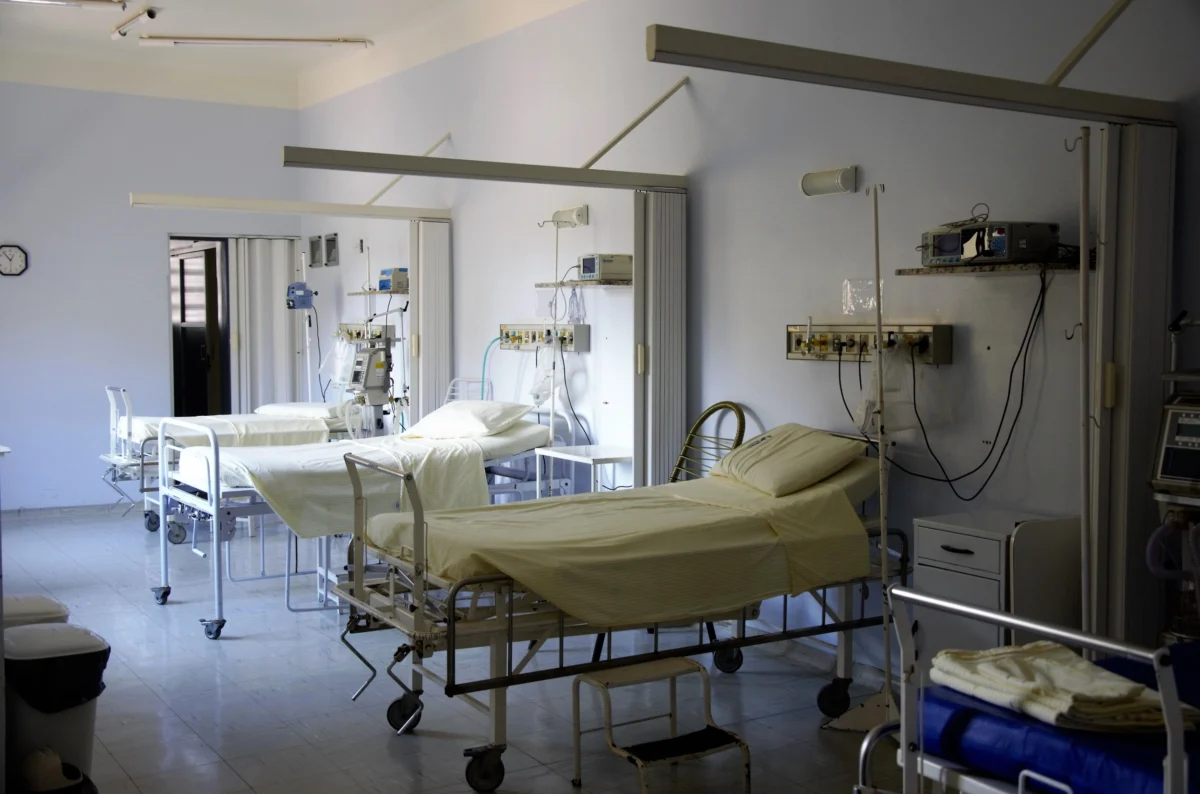
"Oklahoma’s rural healthcare system is on the brink, with over 60% of its hospitals teetering on the edge of closure, threatening access to critical care for thousands and highlighting deep-seated financial vulnerabilities within the sector."
A stark new report from the Center for Healthcare Quality and Payment Reform reveals a critical situation for rural healthcare in Oklahoma, with 44 out of the state’s 72 rural hospitals now considered at risk of closure. Seventeen of these facilities are facing immediate threats, a concerning statistic that places Oklahoma fourth nationally in terms of the sheer number of rural hospitals in jeopardy. This impending crisis, detailed in a recent KGOU report, paints a grim picture for communities that rely heavily on these local medical institutions for essential services, from emergency care to childbirth. The closures are not hypothetical; since 2015, seven rural Oklahoma hospitals have already shuttered their doors, leaving vast areas with significantly reduced access to timely medical attention.
The report, which has also been highlighted by the Oklahoma Council of Public Affairs, underscores the pervasive financial difficulties plaguing these rural facilities. A significant 40 of Oklahoma’s rural hospitals are currently operating at a loss on their patient services, a clear indicator of unsustainable financial models. This widespread financial instability has profound implications for the health and well-being of rural Oklahomans. For families residing in these smaller communities, the prospect of a local hospital closing or ceasing patient admissions is more than an inconvenience; it represents a potential life-or-death scenario. The increased travel time to the nearest emergency room, delivery unit, or inpatient facility can be a critical delay during medical emergencies such as heart attacks and strokes, or in managing complex childbirths.
Understanding the "At-Risk" Designation
The "at-risk" label, as defined by the Center for Healthcare Quality and Payment Reform, is not a definitive closure notice but rather a crucial indicator of financial vulnerability. A hospital is categorized as "at-risk" if it consistently loses money on the delivery of patient care and possesses insufficient financial reserves to absorb these ongoing losses. Those designated as "at immediate risk" are in an even more precarious position, with reserves that could only sustain their operations for an estimated two to three years, assuming current loss trends continue.
It is important to note that hospitals flagged with this designation often find ways to remain operational for extended periods. These survival strategies can include securing local tax support, obtaining grants, engaging in mergers with larger healthcare systems, or implementing significant service reductions to cut costs. However, the sheer volume of hospitals identified as at risk suggests a systemic challenge that these individual measures may not fully address.
The national scope of this crisis is significant. Across the United States, approximately 698 rural hospitals, representing roughly one-third of all such facilities, are considered at risk. Of these, a substantial 260 are facing immediate closure. The trend of rural hospital closures is a long-standing concern, with over 100 facilities having ceased operations between 2015 and 2026. Furthermore, a growing number of hospitals are opting to transition to the Rural Emergency Hospital (REH) model since 2023, a move that involves dropping inpatient care while retaining emergency services. Dr. Jeff Levin-Scherz, a leading voice in healthcare policy, estimates that an annual investment of approximately $4 billion would be necessary to stabilize these struggling rural hospitals.
The primary drivers of financial strain, as identified by the report, include the reimbursement rates from private health plans, notably Medicare Advantage. These plans, while a significant source of revenue for many hospitals, are contributing to losses at a substantial number of at-risk rural facilities. Compounding this issue are the inherent cost structures of rural healthcare. Low patient volumes mean that fixed costs, such as maintaining 24-hour staffing and essential infrastructure, are spread across fewer patients, making the per-patient cost of care significantly higher than in more densely populated areas. This financial dichotomy makes it exceedingly difficult for many rural hospitals to remain solvent. For context, previous reporting from MedicalDaily indicated that Texas faces a similar challenge, with 84 rural hospitals at risk, the highest number of any state.
Divergent Perspectives on Financial Realities
While the national report from the Center for Healthcare Quality and Payment Reform provides a critical overview of the financial health of rural hospitals, leaders within Oklahoma’s hospital sector offer a nuanced perspective. Rich Rasmussen, President and CEO of the Oklahoma Hospital Association, acknowledges the gravity of the situation but suggests the report may not fully capture the complex financial dynamics at play. He agrees that the threat of closures is very real and is exacerbated by impending congressional cuts to Medicaid funding. These cuts, set to take effect, will disproportionately impact rural hospitals, many of which rely heavily on supplemental Medicaid payments to offset losses incurred from patient care services.
The 2025 federal budget law includes provisions for reducing these supplemental payments, a move that is expected to create significant financial gaps for hospitals that have come to depend on them. Federal assistance, while available, may not be sufficient to fill these growing voids. The Rural Health Transformation Program, for instance, will allocate $10 billion annually over five years nationwide. However, Rasmussen has expressed concerns that this new funding stream will not fully compensate for the reductions in Medicaid reimbursements. Adding another layer of complexity, the implementation of new Medicaid work requirements in 2027 could potentially lead to a rise in the number of uninsured rural adults, further increasing the burden of uncompensated care that hospitals must absorb.
Interestingly, Oklahoma’s financial challenges persist despite the state’s Medicaid expansion, a measure approved by voters in 2020. In 2025, hospital association officials informed lawmakers that rural hospitals in neighboring Texas, a state that has not expanded Medicaid, are in a comparatively stronger financial position. This observation suggests that factors beyond Medicaid coverage alone are contributing to the vulnerability of Oklahoma’s rural healthcare infrastructure.
Nowata’s Transition: A Glimpse into Emergency-Only Care
The challenges facing rural hospitals are not always leading to complete closures; some are exploring alternative models to remain viable. The experience of Ascension St. John’s Nowata hospital offers a case study in this evolving landscape. In September, the facility announced its successful attainment of the federal Rural Emergency Hospital (REH) designation. This transition allows the hospital to continue providing essential 24-hour emergency care and a range of outpatient services, including vital imaging and laboratory work.
However, this designation necessitates the discontinuation of inpatient and swing-bed care, services that are crucial for patient recovery and rehabilitation before discharge. Under the REH model, patients requiring hospitalization are stabilized and then transferred to a different facility. This shift has not been without local opposition, with community groups like "Save Our Hospital" actively protesting the changes. For older adults and families without consistent access to transportation, the prospect of being transferred to a hospital far from home can create significant logistical and emotional hurdles, making it harder for loved ones to visit and provide support.
Strategic Planning for Rural Oklahoma Residents
The individuals most acutely affected by the potential closure of rural hospitals include older adults managing chronic illnesses, pregnant women requiring obstetric care, individuals without reliable transportation, and anyone who might need immediate emergency services. Many rural Oklahomans rely on SoonerCare, the state’s Medicaid program, and any reduction in coverage or access can lead to an increase in uncompensated care for local hospitals.
In light of these mounting challenges, rural residents can take proactive steps to prepare for potential disruptions in local healthcare access. It is advisable for households to identify the nearest open emergency room and labor and delivery unit, and to realistically assess the travel time to these facilities. Maintaining an up-to-date list of current medications and medical conditions can be invaluable in any emergency situation. Families caring for elderly parents should proactively inquire with their primary care physician about which hospital the practice utilizes for admissions and patient transfers. Pregnant patients are encouraged to discuss their delivery plans and preferred facilities with their prenatal clinics as early as possible.
In critical medical emergencies such as chest pain, symptoms of a stroke, severe bleeding, or difficulty breathing, individuals should always call 911. Emergency medical services can initiate life-saving treatment en route to the hospital, a critical advantage that can significantly improve patient outcomes, especially when the nearest facility is distant. Furthermore, residents can stay informed about the financial health of their local hospitals by attending public board meetings and engaging with county officials. Transparency and community awareness are crucial in advocating for the continued viability of these essential healthcare institutions.
Key Questions Answered
-
How many Oklahoma rural hospitals are at risk of closing? According to the national report, 44 rural hospitals in Oklahoma, representing 61% of the state’s total, are at risk of closure. Seventeen of these are categorized as being at immediate risk.
-
What does "immediate risk" signify? A hospital is considered at immediate risk if its financial reserves are sufficient to cover its operational losses for only two to three years. This designation serves as a critical warning but is not an immediate closure notice.
-
Do Oklahoma hospital leaders concur with the report’s findings? Hospital leaders in Oklahoma partially agree with the report’s findings. While acknowledging that the report may not present the complete financial picture, the Oklahoma Hospital Association warns that federal Medicaid cuts are significantly increasing the likelihood of hospital closures.
-
What has occurred at the Nowata hospital? Ascension St. John’s Nowata hospital has transitioned to a Rural Emergency Hospital (REH) model. This change means it will continue to offer emergency care and outpatient services but will no longer provide inpatient hospital beds.
-
What are the primary reasons for rural hospital struggles? Rural hospitals are facing significant financial pressures due to low reimbursement rates from private health plans, limited patient volumes, high fixed operational costs (such as staffing), and insufficient financial reserves to absorb losses.
-
What actions can rural residents take? Rural residents are advised to familiarize themselves with the location and travel time to the nearest emergency room and birthing hospital. In emergency situations, they should always call 911, as paramedics can provide immediate care.
