

"The proportion of American adults taking anxiety medications has surged by over 20% since 2019, with millions more now relying on these treatments. While access and public acceptance have grown, fueled in part by telehealth and open discussions on social media, prominent figures have raised concerns about the safety and potential harms of widely prescribed antidepressants, sparking a debate among medical professionals and the public."
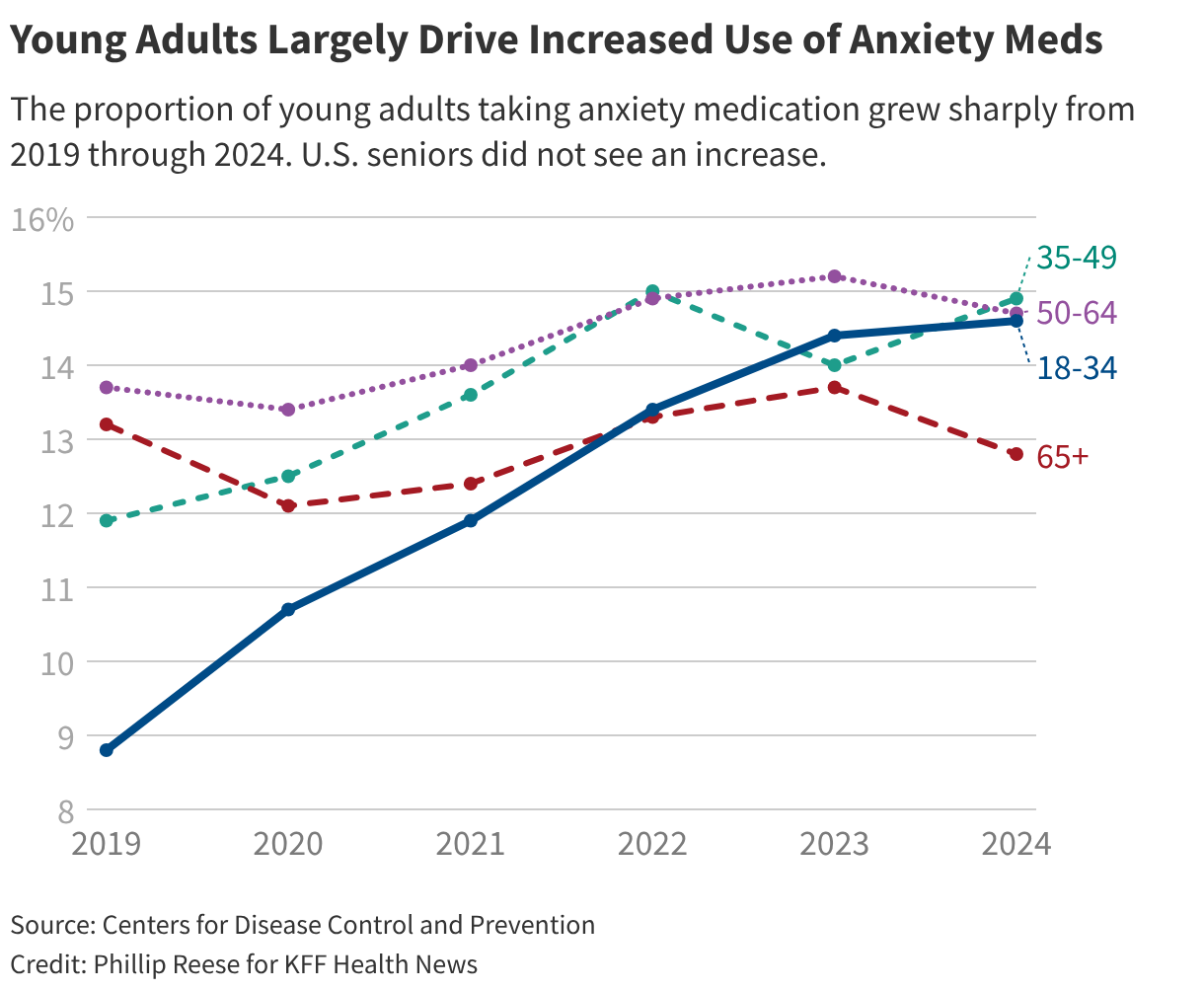
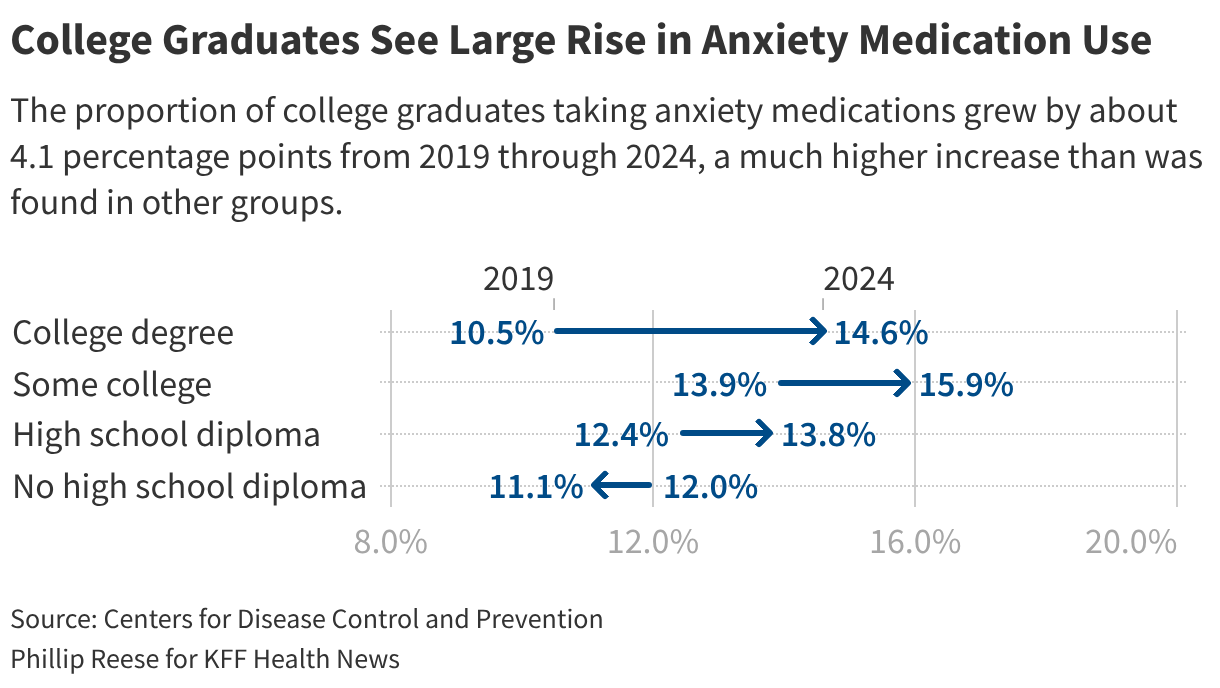
The landscape of mental health treatment in the United States has undergone a significant transformation in recent years, marked by a substantial increase in the use of anxiety medications. Data from the Centers for Disease Control and Prevention reveals a jump from 11.7% of American adults taking anxiety medication in 2019 to 14.3% in 2024, representing an additional 8 million individuals, bringing the total to approximately 38 million. This surge, with a notable acceleration during the COVID-19 pandemic, is particularly pronounced among young adults, college graduates, and individuals identifying as LGBTQ+.

This growing reliance on pharmacological interventions for anxiety is occurring against a backdrop of evolving public perception and increased accessibility, particularly through telehealth services. However, the rise of selective serotonin reuptake inhibitors (SSRIs), a class of antidepressants that includes commonly prescribed medications like Prozac, Zoloft, and Lexapro, has also ignited controversy. Critics, including influential figures associated with the "Make America Healthy Again" movement, have voiced strong opinions, characterizing these medications as harmful and addictive. This narrative directly challenges the consensus among many doctors and researchers who view SSRIs as essential front-line treatments for a range of anxiety disorders, asserting their proven safety for long-term use and refuting claims of widespread detriment.
One prominent voice in this debate is Health and Human Services Secretary Robert F. Kennedy Jr. During his confirmation hearing, he controversially stated that he knows individuals, including family members, who have experienced greater difficulty discontinuing SSRIs than overcoming heroin addiction. More recently, he indicated that his agency is investigating a potential link between SSRIs, other psychiatric medications, and instances of violent behavior, including school shootings. These assertions have drawn significant attention and concern from the medical community.
Adding to the critical discourse, Food and Drug Administration Commissioner Marty Makary has also raised concerns, suggesting a potential link between SSRI use in pregnant women and adverse birth outcomes. Such statements, coming from high-ranking officials, contribute to public apprehension and underscore the contentious nature of these widely used medications.
The debate surrounding SSRIs is multifaceted, with both proponents and critics highlighting potential side effects. Common adverse reactions associated with SSRIs can include gastrointestinal upset, cognitive difficulties often described as "brain fog," and fatigue. Furthermore, some individuals may experience a reduced libido or other sexual side effects, which can impact quality of life.
Despite these potential side effects, many medical professionals emphasize that for a significant portion of patients, these effects are mild and manageable, and the benefits of treating chronic anxiety far outweigh the drawbacks. Dr. Patrick Kelly, president of the Southern California Psychiatric Society, argues that the criticisms leveled against SSRIs are often not supported by empirical evidence. "The statements about SSRIs were just not grounded in any sort of evidence or fact," Kelly stated, specifically addressing comments made by Kennedy.
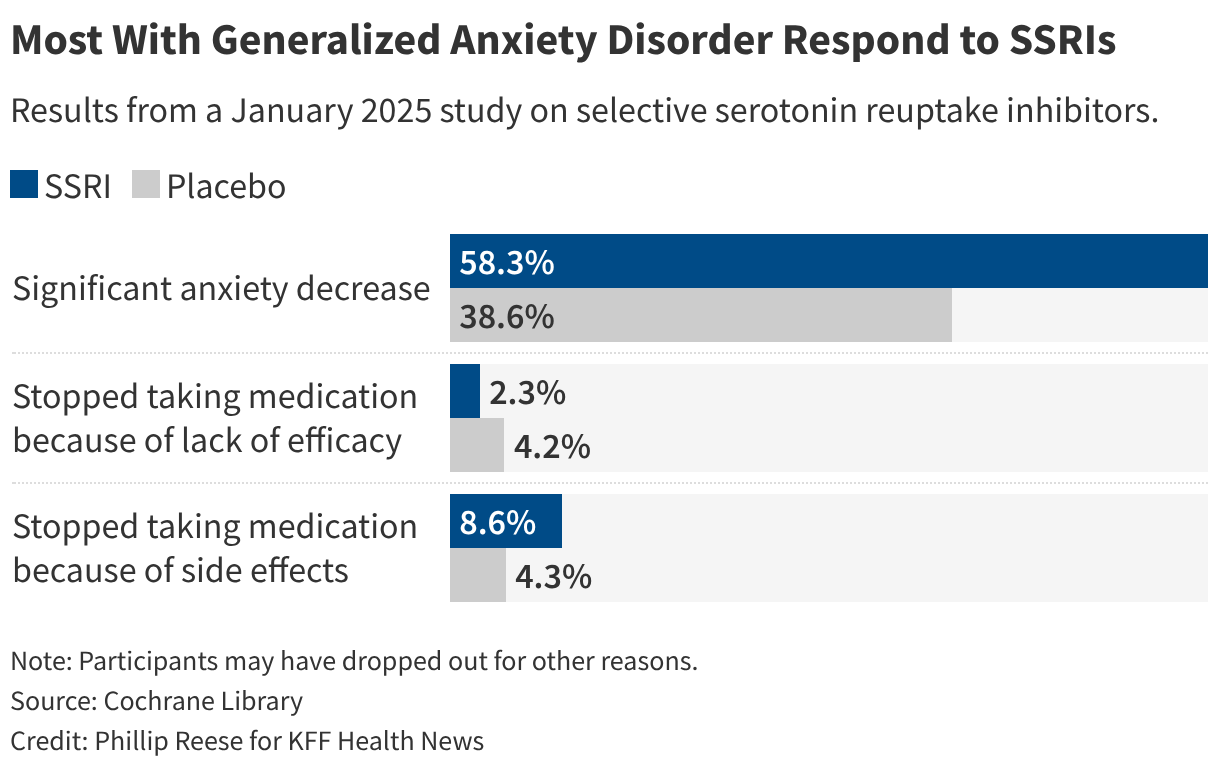
Comprehensive research offers substantial support for the efficacy of SSRIs. A recent study published in the Cochrane Library, for instance, found that over half of individuals diagnosed with generalized anxiety disorder who were treated with an SSRI experienced at least a 50% reduction in their anxiety symptoms. While approximately one in 12 individuals discontinued SSRIs due to side effects, the overall picture suggests a high rate of positive response.
Dr. Emily Wood, a psychiatrist practicing in Los Angeles, underscores the value of SSRIs when integrated with appropriate therapeutic approaches. "When it’s being done right and when you’re also using appropriate therapy techniques, SSRIs can be really, really helpful," she commented. She also points out that concerns about SSRI use during pregnancy may be overstated, as the risks to both mother and child are generally considered low, and untreated depression during pregnancy poses significant risks. "Untreated depression increases your risk for every complication for a mother and a baby," Wood stated, cautioning that public statements about SSRI risks could inadvertently cause harm to pregnant individuals.
The discussion around anxiety medication also touches upon the concept of addiction. While SSRIs are not considered addictive in the same way as substances like benzodiazepines, discontinuing them abruptly can lead to withdrawal symptoms. These can include nausea, insomnia, and other discomforts, particularly if the medication is stopped suddenly. However, Dr. Kelly asserts that the term "addiction" is not scientifically applicable to SSRIs, a viewpoint supported by numerous studies.
Beyond SSRIs, other classes of medications are utilized for anxiety management. Benzodiazepines, such as Xanax, are often prescribed for short-term relief of acute anxiety. While effective in the short term, these medications carry a risk of dependence and can be habit-forming. Dr. Wood notes that benzodiazepines require careful monitoring and are not ideal for long-term daily use due to the potential for escalating dosage requirements and challenging withdrawal processes. Furthermore, benzodiazepines, when taken concurrently with opioids, can increase the risk of overdose, a concern that has also been voiced by Secretary Kennedy.

Another category of drugs increasingly being used, though often "off-label," are beta-blockers like propranolol. These medications, primarily used for cardiovascular conditions, can help manage the physical symptoms of anxiety, such as a racing heart, before public speaking or other stressful events. While beta-blockers can cause side effects like dizziness and fatigue, they are considered nonaddictive and effective in calming the body’s physiological stress response.
The escalating use of anxiety medications is attributed to a confluence of societal factors. Experts suggest that increased social media engagement, growing social isolation, and heightened economic uncertainty have contributed to a rise in anxiety disorders, particularly among younger demographics. The COVID-19 pandemic and subsequent lockdowns exacerbated these trends, creating widespread stress and anxiety.
The accessibility of these medications has also increased. Primary care physicians commonly prescribe SSRIs and benzodiazepines, while the proliferation of telehealth services has made obtaining prescriptions more convenient. Social media platforms, where influencers openly discuss their mental health journeys, have played a role in destigmatizing mental health issues and encouraging help-seeking behaviors, especially among young people. A recent Pew Research Center study indicated that about a third of teenagers receive mental health information through social media.
However, this increased access is not without its risks. The trend of self-diagnosis, often influenced by social media, combined with the ease of searching for medications online, can lead to inappropriate use. Online searches for "buy Xanax online," for instance, often yield sponsored results promising rapid treatment, though disclaimers typically clarify that a prescription is not guaranteed. This highlights the critical distinction between accessible medical care and the potential for misuse.
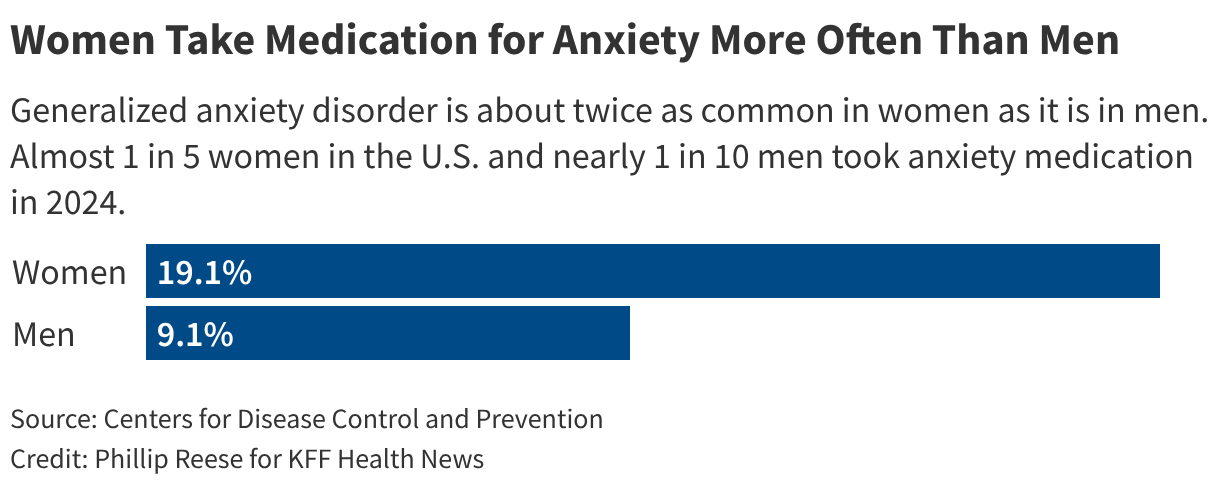
The demographic breakdown of anxiety medication use reveals significant trends. Young adults aged 18 to 34 are the primary drivers of the increase, with their usage rising from 8.8% in 2019 to 14.6% in 2024. This contrasts with a more stable rate among older adults. Women are also more likely than men to take anxiety medication, a phenomenon attributed not only to higher rates of anxiety among women but also to their greater propensity to report symptoms and their tendency to be diagnosed with anxiety by healthcare providers.
Broader societal shifts are also implicated in the growing prevalence of anxiety. Sociologists point to increasing income inequality, which can generate economic stress and feelings of inadequacy. The decline of traditional social and religious activities has been replaced by increased isolation, and a general rise in societal distrust can foster a pervasive sense of unease. These factors, according to sociologist Jason Schnittker, author of "Unnerved: Anxiety, Social Change, and the Transformation of Modern Mental Health," contribute to a generational increase in anxiety observed throughout the 20th and 21st centuries.
For individuals like Sadia Zapp, a communications director who battled breast cancer, anxiety medication has been a crucial tool for recovery. Following grueling chemotherapy, surgery, and radiation, Zapp experienced an overwhelming sense of anxiety that interfered with her daily life. After beginning Lexapro, she found a significant reduction in her anxious thoughts, allowing her to focus and re-engage productively. While she also engaged in talk therapy, she found that medication alone stabilized her chronic anxiety. "It definitely helped me get back to my day-to-day in a way that was productive and not just riddled with my anxieties throughout the day," she stated. Her experience exemplifies the positive impact that carefully prescribed anxiety medication can have when integrated into a comprehensive treatment plan.
