

"The proportion of American adults who took anxiety medications jumped from 11.7% in 2019 to 14.3% in 2024, with most of the increase occurring during the COVID-19 pandemic. This represents a significant societal shift, fueled by a complex interplay of increased stress, greater public acceptance of mental health treatment, and evolving therapeutic access, all while facing scrutiny from some public figures."
The United States has witnessed a marked increase in the prescription and use of anxiety medications, particularly among adults, with a notable surge occurring since 2019 and accelerating during the COVID-19 pandemic. This trend underscores a growing societal engagement with mental health challenges, yet it is simultaneously becoming a focal point for public debate, with some prominent figures questioning the safety and necessity of widely prescribed antidepressants. Health experts and researchers, however, largely maintain that these medications, when used appropriately, offer significant benefits for individuals struggling with anxiety disorders, while also pointing to broader societal factors contributing to the rise in their use.

Sadia Zapp, a 40-year-old communications director from New York, exemplifies the experiences of millions. Following a grueling year of chemotherapy, surgery, and radiation to treat breast cancer, she found herself grappling with a profound and distracting anxiety, far beyond her usual manageable stress levels. "Every little ache, like my knee hurts," she recounted, "made me worry that this is the end of the road for me." This heightened state of worry led Zapp to seek professional help and begin taking Lexapro, a selective serotonin reuptake inhibitor (SSRI). "I love it. It’s been great," she stated, emphasizing its crucial role in her management of anxiety.
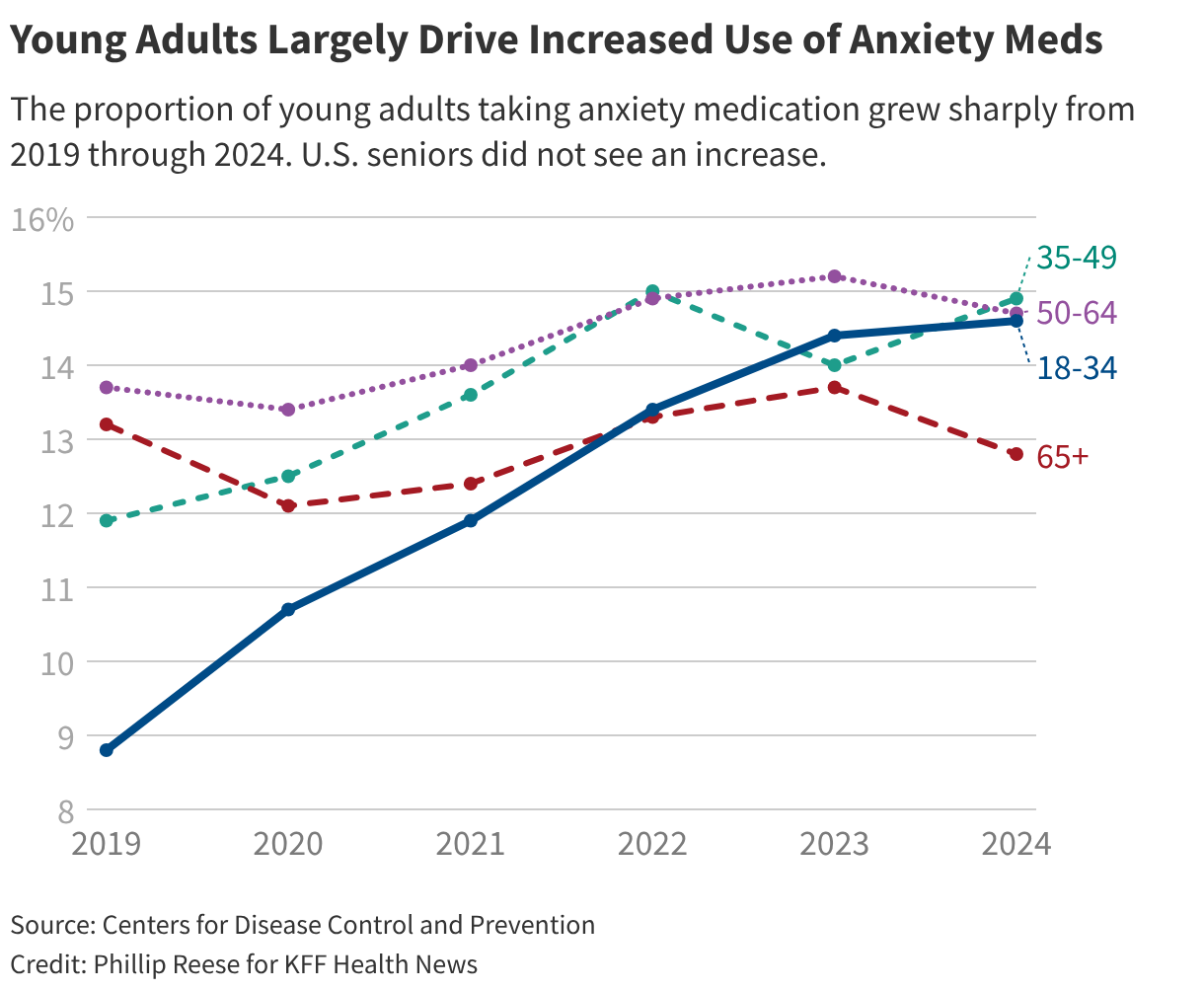
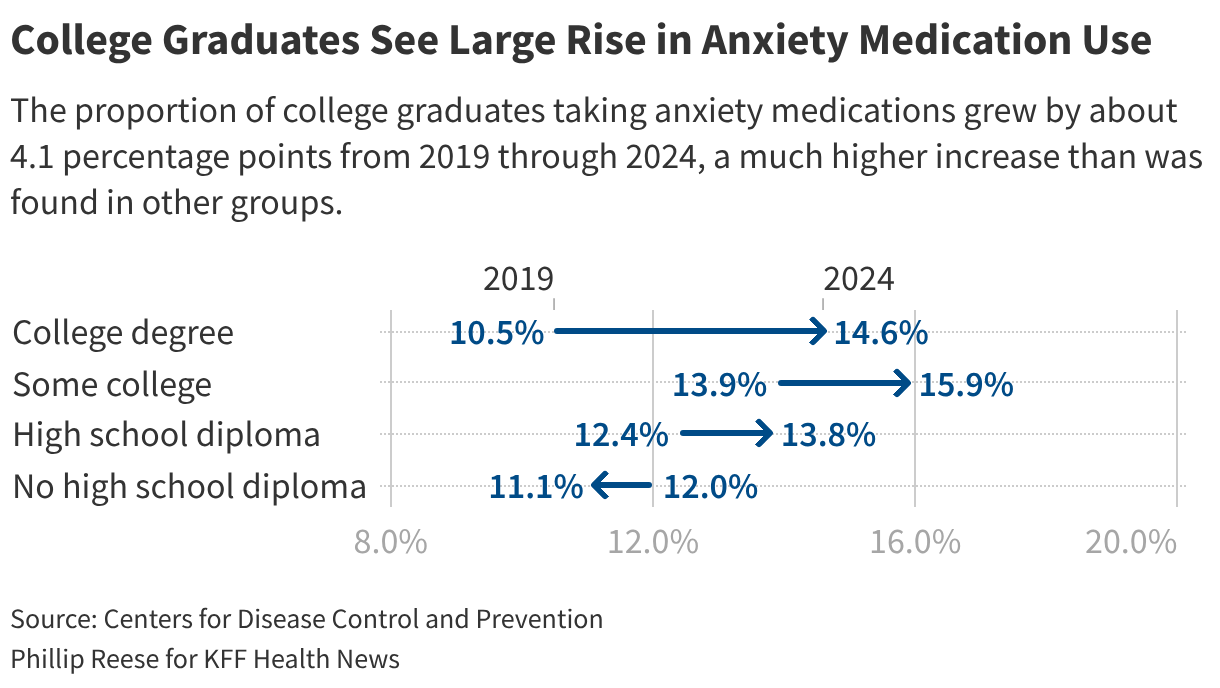
Zapp’s experience is far from unique. According to survey data from the Centers for Disease Control and Prevention (CDC), the percentage of American adults who took anxiety medications rose from 11.7% in 2019 to 14.3% in 2024. This increase accounts for an additional 8 million individuals, bringing the total to approximately 38 million Americans. The data also reveals sharp increases in usage among young adults, individuals with a college degree, and those identifying as LGBTQ+. This demographic breakdown suggests that increased awareness, destigmatization, and potentially greater access to care are playing significant roles in this trend.
The growing acceptance of psychiatric medications, coupled with the increased accessibility of telehealth appointments, has made it easier for many Americans to seek and receive mental health treatment. However, the proliferation of SSRIs, a class of antidepressants that includes widely recognized medications such as Prozac, Zoloft, and Lexapro, has also ignited controversy. Proponents of the "Make America Healthy Again" movement, including some public officials, have voiced concerns, characterizing these medications as harmful and even addictive. This perspective stands in contrast to the consensus among many doctors and researchers, who consider SSRIs to be front-line treatments for various anxiety disorders, including generalized anxiety disorder and panic disorder. They assert that these medications have been proven safe for extended use and are being misrepresented by critics.
Notably, Health and Human Services Secretary Robert F. Kennedy Jr. has been a vocal critic of the expanding use of SSRIs. During his confirmation hearing on January 29, he asserted that he knew individuals, including family members, who experienced greater difficulty discontinuing SSRIs than they did quitting heroin. More recently, he indicated that his agency was investigating a potential link between the use of SSRIs and other psychiatric medications and instances of violent behavior, such as school shootings. Similarly, Food and Drug Administration Commissioner Marty Makary has suggested that SSRI use during pregnancy could be associated with adverse birth outcomes.
These concerns, while amplified by public figures, are not entirely unfounded, as SSRIs can present side effects. Common adverse reactions include upset stomach, cognitive fog, and fatigue. Some individuals may also experience a reduced libido and other sexual side effects. However, for a significant portion of the population, these side effects are mild and manageable, and the benefits of treating chronic anxiety outweigh the drawbacks. Dr. Patrick Kelly, president of the Southern California Psychiatric Society, has strongly refuted claims that SSRIs are broadly harmful, stating, "The statements about SSRIs were just not grounded in any sort of evidence or fact."
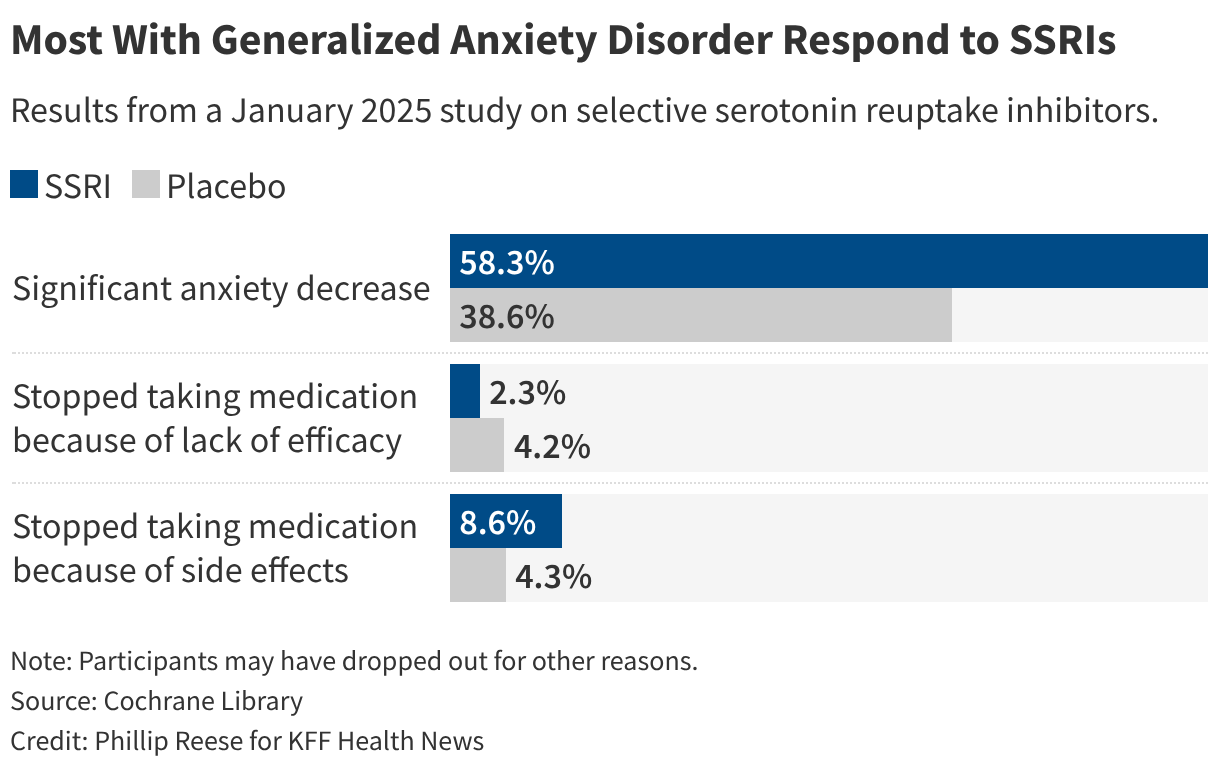
Robust scientific evidence supports the efficacy of SSRIs. A comprehensive study published in the Cochrane Library indicated that over half of individuals with generalized anxiety disorder who were treated with an SSRI experienced a reduction in their anxiety symptoms by at least 50%. While approximately 1 in 12 individuals discontinued SSRIs due to side effects, the overall response rate underscores their therapeutic value. Dr. Emily Wood, a psychiatrist practicing in Los Angeles, emphasized the importance of a holistic approach, noting, "When it’s being done right and when you’re also using appropriate therapy techniques, SSRIs can be really, really helpful." She further clarified that while medication can be a vital tool, it is most effective when integrated with other therapeutic interventions.
The "Make America Healthy Again" movement, however, often attributes the rise in anxiety to lifestyle factors such as poor diet and a lack of physical activity. They advocate for reduced consumption of ultraprocessed foods, which numerous studies have linked to depression and anxiety, and encourage increased exercise and reduced screen time. Psychiatrists generally endorse a healthy diet and regular exercise as adjunctive therapies for anxiety and depression. Dr. Wood also highlights the efficacy of talk therapy, particularly cognitive behavioral therapy (CBT), which has shown significant success in treating anxiety disorders. The increased availability of teletherapy has further boosted access to these forms of treatment, with federal data indicating a boom in mental health counseling use from 2019 to 2024.
Regarding concerns about SSRIs during pregnancy, current research suggests that the risks to both mother and child are low. Dr. Wood countered that untreated depression during pregnancy poses a greater risk of complications for both mother and baby, and voiced concern that public statements questioning SSRI use could lead to tangible harm for pregnant individuals seeking treatment.
The notion of addiction associated with SSRIs is also a point of contention. While benzodiazepines, such as Xanax, which are sometimes used as a second-line treatment for anxiety, can lead to dependence and withdrawal symptoms, and carry a risk of overdose when combined with opioids, SSRIs are distinct. Dr. Kelly asserts, "The concept of addiction simply does not apply to these chemicals," a view supported by multiple scientific studies. Individuals discontinuing SSRIs may experience antidepressant discontinuation syndrome, characterized by symptoms like nausea and insomnia, particularly if they stop abruptly. However, this is distinct from addiction, which involves compulsive drug seeking and use despite harmful consequences. Benzodiazepines, while effective for short-term acute anxiety, require careful monitoring and gradual tapering to avoid dependence.

Beyond SSRIs, an increasing number of individuals are also turning to beta-blockers, such as propranolol, for occasional anxiety management. Often prescribed "off-label," these medications can help mitigate physical symptoms like a racing heart before public speaking or other high-pressure situations. While beta-blockers can cause dizziness and fatigue, they are generally considered nonaddictive and effective in calming the body’s stress response.
The surge in anxiety medication use is attributed to a confluence of societal shifts. Leading theories suggest that increased social media engagement, greater social isolation, and heightened economic uncertainty are contributing factors. The COVID-19 pandemic, with its associated lockdowns and disruptions, significantly exacerbated stress levels, particularly among young adults. Furthermore, the ease of access to prescriptions, often through primary care physicians and telehealth services, has played a crucial role. Social media influencers openly discussing their mental health struggles have also helped to reduce stigma among younger generations, encouraging them to seek help. However, this increased access also presents challenges, as it can be coupled with self-diagnosis based on online trends, potentially leading to the misuse of medications.
Young adults, in particular, are driving this increase in anxiety medication use. The CDC data shows a rise from 8.8% in 2019 to 14.6% in 2024 for Americans aged 18 to 34, while the rate remained relatively stable among older adults. Women also continue to take anxiety medication more frequently than men, a trend attributed by sociologist Jason Schnittker to a higher likelihood of needing such medications, a greater propensity to report anxiety symptoms, and a greater inclination among healthcare providers to recognize anxiety in female patients.
Broader generational trends also point to a growing prevalence of anxiety throughout the 20th and 21st centuries. Schnittker, author of "Unnerved: Anxiety, Social Change, and the Transformation of Modern Mental Health," suggests that rising income inequality, increased social isolation, and a growing distrust of others may contribute to heightened societal anxiety.
For Sadia Zapp, the impact of Lexapro was profound. After a few months, she experienced a noticeable reduction in her mental "noise," allowing for improved focus. While she also engaged in talk therapy, her chronic anxiety is now stabilized with medication alone. "It definitely helped me get back to my day-to-day in a way that was productive and not just riddled with my anxieties throughout the day," she reflected, highlighting the medication’s role in restoring her quality of life. Her journey underscores the critical role that accessible and effective treatments can play in helping individuals navigate significant life challenges and regain their well-being.
