
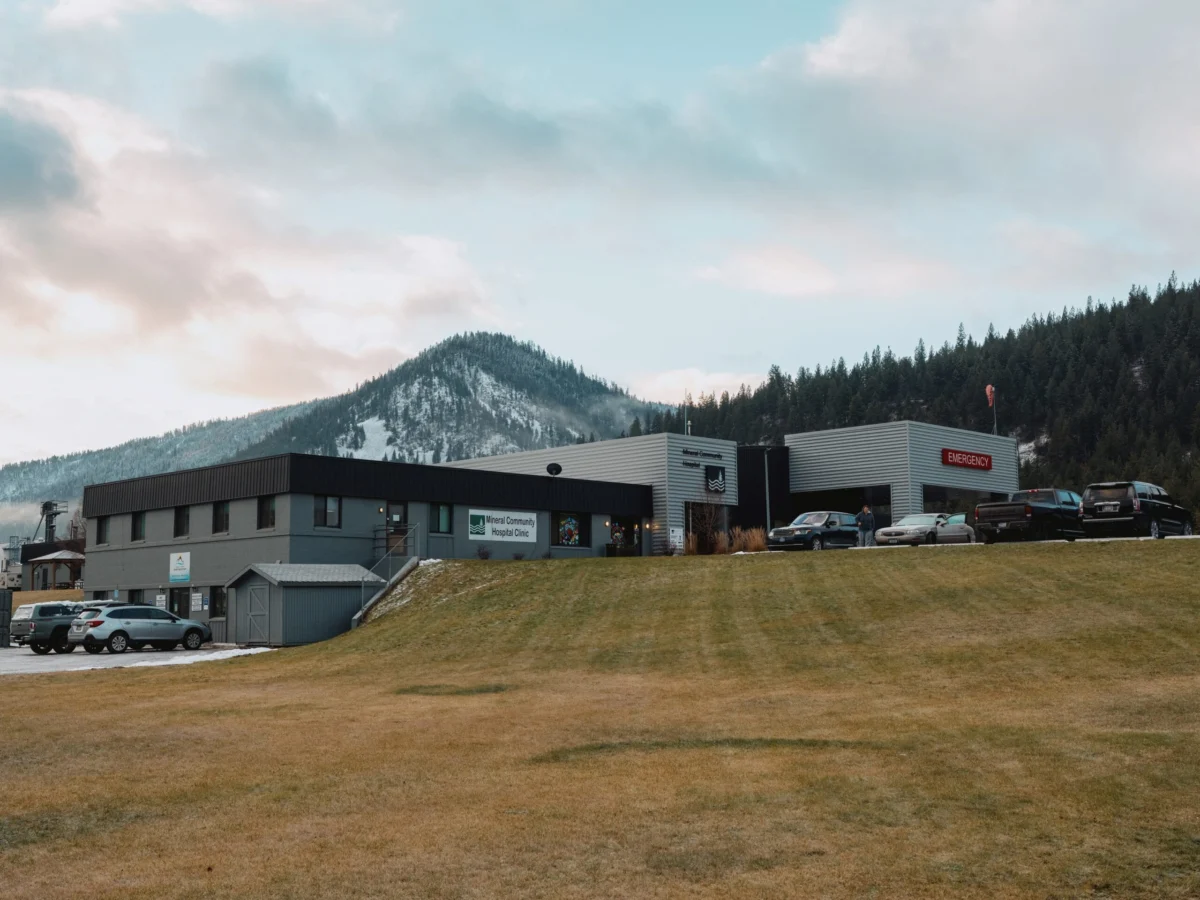
"Rural hospitals represent the thin line between life and death for 60 million Americans, yet they operate on margins so razor-thin that a single equipment failure or policy shift can collapse an entire region’s healthcare infrastructure."

The survival of rural healthcare in the United States has reached a critical inflection point, where the intersection of geographic isolation, aging infrastructure, and volatile federal policy threatens the stability of community anchors like Mineral Community Hospital. As rural facilities struggle to bridge the gap between "routine" care and "frontier" trauma, the burden of these systemic failures falls on a dwindling number of resilient providers who must perform high-stakes medicine with minimal specialized support.
On a Thursday in early January, the snow begins to fall over Superior, Montana, with a density that signals impending danger. For Brian Lopez, MD, a 37-year-old physician at Mineral Community Hospital (MCH), the weather is more than a seasonal nuisance; it is a catalyst for "chaos." Standing at 6’3" in a bright orange down jacket, Dr. Lopez navigates the slush between the main hospital and the training quarters—a building that once served as an assisted-living facility until financial hemorrhaging forced its closure in 2017. This closure is a microcosm of the sacrifices rural hospitals across the nation are making to keep their most essential emergency services alive.

Mineral County is a long, narrow stretch of timbered mountains and winding rivers, home to approximately 5,000 residents. MCH sits in the center of this "frontier," serving not only the local population but also the steady stream of travelers on Interstate 90. The nearest urban medical center is in Missoula, nearly 60 miles away. In the winter, that distance can translate into a two-hour ordeal over black ice and through mountain passes like Lookout Pass, which receives significantly more snow than the surrounding region. For the elderly, the low-income, and the critically injured, MCH is not just a choice; it is the only option.
The statistical reality of rural healthcare in America is grim. Of the 5,121 community hospitals in the U.S., 35 percent are located in rural areas. In the last decade, more than 100 of these facilities have shuttered their doors, leaving millions without local access to care. Today, one-third of the remaining 1,797 rural hospitals are at risk of closing. The economics are fundamentally broken: it costs significantly more to provide care in isolated areas where patient volume is low but fixed costs remain high. Furthermore, rural residents rely heavily on Medicaid and Medicare, programs that frequently reimburse hospitals at rates below the actual cost of service.

The financial volatility has been exacerbated by recent legislative shifts. The "One Big Beautiful Bill" enacted by the Trump administration stripped $1.1 trillion from Medicaid and the Affordable Care Act (ACA) marketplaces. Projections suggest that by 2034, these cuts will result in 15 million people losing health coverage. While the bill included the Rural Health Transformation Program to mitigate these losses, its $50 billion allocation over five years covers less than half of what was removed. In states like Montana, where nearly half the population is rural, this shortfall could be the "death knell" for facilities already operating on a one-percent margin.
Inside the hospital, CEO Laurel Chambers and CFO Stacy Conrow-Ververis embody the "gritty resilience" required to keep the doors open. Chambers, who began her career as a physician’s assistant 25 years ago, has spent 19 of those years with the hospital teetering on the edge of insolvency. The administration has resorted to creative fundraising, from golf tournaments to food booths at local fairs, just to meet payroll. Chambers describes the anxiety of rural hospital management as a "Swiss cheese" model of catastrophe: if the ancient generator fails, or the rotting pipes under the floorboards burst, or the $300,000 X-ray machine dies, the entire system could collapse.

The human cost of a closure would be devastating. MCH is the largest employer in Mineral County, with 90 staff members. If the hospital fails, the community "hollows out" as families are forced to leave to find work. Beyond economics, the hospital serves as a social safety net. During a recent six-day power outage, locals crowded into the hospital just to stay warm.
For Dr. Lopez, the medical reality is one of "decision fatigue." As the only doctor on shift, he is responsible for the emergency room, the inpatient wing, and a long-term care unit. In rural medicine, the "golden hour"—the first sixty minutes after a traumatic injury—is the difference between survival and death. Without on-site surgeons or anesthesiologists, Dr. Lopez must be a generalist of the highest order. He practices spinal taps, intubations, and emergency C-sections in a makeshift training room, knowing that at any moment, a multi-vehicle wreck on the highway could turn his four-bed ER into a "rodeo."

One afternoon, the radio pings with an ambulance call: an elderly man with a fractured arm. It seems routine until a second call crackles through the static: two semitrucks have overturned at the top of Lookout Pass. In these moments, the "frontier" nature of the work becomes apparent. The mountainous terrain often renders radios useless, meaning Dr. Lopez may not know the severity of the incoming trauma until the ambulance doors swing open. He must mentally inventory his staff—radiology technicians who can perform CPR, nurses who can manually bag patients—and decide if he needs to pull Dr. Kirk Crews from the primary care clinic to assist.
Dr. Crews, a veteran family medicine physician, highlights a different but equally vital aspect of rural care: the power of the long-term relationship. In the clinic, he treats everything from ear infections to atrial fibrillation. He argues that primary care is undervalued in the American reimbursement system, yet it is the primary defense against the higher rates of suicide, obesity, and heart disease found in rural populations. "If people know who their primary care doctor is, they live longer," Crews notes. For an adolescent in crisis, a trusted relationship with a local doctor is often the only mental health resource available in a county with no dedicated psychiatric services.

As the evening progresses, the chaos of the highway wreck proves less lethal than feared. Only one driver is brought in, suffering from more adrenaline than injury. However, the "routine" of the night still involves a 90-year-old patient with a surgical fracture and an inpatient whose condition suddenly deteriorates at 1 a.m., requiring an emergency transfer to Missoula. Dr. Lopez manages the medications, coordinates the transport, and monitors the remaining patients, all while the phantom sound of the ambulance beeper rings in his ears—a symptom of the hyper-vigilance required by his role.
The long-term care wing of MCH, while not a "moneymaker," serves as the final refuge for residents like 96-year-old Dot Vining. Many of the 13 residents in this wing have "outlived their money" or are waiting for Medicaid approval. In an urban setting, they might be turned away; at MCH, they are neighbors. This tension—serving the patient at the expense of the bottom line—is the defining characteristic of rural healthcare.

By Friday morning, as Dr. Lopez prepares to head home to his family, the snow continues to blanket the mountains. He feels a sense of quiet accomplishment; he helped a neighbor recover from a break, stabilized a trauma patient, and managed a midnight crisis. Yet, the broader uncertainty remains. The survival of Mineral Community Hospital depends on a fragile alignment of local tax levies, federal reimbursement policies, and the continued willingness of providers to work on the "brink of the frontier." For now, the doors remain open, providing a beacon of stability in a landscape defined by its rugged, unforgiving beauty.
