
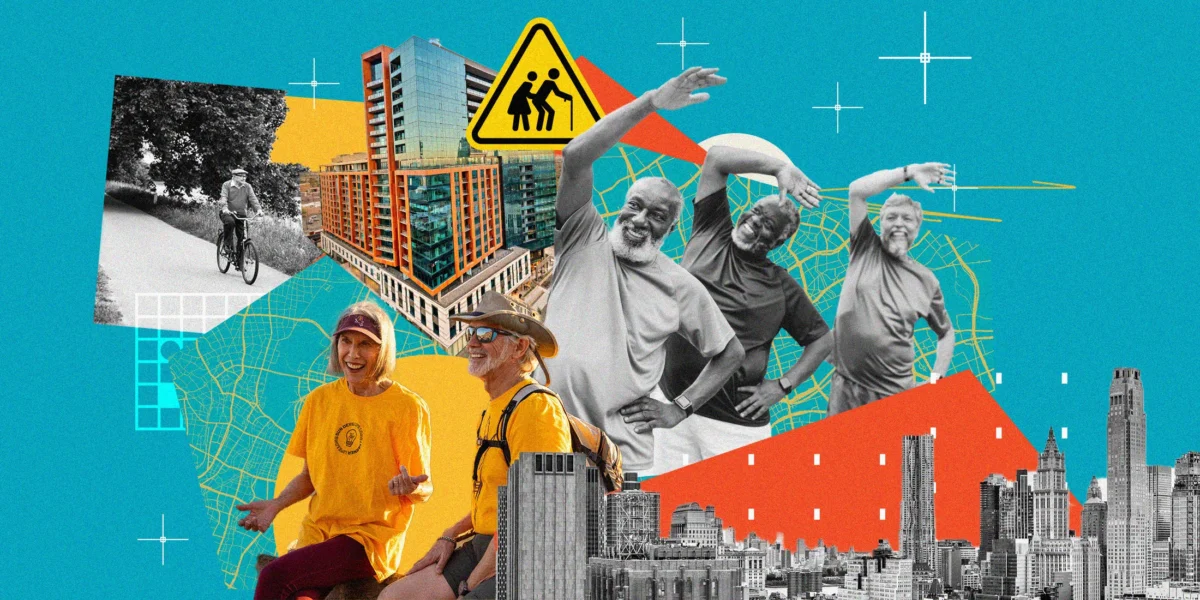
The true measure of a society’s progress in the era of the New Longevity is not merely the extension of life, but the radical redesign of our cities and homes to ensure those extra decades are defined by vitality, purpose, and community integration. As the global population of centenarians is projected to soar, the transition from reactive healthcare to proactive "longevity environments" represents the most significant urban planning challenge of the 21st century.
As medical breakthroughs and lifestyle shifts push human life expectancy toward the century mark, the world is entering a demographic transformation often referred to as the "Silver Tsunami." However, this shift is less a disaster to be managed and more an opportunity to be engineered. In the United States alone, the population of adults aged 65 and older is expected to swell from 62 million to 80 million by 2040. Globally, the United Nations estimates that 1.2 billion people will occupy this age bracket within the next two decades. This massive demographic pivot necessitates a fundamental rethinking of how we design our neighborhoods, our housing, and our social systems. The goal is no longer just "aging in place," but "thriving in place," utilizing technology, intergenerational social structures, and evidence-based urban design to foster a culture of health that begins in youth and sustains through a 100-year lifespan.
The Global Vanguard: Singapore and the Longevity Reframing
Singapore stands as perhaps the world’s most sophisticated laboratory for age-friendly urbanism. Through its "Age Well SG" initiative, the city-state has moved beyond the traditional concept of elder care to a holistic "longevity" framework. This distinction is critical; while "aging" often implies a period of decline to be mitigated, "longevity" focuses on the optimization of health spans. Singapore’s approach integrates the physical environment with social infrastructure. A cornerstone of this strategy is the "Health District" pilot in Queenstown, the city’s first satellite housing town. Here, planners are implementing "universal design" elements—large, high-contrast signage for easier navigation, therapeutic gardens designed to stimulate sensory engagement, and walkways that incorporate "nudge" psychology to encourage both mental and physical exercise.
Perhaps most impressively, Singapore has set a national target to ensure that every resident lives within a 10-minute walk of a park. This is not merely an aesthetic choice; it is a public health mandate. Access to green space is directly correlated with lower stress levels and increased physical activity. Furthermore, the government’s National Steps Challenge and subsidized fitness classes in community centers treat exercise as a civic utility. By integrating social services directly into housing developments—a model pioneered by the Tsao Foundation’s Community for Successful Aging (ComSA)—Singapore ensures that healthcare is a background feature of daily life rather than a destination one only visits when ill.

Japan’s Tech-Enabled Autonomy
Japan, currently home to the world’s oldest population, provides a glimpse into a future where technology bridges the gap between physical decline and independence. With nearly 100,000 centenarians, the Japanese government has been forced to innovate rapidly. In cities like Fujisawa, urban retrofitting includes the deployment of "Smart Homes" equipped with sensor arrays that can detect falls or changes in gait without compromising privacy.
The Shonan Robo Care Center exemplifies Japan’s lead in assistive technology, focusing on robotic exoskeletons and mobility devices that allow older adults to maintain their strength and range of motion. Unlike Western models that often prioritize institutionalized care, Japan’s universal access to home-based care for those over 65 is designed to keep the population in their own neighborhoods. By supporting fitness programs in unconventional local spaces—such as temples and neighborhood centers—Japan maintains a high level of "social capital," which is a primary indicator of longevity.
The European Model: Holistic Innovation
In the United Kingdom, the focus has shifted toward the "Health Innovation Neighborhood." Newcastle University is currently developing a model that merges housing, healthcare, and academic research into a single community fabric. The premise is simple: by living alongside researchers and healthcare innovators, residents become active participants in the evolution of longevity science. This model aims to erase the silos that typically separate "the elderly" from the rest of society, creating a "living lab" where new technologies and social interventions are tested in real-time.
The American Challenge: Private Innovation vs. Policy Gaps
In the United States, the response to the New Longevity is characterized by a stark contrast between lagging federal policy and a burgeoning private sector. While countries like South Korea have implemented comprehensive "Aging Society Master Plans," the U.S. lacks a unified federal strategy. However, cities like New York, Miami, and San Francisco, where the 60-plus population already accounts for upwards of 25% of residents, are becoming hubs for private-sector innovation.
The Blue Zones Project, inspired by Dan Buettner’s research into regions where people live the longest, has now expanded to 75 U.S. cities. The project focuses on environmental "nudges"—making the healthy choice the easy choice by improving walkability, increasing access to fresh produce, and fostering social "moais" (support groups). Similarly, the Silver Sneakers program has successfully utilized the Medicare system to provide millions of seniors with access to fitness centers, proving that financial barriers to exercise can be dismantled through smart public-private partnerships.

Reimagining the Home: From Shelter to Health Tool
The "wellness and longevity housing" trend is redefining the American home. Companies like Michigan-based Urbaneer are treating the house itself as a medical device. This includes advanced air filtration systems to reduce inflammatory pollutants, circadian lighting to regulate sleep cycles, and ergonomic designs that prevent the domestic accidents that often lead to institutionalization.
Furthermore, the "co-housing" movement is gaining momentum as an antidote to the "loneliness epidemic." By sharing common spaces like kitchens and gardens while maintaining private living quarters, older adults can maintain autonomy while benefiting from the safety net of a close-knit community. This is particularly effective in naturally occurring retirement communities (NORCs) in high-density areas like New York City, where apartment buildings organically become multigenerational support networks.
The Intergenerational Solution: Mirabella at ASU
One of the most radical departures from the "senior living" trope is Mirabella at Arizona State University. By placing a high-end residential facility directly on a major university campus, the developers have successfully integrated older adults into the vibrant, high-energy environment of a college. Residents hold university IDs, audit classes, and utilize the same fitness facilities as 20-year-old students. This model addresses a critical component of longevity: cognitive stimulation and intergenerational engagement.
As Lindsey Beagley, Mirabella’s director of Lifelong University Engagement, notes, breaking the "age silo" is essential. When older adults interact with younger generations, it staves off the "social death" that often precedes physical decline. It provides a sense of purpose and ensures that the wisdom of the older population is not lost to the community.
The Biological Mandate: Movement as Medicine
The shift toward age-friendly cities is supported by a growing body of medical evidence. Dr. Mark Lachs of Weill Cornell Medicine emphasizes that the benefits of movement in later life go far beyond cardiovascular health. Physical activity is now recognized as a primary defense against neurodegenerative diseases like Alzheimer’s and dementia. Exercise releases myokines—signaling proteins from muscles—that have been shown to improve brain function and reduce systemic inflammation.

Furthermore, movement is a powerful tool against the mental health challenges of aging. By designing cities that require walking and social interaction, we are essentially prescribing a daily dose of antidepressants and anti-anxiety medication through environmental design.
Conclusion: The Future of the Longevity Economy
The transition to a society built for the 100-year life is not a luxury; it is a necessity. As the UN projects 25 million centenarians by the end of the century, the "New Longevity" will require a lifelong commitment to preventative health, supported by a built environment that makes such a commitment possible. Whether through Japan’s robotics, Singapore’s urban "Health Districts," or America’s intergenerational university housing, the goal is the same: to ensure that the gift of longer life is matched by the quality of the lived experience. The cities of the future will be those that view their older citizens not as a burden to be managed, but as a dynamic, engaged, and essential part of the social fabric.
