
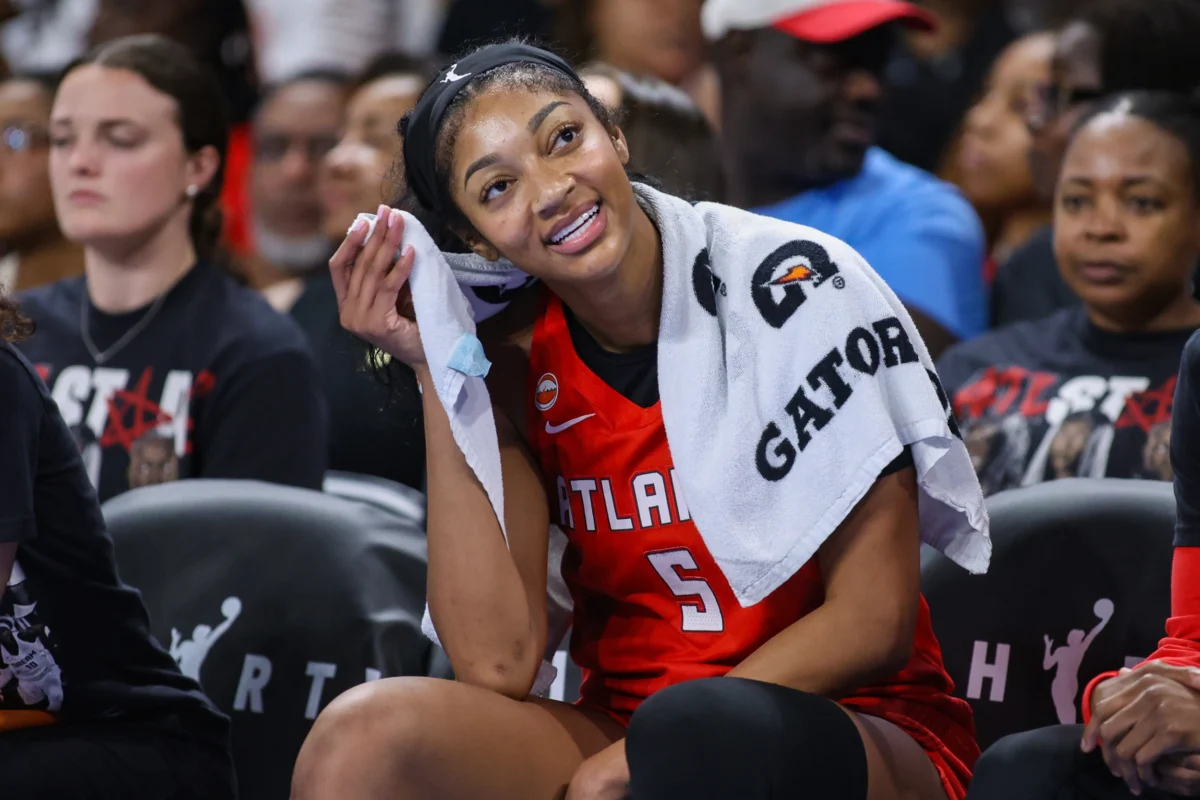
"Angel Reese’s recent left leg injury serves as a stark reminder that even elite athletes must prioritize comprehensive recovery and medical clearance to safeguard their long-term health and performance."
Atlanta Dream forward Angel Reese’s departure from Sunday’s WNBA game against the Chicago Sky due to a left leg injury has cast a significant shadow over her immediate future and the league’s upcoming All-Star festivities. The incident, which occurred in the fourth quarter after an awkward play near the basket, saw Reese immediately clutching her left leg before requiring assistance to leave the court. While initial reports indicated she was in good spirits post-game, her availability remains contingent upon thorough medical evaluation, underscoring a critical principle in sports: the imperative of athletes not rushing back to play before receiving proper medical clearance.
The timing of Reese’s injury is particularly unfortunate, given her meteoric rise as one of the Atlanta Dream’s most impactful players. As a rookie, she has demonstrated significant influence on both ends of the court, making her absence a palpable loss for the team’s immediate performance and raising substantial questions about her readiness for subsequent games and prestigious league events. Currently, no definitive diagnosis has been publicly announced. However, sports medicine professionals consistently emphasize the paramount importance of meticulous assessment for any knee injury before an athlete contemplates a return to basketball activities. Prematurely re-entering the competitive arena can exacerbate the initial injury or lead to secondary damage to crucial structures such as ligaments, cartilage, or surrounding musculature, potentially prolonging recovery and impacting future performance.
The intricate biomechanics of basketball place immense stress on the knee joint, making it a frequent site of injury for athletes across all levels. As highlighted by the Mayo Clinic Sports Medicine, the knee is inherently vulnerable due to its role in absorbing substantial forces during activities such as running, jumping, pivoting, and rapid changes in direction. Basketball players, in particular, face heightened risk due to the sport’s dynamic nature, characterized by frequent cutting maneuvers, explosive acceleration, and repeated, forceful landings. These actions can subject the knee to acute, traumatic forces or cumulative stress, leading to a spectrum of injuries.
Common causes of sports-related knee injuries are diverse and can stem from both direct impact and insidious overuse. Traumatic injuries often result from sudden twists, hyperextensions, or direct blows to the knee. These can include non-contact anterior cruciate ligament (ACL) tears, which frequently occur during abrupt deceleration and changes in direction, or direct contact injuries that can lead to medial collateral ligament (MCL) sprains. Overuse injuries, on the other hand, develop gradually over time due to repetitive stress on the knee structures. These can manifest as tendinopathies, such as patellar tendinitis, commonly known as "jumper’s knee," which affects the tendon connecting the kneecap to the shinbone and is prevalent in sports involving frequent jumping.
Mass General Brigham further elaborates on the specific knee injuries commonly encountered in basketball. These include various ligament sprains, with ACL and MCL injuries being among the most serious and disruptive. Meniscus tears, which involve damage to the C-shaped cartilage that acts as a shock absorber between the thighbone and shinbone, are also prevalent and can result from twisting motions. Patellar tendinitis, as mentioned, is a hallmark overuse injury. Additionally, athletes can suffer from cartilage injuries, which affect the smooth lining of the joint, and bone bruises, which are often indicative of underlying trauma to the bone itself. The symptoms associated with these injuries can vary significantly depending on the specific structure involved and the severity of the damage. However, common indicators include pain, which can range from a dull ache to sharp, debilitating pain, often exacerbated by activity. Swelling is another frequent symptom, as the body’s inflammatory response kicks in to address the injury. A sensation of instability or the knee "giving way" can signal ligamentous compromise. Stiffness and a reduced range of motion, making it difficult to fully extend or bend the knee, are also common. Furthermore, some individuals may experience a locking or catching sensation within the joint, which can be indicative of a meniscal tear.
Diagnosing knee injuries typically involves a multi-faceted approach orchestrated by medical professionals. The initial step is a thorough medical history, where the physician gathers detailed information about the mechanism of injury, the onset of symptoms, and any previous knee issues. This is followed by a comprehensive physical examination, during which the doctor assesses the knee’s stability by testing the integrity of various ligaments, evaluates muscle strength around the joint, and measures the range of motion. Palpation can help identify areas of tenderness and swelling. When significant structural damage is suspected, imaging studies become crucial. X-rays are commonly employed to rule out or identify fractures. Magnetic Resonance Imaging (MRI) is the gold standard for visualizing soft tissues, including ligaments, cartilage, tendons, and menisci, providing a detailed view of any tears or other abnormalities. In specific cases, ultrasound may be used to assess soft tissues, particularly tendons and ligaments, while Computed Tomography (CT) scans can offer more detailed views of bone structures.
The treatment strategy for a knee injury is meticulously tailored to its specific diagnosis and severity. For milder injuries, such as minor sprains or overuse conditions like mild tendinitis, a conservative approach is often effective. This typically includes R.I.C.E. therapy – Rest, Ice, Compression, and Elevation – to reduce inflammation and pain. Over-the-counter pain relievers, such as nonsteroidal anti-inflammatory drugs (NSAIDs), can help manage discomfort and swelling. Physical therapy plays a pivotal role, focusing on restoring strength, flexibility, and proprioception (the body’s awareness of its position in space) through a series of progressive exercises. As the injury heals, a gradual return to activity is guided by the physical therapist. However, more substantial injuries, including significant ligament tears, tendon ruptures, or complex cartilage damage, may necessitate more aggressive interventions. Bracing can provide external support to the injured joint, while corticosteroid injections might be used to reduce inflammation in specific cases. In instances of severe tears or irreparable damage, surgical reconstruction may be required. This could involve procedures like ACL reconstruction, where a torn ligament is replaced with a graft, or meniscal repair or removal. Following surgery, a prolonged and intensive rehabilitation period, often spanning several months, is essential to ensure the joint fully recovers and can safely withstand the demands of competitive sports.
Several inherent factors can elevate an individual’s risk of sustaining knee injuries. Biomechanical factors, such as improper landing mechanics, muscle imbalances (e.g., weak quadriceps or hamstrings), and poor flexibility, can predispose an athlete to knee strain. Anatomical variations, such as genu valgum (knock knees) or genu varum (bow legs), can also alter the forces placed on the knee. Previous knee injuries, even if seemingly minor, can create residual weaknesses or altered joint mechanics that increase the likelihood of re-injury. Inadequate conditioning, meaning a lack of sufficient strength, endurance, and agility, leaves athletes less prepared to handle the physical demands of their sport. Environmental factors, such as playing on uneven surfaces or in adverse weather conditions, can also contribute to an increased risk of falls and acute injuries. Finally, the intensity and volume of training play a role; excessive training without adequate recovery can lead to overuse injuries.
Fortunately, a substantial body of research in sports injury prevention highlights that many knee injuries can be significantly mitigated through structured and evidence-based prevention programs. These programs often emphasize neuromuscular training, which focuses on improving coordination, balance, and reaction time to enhance the body’s ability to control movements and absorb forces. Strength training is crucial for building robust musculature around the knee, particularly the quadriceps, hamstrings, and gluteal muscles, which provide essential support and stability. Flexibility exercises, including dynamic and static stretching, help maintain a healthy range of motion and reduce muscle tightness that can contribute to abnormal joint loading. Proper warm-up and cool-down routines are fundamental, preparing the body for physical activity and aiding in recovery. Education on safe movement techniques, such as proper landing mechanics and cutting strategies, empowers athletes to minimize risky maneuvers.
Angel Reese’s unfortunate injury serves as a critical and timely reminder that medical clearance is far from a mere procedural formality. For elite athletes, it represents the culmination of a rigorous healing process, signifying that their bodies have sufficiently recovered to withstand the intense physical demands of their sport without an unacceptably high risk of reinjury. This principle extends unequivocally to recreational athletes and weekend warriors. Persisting to play through knee pain or returning to activity before full recovery of strength, stability, and mobility can not only prolong the rehabilitation timeline but also significantly increase the risk of developing chronic knee problems that may manifest later in life. Prioritizing adequate rest, adhering to prescribed rehabilitation protocols, and diligently following medical advice are among the most effective strategies for safeguarding long-term joint health. Reese’s experience underscores a fundamental truth: by investing in a comprehensive and safe recovery today, athletes are better positioned to perform at their peak, with greater longevity and reduced risk of debilitating setbacks, in the future.
