
"Strengthening the musculature of the lower extremities is a biological necessity for joint preservation; the key to overcoming knee pain is not total rest, but the strategic application of mechanical load to the hips and glutes."

The "never skip leg day" mantra is a staple of fitness culture, yet for millions of individuals dealing with chronic knee discomfort or recovering from injury, this advice often feels like a prescription for further pain. However, avoiding lower-body training creates a detrimental feedback loop: as muscles atrophy from disuse, the knee joint loses the structural support it requires to function correctly, leading to increased instability and further degeneration. By transitioning from traditional high-impact movements to "knee-friendly" alternatives that emphasize hip dominance and vertical shin angles, athletes can continue to build strength and bone density while effectively bypassing the mechanical stress that triggers joint inflammation.
The Biomechanical Dilemma of Knee Pain
The human knee is a hinge joint caught between two highly mobile neighbors: the hip and the ankle. When either of these neighbors fails to perform—due to poor mobility or weakness—the knee often pays the price by overcompensating. For many, "knee pain" is not a primary problem but a secondary symptom of gluteal amnesia or ankle stiffness.

According to Daniel Giordano, DPT, PT, C.S.C.S., of Bespoke Physical Therapy, the goal of a modified leg day is to maintain mechanical stress on the target muscles while minimizing the shear forces on the patellofemoral joint. This requires a fundamental shift in how we perceive the squat and the lunge. Rather than focusing on maximum depth or quad dominance, the emphasis shifts toward "loading the posterior chain"—the glutes and hamstrings—which act as the natural stabilizers of the knee.
The Foundation: A Knee-Friendly Prep Series
Before approaching heavy resistance, a specific "prep series" is essential to wake up the stabilizers that protect the joint. This is not a traditional warm-up but a series of low-impact corrective exercises designed to "pre-activate" the gluteus medius and maximus.

1. Lateral Band Steps and Standing Fire Hydrants
These movements utilize resistance bands to target the glute medius. In the lateral band step, the athlete steps against resistance, forcing the hip abductors to engage. This is critical because a strong glute medius prevents the knee from caving inward (valgus), a common cause of ACL and meniscus strain. The standing fire hydrant performs a similar function but adds a balance component, forcing the standing leg’s stabilizers to fire.
2. Loaded Step-Ups and Reverse Lunges
In the prep phase, the focus for these movements is intentionality over intensity. By keeping the weight centered in the heel during a step-up, the mechanical stress is diverted from the patellar tendon to the hip joint. Similarly, the reverse lunge is often superior to the forward lunge for those with "cranky" knees, as the backward step makes it easier to maintain a vertical shin, reducing the forward "tracking" of the knee over the toes.

3. Heels-Elevated Goblet Squat
While it may seem counterintuitive, elevating the heels on a small wedge or weight plate can actually decrease calf muscle tension and allow for a more upright torso. This positioning helps many individuals achieve a deeper range of motion without the compensatory forward lean that puts excessive pressure on the knee cap.
The Core Four: Knee-Friendly Strength Standards
Once the joints are prepared and the glutes are "awake," the workout transitions into primary strength movements. These four exercises represent the gold standard for training around knee discomfort.

I. The Box Squat
The traditional back squat is often the first casualty of knee pain. The solution is the box squat. By sitting back onto a bench or box, the athlete is forced to keep their shins vertical. This verticality is the secret to pain-free squatting, as it ensures the hamstrings and glutes take the brunt of the load rather than the knee joint.
When performing the box squat, the hip socket should ideally reach a point parallel to the knee. The athlete should counterbalance the movement by leaning the torso forward slightly and bracing the core, ensuring they don’t "slam" onto the box but rather touch it with control. This variation also serves as a "tactile floor," preventing the lifter from descending into a range of motion they can no longer stabilize.

II. The Lunge with a Vertical Shin
Unilateral (single-leg) training is essential for correcting imbalances, but the dynamic nature of a walking lunge can be jarring for an injured knee. The fix is a "hip-dominant" lunge. By focusing on a vertical shin on the front leg and leaning the torso forward, the lifter shifts the center of gravity. This movement pattern recruits the glutes more heavily and eliminates the forward "quad-crash" that characterizes painful lunges. For those who find even this version difficult, the split squat—where the feet remain stationary—offers an even more stable alternative.
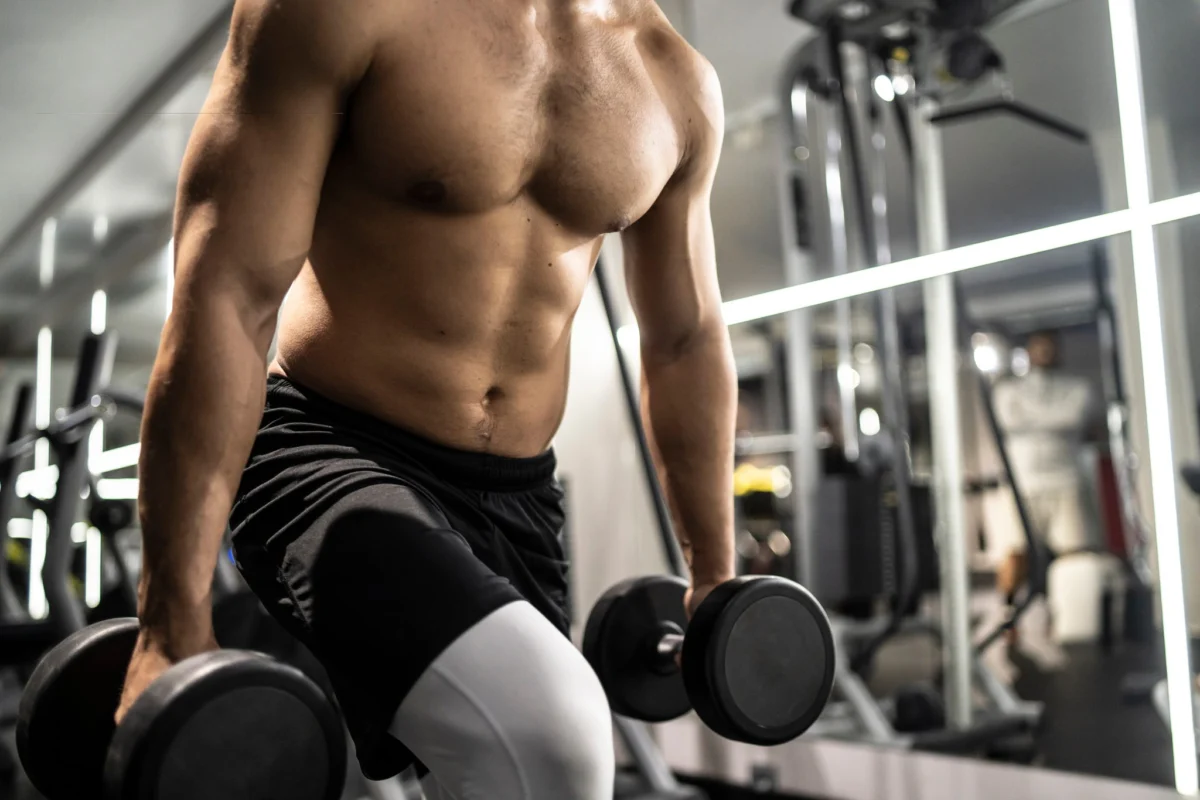
III. Dumbbell Romanian Deadlifts (RDLs)
Knee health is often a reflection of "upstairs" and "downstairs" strength. The Romanian Deadlift is perhaps the most important exercise for knee longevity because it strengthens the hamstrings, which act as a secondary stabilizer for the ACL.

Unlike a standard deadlift, the RDL starts from a standing position and emphasizes the "hinge"—pushing the hips back as if trying to touch a wall with the glutes. By keeping the dumbbells close to the shins and avoiding a full squatting motion, the athlete loads the posterior chain with zero impact on the knee joint. Strong hamstrings provide a "brake" system for the knee, preventing the tibia from sliding too far forward during daily activities.
IV. The Reverse Sled Drag
The reverse sled drag is frequently cited by physical therapists as a "magic bullet" for knee rehabilitation. Unlike traditional weightlifting, there is no eccentric (lowering) phase in a sled drag, which is often where most joint pain occurs.

By walking backward and pulling a weighted sled, the athlete forces the vastus medialis oblique (VMO)—the tear-drop shaped muscle above the knee—to fire. Strengthening the VMO is essential for proper patellar tracking. Furthermore, the sled drag provides a massive amount of blood flow to the tendons and ligaments of the knee with almost zero impact, making it an ideal finisher for any lower-body session.
Strategic Integration and Recovery
Training with knee pain requires a shift in intensity metrics. Rather than training to absolute failure, athletes should aim for "two reps in reserve" (RPE 8). This ensures that form does not break down, as the final, grinding reps of a set are usually where the knee loses its alignment and the "baby giraffe on ice" effect takes over.

Recovery also plays a pivotal role. A few minutes of foam rolling the quads and glutes can inhibit overactive muscles that may be pulling the kneecap out of alignment. However, it is important not to over-rely on "smashing" the tissue; the goal is to create a window of improved mobility to perform the strength exercises that provide the long-term solution.
Conclusion: The Path Forward
Knee pain does not have to be the end of lower-body development. By utilizing tools like adjustable dumbbells, stable weight benches, and resistance bands, individuals can recreate a professional physical therapy environment in a home or commercial gym. The transition from "quad-dominant" to "hip-dominant" movement is more than just a workout tweak; it is a sustainable philosophy for lifelong fitness. When the hips and glutes are strong, the knees are no longer required to do a job they weren’t designed for, allowing for a return to the activities—and the leg days—that define an active life.
