
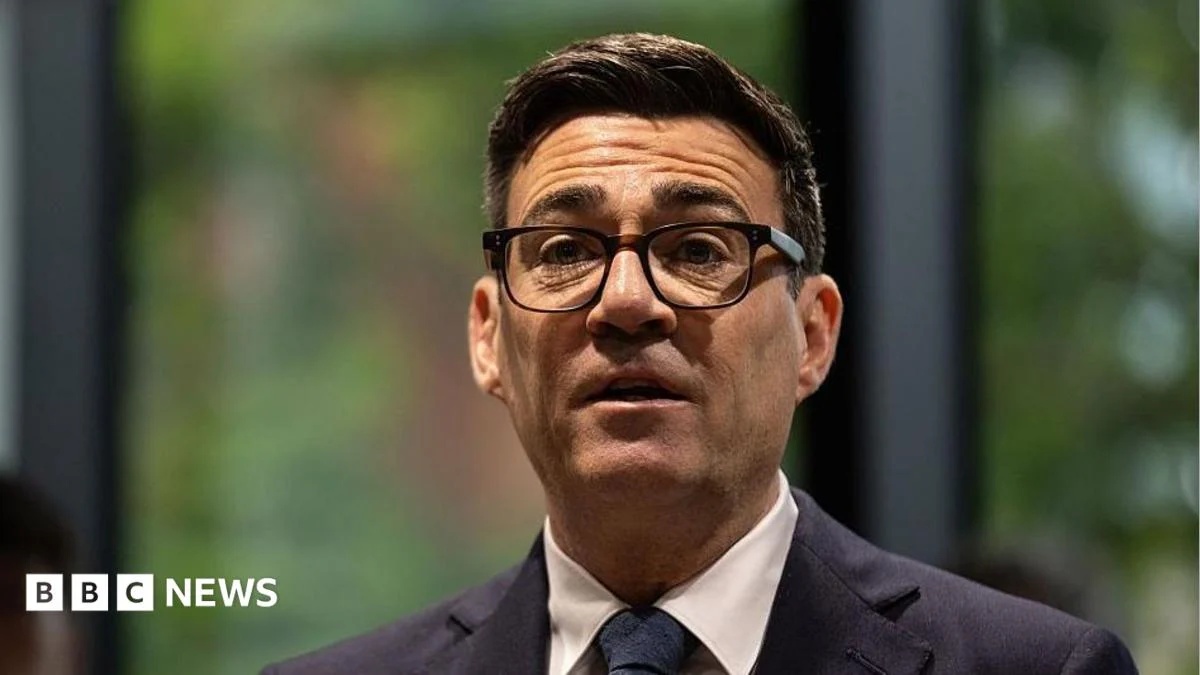
A new Prime Minister, Andy Burnham, has signalled an intent to fundamentally reset the political approach to long-standing national challenges, declaring a readiness to confront issues previously deemed insurmountable and instil renewed public faith in government’s capacity to deliver change.
This statement encapsulates the ambitious ethos of Prime Minister Andy Burnham’s nascent administration, which has launched with a bold promise to address some of the nation’s most entrenched problems. Central to this agenda is the reform of adult social care, an issue that has eluded comprehensive solutions for decades, alongside immediate pledges to combat rough sleeping, alleviate cost-of-living pressures, and support vital community sectors. Burnham’s declaration is not merely a policy announcement but a strategic articulation of a new governance philosophy, aiming to demonstrate that effective political will can translate into tangible improvements in people’s lives and restore a sense of national optimism.
In a striking departure from what his team describes as years of political inertia, Prime Minister Burnham has asserted a resolute determination to "fix the most difficult issues that have been ignored for years and seen as impossible to resolve." A source close to the Prime Minister elaborated on this philosophy, stating, "He doesn’t accept that they are. They can’t be ignored any longer." This sentiment underscores a core belief within the new government that political courage and strategic action can overcome obstacles that have historically stymied progress, aiming to restore public confidence in the efficacy of government. The Prime Minister’s vision, as articulated by the source, is to "show that governments can make people’s lives better if they choose to. He wants to get Britain believing again." This aspiration speaks to a broader ambition to mend a perceived disconnect between the public and political institutions, fostered by years of unresolved national challenges.
At the forefront of Burnham’s ambitious agenda is the systemic overhaul of adult social care, an area universally acknowledged as being in crisis. Unlike the National Health Service (NHS), social care in England is not free at the point of use, imposing significant financial burdens on individuals and families. The current system stipulates that individuals with savings exceeding £23,250 are not entitled to financial assistance from their local council for care costs. This threshold, often quickly surpassed by the escalating costs of residential or even extensive home care, frequently forces individuals to deplete their life savings, sell their homes, and face profound financial insecurity in their later years. The emotional and economic toll on unpaid family carers, who often shoulder immense responsibilities with inadequate support, further compounds the crisis, creating a hidden strain across society.
The challenge of social care reform is not new; it has been a recurring fixture on the political agenda for well over a decade, often described as the "hottest potato" in British politics. In 2019, in his inaugural speech as Prime Minister, Boris Johnson famously pledged that the Conservative Party would "fix the crisis in social care once and for all." This promise, however, ultimately led to the controversial "Build Back Better" plan, which included a cap on lifetime care costs set at £86,000, funded by a rise in National Insurance. While aiming to protect individuals from catastrophic costs, the implementation faced criticism for its complexity and perceived inequities, particularly concerning the interaction with means-testing. Just five years later, in July 2024, Labour leader Keir Starmer faced significant criticism when his party scrapped plans for the very same £86,000 cap, citing unmanageable costs and the broader economic climate. These historical attempts highlight the profound fiscal and political complexities inherent in designing a fair, sustainable, and universally accepted social care funding model. The Dilnot Commission in 2011, for instance, proposed a more generous cap and higher means-test threshold, yet its recommendations were largely diluted due to funding concerns. The repeated failures to enact lasting reform have only deepened the public’s disillusionment and the sector’s precarity.
Recognising the cross-generational and non-partisan nature of the social care challenge, Liberal Democrat leader Sir Ed Davey, a vocal advocate for reform with personal experience as a carer, swiftly responded to Burnham’s pledge. On Saturday, Sir Ed stated, "This has to be the start of a real effort to end the social care catastrophe," and added, "I’ll fight to ensure family carers aren’t forgotten. We need cross-party consensus, and I hope the PM’s door is open." Prime Minister Burnham’s immediate and public response on X (formerly Twitter) was notably conciliatory: "It most certainly is, Ed. Let’s work together to find some common ground." This exchange signals a potential willingness for a collaborative approach, a strategy many experts believe is essential for delivering a long-term, stable solution to social care, insulated from the vicissitudes of electoral cycles. Without broad political backing, any reform risks being undone by subsequent administrations.
However, the ambitious scope of Burnham’s agenda has immediately drawn pointed questions regarding its financial viability. Kevin Hollinrake, chairman of the Conservative Party, articulated the core challenge facing the new government: "Where’s the money coming from, Andy? We’re all dying to know." He pressed further, stating, "It is all well and good for the prime minister to promise to fix the issues facing our country, but how is he going to pay for them?" This question looms large, particularly given the UK’s current economic climate of high inflation, significant national debt, and ongoing pressures on public services. Any significant increase in public spending would necessitate either tax rises, increased borrowing, or cuts elsewhere, each with its own political and economic ramifications.
Beyond social care, Prime Minister Burnham’s first week in office has seen a flurry of policy announcements aimed at delivering immediate impact. These pledges include a commitment to end rough sleeping in England, a long-standing societal blight. Current figures indicate thousands sleeping rough on any given night, a symptom of broader issues such as housing affordability, mental health challenges, and addiction. Burnham’s promise implies a comprehensive strategy, likely involving increased provision of "housing first" initiatives, enhanced support services, and preventative measures to tackle the root causes of homelessness. This ambitious goal would require substantial investment in housing, mental health, and social support infrastructure, posing a significant logistical and financial undertaking.
Furthermore, in a direct response to the persistent cost-of-living crisis, the government has pledged to cut VAT from domestic electricity bills in the current financial year. This measure, aimed at providing immediate relief to households grappling with rising energy costs, represents a significant fiscal intervention. While welcomed by consumers, such a cut would reduce government revenue by an estimated billions of pounds annually and raise questions about the long-term sustainability and the balance between immediate relief and broader fiscal responsibility, especially in the context of climate change initiatives. Alongside this, a commitment to reduce the cap on bus fares outside of London from £3 to £2 from January aims to make public transport more accessible and affordable, encouraging usage, easing financial pressure on commuters, and potentially contributing to environmental goals by reducing reliance on private vehicles. This also implies increased subsidies for bus operators or local authorities, again adding to government expenditure.
The new administration has also announced targeted support for specific sectors, pledging to cut business rates for pubs, clubs, and live music venues in England by 20% from April. These industries, vital to local economies and cultural life, have been severely impacted by the pandemic, subsequent lockdowns, and the ongoing cost-of-living crisis. Business rates, a property tax levied on non-domestic properties, are often cited as a significant burden for hospitality and entertainment businesses. A 20% reduction could provide crucial breathing room, aiding recovery, fostering job creation, and preserving cherished community assets. However, this, too, represents a reduction in local government funding, necessitating central government compensation or a recalibration of local authority finances, potentially impacting other local services.
The breadth and ambition of these early pledges, particularly the commitment to tackle a challenge as complex and costly as social care, set a high bar for Prime Minister Burnham’s premiership. The central challenge will be to translate these bold promises into concrete, funded, and sustainable policies without exacerbating existing fiscal pressures or creating new ones. The public, weary from years of unfulfilled promises and economic uncertainty, will be keenly watching whether this new government can indeed "make people’s lives better" and truly "get Britain believing again." The success of Burnham’s administration will ultimately hinge on its ability to demonstrate not only the courage to identify difficult problems but also the practical means and political dexterity to deliver lasting solutions. The call for cross-party collaboration on social care suggests an understanding of the scale of the task, but the path to consensus on funding, in particular, remains fraught with historical divisions and competing economic priorities. The initial days of Burnham’s government signify a profound shift in rhetoric, but the true test will be in the delivery of a transformative agenda against a backdrop of considerable national challenges.
