
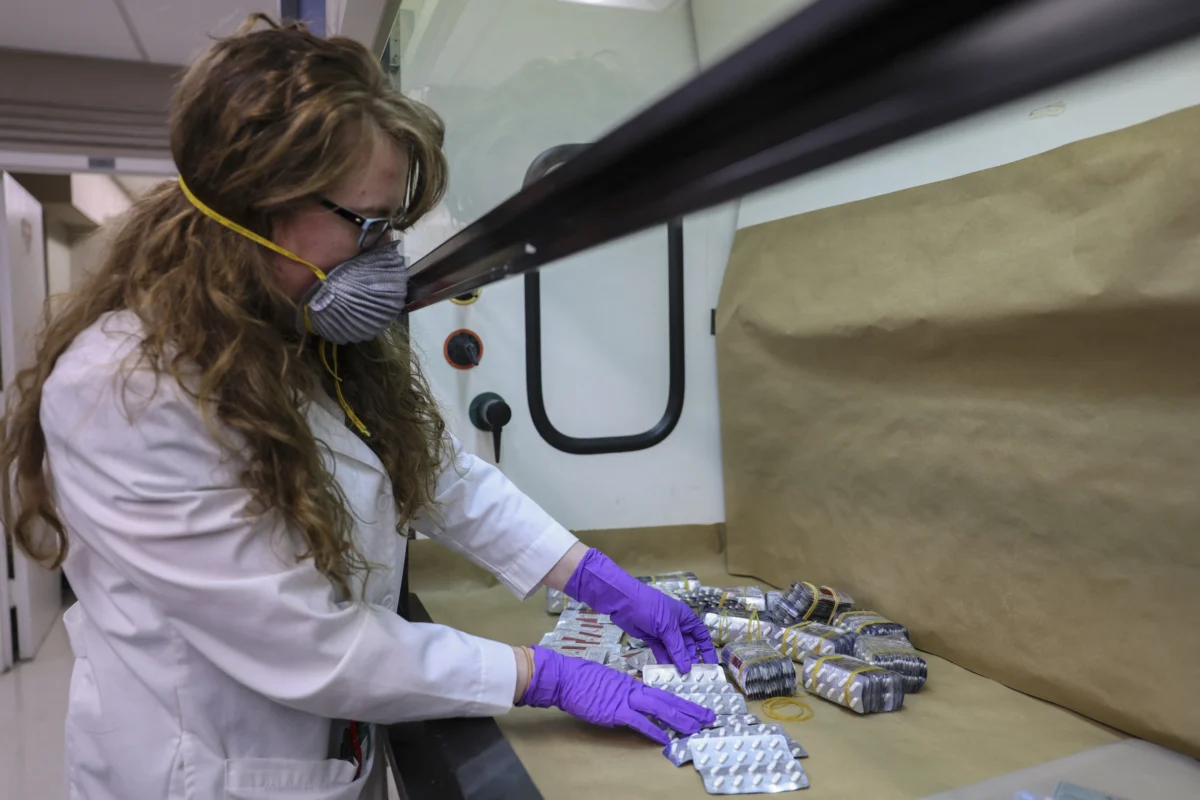
"The DEA has publicly committed to a timeline for potentially scheduling highly concentrated 7-hydroxymitragynine (7-OH) and related compounds, providing a critical window for users and healthcare providers to prepare for significant regulatory changes and potential supply disruptions."
The U.S. Drug Enforcement Administration (DEA) has issued a formal notification, published in the Federal Register, signaling its intent to temporarily place 7-hydroxymitragynine (7-OH) into Schedule I of the Controlled Substances Act. This move, expected no earlier than August 5, 2026, will significantly impact the availability and legality of concentrated products containing this kratom alkaloid. The agency’s announcement comes after a review of scientific data and adverse event reports, highlighting concerns about the potency and potential for misuse of these substances. This impending regulatory shift underscores the urgent need for open conversations about risk mitigation, access to treatment, and public health preparedness.
The DEA’s notification establishes a clear timeline, stating that a temporary scheduling order for 7-OH, when present above a specified threshold, "will not be issued before August 5, 2026." The agency intends to finalize and issue this order as swiftly as possible after the 30-day public comment period concludes. It is crucial to understand that this notice is not an immediate order; 7-OH remains unscheduled at the federal level as of this report. However, the moment the DEA publishes the official order, the manufacturing, distribution, sale, and possession of covered 7-OH products will fall under the stringent criminal, civil, and administrative penalties stipulated by the Controlled Substances Act. Such temporary scheduling typically lasts for two years, with the possibility of a one-year extension.
This regulatory action also encompasses three related compounds: mitragynine pseudoindoxyl, MGM-15, and MGM-16, which are slated to follow the same scheduling timeline. These substances are chemically similar to 7-OH and are found in kratom, a plant native to Southeast Asia that has gained popularity in the United States for its perceived effects on pain, anxiety, and mood.
Implications for Consumers and Public Health
The impending scheduling of 7-OH has profound implications for a significant segment of the American population. Products containing 7-OH are widely available, often found at gas station counters and smoke shops in various forms, including tablets, gummies, shots, powders, sublingual strips, and nasal sprays. These products are frequently marketed under names like "7-OH" and "7 Ohmz," their colorful packaging often appealing to a broad consumer base.
Critically, the DEA’s own review indicates that the primary users of these concentrated 7-OH products are not simply recreational experimenters. Many individuals report using them as a means of self-treating chronic pain and anxiety. The agency’s findings suggest a trend where users transition from traditional kratom leaf to more potent, concentrated 7-OH tablets. For households where these products are used daily, an abrupt cutoff in supply could lead to significant withdrawal challenges, underscoring the necessity of a proactive medical conversation before the DEA’s order takes effect, rather than in its aftermath.
Understanding 7-Hydroxymitragynine
Consumer understanding of 7-OH is often obscured by marketing claims, leading to potential confusion about its nature and potency. 7-Hydroxymitragynine is a naturally occurring alkaloid found in the kratom leaf. However, it is a minor alkaloid, typically comprising less than two percent of the total alkaloid content and often present in only trace amounts in raw plant material. It can also be synthesized from mitragynine, the major alkaloid in kratom, through a single chemical step.
While the molecule itself remains identical regardless of its origin, the crucial difference lies in the dosage. The DEA notes that consumers of raw kratom leaf generally experience a more attenuated effect due to the presence of other competing alkaloids. In contrast, isolated or semi-synthetic formulations of 7-OH deliver the alkaloid at full potency. A survey of 250 kratom products sold between September 2024 and February 2025 revealed a staggering range in single-dose concentrations, from a mere 1 milligram to as high as 700 milligrams. This wide variation in potency poses a significant risk to consumers who may not be aware of the actual concentration of the product they are using.
The DEA’s Threshold and Targeted Products
The DEA’s threshold for scheduling 7-OH is adapted from a definition provided by the Department of Health and Human Services (HHS). This threshold targets botanical material containing more than 0.050 percent 7-OH on a dry weight basis. Crucially, it also applies to any synthetic or further-processed article that exceeds 0.050 percent 7-OH or contains more than 1.00 milligram of the alkaloid.
The agency has explicitly stated that this regulatory action is not intended to apply to natural kratom products that contain naturally occurring 7-OH below this specified threshold. The primary targets of this measure are concentrated extracts, processed edibles, and pressed pills – products that have undergone significant processing and are often formulated to deliver higher concentrations of 7-OH.
Federal Data and Emerging Trends
The DEA’s toxicology testing program, which analyzes biological samples from overdose cases, has identified 7-OH in 85 cases since 2019. Of these, 55 were fatal and 30 were non-fatal. The median age of patients involved in these cases was 36 years old.
It is essential to acknowledge a significant limitation of this data: these samples frequently contained other substances, including potent opioids like fentanyl, benzodiazepines, and ketamine, as well as other kratom alkaloids. Therefore, while the DEA’s data establish that 7-OH is appearing with increasing frequency in overdose casework between 2020 and 2025, they do not definitively prove that 7-OH alone caused the 55 recorded deaths.
In parallel, the FDA Adverse Event Reporting System (FAERS) held 86 cases involving 7-OH at the time of the DEA’s February inquiry. Of these, 79 were classified as serious, and nine involved fatalities. Furthermore, poison control centers logged 165 exposure cases involving 7-OH between January and July of 2025. Among cases involving 7-OH as a single substance, 35 percent resulted in serious health problems, and 67 percent required treatment at a healthcare facility.
Official Statements and Industry Perspectives
DEA Administrator Terrance Cole, in a press release accompanying the agency’s announcement, stated that "today’s action targets highly concentrated, synthetic 7-OH products." He emphasized that this measure equips law enforcement and public health partners with crucial tools to address an emerging threat to public safety.
HHS Secretary Robert F. Kennedy Jr. characterized the compounds as "dangerous opioids that fuel addiction and put American lives at risk," adding that HHS had reviewed the scientific evidence and recommended the action.
However, not all stakeholders share this perspective. The industry group, the 7-HOPE Alliance, has publicly argued that 7-OH remains lawful under the Food, Drug, and Cosmetic Act. They have also cited researchers who dispute the findings related to overdose and dependence. Conversely, some kratom advocacy organizations have taken the opposite stance, advocating for the scheduling of these substances. Consumers and the public are encouraged to weigh these competing claims, particularly in light of the fact that no controlled clinical trials have definitively established a safe dosage for these concentrated products.
Identifying High-Risk Individuals and Populations
The highest-risk group for adverse outcomes includes individuals using concentrated 7-OH products daily for pain or anxiety management. This risk is significantly amplified for those also consuming opioids, benzodiazepines, alcohol, or other central nervous system depressants. The concurrent use of these substances can dangerously increase the risk of respiratory depression, a potentially fatal condition where breathing slows or stops.
Children represent another vulnerable population. The FDA has previously issued warnings to a company selling 7-OH gummies, noting that the packaging could be appealing to minors. The presence of candy-like formulations within households also poses a risk, as these products can be easily accessible to children.
The legal landscape surrounding 7-OH already exhibits considerable variation. Nine states have already implemented prohibitions on 7-OH consumption, while several others have enacted caps based on its percentage of total alkaloid content. This patchwork of regulations means that the legal status of these products can differ significantly depending on geographic location.
Recognizing Symptoms and Warning Signs
Reported effects of 7-OH exposure in poison center cases include a range of symptoms such as nausea and vomiting, agitation, confusion, loss of consciousness, seizures, sweating, rapid heartbeat, elevated blood pressure, and difficulty breathing.
In cases of suspected opioid overdose, critical warning signs include slowed or stopped breathing, blue-tinged lips, unresponsiveness, or an inability to wake the individual. These are medical emergencies requiring immediate intervention. A documented case report highlighted a cardiopulmonary arrest that was reversed with naloxone following reported 7-OH use, underscoring that standard overdose response protocols are applicable.
Taking Proactive Steps
Individuals who regularly use these concentrated 7-OH products are strongly advised to consult with a clinician or an addiction medicine specialist before the DEA’s order takes effect. Physical dependence on opioid-acting substances is a treatable condition. One documented case required inpatient buprenorphine stabilization to manage withdrawal symptoms associated with 7-OH dependence.
Abruptly discontinuing use without medical supervision, especially after daily consumption, is not recommended. Similarly, substituting with unregulated online sellers in anticipation of a ban is ill-advised and could expose individuals to even greater risks. For households where any opioid-acting substances are used, it is crucial to keep naloxone readily available and to store such products securely, out of reach of children.
Ensuring Access to Treatment and Support
Naloxone, the opioid overdose reversal medication, is now available over the counter at pharmacies nationwide. Many state health departments and community organizations also provide it free of charge. Treatment for opioid use disorder, including medications like buprenorphine, is covered by Medicaid and most commercial insurance plans. Federally qualified health centers offer treatment services on a sliding-fee scale, making them accessible to a broader range of individuals. For confidential referrals and support, SAMHSA’s national helpline operates 24 hours a day, seven days a week, providing free information and assistance.
The Path Forward
The DEA is empowered to publish the temporary scheduling order in the Federal Register at any time on or after August 5, 2026. The order will become effective upon its publication. Importantly, temporary scheduling orders are not subject to judicial review, and the standard notice-and-comment rulemaking process, typically required for permanent scheduling, does not apply to these temporary measures. A separate public docket managed by HHS concerning the threshold criteria closed on July 31. MedicalDaily will continue to monitor the Federal Register for the official publication of the DEA’s order.
Conclusion
The most concrete development in this unfolding situation is the confirmed timeline: the DEA cannot issue its Schedule I order before August 5, 2026, and intends to proceed with the scheduling process thereafter. The individuals most likely to be impacted are those who use concentrated 7-OH extracts on a daily basis. For these users, initiating a conversation with a healthcare provider now is far more beneficial than attempting to stockpile products. A central point of uncertainty remains the exact date of the order’s publication and how enforcement agencies will approach products that fall near the specified threshold.
Developing Story Timeline
- July 6, 2026: The DEA publishes two notices of intent in the Federal Register, officially commencing the 30-day period and establishing August 5 as the earliest possible date for issuing an order.
- July 1, 2026: The DEA publicly announces the filing of these notices, with the documents signed by Administrator Terrance Cole.
- March 6, 2026: HHS advises the DEA that it has no objection to the temporary placement of 7-OH and related substances into Schedule I, provided they are above the specified threshold.
- February 24, 2026: The DEA formally transmits its required notification to the HHS Assistant Secretary for Health, initiating the inter-agency review process.
