
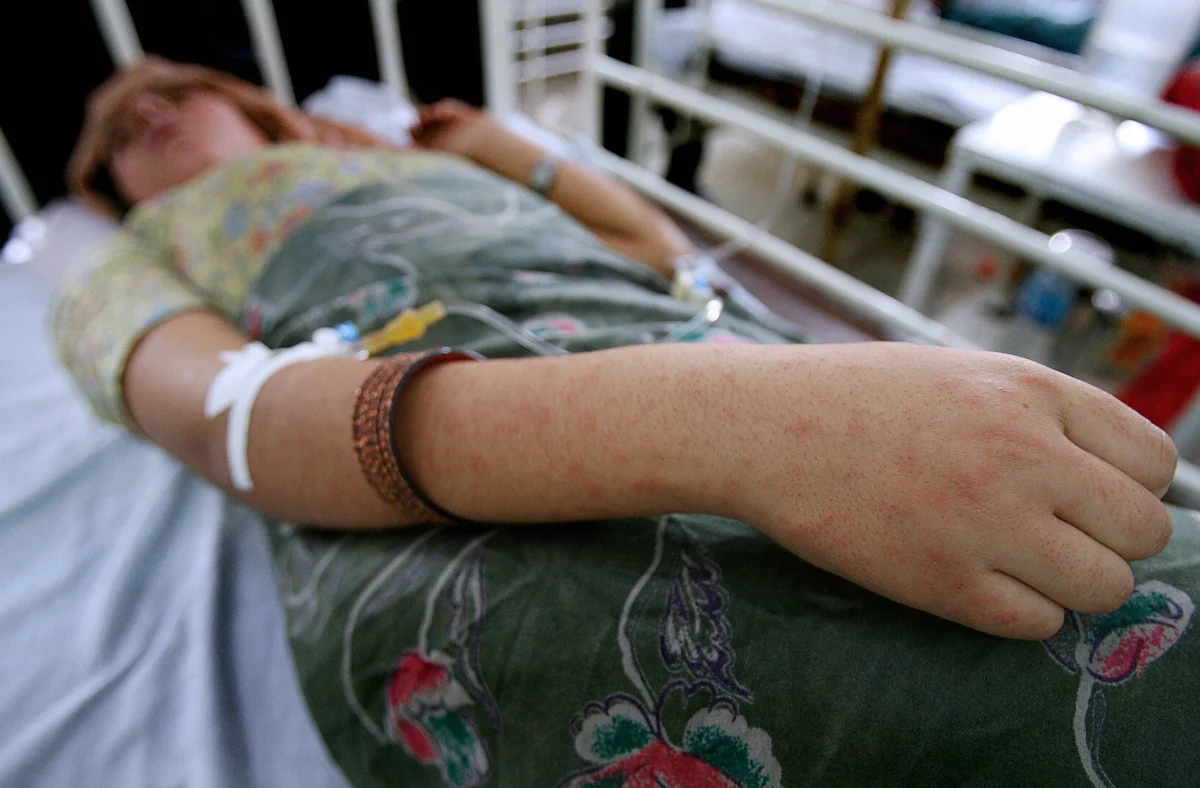
"The United States is experiencing a significant resurgence of measles, with 2026 marking the highest annual case count since 1991. This alarming trend underscores a critical public health failure driven by declining vaccination rates, disproportionately impacting specific states and vulnerable populations as the school year begins."
The latest data from the Centers for Disease Control and Prevention (CDC) reveals a stark reality: the United States has recorded 2,318 confirmed measles cases in 2026, a figure current as of July 23rd. This number not only surpasses the 2,289 cases reported for the entirety of 2025 but also represents the most significant annual tally of this highly contagious disease in over three decades, dating back to 1991. This surge is not uniformly distributed; rather, it is heavily concentrated in seven states that account for over 84% of the national total. Notably, South Carolina and Utah alone are responsible for approximately half of all confirmed cases, with 670 and 522 cases respectively. This concentration of risk is particularly concerning as families in these states prepare for school registration deadlines and the imminent start of the academic year.
The implications of these escalating numbers extend far beyond mere statistics. For the majority of the country, the immediate risk of measles exposure may remain relatively low. However, for residents of Utah, South Carolina, Texas, Virginia, Florida, Pennsylvania, and Arizona, the landscape is markedly different and poised to become more perilous with the reopening of schools, daycares, and the resumption of school transportation. Measles is an airborne pathogen, capable of remaining infectious in a room for up to two hours after an infected individual has departed. This inherent transmissibility means that a single unvaccinated child within a classroom exhibiting suboptimal immunization coverage can initiate a cascade of exposures, potentially impacting classmates, patrons of pediatric waiting rooms, and even infants too young to have received their initial measles vaccination.
The CDC’s comprehensive report highlights that of the 2,318 cases documented in 2026, 2,302 were reported by 45 jurisdictions across the nation, with an additional 16 cases attributed to international visitors. A significant driver of this year’s caseload is the persistence of outbreaks, with 35 new outbreaks identified in 2026. A staggering 93% of confirmed cases, equating to 2,153 individuals, are linked to these outbreaks. Further analysis reveals that 1,371 of these outbreak-associated cases originated in 2025 and have continued into the current year. While no measles-related deaths have been confirmed in the United States in 2026, a stark contrast to the three deaths recorded during the 2025 outbreak period, the overall burden of the disease remains a pressing concern. Compounding this issue is the observed decline in vaccination rates. The CDC indicates that national measles, mumps, and rubella (MMR) vaccine coverage among kindergartners dropped to 92.5% for the 2024-2025 school year, a decrease from 95.2% in the 2019-2020 academic year. This decline translates to approximately 286,000 kindergartners potentially being unprotected in a single school year, creating fertile ground for outbreaks.
The geographical concentration of risk is a critical aspect of the current measles epidemic. South Carolina’s Upstate outbreak, which ultimately reached 997 cases according to state tallies before being declared over in April, continues to contribute a substantial portion of this year’s carryover cases. Utah’s ongoing outbreak, situated along the border with Arizona, has been a persistent concern for over a year, contributing more than 500 cases in 2026 alone. Texas, which previously led the nation with 803 cases in 2025, has reported 188 cases thus far in 2026. State officials in Texas have issued cautious warnings, emphasizing that reported confirmed counts likely underestimate the true extent of the outbreak. Dr. Varun Shetty, Texas Chief Epidemiologist, stated in comments to the Associated Press, "what we’re able to count and report is almost always an underestimate." This sentiment suggests that the actual number of measles infections may be significantly higher than officially documented.
Public health and medical leaders have voiced profound concern over the escalating situation. Dr. Andrew Racine, President of the American Academy of Pediatrics, characterized the current state of affairs as a "preventable systems failure" in an interview with CNN, emphasizing that the crisis is "avoidable." Clinicians operating in outbreak-affected states report encountering a disease that many American doctors trained after the year 2000 have rarely, if ever, seen. Dr. Stuart Simko, a pediatrician at Prisma Health in Greer, South Carolina, described the presentation of measles in children to NBC News as resembling "the flu on steroids." Echoing these sentiments, Dr. Richard Besser, a pediatrician and President of the Robert Wood Johnson Foundation, noted that the United States is now among a growing number of nations where immunization levels are falling short of the protection children require.
The CDC’s reported 2026 case counts are preliminary and subject to revision. The agency’s weekly updates are based on laboratory-confirmed cases notified by noon each Thursday, meaning that state-level dashboards often reflect more current information. Discrepancies may also arise between the CDC’s published state totals and those posted by individual state health departments on the same day. While the data clearly demonstrate a correlation between declining kindergarten MMR coverage and sustained measles transmission, they do not, in isolation, definitively attribute the current year’s total to specific policies, staffing levels within public health agencies, or individual state decisions. These are complex, multifaceted questions that require further investigation beyond the scope of raw surveillance numbers.
The group facing the most significant risk from measles are unvaccinated children. This is followed closely by infants under 12 months of age, who are too young to receive their first MMR dose, pregnant individuals, and anyone with a compromised immune system, including those undergoing cancer treatment or who have received organ transplants. Approximately one in five unvaccinated individuals who contract measles require hospitalization. Residents of counties where kindergarten vaccination coverage falls below the 95% threshold, the benchmark for community immunity, face a substantially higher risk of exposure compared to those living in areas with high vaccination rates within the same state.
Recognizing the symptoms and warning signs of measles is crucial for prompt identification and intervention. The disease typically begins with a high fever, accompanied by a cough, runny nose, and red, watery eyes. Several days later, a characteristic rash emerges, usually starting at the hairline and gradually spreading down the body. Small, white spots, known as Koplik’s spots, may also appear inside the mouth before the onset of the rash. Individuals who suspect they or a loved one may have measles should contact their clinic or emergency department by phone before arriving. This proactive measure allows healthcare facilities to implement necessary precautions to prevent exposure in waiting areas. Urgent medical evaluation is warranted for individuals experiencing difficulty breathing, dehydration, seizures, confusion, or a rapidly deteriorating condition.
Proactive measures can be taken to mitigate the risk of measles infection. Parents are encouraged to review their children’s immunization records now, rather than waiting until the back-to-school rush. Consulting with a clinician to determine if a child is due for a second MMR dose is also recommended. Adults who are uncertain about their own measles immunity status can inquire about obtaining documentation of previous vaccinations or undergoing titer testing to assess antibody levels. For families planning international travel or visiting states with active measles outbreaks, consulting a healthcare provider regarding early vaccination guidance for infants is advisable. Local health department websites remain the most timely source for county-specific exposure notices, which often detail exact dates, affected clinics, airports, and retail locations.
The MMR vaccine is readily accessible and generally covered without out-of-pocket costs by most private insurance plans and Medicaid. The federally funded Vaccines for Children program provides the MMR vaccine at no cost to eligible children who are uninsured, underinsured, enrolled in Medicaid, or are of American Indian or Alaska Native heritage. In areas experiencing outbreaks, county health departments have been organizing mobile and pop-up vaccination clinics. Residents are advised to check local listings for these initiatives before assuming that an appointment is unavailable.
The CDC continues its weekly updates to the national measles case count. A significant international health assessment is scheduled for November to determine if the United States can retain its measles elimination status. This determination hinges on whether any single chain of transmission has persisted uninterrupted for a full 12 months. The ongoing outbreak cluster in Utah and Arizona is the primary focus of this review. MedicalDaily will provide ongoing coverage of the weekly CDC releases and the outcomes of the November assessment.
The most definitive recent development is the CDC’s confirmation of 2,318 measles cases in 2026, as of July 23rd, with no fatalities reported this year. The burden of this disease disproportionately falls on unvaccinated families residing in seven states, underscoring the critical need for a prompt review of immunization records with a healthcare provider before the commencement of the school year. A persistent uncertainty surrounds the true extent of the unreported cases, and the next significant milestone will be the November review of the nation’s measles elimination status.
Developing Story Timeline:
- July 24, 2026: CDC releases updated figures, confirming 2,318 measles cases for 2026 through July 23rd, surpassing the total of 2,289 cases recorded for all of 2025.
- July 22, 2026: Independent data trackers indicate the national measles case count exceeded the full-year total for 2025, prior to the CDC’s official weekly announcement.
- April 2026: South Carolina officials declare its Upstate measles outbreak officially over after 42 consecutive days without a linked new case, with a final state-counted total of 997 cases.
