
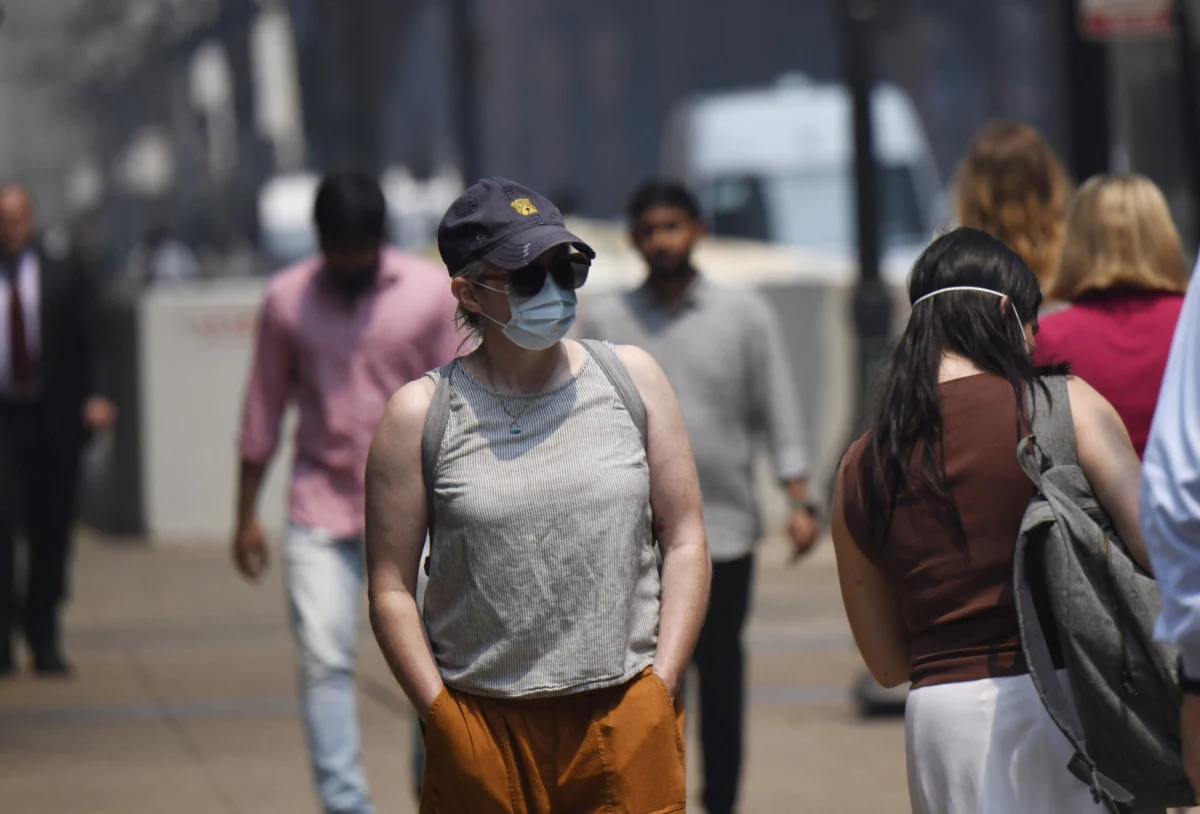
"Over 120 million Americans endured hazardous air quality due to Canadian wildfire smoke in July 2026, leading to a surge in respiratory and cardiovascular distress with no formal accountability for transboundary health impacts."
The summer of 2026 witnessed an unprecedented air quality crisis as smoke from extensive Canadian wildfires, particularly those raging in Ontario, blanketed large swathes of the Midwest and Northeast United States. Between July 14th and July 20th, an estimated 120 million Americans found themselves living under severe air quality alerts. Major metropolitan areas like Detroit, Minneapolis, and Chicago ranked among the most polluted cities globally on July 16th, according to IQAir. The severity of the pollution was starkly illustrated by PM2.5 concentrations in Baltimore and Washington, D.C., which neared 200 micrograms per cubic meter – a level exceeding the U.S. Environmental Protection Agency’s 24-hour safe limit of 15 micrograms by over thirteen times. For many residents, the air was so thick with particulate matter that they could taste it, a visceral indicator of the pervasive environmental hazard.
The immediate impact of this widespread pollution was a significant increase in respiratory complaints presenting at emergency rooms across affected cities. Individuals with pre-existing conditions, such as asthma, experienced accelerated use of their inhalers, while those suffering from Chronic Obstructive Pulmonary Disease (COPD), heart failure, and chronic cardiovascular disease faced an elevated risk of acute exacerbations and serious health events. These health consequences translate directly into substantial financial burdens, affecting patients directly, their insurance providers, hospitals, and the broader public health system. Crucially, the current international framework lacks a formal mechanism for accountability and cost-sharing between the United States and Canada when transboundary smoke events of this magnitude occur.
This event was not an isolated incident but rather an intensification of a trend observed over the past decade, with Canadian wildfire smoke increasingly impacting millions of Americans for extended periods during the summer months. The 2023 event that famously turned New York City’s sky an eerie orange served as a previous benchmark, a threshold that the 2026 mid-July event significantly surpassed. Data from The Weather Company indicates that the July 2026 smoke event produced the highest levels of particulate pollution recorded since 1999 for cities stretching from Minnesota to Washington, D.C.
Scientific visualizations from NASA confirmed the scale of the crisis, revealing nearly 80 wildfires burning out of control in Ontario. These fires were exacerbated by the same heat dome that had previously affected the United States in the early weeks of July. The resulting smoke was transported southward by a high-pressure system and, upon reaching densely populated U.S. cities, was channeled in by a frontal system. Critically, the smoke was trapped near the surface, rather than dispersing at higher altitudes, leading to prolonged and severe ground-level pollution.
The link between elevated fine particulate matter (PM2.5) exposure and adverse health outcomes is well-established. Scientific literature consistently demonstrates that exposure to high concentrations of PM2.5 is associated with increased emergency department visits for asthma, COPD exacerbations, respiratory infections, cardiac events including myocardial infarction and arrhythmia, and overall mortality. Researchers studying previous Canadian wildfire smoke events have quantified that prolonged exposure to elevated PM2.5 levels leads to measurable increases in emergency department visits for cardiorespiratory complaints in affected metropolitan areas.
The health burden of the July 2026 wildfire smoke event was disproportionately borne by specific populations. Individuals with pre-existing respiratory conditions, such as asthma and COPD, were at the forefront of experiencing exacerbated symptoms. Older adults, who often have underlying health issues and reduced physiological reserves, were also highly vulnerable. Children, whose respiratory systems are still developing, and pregnant individuals, facing potential risks to both themselves and their developing fetuses, were another group at elevated risk. Furthermore, individuals with cardiovascular disease experienced a heightened susceptibility to smoke-induced cardiac stress.
From an economic and public health perspective, the states most severely impacted in the Midwest – Ohio, Michigan, Illinois, Indiana, and Wisconsin – are also among those with the highest national rates of COPD and asthma hospitalizations. This confluence of intense smoke exposure and a high prevalence of pre-existing respiratory vulnerabilities concentrated the health costs precisely in the communities most affected by the 2026 event.
Medical experts have extensively detailed the cardiovascular mechanisms by which PM2.5 exposure exerts its harmful effects. Fine particulate matter is capable of entering the bloodstream, where it triggers systemic inflammation, promotes instability in arterial plaque, and increases the risk of myocardial infarction, stroke, and cardiac arrhythmia. A single multi-day exposure event to PM2.5 at the concentrations recorded in July 2026 is far from benign; it represents a population-level cardiovascular stress event, the full clinical implications of which may not be fully understood for weeks or even months following the initial exposure.
Independent public health researchers have highlighted the limitations of the existing U.S.-Canada Air Quality Agreement, last updated in 2000. This agreement primarily focuses on managing chronic transboundary air pollution originating from industrial sources, and it lacks provisions for addressing acute emergency events driven by widespread wildfire smoke at the current scale. Consequently, it offers no established framework for cost-sharing when transboundary smoke generates emergency-level health impacts in the neighboring country. Physicians from the American Academy of Emergency Medicine in Chicago and Detroit reported observing increases in respiratory complaint visits during the July 2026 event, consistent with patterns seen during previous major air quality crises. However, comprehensive surveillance data across all affected cities is a complex undertaking that requires weeks to compile and analyze.
The scientific evidence unequivocally establishes a causal link between elevated PM2.5 exposure and adverse cardiovascular and respiratory health outcomes. This association is among the most robustly supported findings in environmental health research, consistently demonstrated through large-scale epidemiological studies, time-series analyses, and natural experiments during prior wildfire smoke events. These studies reliably show elevated emergency department visits, hospitalizations, and mortality rates during periods of high PM2.5 concentration.
While the causal pathways are clear, precisely quantifying the number of Americans who experienced adverse health events directly attributable to the July 2026 wildfire smoke event, or determining the exact healthcare cost burden, is not feasible in real time. Such detailed calculations necessitate the collection and analysis of surveillance data that typically emerges over the weeks and months following the period of exposure.
The individuals facing the greatest risk from wildfire smoke exposure and who should take protective measures during air quality events include:
- Individuals with pre-existing respiratory conditions: Such as asthma, COPD, bronchitis, and emphysema.
- Individuals with pre-existing cardiovascular conditions: Including heart disease, heart failure, and arrhythmias.
- Older adults: Who may have compromised immune systems and reduced lung capacity.
- Children: Whose developing lungs are more susceptible to damage.
- Pregnant individuals: Due to potential risks to both maternal and fetal health.
- Individuals working or spending time outdoors: Especially those engaged in strenuous activity.
- People with diabetes: As diabetes can exacerbate the effects of air pollution on cardiovascular health.
During or after a wildfire smoke event, prompt medical attention is crucial for:
- Worsening shortness of breath or difficulty breathing.
- Increased wheezing or coughing.
- Chest pain or tightness.
- Sudden onset of sore throat or sinus pain.
- Eye irritation, redness, or watering.
- Headaches or dizziness.
- Nausea or vomiting.
These symptoms, particularly when occurring during a period of high PM2.5 concentration and in individuals with pre-existing cardiovascular or respiratory disease, warrant immediate medical evaluation.
During smoke events, individuals can take several protective actions:
- Stay indoors: Minimize outdoor activity and keep windows and doors closed.
- Use air purifiers: Employ HEPA (High-Efficiency Particulate Air) filters in indoor air purifiers and HVAC systems to remove fine particles.
- Wear N95 respirators: If outdoor activity is unavoidable, wear a well-fitting N95 respirator mask to filter out fine particles.
- Limit strenuous activity: Reduce physical exertion, especially when outdoors.
- Stay hydrated: Drink plenty of fluids.
- Monitor air quality reports: Stay informed about local air quality levels and advisories.
For policymakers and health officials, proactive measures are essential:
- Enhance transboundary air quality agreements: Modernize existing agreements to specifically address wildfire smoke and establish protocols for early warning and response.
- Invest in wildfire prevention and management: Support efforts to reduce the frequency and intensity of wildfires in collaboration with international partners.
- Develop public health response plans: Create and disseminate comprehensive plans for communities to prepare for and respond to wildfire smoke events.
- Promote public education campaigns: Increase awareness about the health risks of wildfire smoke and effective protective measures.
- Establish robust air quality monitoring networks: Ensure widespread and accurate monitoring of PM2.5 and other pollutants.
Emergency care for asthma and COPD exacerbations triggered by wildfire smoke represents a significant out-of-pocket expense for patients, their insurers, and, in the case of uninsured individuals, hospitals. Currently, there is no federal disaster cost-sharing mechanism specifically designed for air quality emergencies stemming from foreign wildfires. High-efficiency HEPA air purifiers can range in price from $50 to $300. During declared air quality emergencies, many local health departments make N95 masks available for free distribution through community centers. Additionally, city-operated cooling and clean air centers are often activated during extreme events; individuals can contact their local health department or dial 311 in many cities to locate the nearest facility.
The 2026 Canadian wildfire season remains active, and the possibility of further smoke events impacting the United States throughout the remaining summer months cannot be discounted. The current U.S.-Canada Air Quality Agreement, which does not explicitly address extreme wildfire events, is in urgent need of an update to incorporate such scenarios.
Following the 2026 season, advocacy efforts from public health organizations, emergency medicine societies, and environmental health researchers for a formal North American wildfire smoke health response framework are expected to intensify. While congressional interest in such issues has historically been episodic, tending to rise during major events and recede thereafter, the recurring nature and increasing severity of these events may prompt sustained policy attention.
The July 2026 Canadian wildfire smoke event served as a stark reminder of the profound health and economic consequences of transboundary air pollution. Exposing over 120 million Americans to hazardous air quality, it resulted in documented surges in emergency room visits and undeniable cardiovascular and respiratory health impacts. The absence of a formal framework between the United States and Canada for responding to these transboundary health emergencies, coordinating early warning systems, or sharing the associated health costs represents a critical governance failure. As wildfire seasons intensify under a warming climate, this deficiency is not a peripheral policy gap but a systemic vulnerability with direct and recurring consequences for millions of American patients, underscoring the urgent need for a comprehensive and collaborative North American approach to wildfire smoke management and public health protection.
