
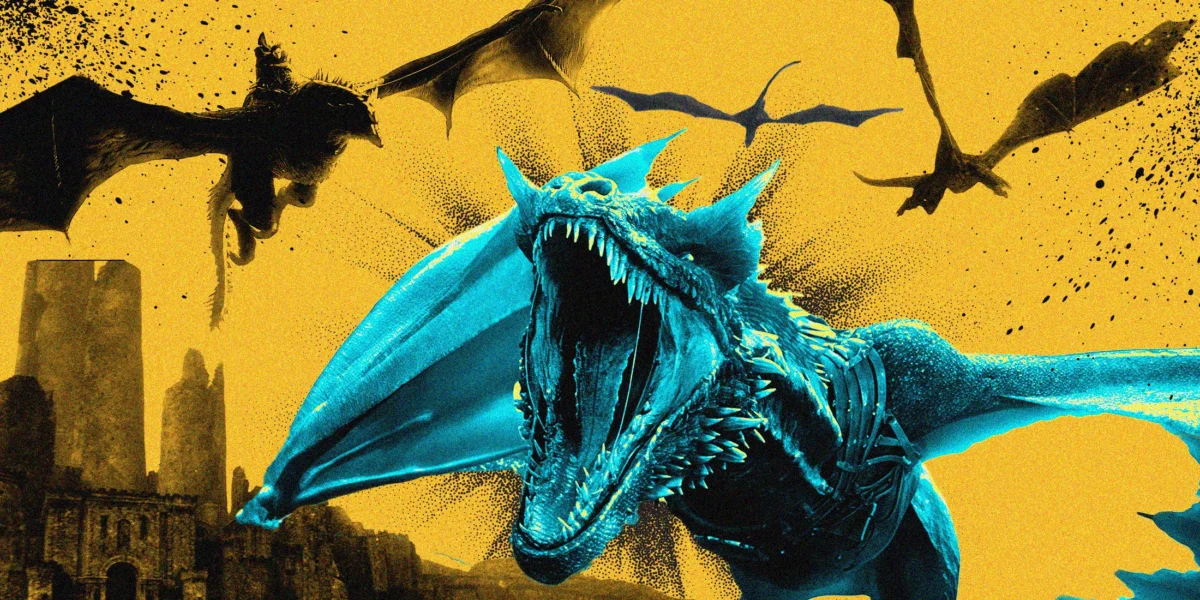
"Digital dragons cease to be mere visual effects when the audience mourns their loss with the same fervor as they do the human cast, a feat achieved through a meticulous blend of biological realism and narrative characterization."
The third season of HBO’s House of the Dragon represents a significant escalation in the "Dance of the Dragons," the internecine Targaryen civil war that defines the prequel’s narrative arc. As the conflict intensifies, the series has moved beyond the mere spectacle of fire-breathing reptiles to treat its 22 distinct dragons as multifaceted characters with unique temperaments, physical deformities, and emotional resonances. Under the guidance of production VFX supervisor Dadi Einarsson, the show utilizes a sophisticated combination of practical engineering, biological observation, and classical animation principles to bridge the gap between high-fantasy myth and grounded, visceral reality.

The Evolution of the Digital Character
In the original Game of Thrones series, dragons were a rarity—three growing beasts that served as symbols of Daenerys Targaryen’s rising power. In House of the Dragon, however, dragons are an established part of the socio-political infrastructure of Westeros. This abundance necessitates a higher degree of individualization. VFX supervisor Dadi Einarsson notes that the progression across three seasons has allowed the production team to move past the physical mechanics of flight and fire into the realm of "character work."
The "Dragon Bible," a foundational document developed alongside showrunner Ryan Condal and inspired by George R.R. Martin’s source material, serves as the blueprint for every beast. This document tracks the age, gender, size, and personality traits of each creature. It also establishes the "mirror" effect, where a dragon often reflects the temperament or physical status of its rider. For example, Caraxes, the "Blood Wyrm," possesses a long, serpentine neck and a volatile nature that mirrors the mercurial Daemon Targaryen, while the regal Syrax embodies the grace and status of Queen Rhaenyra.
The Case of Sheepstealer: Beauty in Deformity
Season 3 introduces Sheepstealer, a "wild" dragon that serves as a stark contrast to the pampered, "house-trained" dragons of the Dragonpit. Unlike the Velaryon or Targaryen dragons, which are raised by keepers and adorned with ornate saddles, Sheepstealer is a stray. Einarsson describes the creature’s design as being akin to a "pit bull" or a stray animal found in a back alley—unpredictable, gnarly, and fiercely independent.

To convey this "wildness" visually, the VFX team moved away from the sleek, aerodynamic lines of younger dragons. Sheepstealer is characterized by an aggressive underbite, patches of vitiligo, and a spiky, irregular hide. These physical imperfections tell a story of survival and social exclusion. When Lady Rhaena attempts to bond with the beast, the narrative relies on the audience’s ability to see beauty in his ruggedness. This bond is further grounded in reality through the use of 3D-printed physical models. For scenes where Phoebe Campbell (Rhaena) mounts the dragon, the team created a 1:1 scale back piece featuring Sheepstealer’s specific spike patterns and skin textures, allowing the actor to physically grip the "character" rather than a generic green-screen prop.
The Biological Blueprint: From Alligators to Albatrosses
One of the greatest challenges in creature animation is the absence of a living reference for a multi-ton flying reptile. To solve this, the House of the Dragon team relies on "analogous creatures" found in nature. The lumbering, terrestrial movements of the dragons are modeled after crocodilians like alligators, emphasizing a low center of gravity and powerful, heavy strides.
For flight and landings, however, the team looks to the avian world. In Season 3, the albatross became a primary reference for Sheepstealer’s more awkward maneuvers. Albatrosses are known for their immense wingspans and their relative clumsiness when transitioning from air to land. By mimicking the "struggle" of a heavy bird trying to find its footing on a mountaintop, the animators instill a sense of authentic weight and physics.

Einarsson emphasizes the importance of "follow-through and overlap" in animation—the principle that different parts of a large body move at slightly different speeds. When a dragon pulls up from a dive, the head moves first, followed by the chest, then the pelvis, and finally the tail. This ripple effect of weight prevents the dragons from looking like weightless digital assets and instead makes them feel like biological entities subject to the laws of gravity.
The "Buck" and the Volume: Practical On-Set Integration
While the final dragons are digital, the performances of the actors are rooted in practical technology. The production utilizes a "buck"—a high-tech gimbal that mimics the movement of a dragon’s back. When an actor is filmed "flying," the buck rolls and pitches in sync with a pre-visualized (pre-vized) animation. This allows the camera to fly around the actor while wind machines and lighting arrays (often housed within a "Volume" or LED stage) simulate the environment of the open sky.
For more intimate interactions, such as a rider touching a dragon’s snout, the production employs "dragon performers." These individuals, dressed in blue suits, manipulate fiberglass dragon heads on long poles. This provides the actors with a physical point of contact and a specific eye-line, which is crucial for emotional scenes. In Season 3’s premiere, which features a harrowing underwater sequence involving Prince Jacaerys and his dragon Vermax, the team went a step further, building a submersible gimbal in an outdoor water tank to simulate the dragon’s movement as it sinks beneath the waves.

The Legacy of Jurassic Park and the "Gold Standard"
Einarsson acknowledges that the modern audience’s perception of prehistoric or fantasy creatures was fundamentally shaped by Steven Spielberg’s Jurassic Park in 1993. The animators of that era established a "visual language" for how heavy, reptilian creatures should move—balancing grace with terrifying power. House of the Dragon operates within this established tradition, knowing that if the dragons moved too quickly or lacked a sense of inertia, the audience would instinctively reject the illusion.
This commitment to realism extends to the dragons’ primary weapon: fire. Rather than relying solely on digital flame, the production uses massive fire cannons and coordinates with stunt teams to set practical fires on set. This provides a "ground truth" for the VFX artists, who can then match the digital dragon breath to the behavior of real-world combustion, ensuring that the light, smoke, and heat distortion feel consistent with the environment.
Conclusion: The Emotional Resonance of the Machine
The ultimate metric of success for the VFX team is not the technical complexity of a render, but the emotional reaction of the viewer. Einarsson recalls the premiere of Season 3, where the audience’s audible gasps and genuine sadness at the death of Vermax served as the ultimate validation of their work. When the audience stops looking at the "water simulation" or the "scale textures" and starts mourning a digital creature as if it were a beloved pet or a fallen soldier, the bridge between technology and storytelling is complete.

As House of the Dragon moves toward its Season 3 finale, the dragons will continue to evolve from mere weapons of war into the tragic centerpieces of a collapsing dynasty. Through the meticulous application of science, art, and empathy, the VFX team has ensured that when these titans fall, the impact is felt far beyond the screen.
