
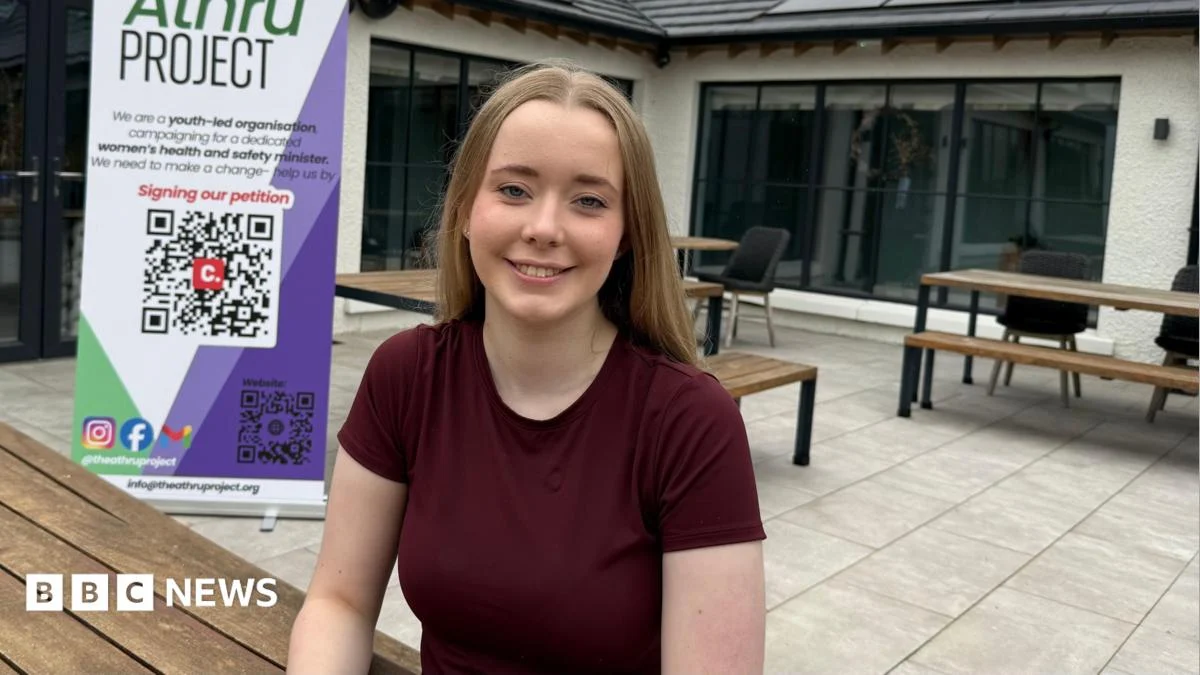
Driven by alarming statistics and pervasive misogyny, a group of young activists in Northern Ireland are advocating for a dedicated Minister for Women’s Safety and Health, arguing that fragmented governmental approaches fail to adequately protect women and address systemic issues.
This powerful youth-led initiative, named ‘Athrú’ (Irish for ‘change’), highlights a growing concern among younger generations regarding the escalating prevalence of Violence Against Women and Girls (VAWG) and the perceived inaction of political leaders in Northern Ireland. The campaign’s core demand for a specific ministerial portfolio underscores a belief that a consolidated, focused approach is essential to tackling the complex, interconnected challenges related to women’s safety, health, and equality, which currently fall across multiple government departments without sufficient coordination or priority.
The landscape of women’s safety in Northern Ireland has become a pressing concern, driving a new generation of activists to demand systemic change. According to Women’s Aid, Violence Against Women and Girls (VAWG) is defined as actions "directed against a woman because she is a woman or that affects women disproportionately." This stark definition is tragically underscored by recent statistics revealing that 31 women have been killed in Northern Ireland since 2020. In the overwhelming majority of these cases, men were identified as the perpetrators or have been charged in connection with these devastating deaths, highlighting a deeply entrenched pattern of gender-based violence that demands urgent and comprehensive intervention.
Against this backdrop, in August 2025, 19-year-old Pearse O’Neill observed an alarming increase in news reports about VAWG. Simultaneously, he noted a disturbing rise in misogynistic behaviour among younger boys within his community, a trend often seen as a precursor to more severe forms of gender-based disrespect and aggression. This confluence of events ignited a spark. Pearse had recently completed work experience with the charity Politics in Action, an experience he credits with demystifying the process of initiating a campaign. It showed him that impactful change was "not really this big daunting thing that was impossible and needed millions of pounds of funding." Inspired by this insight, he rallied his friends, who regularly discussed politics and current affairs, to join him in confronting these issues head-on. Their initial thought of merely emailing MLAs quickly evolved. "We knew it had to be more than that," Pearse recalled. "It seemed to be getting worse and we thought we shouldn’t wait any longer to do something about it." Their collective resolve birthed Athrú, an Irish word meaning "change," embodying their profound aspiration for a safer and more equitable society.
The urgency of their campaign resonates deeply with young women across Northern Ireland. Eimear McCloskey, 18, articulates a pervasive sense of vulnerability, expressing that she feels "disappointed and nervous" about the perceived lack of protection for women in her community. Living in a seaside town and rural area, Eimear highlights practical deficiencies such as insufficient CCTV coverage and inadequate public lighting. Her fear is tangible: "If anything was to ever happen to me, it would be a ‘he said, she said’ moment, with no evidence. It’s very upsetting to know that’s the case for many women today." This sentiment speaks to a broader societal issue where victims of gender-based violence often face immense challenges in achieving justice, particularly when physical evidence is scarce and their credibility is questioned. The lack of robust infrastructure not only increases the risk of harm but also erodes trust in the systems meant to ensure public safety and accountability.
Devyn McAlister, also 18, echoes this frustration, critiquing politicians for offering condemnations without tangible action. "They say things and condemn it but no real action takes place. That needs to change," she asserts. The constant barrage of news detailing women’s deaths has instilled a profound sense of fear in Devyn. "Seeing the news of women being killed, I feel scared to live in this country. At night, I look over my shoulders and I have a safety alert on my bag. I shouldn’t need to take those precautions and be so aware of that." These personal testimonies reveal the psychological toll of living in an environment where safety cannot be taken for granted, forcing young women to adopt defensive behaviours simply to navigate their daily lives, from walking home to using public transport.
The central pillar of Athrú’s campaign is the establishment of a new, dedicated ministerial role within the Northern Ireland Executive – specifically, a Minister for Women’s Safety and Health. This proposal draws inspiration from similar positions elsewhere, such as the Minister for Women and Equalities at Westminster or the Deputy Minister for Social Care, Mental Health and Women’s Health in Wales, although the proposed Northern Ireland role would focus more acutely on safety and health. The Ballycastle-based group believes that a minister, by virtue of their office, carries a fundamental obligation to initiate legislation and drive policy. As Pearse explains, creating such a role would be "a good step towards changing how women’s safety and healthcare is approached in government." His sister, Aoísha O’Neill, 18, adds that a dedicated minister would consolidate women’s issues, allowing them to be "tackled in a more efficient way" rather than being dispersed across various departmental remits. This consolidation, they argue, would provide a singular, high-level advocate for women’s concerns, ensuring they receive consistent attention and resources.
Beyond the creation of a ministerial post, Athrú is advocating for a multi-faceted approach to improve women’s lives. Their demands include significant improvements to public infrastructure, such as enhanced street lighting, visible CCTV, and safer public transport, all crucial for deterring crime and increasing feelings of safety in public spaces. They also call for a dedicated minister to address the unacceptably long healthcare waiting lists that disproportionately affect women, citing the "abhorrent" delays for gynaecology appointments as a prime example. Such delays not only cause immense physical and emotional distress but can also lead to poorer health outcomes and erode trust in the health service, encompassing a range of issues from reproductive health to menopause care. Furthermore, the group advocates for a broadened school curriculum, specifically an overhaul of sex and relationship education. Aoísha emphasizes the need for young people to receive "enough information about their own bodies," advocating for comprehensive education that covers consent, healthy relationships, body autonomy, and the identification of abusive behaviours, thereby empowering them and fostering a culture of respect from an early age. While post-primary schools in Northern Ireland currently receive guidance on delivering sex education, Athrú believes the current provision is inadequate and requires substantial enrichment to meet the needs of contemporary society. Aoísha stresses that "issues of women’s health and safety are quite low on departments’ priority lists" – a perception that fuels their call for a dedicated ministerial advocate.
Current governmental efforts to address VAWG and women’s health are indeed underway, but Athrú argues they lack the necessary central coordination and political weight. The First and Deputy First Ministers have been involved in initiatives to end violence against women and girls, and the Executive Office (TEO) launched its "Ending Violence Against Women and Girls Strategy" in 2024. A spokeswoman for TEO affirmed that promoting the health and safety of women, including ending violence and abuse, is a priority, and that the strategy underscores this commitment. She highlighted the need for "a coordinated, whole Executive approach, with all Ministers working collectively" to address this long-term issue. Similarly, in 2022, the PSNI launched an action plan specifically aimed at reducing violence against women and girls. The Department of Health is also developing a Women’s Health Action Plan for Northern Ireland, expected to be published later this year following a comprehensive public listening exercise involving thousands of women. This plan aims to foster "positive dialogue around women’s health and wellbeing" and acknowledges the "voices and views of young people as an important part of that conversation." Additionally, the justice and health ministers have launched a Domestic and Sexual Abuse strategy for Northern Ireland, and Justice Minister Naomi Long launched a Victims and Witnesses of Crime Strategy in March 2026.
Despite these various initiatives, Athrú contends that the current model, where responsibility for tackling VAWG, healthcare, and education is diffused across Stormont departments for justice, health, and education, leads to fragmentation and inefficiency. Eimear eloquently summarises this concern: "Women’s safety and health is such a large and pressing issue that it’s so difficult to keep up with. With a Minister’s resources and attention it could be tackled effectively." The creation of a dedicated minister within the Executive Office, appointed by the First and Deputy First Ministers, would, they believe, ensure that these critical issues receive consistent, high-level political attention and strategic oversight, enabling more cohesive policy development and implementation that transcends traditional departmental silos.
The campaign has already made significant strides, including launching an online survey to gather public opinion and hosting a panel event that brought together politicians, campaigners, and young people. The response from political quarters has been largely encouraging. "As far as the response from politicians goes, it’s been really positive so far," Pearse notes. "We have full SDLP support and have really positive engagement from other parties. There hasn’t been any negative responses from politicians so we’re looking to expand our support from anyone who will listen." This broad appeal underscores the universality of the issue. Pearse passionately argues that the fight for women’s health and safety is not solely a women’s issue. "Everyone needs to be involved with this. People should feel obligated to speak out regardless of who they are. Everyone knows someone affected by this. It’s quite simple." This call to collective responsibility highlights the societal imperative to address gender-based violence and discrimination, emphasizing that it is a fundamental human rights issue affecting the entire community.
SDLP Assembly Member Cara Hunter has acknowledged the campaign’s proposal, stating that a dedicated women’s minister is an idea "worth exploring further." However, speaking on the BBC’s Good Morning Ulster programme, she also raised pertinent questions regarding the logistics and potential costs, emphasizing the need to ensure "value for public money" given that ministerial positions come with significant resources and administrative overheads. This pragmatic perspective highlights the challenges of implementing new governmental structures, balancing the perceived need for a dedicated role against the realities of public expenditure and existing departmental responsibilities. The Department of Health’s ongoing work to develop a Women’s Health Action Plan and its commitment to improving services indicate an awareness of the issues, but Athrú’s campaign presses for a more fundamental shift in how these concerns are prioritised and managed at the highest levels of government. The youth of Athrú believe that with sustained political support and public engagement, their vision for a dedicated minister could indeed become a reality, paving the way for a Northern Ireland where women’s safety and health are paramount, not an afterthought.
