
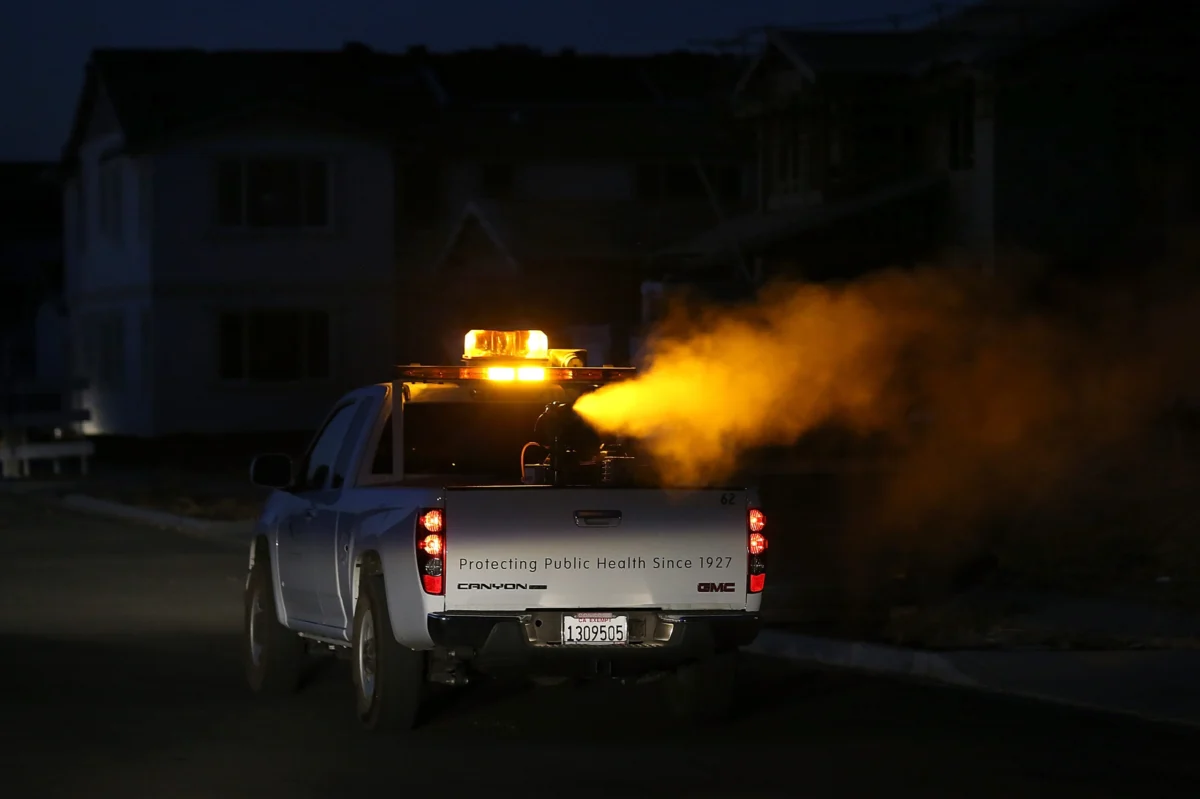
"While Santa Clara County has identified its first two human West Nile Virus cases of 2026, the origin of these infections remains undetermined due to the patients’ domestic travel during the virus’s incubation period. Simultaneously, the county has confirmed the presence of West Nile Virus in local mosquito populations, underscoring the need for continued vigilance and preventative measures."
Santa Clara County has officially confirmed its first two human cases of West Nile Virus (WNV) for the 2026 season. In a significant clarification accompanying the announcement, county officials stated that the specific origin of infection for either individual cannot be definitively determined. Both patients had undertaken domestic travel during the virus’s typical incubation period, which generally spans from two days to two weeks. This travel history complicates efforts to attribute the infections to local mosquito populations, leading the county to explicitly state that the virus is not confirmed to be circulating and infecting people within the South Bay region at this time. Fortunately, both individuals have received treatment and are reportedly recovering at home, according to Dr. Krishna Surasi, the county’s assistant public health officer.
The distinction between imported and locally acquired cases is crucial for public understanding and informs the county’s public health strategy. The presence of two confirmed human cases in a county of nearly two million residents might initially suggest widespread community transmission. However, the county’s detailed explanation emphasizes that this is not necessarily the case. West Nile Virus cases are officially recorded based on the patient’s county of residence, not the location of the mosquito bite. This standard surveillance practice means that a county’s initial reported case of the season can often be an "imported" one, contracted during travel to an area with active WNV transmission.
Santa Clara County does, however, possess more definitive evidence of local WNV activity. The county’s Mosquito and Vector Control District has been conducting routine monitoring, deploying traps and collecting over 20,000 insects. Testing of these collected mosquito pools has revealed the presence of the virus in two separate locations within the county. Therefore, the accurate summary of the situation is that mosquitoes carrying West Nile Virus have been confirmed locally, while the two human infections cannot be directly linked to these specific local mosquito populations. Both pieces of information are critical for public awareness and preventative actions, though they represent distinct findings.
Dr. Surasi highlighted the significance of these cases, describing them as "a reminder that West Nile Virus can cause very serious illness." She reiterated that the virus does not spread from person to person, emphasizing that the primary mode of transmission is through the bite of an infected mosquito.
In response to the confirmed local mosquito activity, Jeremy Shannon, assistant manager of the Mosquito and Vector Control District, announced plans for targeted adult mosquito treatments. These treatments will be implemented in the areas surrounding the two locations where WNV-positive mosquito pools were identified. This approach of focusing treatments on identified hot spots, rather than broad, county-wide spraying, is the standard protocol when surveillance efforts have successfully localized the virus.
Shannon also noted an observed increase in mosquito activity across the state this year, underscoring the importance of the district’s ongoing surveillance and control efforts, which are heavily reliant on community cooperation. "Our team at the Mosquito and Vector Control District is working year-round," he stated, emphasizing that "the community plays a large role" in mitigating WNV risk.
The public health directives for residents are clear and actionable. Residents are urged to eliminate or drain any standing water on their properties, as this is the primary breeding ground for mosquitoes. This includes emptying containers such as plant saucers, buckets, and ensuring neglected swimming pools are properly managed. Additionally, the use of EPA-registered insect repellents containing active ingredients like DEET or IR3535 is strongly recommended, especially during periods of high mosquito activity. A critical, yet often overlooked, step is for residents to report any instances of standing water, particularly neglected swimming pools, to the Mosquito and Vector Control District. A single neglected pool can generate a significant number of mosquitoes that can affect an entire neighborhood, and vector control districts rely on this public reporting to identify and address such breeding sites.
The risk posed by West Nile Virus is not uniformly distributed among the population. The vast majority of individuals infected with WNV experience no symptoms and are unaware of their infection. For those who do develop symptoms, they are typically mild and include fever, headache, muscle aches, nausea, and vomiting. A small percentage of infections can progress to neuroinvasive disease, where the virus affects the central nervous system, potentially leading to long-term disability or even death.
Certain demographics face a substantially higher risk of developing severe illness. Individuals over the age of 60, those with compromised immune systems, and people with pre-existing health conditions such as diabetes, cancer, kidney disease, or hypertension are particularly vulnerable. For a healthy adult under the age of 50, the likelihood of experiencing no illness or only a mild illness is significantly higher.
Currently, there is no human vaccine available for West Nile Virus, nor is there a specific antiviral treatment. Medical care for severe cases is primarily supportive, often requiring hospitalization. Consequently, the most effective strategy for managing WNV is through the prevention of mosquito bites.
Individuals experiencing symptoms such as fever, severe headache, confusion, neck stiffness, muscle weakness, or seizures, especially after potential mosquito exposure, should seek urgent medical evaluation. Milder symptoms warrant a consultation with a healthcare provider for guidance rather than an immediate emergency visit.
The California Department of Public Health provides weekly updates on West Nile Virus surveillance through its dedicated state program. As of July 24, 2026, the state had reported a total of six confirmed human cases from six other counties: Fresno, Kings, Tulare, Sacramento, Los Angeles, and San Diego. These figures predate the Santa Clara County announcement, meaning the two new cases will be reflected in subsequent updates, and the statewide tally is expected to increase.
Santa Clara’s vector control district will continue its trapping and testing operations. Further detection of positive mosquito pools would likely prompt additional treatment efforts. The county has not yet indicated whether it anticipates being able to pinpoint the exact locations where the two infected patients contracted the virus.
On a national level, the Centers for Disease Control and Prevention (CDC) has characterized 2026 as having one of the earliest starts to the West Nile Virus season and the highest number of cases by this point in the year since 2004. Historically, August and September represent the peak months for WNV activity. Broader surveillance data, including coverage of California’s statewide picture and the Central Valley’s initial cases, provides further context on the current WNV season.
In summary, Santa Clara County is grappling with two confirmed human West Nile Virus cases that cannot be directly linked to local mosquitoes due to the patients’ travel histories. Concurrently, the county has confirmed the presence of WNV-carrying mosquitoes within its borders. The highest risk of severe illness is among individuals over 60 and those with weakened immune systems or underlying health conditions. Effective prevention strategies include eliminating standing water, using EPA-registered repellents, and reporting potential mosquito breeding sites to the local vector control district. The primary uncertainty remains the exact geographical origin of the two human infections.
Developing Story Timeline
- July 29, 2026: Santa Clara County announces its first two human West Nile Virus cases of 2026, stating that domestic travel during the incubation period prevents confirmation of infection location. Vector control reports two positive mosquito pools and plans targeted adult mosquito treatments in affected areas.
- July 24, 2026: California Department of Public Health surveillance data indicates six confirmed human West Nile Virus cases statewide, originating from six other counties.
- Early June 2026: California reports positive mosquito samples across six counties, with no confirmed human cases at that point in the season.
Frequently Asked Questions
Were these two people infected in Santa Clara County?
Officials are unable to confirm the specific location of infection. Both patients traveled domestically during the virus’s incubation period, which ranges from approximately two days to two weeks, making it impossible for the county to determine where they acquired the virus.
Is West Nile Virus present in Santa Clara County mosquitoes?
Yes. The county’s vector control district collected over 20,000 insects and identified two mosquito pools that tested positive for West Nile Virus.
What is the county doing in response?
The county is planning adult mosquito treatments in the vicinity of the two positive mosquito pools and will continue its ongoing mosquito trapping and testing efforts.
Who is most at risk of severe illness from West Nile Virus?
Individuals over the age of 60, those with weakened immune systems, and people with underlying health conditions such as diabetes, cancer, kidney disease, or hypertension face the highest risk of severe illness.
What symptoms should I watch for?
Common symptoms include fever, headache, muscle aches, nausea, and vomiting. Seek urgent medical attention for severe headache accompanied by fever, confusion, neck stiffness, muscle weakness, or seizures.
Is there a vaccine or treatment for West Nile Virus?
There is no human vaccine available for West Nile Virus, nor is there a specific antiviral treatment. Severe cases are managed with supportive hospital care, making bite prevention the most effective protective measure.
What preventative actions can I take at home?
Residents should dump or drain any standing water around their homes, use EPA-registered repellents (such as those containing DEET or IR3535), ensure window and door screens are intact, and report any identified standing water to their local vector control district.
