
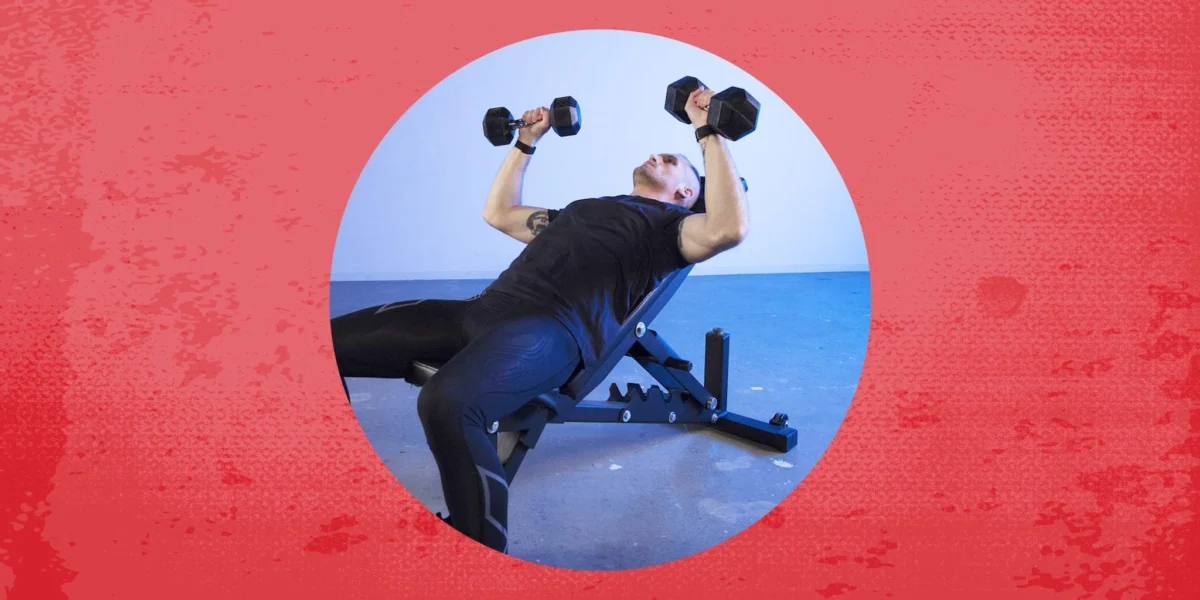
"The dumbbell incline press is a precision tool that shifts the mechanical load to the clavicular fibers of the pectorals, offering a superior range of motion and increased shoulder safety compared to traditional barbell variations."
While the flat bench press remains the gold standard for raw strength and powerlifting performance, it often leaves the upper third of the chest underdeveloped. Transitioning to an incline angle with dumbbells allows for targeted hypertrophy of the upper pectorals while respecting the natural biomechanics of the shoulder joint, ultimately creating a more balanced, aesthetically complete, and resilient physique.

The Anatomy of the Upper Chest
To understand the value of the dumbbell incline press, one must first understand the anatomy of the chest. The pectoralis major is divided into two primary heads: the sternocostal head (the mid and lower chest) and the clavicular head (the upper chest). While any pressing movement will involve the entire pectoral complex, the angle of the press determines which fibers are recruited most aggressively.
When pressing on a flat surface, the resistance is perpendicular to the torso, which heavily favors the sternocostal head. By adjusting the bench to an incline—typically between 30 and 45 degrees—the angle of the arms relative to the torso changes. This "opening" of the arm-to-torso angle places the clavicular fibers in a more direct line of pull with the resistance. Developing this "upper shelf" is what gives the chest a full, powerful appearance and provides the functional strength necessary for overhead movements.
Why Dumbbells Surpass the Barbell
The barbell incline press is a staple in many gyms, but it possesses inherent limitations that dumbbells elegantly solve. First and foremost is the range of motion (ROM). A barbell is a fixed, rigid object; its path is stopped the moment it touches the chest. For many lifters, this restricts the stretch of the pectoral fibers. Dumbbells, however, allow the hands to move independently. At the bottom of the movement, the weights can be lowered slightly outside the silhouette of the torso, providing a deeper stretch and greater time under tension.
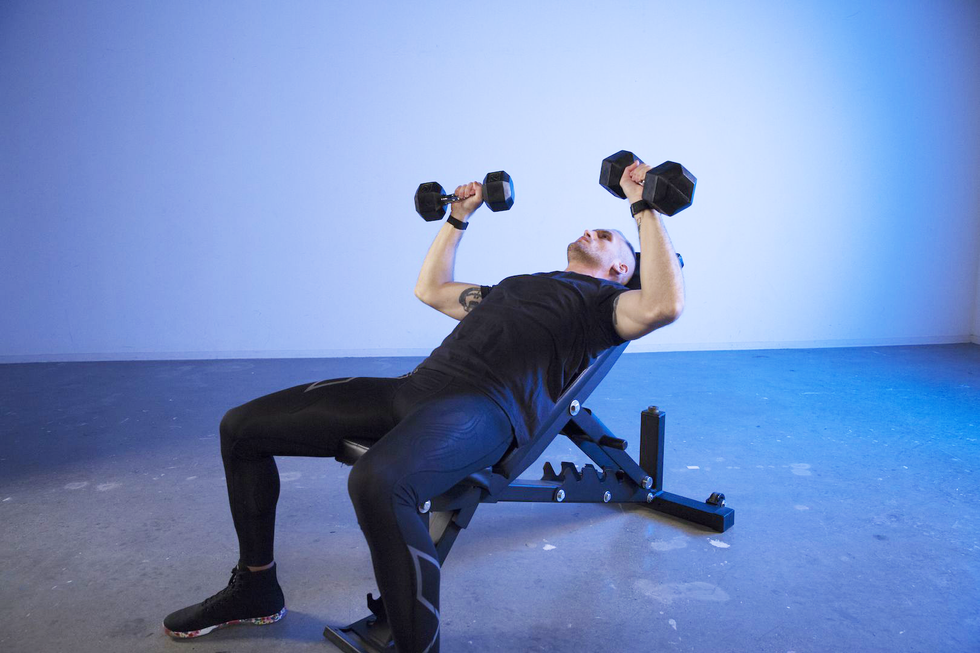
Furthermore, dumbbells allow for movement in the "scapular plane." Human shoulders are not designed to move in a perfectly flat line out to the sides; the shoulder blades sit on the rib cage at an angle. Dumbbells allow the lifter to rotate their wrists and tuck their elbows slightly inward, aligning the movement with the natural mechanics of the glenohumeral joint. This reduces the risk of impingement and chronic shoulder pain, a common complaint among dedicated bench pressers. Finally, the unilateral nature of dumbbells forces the stabilizer muscles to work harder, ensuring that a dominant side does not compensate for a weaker one.
Mastering the Form: Expert Cues for Success
As Ebenezer Samuel, C.S.C.S., fitness director at Men’s Health, and senior editor Brett Williams, NASM, emphasize, the incline press is easy to perform but difficult to master. Precision is the difference between chest growth and a shoulder injury.
The Core Foundation: Abs Tight, No Arching
In a traditional powerlifting flat bench press, a significant arch in the lower back is often encouraged to shorten the distance the bar travels and to engage the lower lats. On the incline press, this arch is a mistake. When you arch your back excessively on an incline bench, you effectively change the angle of your torso relative to the weight, turning the movement back into a flat press.

To isolate the clavicular fibers, you must keep your core braced and your spine neutral. "Glue your butt to the bench," Samuel advises. By keeping the rib cage down and the abs tight, you ensure that the incline of the bench is actually doing its job. This stability also provides a solid platform from which to drive the weight, preventing energy leaks.
The Pressing Path: Verticality is Key
A common technical error is pressing the dumbbells "out" or away from the body, rather than straight up toward the ceiling. This often happens because the lifter is subconsciously trying to make the movement easier by engaging more of the front deltoids.
The correct setup begins with the dumbbells directly above the shoulders. Before the first rep, drive your shoulder blades hard into the bench to create a stable base. As you lower the weights, turn your elbows slightly forward (roughly 30 degrees) into the scapular plane. When you press back up, the path should be perfectly vertical. Think about "squeezing" the chest at the top of the rep to maximize fiber recruitment.

Managing Depth and Shoulder Health
There is a persistent myth that every rep must touch the chest to be valid. In reality, depth should be dictated by individual shoulder mobility. "Don’t fixate on touching the dumbbells to your chest," says Samuel. The goal is to lower the weights until the elbows are slightly below the shoulders.
For many, going deeper than this causes the head of the humerus (the upper arm bone) to tilt forward in the socket, putting immense strain on the rotator cuff and anterior capsule. If you cannot touch the dumbbells to your chest without feeling a "pinch" or your shoulders rolling forward, stop at your natural limit. The "press" is the primary stimulus; if you want to stretch, do a dedicated chest stretch after your set.
The Benefits of Unilateral and Alternating Variations
One of the most significant advantages of using dumbbells is the ability to introduce variety into the pressing pattern. Traditional bilateral pressing (both arms moving together) is excellent for building strength, but alternating or unilateral presses offer unique hypertrophic benefits.

In an alternating press, one arm holds the weight at the top (under isometric tension) while the other arm performs a rep. This increases the total "time under tension" for each set, a primary driver of muscle growth. Unilateral pressing—working one side at a time—forces the core to work overtime to prevent the torso from rotating off the bench. These variations are particularly useful for athletes who need to develop "anti-rotational" strength and for bodybuilders looking to "sculpt" the chest and correct asymmetries.
Programming and Integration
The dumbbell incline press is most effective when used as a "secondary" or "supplemental" movement. Because dumbbells are harder to stabilize than a barbell, they are rarely the best choice for low-rep, maximal-strength work (e.g., sets of 1-3 reps). Instead, they shine in the hypertrophy range.
For most trainees, the best placement for this exercise is immediately following a heavy flat press or a primary compound movement. A standard prescription is 3 to 4 sets of 8 to 12 repetitions. This rep range allows for enough weight to create mechanical tension while providing enough volume to trigger metabolic stress.

Selecting the Right Gear for Your Home Gym
For those training at home, the quality of equipment directly impacts the safety and efficacy of the incline press. An adjustable bench is the most critical component. High-end options like the REP Fitness Adjustable Bench 3000 or the Hammer Strength Multi-Adjustable Bench provide the stability needed to handle heavy loads without wobbling, which is essential for maintaining form.
When it comes to weights, versatility is key. SMRTFT Nuobell Adjustable Dumbbells are highly recommended because they allow for quick weight changes in a compact form factor, making them ideal for drop sets or alternating variations. For those who prefer a classic feel, Cap Barbell Coated Hex Dumbbells offer a durable, no-frills option that stays put on the floor between sets.
Conclusion: Building a Balanced Chest
The journey to a powerful chest does not end at the flat bench. By incorporating the dumbbell incline press with strict form and intentional programming, you address the often-neglected upper pectoral fibers and safeguard your shoulder health. Remember that the goal of the incline press is not just to move weight from point A to point B, but to do so in a way that maximizes tension on the clavicular head. Keep the core tight, respect the scapular plane, and prioritize the quality of each contraction over the number on the side of the dumbbell. Over time, this disciplined approach will yield a chest that is as functional as it is aesthetic.
