
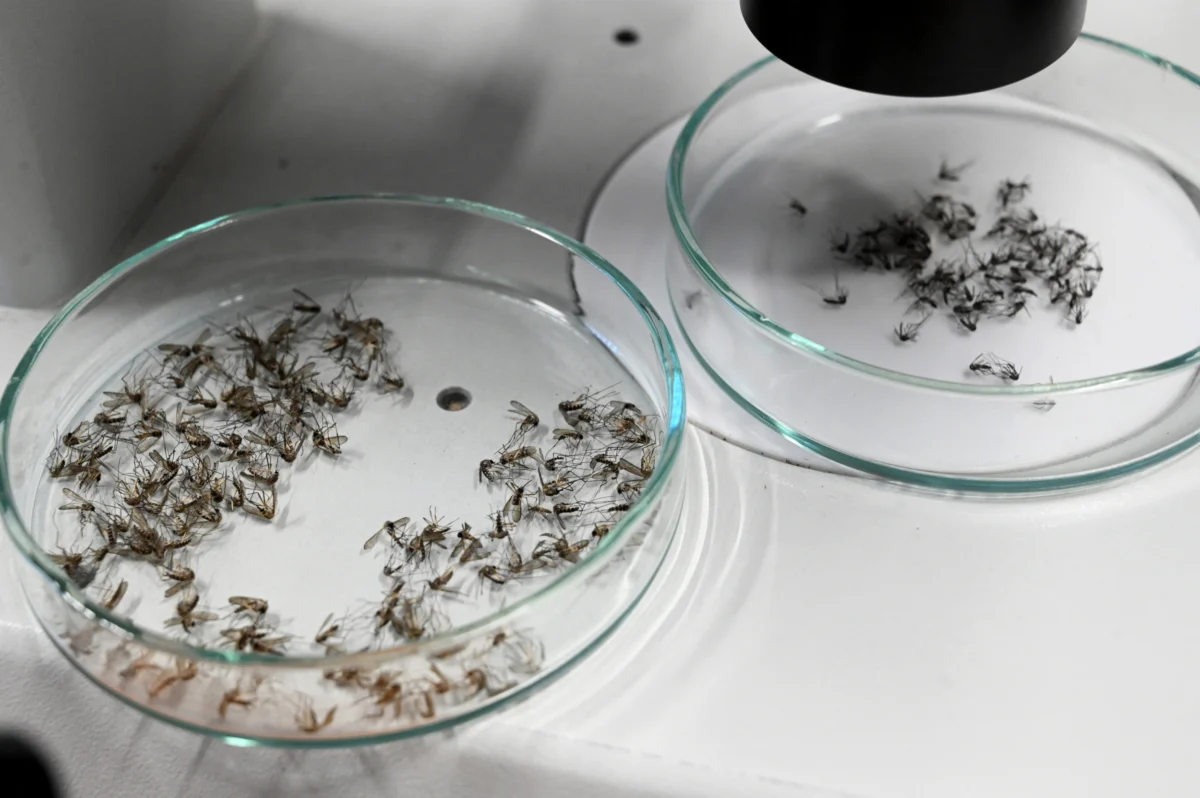
"A sevenfold increase in positive mosquito samples statewide, coupled with the season’s second human case, signals a critical juncture in Utah’s West Nile virus surveillance, underscoring the immediate need for widespread public vigilance."
Utah is currently experiencing a significant escalation in West Nile virus (WNV) activity, far surpassing previous years. As of this week in 2026, 296 mosquito samples across the state have tested positive for the virus. This figure stands in stark contrast to the 39 positive samples recorded at the same point in the 2025 season and a mere 18 in 2024. While the number of human cases remains relatively low – with the second case confirmed in Salt Lake County and an adult expected to make a full recovery – the dramatic rise in entomological data, specifically positive mosquito pools, is raising serious public health concerns. This surge in viral presence in the mosquito population serves as a critical early warning, suggesting a heightened risk of transmission to humans in the coming weeks.
The alarming trend is particularly pronounced within Salt Lake County, where its three mosquito abatement districts have identified the virus in 86 separate mosquito samples this season. For comparison, during the same period last year, Salt Lake County had documented only 24 positive samples. This localized increase contributes to the statewide sevenfold jump in detections, a magnitude that warrants significant public attention.
The implications of this entomological data are best understood by referencing the previous season. In 2025, Utah recorded a total of 49 human West Nile virus cases. Of these, 39 were the more severe neuroinvasive form, which affects the central nervous system, and tragically, four individuals lost their lives. In the preceding year, 2024, the state reported no fatalities due to WNV. The current jump in positive mosquito pools suggests a potential for a similar, or even more severe, impact this season if preventative measures are not rigorously adopted. Health officials are emphasizing that due to the flight range of mosquitoes, which can extend several miles, "everyone in the county" should implement protective measures, irrespective of their precise location. The WNV season in Utah typically persists until the first hard freeze, leaving a substantial period for potential transmission.
To accurately interpret the significance of a "positive mosquito sample," it is crucial to understand the methodology behind WNV surveillance. Mosquito abatement districts deploy traps to capture mosquitoes, which are then sorted by species. Mosquitoes of the same species, collected from the same trap on the same date, are grouped into what is commonly referred to as a "pool." This pool, which can comprise up to 50 individual mosquitoes, is then tested for the presence of viral genetic material. A positive result indicates that at least one mosquito within that batch carried the virus; it does not specify the exact number of infected insects.
This pooling strategy has important implications for data interpretation. A rising count of positive pools genuinely signifies that the virus is circulating more broadly within the environment and across the mosquito population being monitored. However, it is essential to recognize that the count of positive pools is not a direct proportional measure of the total number of infected mosquitoes present. Furthermore, comparing pool counts between different states can be largely meaningless due to variations in trapping methodologies, the number of traps deployed, and the specific pooling conventions adopted by each jurisdiction.
Beyond mosquito pools, Utah’s surveillance system also monitors for WNV activity through positive findings in dead birds and horses. It’s worth noting that sentinel chicken testing, a historical component of WNV surveillance, has not been a routine part of the state’s monitoring efforts since 2011. Consequently, the mosquito pool data plays a pivotal role in providing early warnings of increased viral transmission.
A critical caveat, often unmentioned, that must accompany the reported sevenfold increase in positive samples is the intensity of the trapping effort. The number of positive pools is inherently influenced by two primary factors: the prevalence of the virus in the environment and the extent of testing conducted. If a mosquito abatement district increases the number of traps deployed, tests a larger number of pools, or expands its geographic trapping range, the positive count could rise even if the underlying viral activity remains unchanged. MedicalDaily was unable to confirm from publicly available announcements whether Utah’s 2026 trapping effort is comparable to that of 2025, and neither county nor state officials have addressed this variable.
While this unmeasured variable means the precise multiple of the increase should be approached with caution, the directional signal remains significant. A sevenfold change is a substantial magnitude, and the widespread nature of the increase across the state, rather than being concentrated in a single district, further amplifies its importance. This trend also aligns with similar increases in WNV activity reported in other Western states this season. Therefore, while the exact numerical amplification warrants careful consideration, the overall upward trajectory of WNV risk is a clear and present concern.
Furthermore, it is crucial to understand the predictive limitations of mosquito surveillance data. Positive mosquito pools serve as indicators of increased risk of human exposure. However, they do not forecast the exact number of people who will become ill. This outcome is contingent upon a complex interplay of factors, including human behavior, the effectiveness of personal protective measures, and the age and underlying health status of individuals who are bitten by infected mosquitoes.
The vast majority of individuals infected with West Nile virus experience no symptoms, or only mild, flu-like symptoms. When symptoms do manifest, they typically appear between two and 14 days after an infected mosquito bite and can include fever, headache, body aches, and fatigue. In a small percentage of cases, fewer than 1 percent, the virus can progress to the more severe neuroinvasive form. This can present with alarming symptoms such as high fever, severe headache, neck stiffness, disorientation, tremors, muscle weakness, paralysis, and in the most extreme instances, coma.
The risk of developing severe illness from WNV is not uniformly distributed. Individuals over the age of 50 and those with compromised immune systems, due to conditions like organ transplants, HIV/AIDS, or certain medical treatments, face a significantly higher probability of experiencing severe neurological complications. It is important to reiterate that West Nile virus does not spread from person to person. Currently, there is no human vaccine available, nor is there a specific antiviral treatment that can directly combat the virus. Consequently, the primary and most effective defense against WNV remains the prevention of mosquito bites.
In response to the escalating WNV activity, the Salt Lake County Health Department and state health officials are strongly recommending a series of preventative measures. Residents are advised to use EPA-registered insect repellents containing active ingredients such as DEET, picaridin, IR3535, or oil of lemon eucalyptus, and to apply them strictly according to label instructions. Wearing long-sleeved shirts and long pants, especially during dusk and dawn when mosquitoes are most active, can significantly reduce exposure. A critical component of WNV prevention involves eliminating mosquito breeding grounds by draining standing water from common sources such as tires, plant saucers, pet water dishes, children’s toys, and buckets on a weekly basis. Additionally, maintaining short grass and keeping weeds trimmed can help reduce the number of adult mosquitoes seeking shelter in residential areas during hot weather.
Individuals who develop fever and headache following known or suspected mosquito exposure should seek prompt medical attention from a clinician. Those experiencing symptoms of confusion, severe headache, stiff neck, sudden onset of weakness, or seizures require immediate emergency medical evaluation, as these can be indicators of neuroinvasive disease. Care for severe WNV cases is primarily supportive, focusing on managing symptoms and providing intensive care where necessary. This underscores the critical importance of timely diagnosis and intervention, making proactive prevention paramount.
Several key questions remain regarding the unfolding WNV season in Utah. It is not yet determinable whether the human case count will mirror the dramatic increase observed in mosquito samples, as human cases typically lag behind entomological findings by several weeks, and a significant portion of the season remains. The exact extent of the increased trapping effort for 2026 also remains unquantified. County abatement districts typically publish their treatment schedules as they are finalized, and residents have the option to request property inspections through their local district to identify and address potential mosquito breeding sites.
Frequently Asked Questions
What has changed in Utah regarding West Nile virus this season?
Statewide, the number of mosquito samples testing positive for West Nile virus has surged to 296 in 2026. This is a substantial increase compared to the 39 positive samples recorded at the same point in 2025 and just 18 in 2024.
How many human infections have been confirmed in Utah?
As of this report, there have been two confirmed human cases of West Nile virus in Utah in 2026. The first was reported in the Bear River area in late June, and Salt Lake County confirmed its first case on July 30.
What constitutes a "positive mosquito sample"?
A positive mosquito sample refers to a batch, or "pool," of mosquitoes of the same species collected from a single trap on a given day. This pool can contain up to 50 mosquitoes and is tested collectively. A positive result signifies that at least one mosquito within that pool was infected with the virus.
Does a higher number of positive samples directly correlate with more infected mosquitoes?
Not proportionally. The number of positive samples is also influenced by the intensity of the surveillance efforts, including the number of traps set and the number of pools tested. The precise trapping effort for 2026 has not been disclosed, making direct proportional comparisons challenging.
Who is at the highest risk for developing severe West Nile virus illness?
Individuals over the age of 50 and those with weakened immune systems are at the greatest risk of experiencing severe complications from West Nile virus infection. It is estimated that fewer than 1 percent of all WNV infections progress to the neuroinvasive form.
Is there a vaccine or specific treatment for West Nile virus?
Currently, there is no vaccine available for humans to prevent West Nile virus infection, nor is there a specific antiviral medication to treat it. For severe cases, medical care is supportive, meaning it focuses on managing symptoms and providing intensive care. Therefore, preventing mosquito bites is the most effective defense.
How long does the West Nile virus season typically last in Utah?
The West Nile virus season in Utah generally continues until the first hard freeze occurs. Mosquito activity, and thus the risk of transmission, can persist into the fall months.
