
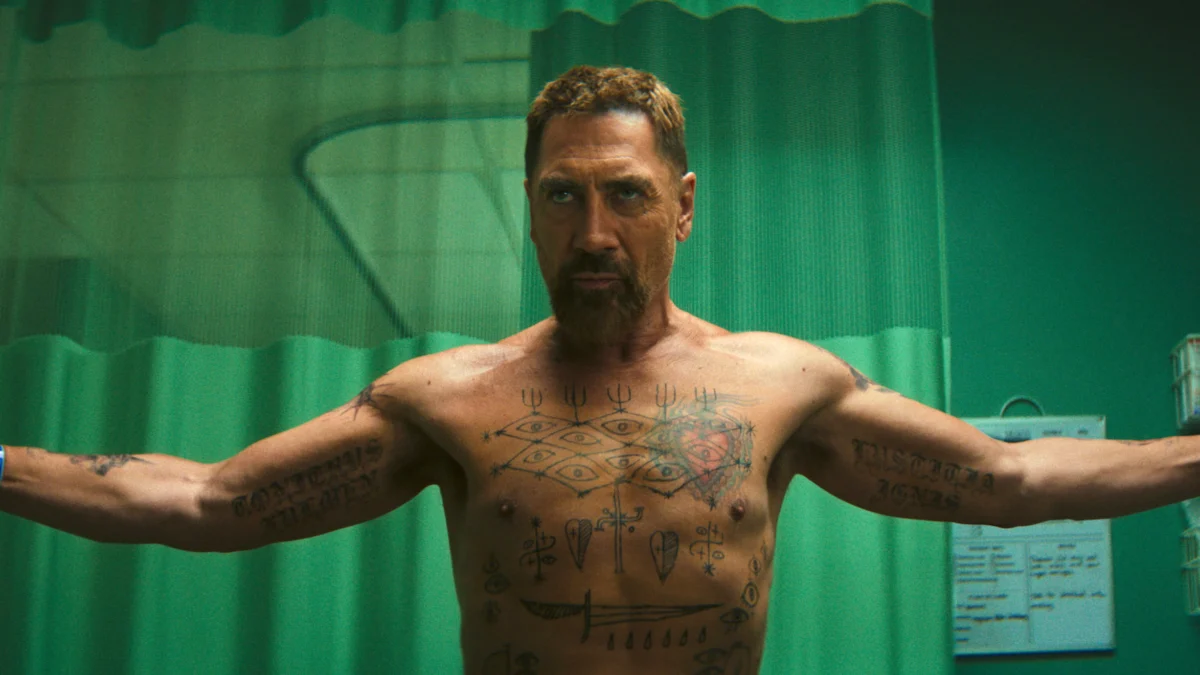
"By reimagining the classic protagonist as a divided legal duo and casting Javier Bardem as a formidable Max Cady, Apple TV+’s ‘Cape Fear’ transforms a legendary tale of retribution into a complex, ten-part exploration of modern morality and marital tension."
The story of Max Cady and the Bowden family has haunted the American psyche for over sixty years, evolving through various literary and cinematic iterations to reflect the anxieties of each passing decade. What began as a taut suspense novel has now found a new home on Apple TV+ as a prestige television series, signaling a shift from the condensed intensity of a feature film to the slow-burn psychological depth afforded by the episodic format. This latest adaptation, led by creator Nick Antosca and backed by executive producers Steven Spielberg and Martin Scorsese, seeks to honor the legacy of its predecessors while introducing radical structural changes that modernize the narrative’s core conflict.
A Legacy of Terror: From ‘The Executioners’ to the Big Screen
The journey of Cape Fear began in 1957 with John D. MacDonald’s novel The Executioners. The book established the foundational premise: Max Cady, a man of singular, obsessive focus, is released from prison and immediately begins a campaign of psychological and physical psychological warfare against Sam Bowden, the man he holds responsible for his incarceration. The novel explored the fragility of middle-class security and the ethical dilemmas of a "civilized" man forced to resort to primal violence to protect his family.
The story first reached the silver screen in 1962, featuring a legendary showdown between Robert Mitchum as the menacing Cady and Gregory Peck as the principled Sam Bowden. Mitchum’s performance was characterized by a quiet, predatory stillness that set the standard for cinematic villains. Nearly thirty years later, in 1991, Martin Scorsese revisited the material, casting Robert De Niro as a more operatic, tattooed, and religiously fanatical version of Cady. Scorsese’s version leaned into the Southern Gothic aesthetic, turning the Bowden family’s internal dysfunction into a catalyst for Cady’s intrusion. The story’s impact was so pervasive that it eventually entered the realm of parody, most notably in The Simpsons episode "Cape Feare," where Sideshow Bob took on the Cady role, cementing the story’s status as a foundational archetype of the revenge genre.

The Apple TV+ Reimagining: A New Structure
The most significant departure in the new Apple TV+ series is the decision to split the character of Sam Bowden into two distinct entities. In previous versions, Sam was a singular patriarch—a lawyer who represented both the legal system and the domestic protector. In this modern iteration, the burden is shared between Amy Adams, who plays defense attorney Anna Bowden, and Patrick Wilson, who portrays prosecutor Tom Bowden.
This structural change serves several purposes. First, it reflects a more contemporary view of professional and domestic partnerships, moving away from the "great man" trope of the 1960s. Second, it heightens the legal and ethical stakes. In this version, Max Cady’s grievance is not merely with a single individual’s testimony or legal strategy, but with a perceived conspiracy within the justice system itself. The fact that his former defense attorney (Anna) is married to the man who prosecuted him (Tom) creates a "conflict of interest" narrative that Cady exploits with surgical precision. This adds a layer of "soapy" intrigue and professional malpractice that wasn’t possible in the shorter film formats.
Javier Bardem and the Modern Max Cady
Central to the success of any Cape Fear adaptation is the casting of Max Cady. Javier Bardem, an actor who earned an Academy Award for his terrifying portrayal of Anton Chigurh in No Country for Old Men, steps into the role with a pedigree for playing unstoppable forces of nature. Bardem’s Cady is presented as a man who has been exonerated, allowing him to enter the lives of the Bowdens not just as a stalker in the shadows, but as a public figure seeking "justice."
This version of Cady is less of a backwoods brute and more of a psychological architect. By reinserting himself into the lives of Anna and Tom, he forces them to confront the moral shortcuts they may have taken in their careers. Bardem’s performance leverages his ability to switch between charismatic and chilling, making his Cady a villain who feels uniquely dangerous in an era of public discourse and legal maneuvering.
Creative Pedigree and Atmospheric Tension
The series is helmed by Nick Antosca, known for his work on Channel Zero and Brand New Cherry Flavor. Antosca has a reputation for blending grounded human drama with surreal, often horrific elements. This sensibility is reflected in the tone of Cape Fear, which eschews the dry pacing of a standard legal thriller in favor of something more visceral and high-stakes.

The atmospheric tension is further heightened by composer Jeff Russo, whose score is described as "overpowering" and intentional. The music signals to the audience that this is a story of heightened reality—a revenge fantasy where twists and gasps are more important than strict procedural realism. The involvement of Spielberg and Scorsese as executive producers ensures that the series maintains a high level of technical craft, serving as a bridge between the classic cinema of the past and the prestige streaming era of the present.
A Modern Setting for an Ancient Conflict
Setting Cape Fear in the present day allows the production to explore how technology and modern transparency change the dynamics of a stalking narrative. In 1962, a man like Cady could be kept at bay by a simple restraining order or a town’s collective shunning. In the 2020s, the battle is fought through reputation, legal filings, and the constant, digital presence of the antagonist.
The series explores the optics of the Bowdens’ relationship. The revelation that the defense and prosecution were romantically involved creates a scandal that Cady uses to systematically dismantle their lives. This shift moves the story away from a simple "home invasion" plot and toward a total deconstruction of a family’s social and professional standing.
The Complete Ten-Episode Journey
Unlike the films, which conclude in a singular, violent confrontation, the ten-episode format allows the series to explore the "phantom sensations" of Cady’s presence. Each episode title hints at the slow-burn nature of the plot, moving from the initial contact in "Fingers & Toes" to the inevitable reckoning in the finale, "The Executioners"—a nod to the original novel.
The release schedule for the series spanned the summer, allowing for a communal viewing experience that built momentum toward its July finale:

- Episode 1: “Fingers & Toes” (June 5)
- Episode 2: “Why Would I Want to Hurt You?” (June 5)
- Episode 3: “Phantom Sensations” (June 12)
- Episode 4: “Pierced” (June 19)
- Episode 5: “Faith” (June 26)
- Episode 6: “Possum” (July 3)
- Episode 7: “Mongrel” (July 10)
- Episode 8: “Los tiempos de Dios son Perfectos” (July 17)
- Episode 9: “The Scar” (July 24)
- Episode 10: “The Executioners” (July 31)
Conclusion: Why ‘Cape Fear’ Endures
The enduring appeal of Cape Fear lies in its exploration of the "unwanted guest"—the personification of a past mistake that refuses to stay buried. By expanding the narrative into a series, Apple TV+ has given the story room to breathe, allowing the characters of Anna and Tom Bowden to be more than just victims. They are flawed individuals whose past choices have created the very monster that now threatens them.
With a powerhouse cast including Amy Adams and Patrick Wilson, and the looming, magnetic presence of Javier Bardem, this iteration of Cape Fear stands as a testament to the power of reimagining classic stories for new generations. It is a fun, soapy, and ultimately harrowing look at the cost of revenge and the thin line between the law and justice. For those looking to dive into the full saga, all ten episodes are now available for streaming, offering a complete and chilling look at one of fiction’s most relentless rivalries.
