
"This vote is a procedural action about whether a subpoenaed witness could refuse to answer questions, not a finding about how the COVID-19 pandemic began. It carries no regulatory force over public health guidance."
The U.S. Senate Homeland Security and Governmental Affairs Committee has taken a significant procedural step, voting to hold retired infectious disease official Dr. Anthony Fauci in contempt of Congress. The August 6 vote, which passed 8-5 along party lines, stems from Fauci’s refusal to answer specific questions during a hearing on July 29, where he invoked his Fifth Amendment right against self-incrimination over 100 times. The committee’s resolution has been sent to the Justice Department for review, marking an escalation in a protracted dispute over transparency and accountability concerning the origins of the COVID-19 pandemic. Crucially, this contempt referral is a congressional process concerning a witness’s compliance, and it does not constitute a legal judgment on the pandemic’s origins or impact public health guidance on vaccines, treatments, or screenings.
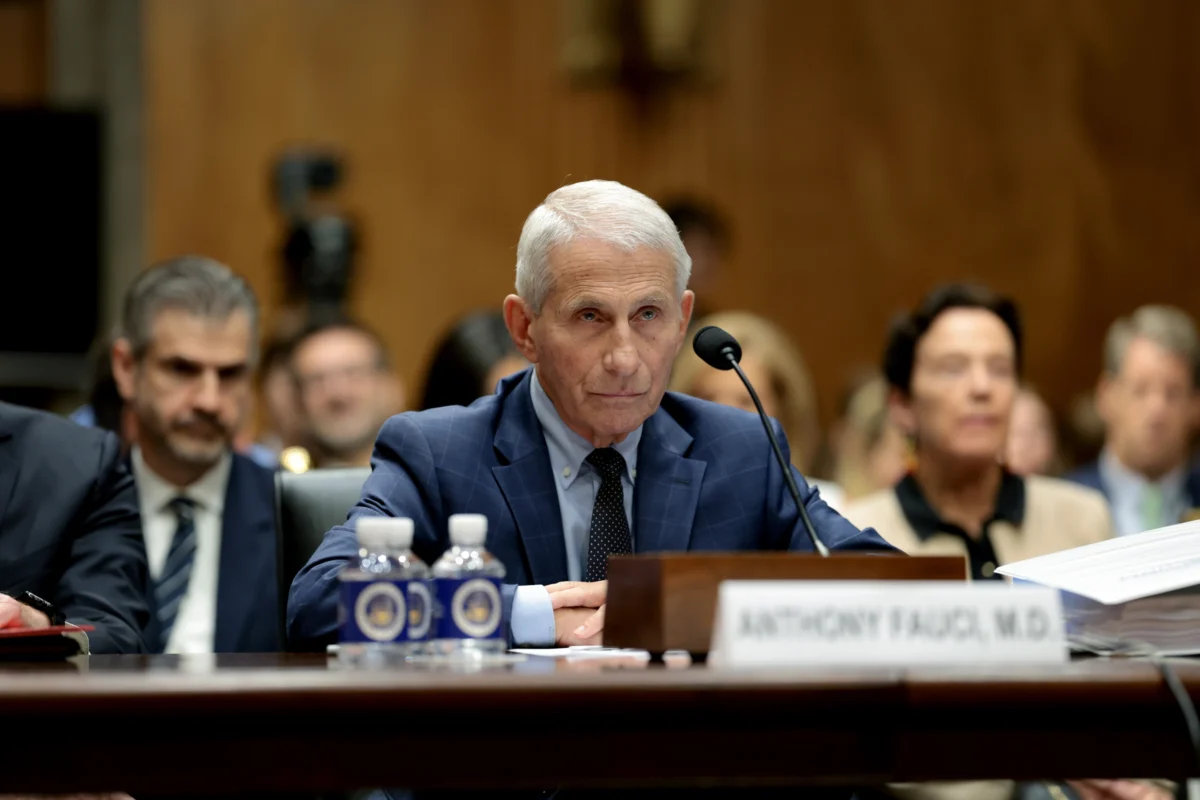
The decision by the Senate Homeland Security and Governmental Affairs Committee to refer Dr. Anthony Fauci for contempt of Congress signifies a deepening political and legal entanglement surrounding the unresolved questions about the COVID-19 pandemic’s origins. The vote, which occurred on August 6, 2026, concluded a contentious hearing on July 29 where Dr. Fauci, a central figure in the nation’s response to the pandemic, invoked his Fifth Amendment right against self-incrimination on more than 100 occasions. This invocation, he stated, was a direct response to what he perceived as a politically motivated inquiry by Chairman Rand Paul (R-KY) and a fear of criminal prosecution stemming from public statements made by the chairman. The committee’s resolution, approved by a margin of 8-5 along party lines, has been forwarded to the Department of Justice and the Attorney General’s office, bypassing the typical Senate floor vote. A Justice Department spokesperson confirmed receipt of the document and stated it is under review, initiating a phase where prosecutorial discretion will determine any further action.
This congressional action, while politically charged, represents a procedural mechanism to compel testimony. It is imperative to distinguish this from a determination of how the COVID-19 virus first emerged and spread globally. The contempt referral does not offer any scientific conclusions or new evidence regarding the pandemic’s genesis. The debate over the origins of COVID-19 has remained a persistent and divisive issue, shaping policy decisions related to biosafety regulations, pandemic preparedness investments, and the speed of international outbreak information sharing. Despite the passage of six years since the initial outbreak, definitive answers have remained elusive, impacting various facets of public health infrastructure and global cooperation. The August 6 vote, therefore, did not resolve these underlying scientific and epidemiological questions.
The committee’s proceedings on July 29 were marked by Dr. Fauci’s extensive invocation of the Fifth Amendment. He asserted that his decision was justified by Chairman Rand Paul’s public pronouncements expressing a desire for his imprisonment, coupled with the belief that he had already provided comprehensive answers to similar inquiries in prior appearances. In the lead-up to the hearing, Chairman Paul released over a thousand pages of Dr. Fauci’s private diary entries, a move that some interpreted as an attempt to gather leverage or evidence. Paul framed the contempt vote narrowly, emphasizing that it was a direct response to Dr. Fauci’s refusal to answer questions posed by the committee, rather than an indictment of his policy decisions or personal opinions. He stated to committee members, "The chair directed Anthony Fauci to answer. He refused. That is what we are voting on today. Not his opinions. Not his policies."
In response to the Republican-led motion, Democrats on the committee moved to table the resolution, a move that ultimately failed. Senator Gary Peters (D-MI), the committee’s ranking member, argued that criminal contempt is a punitive measure rather than a tool to compel testimony. He voiced concerns that such a referral could establish a damaging precedent, empowering future witnesses to resist legitimate congressional oversight and thereby weakening the committee’s ability to secure testimony. Dr. Fauci’s attorney, David Schertler, issued a statement characterizing the vote as a "crude political stunt intended to punish Dr. Fauci for exercising his constitutional rights." It is important to note that Dr. Fauci has not been formally charged with any criminal offense.
The legal ramifications of a contempt of Congress referral are significant. As outlined by PBS News, contempt of Congress is classified as a federal misdemeanor, carrying a potential penalty of up to one year in prison and a fine of as much as $100,000. The committee’s resolution directs Vice President JD Vance, in his capacity as President of the Senate, to certify the referral to the U.S. Attorney for the District of Columbia. The ultimate decision of whether to pursue criminal charges rests solely with the Department of Justice. Republicans on the committee have advanced an argument that a preemptive pardon granted to Dr. Fauci by President Joe Biden, covering conduct from 2014 through January 2025, removed his exposure to prosecution and, consequently, his legal basis for invoking the Fifth Amendment. However, this pardon would not extend to conduct occurring after its issuance, including statements made during current testimony. Legal analysts, such as former federal prosecutor Elie Honig speaking for CNN, have described the legal argument against Dr. Fauci’s Fifth Amendment assertion as complex and noted that the threshold for a criminal conviction would be substantial.
Critically, the contempt referral and the underlying political dispute have no bearing on the scientific investigation into the pandemic’s origins. A finding of contempt pertains exclusively to a witness’s conduct during a congressional hearing and does not involve an evaluation of virological evidence or the generation of new data concerning the pandemic’s inception.
The scientific and intelligence communities have presented divergent perspectives on the origins of COVID-19, with varying degrees of confidence attached to their assessments. The House Select Subcommittee on the Coronavirus Pandemic, led by Republicans, released a comprehensive 520-page report in December 2024, concluding that the most probable origin of COVID-19 was a laboratory in Wuhan. This report, however, relied on circumstantial evidence rather than new, direct proof. In contrast, Democrats on the same subcommittee issued a dissenting report, asserting that the investigation had not definitively established the virus’s origin and that Dr. Fauci had not orchestrated a campaign to suppress information about a potential lab leak.
U.S. intelligence agencies also remain divided. The Federal Bureau of Investigation (FBI) and the Department of Energy have leaned towards a research-related origin. In January 2025, the Central Intelligence Agency (CIA) indicated that a research-related origin was more likely than a natural one, but it simultaneously stated it had "low confidence in that judgment," acknowledging that both scenarios remain plausible. This assessment was based on existing reporting, not on new intelligence gathering. Other intelligence agencies have favored the theory of natural zoonotic spillover from animals to humans.
On the international front, a World Health Organization (WHO) scientific advisory group, comprising 27 members, concluded after three years of deliberation that the "weight of available evidence" supports an animal-to-human spillover event. However, the group also noted its inability to definitively close the case due to China’s refusal to provide requested records. A 2024 analysis published in the journal Cell found that samples collected from the Wuhan market, which tested positive for SARS-CoV-2, clustered around a stall selling live animals. Proponents of the laboratory origin theory have pointed out that such analyses are contingent on data provided by the Chinese government and that no infected animal from the market has been definitively identified as the source.
Beyond the origin debate, a separate thread has led to formal governmental action concerning research funding. In January 2025, the Department of Health and Human Services (HHS) formally debarred EcoHealth Alliance and its president, Dr. Peter Daszak, from receiving federal funding for a period of five years. HHS cited EcoHealth Alliance’s failure to report on gain-of-function experiments conducted at the Wuhan Institute of Virology, their disregard for oversight requests, and a significant delay in submitting a required research report under a National Institutes of Health (NIH) grant. This action represents an administrative finding regarding grant compliance and oversight, not a determination that any specific funded experiment directly caused the emergence of SARS-CoV-2. House Democrats, in their report, concluded that the viruses studied under the grant were genetically too distant from SARS-CoV-2 to have caused the pandemic, and Dr. Fauci has consistently denied that NIH-funded research was responsible for the outbreak. The critical distinction here is that grant oversight failures and the origin of the virus, as well as the scientific basis for current health recommendations, are supported by entirely different bodies of evidence.
The referral to the Justice Department now places the onus on federal prosecutors to decide whether to pursue charges against Dr. Fauci. No specific timeline for this decision has been announced. Chairman Rand Paul has not ruled out seeking a full Senate vote on the contempt resolution at a later date, which would require 60 votes to carry the full force of the chamber. Dr. Fauci’s legal team has indicated its intention to vigorously contest the referral. On the scientific front, the WHO advisory group has reiterated its need for further records from China to advance its investigation, suggesting that the origin question is likely to remain open in the absence of this cooperation.
Ultimately, the Senate committee’s referral of Dr. Fauci to the Justice Department for contempt of Congress is a significant procedural event, but it does not alter the fundamental understanding of how the virus first transmitted to humans. Prosecutors are currently reviewing the matter, and no charges have been filed. Individuals making decisions about vaccinations, screenings, or treatments should rely on the established scientific evidence and guidance provided by public health authorities and healthcare professionals, rather than interpreting a congressional committee vote as a basis for clinical advice. The integrity and evidence base of health recommendations remain paramount, irrespective of political proceedings.
Key Questions Answered
What did the Senate committee actually vote on?
The Homeland Security and Governmental Affairs Committee voted 8 to 5 on August 6, 2026, to hold Anthony Fauci in contempt of Congress for declining to answer questions at a July 29 hearing, and to refer the matter to the Justice Department.
Does the vote mean Fauci has been charged with a crime?
No. Contempt of Congress is a federal misdemeanor, but only the Justice Department can bring charges. It has confirmed receiving the referral and said it is reviewing the matter. Fauci has not been charged.
Does invoking the Fifth Amendment indicate wrongdoing?
No. It is a constitutional right available to any witness. Whether it applied here, given the pardon Fauci received in January 2025, is the legal question in dispute.
Did the vote establish anything new about how COVID-19 started?
No. It concerns a witness’s refusal to answer questions. It produced no new virological evidence and no new intelligence finding.
What have official reviews concluded about the origin?
They disagree. A House Republican report concluded a lab origin was most likely, House Democrats said the origin was not established, U.S. intelligence agencies are split with several holding low confidence, and a WHO advisory group found the weight of evidence favors animal spillover while noting that key Chinese records remain unavailable.
Was anyone penalized over the research funding questions?
Yes, on grant compliance grounds. HHS debarred EcoHealth Alliance and Peter Daszak from federal funding for five years in January 2025 over unreported experiments and grant violations. That action did not find that a funded experiment caused the pandemic.
Should any of this change a personal health decision?
No. A contempt referral has no bearing on clinical guidance. Anyone weighing a vaccine, screening, or treatment decision should check the recommendation’s stated evidence and review date, or speak with a clinician who knows their history.
