
"True character is forged not in moments of comfort, but through the ‘crucible’ of hardship and the willingness to admit one has everything to learn."

In the upcoming A24 biopic Tony, director Matt Johnson and actor Dominic Sessa explore the formative, often turbulent 1975 summer of a young Anthony Bourdain in Provincetown, Massachusetts. Moving beyond the polished legacy of the global culinary icon, the film serves as a gritty coming-of-age study that examines how a self-described "miserable lout" utilized the pressures of a professional kitchen and the chaos of youth to construct the foundation of his future identity.
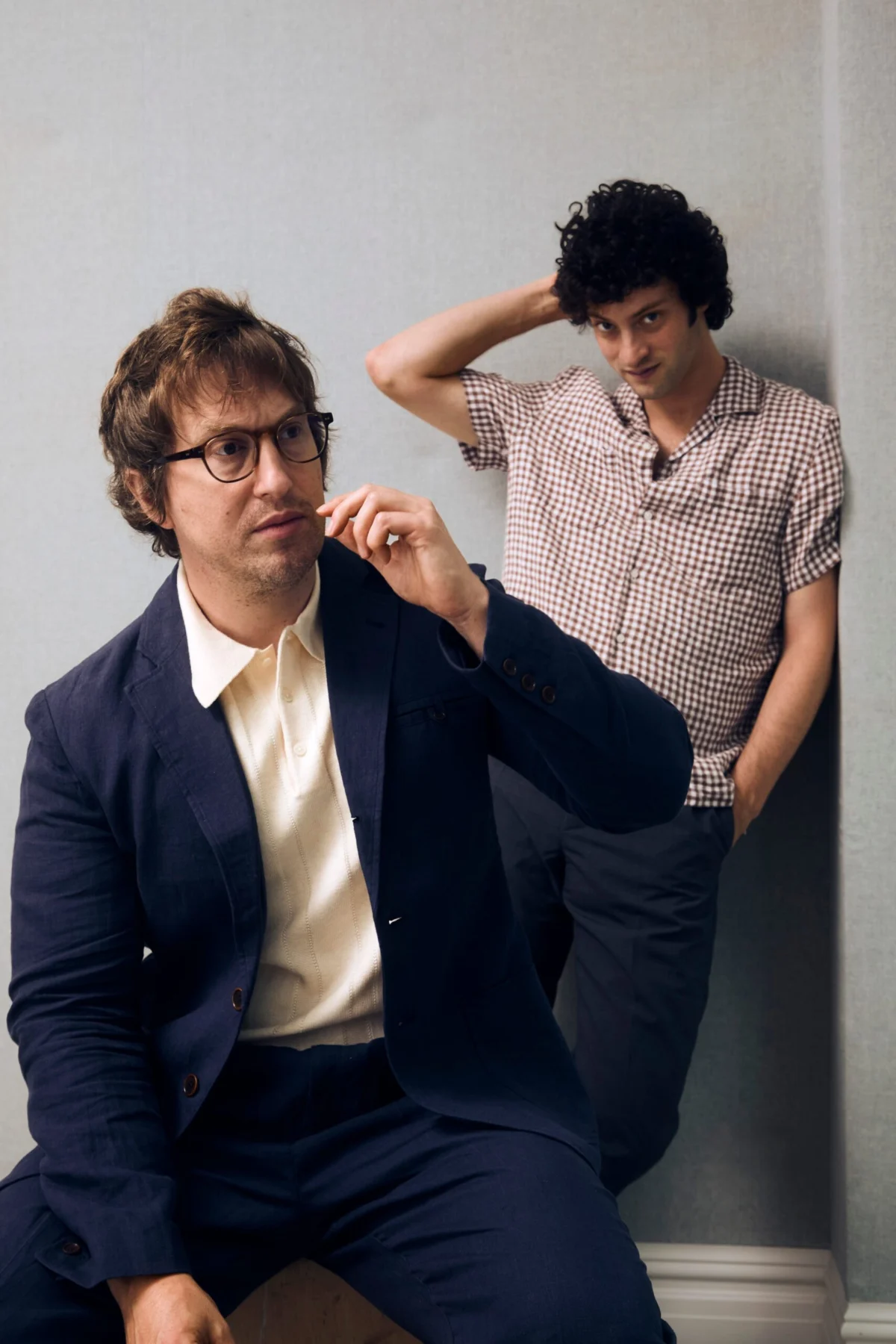
The setting is a quiet corner of a Tribeca restaurant, a stark contrast to the humid, high-velocity kitchens of 1970s Provincetown depicted in the new film Tony. Seated together are the two men responsible for bringing this specific, pre-fame chapter of Anthony Bourdain’s life to the screen: director Matt Johnson and breakout star Dominic Sessa. Their synergy is immediate, characterized by a shared language and a mutual respect for the "naturalistic" approach to storytelling that defines their collaboration.

For many, Anthony Bourdain is the patron saint of modern travel and culinary curiosity—a man who transitioned from the "line" to the limelight with a singular, gravelly authority. However, Tony chooses to ignore the international celebrity and the polished television persona. Instead, it draws from the early, visceral chapters of Bourdain’s 2000 memoir, Kitchen Confidential, focusing on a nineteen-year-old version of the man. This Tony is not yet a chef, nor a writer; he is a college dropout, a dishwasher, and, by his own admission, a "spoiled, miserable, self-destructive young lout."
The film’s journey to the screen began with a script featured on the 2024 Black List, an annual compilation of the industry’s most liked unproduced screenplays. Matt Johnson, the 40-year-old auteur known for the corporate-thriller BlackBerry and the improvisational Nirvanna the Band the Show, was not looking for a biopic. He was looking for a partner. He found that partner in Dominic Sessa, the 23-year-old actor who captivated audiences opposite Paul Giamatti in The Holdovers. Johnson’s decision to helm the project was driven less by a lifelong obsession with Bourdain and more by the potential he saw in Sessa to inhabit a character defined by vulnerability, arrogance, and an urgent need for direction.

A significant portion of the film’s authenticity stems from the fact that neither Johnson nor Sessa were Bourdain devotees prior to production. This lack of a "fan-first" agenda allowed them to approach the biography as a discovery rather than a hagiography. They were not trying to mimic a legend; they were trying to understand a boy. As Sessa notes, the 1970s setting became a vehicle for exploring universal themes of mentorship and self-discovery. This objective lens allowed the production to portray Tony with total honesty—flaws, lies, and all.
Johnson’s directorial style is famously unconventional. He favors a "faux-documentary" or naturalistic format that prioritizes real-world interaction and improvisation over rigid scripting. In Tony, this manifests in a camera that lingers on Sessa’s expressive face, capturing the internal gears of a young man trying to "problem-solve" his way into adulthood. Johnson operates under the philosophy, famously articulated by Thelonious Monk, that "genius is the man who is most like himself." By encouraging Sessa to avoid over-preparation and instead react authentically to his environment, Johnson captures a performance that feels less like acting and more like a live-wire transmission of a person in flux.

The film’s narrative structure is built upon a dualism of mentorship, represented by two contrasting figures in Tony’s life: Sal and "Chef." Sal, played by Leo Woodall (The White Lotus), is the charismatic, free-spirited friend who introduces Tony to the "underside" of life—the parties, the recklessness, and the intoxicating freedom of the 1970s. In contrast, Antonio Banderas portrays "Chef," a figure of stern professionalism and uncompromising standards.
These two characters serve as the north and south poles of Tony’s development. Sal teaches him that life can be grabbed by the neck and experienced without fear, while Chef teaches him that excellence requires discipline and the surrender of one’s ego. The film utilizes twin montages to illustrate these influences, showing Tony’s gradual transformation from a jittery outsider to someone who understands the rhythm of the kitchen. While Sal eventually represents a path toward self-destruction—highlighted by a poignant scene where Tony watches his friend’s descent into addiction—Chef represents the redemptive power of work.

One of the most striking aspects of Tony is its handling of Bourdain’s eventual struggle with heroin. Rather than depicting Tony’s own later addiction, the film focuses on a pivotal moment where he observes Sal using the drug. It is a moment of silent, non-verbal processing for Sessa. Johnson intentionally keeps the camera on Tony’s face, showing the "seed being planted." It is a glimpse into a future the character isn’t yet ready to face, but one that the audience knows is looming. This choice emphasizes the film’s focus on the "mental health journey" and the psychological architecture of a man who would eventually become an advocate for honesty in the face of darkness.
The production itself became a "crucible" for the cast and crew. Facing a compressed schedule—shooting a 40-day movie in just 20 days—the team worked in a state of constant, high-pressure motion. For Johnson and Sessa, this mirrored the intensity of the kitchen environments they were depicting. They describe the experience as "crawling through a foxhole covered in broken glass," a reference to psychiatrist Viktor Frankl’s Man’s Search for Meaning. Frankl’s philosophy is central to Johnson’s view of the film: that a man can endure any "how" if he has a "why."

Johnson argues that in a modern world defined by a pursuit of comfort, the value of a "difficult challenge" is often lost. He views Tony’s summer in Provincetown as a necessary rite of passage—a period of hell that, rather than crushing him, refined him. This perspective reframes the "struggling artist" trope not as a romantic ideal, but as a practical necessity for character building. "Comfort can become a prison," Johnson suggests, advocating for the idea that one must be willing to "wash dishes in a shitty kitchen" or put themselves through a grueling creative process to truly find themselves.
For Dominic Sessa, Tony marks his first time as "number one on the call sheet," a position of leadership he approached by observing the veterans around him. His ability to lead a cast that includes seasoned actors like Banderas and rising stars like Woodall and Emilia Jones speaks to his rapid maturation as a performer. The bond formed between Sessa and Johnson during the shoot has transitioned into a genuine, "fated" friendship, one they believe will lead to future collaborations.

Ultimately, Tony is more than a culinary biopic; it is a film about the "cathedral of the self." It posits that every labor, every toil, and every mistake is a brick in a much larger structure that may take a lifetime to finish. By focusing on the unpolished, "piece of shit" version of Anthony Bourdain, the film offers a message of hope to young men who feel lost or self-destructive. It suggests that the journey of life is fraught with ups and downs, but those very experiences are what allow an individual to eventually develop a persona that can inspire the world.
As the film prepares for its release, it stands as a testament to the power of naturalistic filmmaking and the enduring relevance of Bourdain’s early life. It does not offer a saint, but a human being—one who was willing to admit he knew nothing so that he might eventually learn everything. Through the lens of Johnson and the performance of Sessa, Tony invites audiences to embrace their own crucibles and begin the long, difficult work of building their own cathedrals.
