
"The foundation of long-term physical transformation lies not in the complexity of the routine, but in the precision and consistency of foundational movement patterns that trigger early neurological adaptations."
The initial phase of strength training is characterized by a unique physiological phenomenon known as "newbie gains," where the body and nervous system undergo rapid adaptation to external resistance. During this period, the primary driver of progress is often neuromuscular—the brain becomes more efficient at recruiting motor units—rather than purely hypertrophic. To maximize this window of opportunity, beginners must prioritize a structured plan centered on multi-joint compound movements. By utilizing dumbbells, which offer a greater range of motion and require more stabilization than machines, novices can build a balanced, resilient physique while mastering the essential mechanics of human movement.

The Science of the Start: Understanding Early Adaptation
Strength training is frequently perceived through the lens of aesthetic change, yet its most profound early impacts occur within the nervous system. When a beginner first lifts weights, the initial increase in strength is largely the result of improved motor unit synchronization and a reduction in protective neural inhibition. This means the body is learning how to use the muscle it already has more effectively.
Kurt Ellis, C.S.C.S., a prominent strength and performance coach, emphasizes that the most effective way to harness these adaptations is through a minimalist approach. Beginners do not require a vast array of specialized equipment or high-volume "isolation" exercises. Instead, they need to master the fundamental movement patterns: the hinge, the pull, the squat, and the push. Using dumbbells for these patterns provides a unique advantage; unlike barbells, which can mask bilateral imbalances, dumbbells force each side of the body to work independently, ensuring that strength is developed symmetrically from the outset.
The Romanian Deadlift (RDL): Mastering the Hinge
The Romanian Deadlift is arguably the most critical exercise for developing the posterior chain—the group of muscles including the hamstrings, glutes, and lower back. Unlike a traditional deadlift that starts from the floor, the RDL begins in a standing position and focuses on the eccentric (lowering) phase of the movement.

Why It Matters:
The "hinge" is a fundamental human movement used in everything from picking up a grocery bag to jumping. The RDL teaches an athlete how to load the hips while maintaining a neutral spine. Ellis notes that this move "sets the tone for everything," as it prepares the body to handle larger loads safely in the future. Beyond aesthetics, a strong posterior chain is essential for spinal health and athletic longevity.
Technical Execution:
To perform the RDL correctly, stand with feet hip-width apart, holding a pair of dumbbells in front of your thighs. With a slight bend in the knees, initiate the movement by pushing the hips back as if trying to touch a wall behind you. Lower the weights along the line of your shins, keeping them close to the body, until you feel a deep stretch in the hamstrings. It is vital to keep the back flat and the shoulder blades retracted; rounding the spine under load is a common error that can lead to injury. Drive through the heels to return to a standing position, squeezing the glutes at the top.
Programming:
For beginners, Ellis recommends 3 to 4 sets of 6 to 8 repetitions. This lower rep range allows for a focus on heavy, high-quality movements without the form breakdown that often accompanies high-volume fatigue.

The Chest-Supported Row: Building a Resilient Upper Back
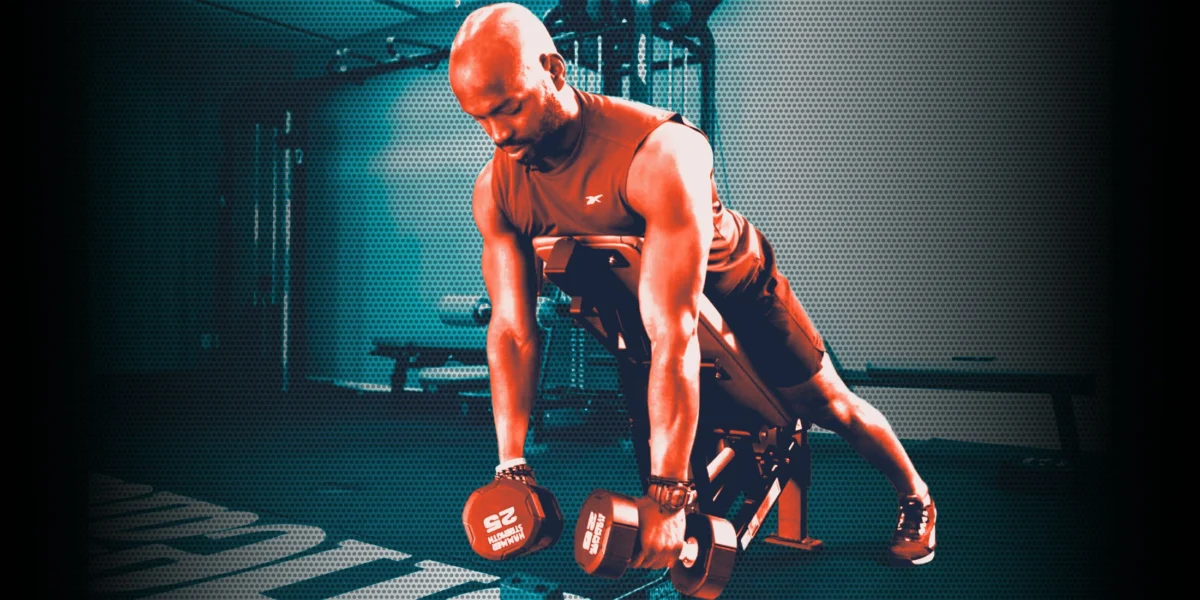
While the "push" (like the bench press) often gets the most attention in the gym, the "pull" is arguably more important for long-term shoulder health and posture. The chest-supported row is a variation that removes the common pitfalls of the traditional bent-over row.
Why It Matters:
In a standard bent-over row, the lower back often becomes the limiting factor, fatiguing before the lats and rhomboids. By lying prone on an incline bench, the trainee stabilizes their torso, allowing for total isolation of the mid and upper back muscles. Ellis highlights that this move also develops grip strength, a metric frequently cited in clinical studies as a key indicator of overall longevity and cardiovascular health.
Technical Execution:
Set an adjustable bench to a 45-degree incline. Lie face down with your chest firmly against the pad and feet planted on the floor for stability. Let the dumbbells hang at arm’s length with a neutral grip (palms facing each other). Pull the weights toward your ribcage, leading with the elbows and squeezing the shoulder blades together at the peak of the movement. Control the descent to maximize the eccentric tension.

Programming:
A higher volume is generally preferred for back work to build endurance and muscle thickness. Aim for 3 to 4 sets of 8 to 12 repetitions.
The Goblet Squat: The Gold Standard for Leg Development
The squat is often called the "king of exercises," but the barbell back squat can be intimidating and technically demanding for a novice. The goblet squat serves as the perfect entry point.
Why It Matters:
By holding a single dumbbell against the chest, the weight acts as a counterweight. This naturally pulls the torso into a more upright position, making it easier to achieve a deep range of motion without rounding the lower back. Ellis explains that this move "teaches your body how to sit and stand with proper form," while simultaneously challenging the quadriceps, glutes, and core stabilizers.

Technical Execution:
Hold one end of a dumbbell with both hands at chest height, tucking your elbows in. Stand with feet slightly wider than shoulder-width, toes pointed slightly outward. Lower your hips down and back, keeping your chest up and ensuring your knees track over your toes. Descend until your thighs are at least parallel to the floor, then drive through the mid-foot to return to the starting position.
Programming:
To build both strength and metabolic conditioning, Ellis suggests 3 to 4 sets of 8 to 12 repetitions.
The Dumbbell Bench Press: Developing Horizontal Push Strength
The bench press is the quintessential chest-building exercise, but using dumbbells offers several advantages over the traditional barbell version, particularly for beginners.

Why It Matters:
Dumbbells allow for a more natural path of motion and a greater stretch at the bottom of the movement. Furthermore, they require significant stabilization from the rotator cuff and smaller muscles of the shoulder, which helps prevent the injuries often associated with heavy barbell pressing. Ellis notes that building pushing strength is an "underrated physical characteristic" that carries over into nearly every other upper-body exercise.
Technical Execution:
Lie back on a flat bench with a dumbbell in each hand, held at chest level. Plant your feet firmly on the ground to create a stable base. Press the weights toward the ceiling, extending your arms fully without locking the elbows. Lower the weights slowly until they are level with your chest, feeling the stretch across the pectorals before initiating the next rep.
Programming:
Focus on 3 sets of 8 to 10 reps to balance muscle growth with the development of pressing mechanics.

The Path Forward: Consistency and Gear
Success in a beginner’s muscle-building program is predicated on the principle of progressive overload—the gradual increase of stress placed upon the body during exercise. This can be achieved by increasing the weight, adding more repetitions, or reducing rest periods. However, for a beginner, the most important variable is consistency.
To execute these moves effectively, having the right equipment is essential. While a commercial gym offers a wide variety of weights, a home setup can be equally effective with the right tools. High-quality hex dumbbells or adjustable sets, such as the SMRTFT Nuobell, allow for quick weight changes and space efficiency. Additionally, a sturdy adjustable bench, like the REP Fitness 3000, is necessary for performing the chest-supported row and the bench press safely.
By focusing on these four cornerstone exercises—the RDL, the row, the squat, and the press—beginners can bypass the confusion of complex routines and build a foundation of strength that will serve them for a lifetime. As Ellis’s Beginner’s Guide to Muscle suggests, the journey toward a better body does not require a reinvented wheel; it requires the disciplined mastery of the basics.
