
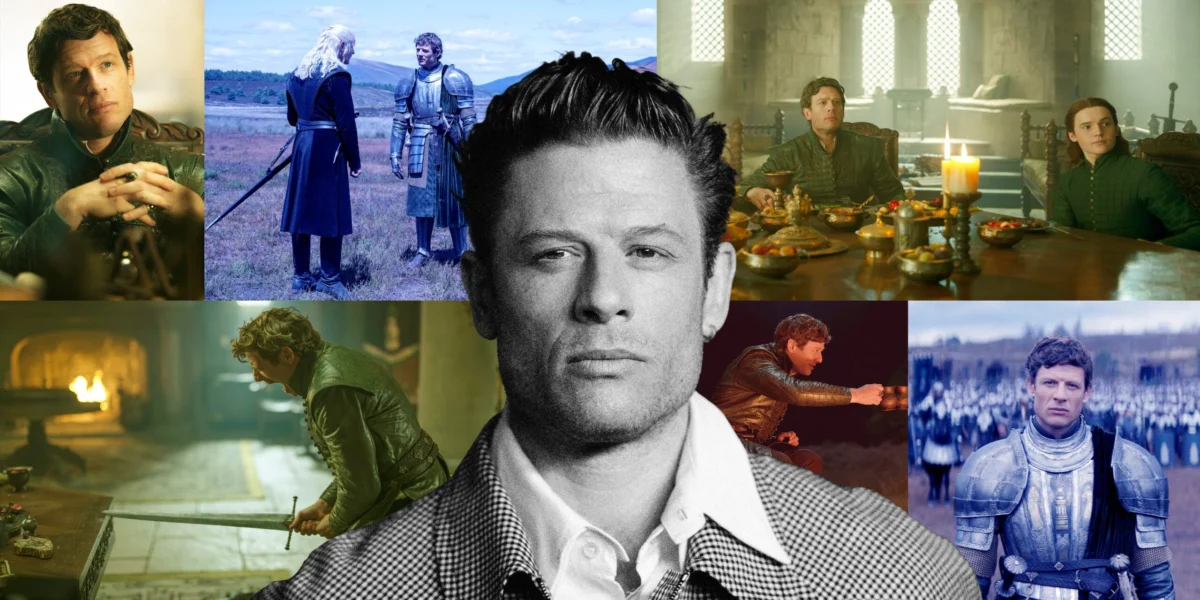
"James Norton’s portrayal of Ormund Hightower transformed a secondary literary figure into a complex, tragic antagonist, blending a paternal sense of duty with a chilling, manipulative ambition that culminated in one of the series’ most visceral and memorable exits."

The third season of House of the Dragon has consistently pushed the boundaries of the high-fantasy genre, evolving from a dynastic drama into a full-scale continental war. At the heart of this season’s antagonistic force was James Norton’s Ormund Hightower, a character who, despite his relatively brief tenure, left an indelible mark on the landscape of Westeros. Norton’s performance balanced the aristocratic pomposity of Oldtown with a raw, desperate humanism, particularly in his relationship with Daeron Targaryen. His departure in the season finale marks a significant turning point for the Green faction and serves as a testament to the show’s ability to turn minor book characters into central, driving forces of the narrative.
The Architect of a Theatrical Villain
When James Norton was first cast as Ormund Hightower, readers of George R.R. Martin’s Fire & Blood might have expected a straightforward military commander. However, Norton and showrunner Ryan Condal had a different vision. They sought to create a man who was as much a product of his refined upbringing as he was a victim of his own fanatical devotion to the Hightower legacy. Norton, 41, approached the role with a specific goal: to avoid the "comic book villain" trope. Instead, he crafted a man of "theatrical bravado," an egomaniac who masked a delicate constitution behind the steel of his armor.

In his early discussions with Condal, Norton emphasized that Ormund could not be defined solely by his manipulativeness. This led to the creation of a character who was almost preening in his self-importance, yet grounded by a genuine, albeit twisted, paternal love for his ward, Daeron Targaryen (played by Benjamin Evan Ainsworth). This duality made Ormund a "razor-thin" act; he was someone the audience could despise for his power-hungry machinations, yet respect for the conviction with which he carried them out.
The Paternal Puppet Master
The emotional core of Ormund’s arc was his relationship with Daeron. In the season 3 finale, this relationship reached both its zenith and its nadir. The scene in which Ormund knights Daeron was intended to be a moment of authentic pride. Norton notes that despite the political utility of having a Targaryen prince under his tutelage, there was a real sense of history between the two. Daeron, having been raised in Oldtown away from the toxic environment of the Red Keep, looked to Ormund as a surrogate father.

Norton and Ainsworth worked to ensure this tenderness felt earned. For Ormund, Daeron was the key to ultimate power—the "puppet" he hoped to install in King’s Landing—but the boy was also a "good, diligent" student whom Ormund had shaped for years. This paternal pride made the subsequent betrayal even more devastating. When Daeron and Gwayne Hightower attempted to broker a secret peace with the Blacks, bypassing Ormund’s authority, the blow was personal. Norton reflects on filming the discovery of this betrayal by tapping into his own experiences of being let down by loved ones, aiming to show that even a "monster" like Ormund is capable of feeling the sting of a broken bond.
The First Battle of Tumbleton: A Final Stand
The season finale’s centerpiece was the First Battle of Tumbleton, a sequence that exemplified the brutal reality of dragon-led warfare. Ormund’s strategic mind, which had served him well in the war councils of Oldtown, proved no match for the chaotic violence of the battlefield. Despite his outward confidence and his claim of strategic advantage, Norton suggests that Ormund possessed a fatalistic "suicide wish." Pitting a single young dragon against the overwhelming might of the Blacks’ aerial forces was a move born of fanaticism rather than logic.

The mechanics of Ormund’s death have already become a point of discussion among the fanbase. His end was a two-stage execution: first, a visceral assault by the Northern warlord Roderick (Tommy Flanagan), followed by a cleansing fire from Ulf (Tom Bennett). The specifics of the death—involving a dagger used in a particularly humiliating fashion—were the brainchild of stunt coordinator Rowley Irlam. Norton recalls the extensive rehearsals required for the sequence, noting that the "ass-stabbing" was refined through multiple iterations to ensure it was as memorable as it was shocking.
The irony of Ormund’s end was not lost on the actor. A man who spent the season obsessing over refined scents—using a lavender-infused pomander to ward off the stench of the common folk—died amidst the gore and vomit of a muddy battlefield. This "intolerance to smell" was a trait Norton shared with the character, as the actor suffers from misophonia, a condition that makes certain sounds and smells particularly distressing. This shared trait allowed Norton to bring a level of physical discomfort to Ormund that made the character’s aristocratic disdain feel palpable.

The Craft of Westeros
Beyond the character beats, Norton’s experience on House of the Dragon highlighted the sheer scale of modern television production. The actor spoke with reverence about the attention to detail provided by the various departments. From the armorers who carved the sigils of the Seven into his breastplate to the prosthetics team that spent five hours turning him into a charred corpse for his final scene, the commitment to immersion was total.
Norton’s "tour of Tumbleton" and his visits to the armory underscored the collaborative nature of the show. He noted that the high standards set by the crew pushed the actors to "up their game." In a digital age where CGI is often used as a crutch, House of the Dragon’s reliance on practical effects and detailed craftsmanship provided Norton with a tangible world to inhabit. Even his final appearance as a "charred corpse" was a result of meticulous makeup work rather than post-production trickery, a choice that Norton felt gave his exit the weight it deserved.

Legacy and the Road to Season 4
As the dust settles on Tumbleton, the loss of Ormund Hightower leaves a vacuum within the Green military hierarchy. His death, alongside the betrayal by Daeron, signals a fracturing of the Hightower influence that has dominated much of the conflict. For Norton, the experience was a "hell of a season" that allowed him to explore the full spectrum of the Song of Ice and Fire universe. He exits the series having played a character who "loved being Ormund," a man who lived and died by the sword and the status of his house.
The First Battle of Tumbleton will likely be remembered as one of the franchise’s most brutal set pieces, not just for the dragonfire, but for the intimate, ugly ways in which its central players met their ends. For James Norton, Ormund Hightower was more than just a villain; he was a study in the costs of ambition and the fragility of a legacy built on manipulation. As the show moves toward its fourth season, the shadow of the Hightower patriarch will continue to loom over the remaining players, a reminder that in the dance of dragons, even the most calculated strategies can end in a ball of flame and a "memorable death."
