
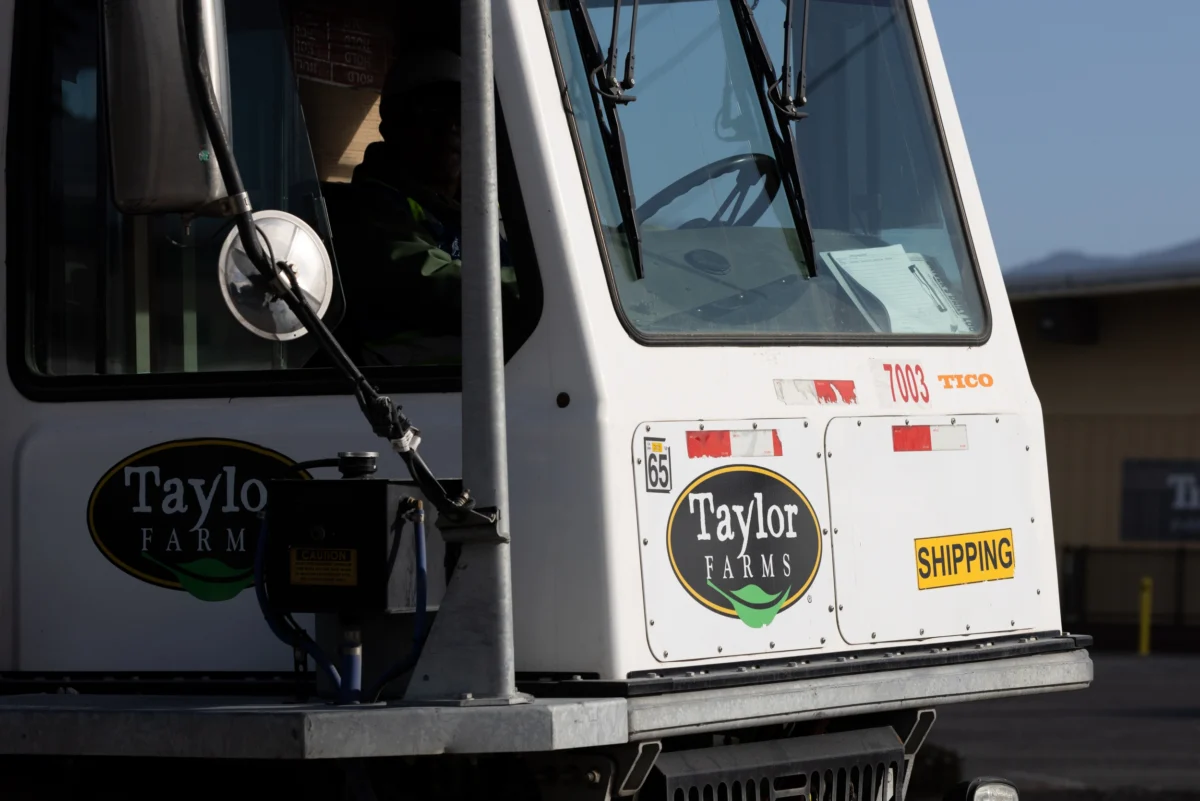
"The unique life cycle and resilient nature of Cyclospora cayetanensis render traditional produce washing ineffective, highlighting a critical gap in food safety protocols that allowed a widespread outbreak to occur."
A significant outbreak of Cyclospora infections, now encompassing 6,358 confirmed illnesses across 15 states, underscores the limitations of conventional food safety practices when confronting certain microscopic pathogens. Federal officials have definitively linked this widespread illness to iceberg lettuce supplied by Taylor Farms de Mexico. The outbreak has resulted in 278 hospitalizations and tragically, two fatalities in Michigan. The initial onset of illnesses was recorded on June 22, with the most recent case appearing on July 31, indicating a prolonged period of exposure and an ongoing investigation by the Food and Drug Administration (FDA). The culprit, Cyclospora cayetanensis, is not a bacterium, but a single-celled parasite, and this fundamental difference is key to understanding both the outbreak’s origins and why routine preventative measures, such as washing lettuce, proved insufficient.
The distinct biological characteristics of Cyclospora cayetanensis dictate its transmission pathways and explain the outbreak’s trajectory. Unlike many common foodborne bacteria, Cyclospora oocysts, the parasite’s resilient, protective structures, are shed in the feces of infected individuals. Crucially, these oocysts are not infectious immediately upon leaving the host. They require a period of maturation, ranging from days to weeks, within the environment, dependent on specific temperature and moisture conditions, to transform into an infectious form. This environmental incubation period is the primary reason why cyclosporiasis does not spread directly from person to person. Consequently, a food handler cannot contaminate a dish and cause illness on the same day, nor can an infected individual transmit the parasite to a family member through casual contact.
The contamination of produce with Cyclospora is therefore an environmental issue. Infectious oocysts typically reach crops through contaminated water sources. This contamination can occur via irrigation water used in fields or during post-harvest washing and packing operations. While Cyclospora does not have a significant animal reservoir, human waste entering water sources serves as the most probable pathway for environmental contamination. This explains why Cyclospora outbreaks tend to be geographically and seasonally clustered, often associated with fresh produce grown in specific regions and during particular times of the year. Leafy greens, berries, and herbs, which are frequently consumed raw, are particularly vulnerable if grown in areas where water sources may be compromised. The seasonal nature of the parasite’s maturation and prevalence is so recognized that clinicians in certain regions are advised to consider cyclosporiasis in patients presenting with prolonged diarrhea during the late spring and summer months, even in the absence of a known outbreak.
The limitations of standard produce washing practices are starkly illustrated by this outbreak. While washing fruits and vegetables remains a critical and recommended step for reducing exposure to bacteria and other common contaminants, it is demonstrably insufficient against Cyclospora. The Centers for Disease Control and Prevention (CDC) explicitly states that washing produce may not effectively remove Cyclospora. This inefficacy stems from several properties of the parasite’s oocysts. Firstly, they are microscopic, measuring approximately eight to 10 micrometers, allowing them to lodge deeply within the intricate surface irregularities, vein structures, and crevices of produce, areas that a surface rinse cannot adequately penetrate. Secondly, Cyclospora oocysts adhere tenaciously to the surface of produce, rather than sitting loosely, making them difficult to dislodge.
Perhaps the most significant challenge for industrial food processing lies in the parasite’s resistance to common sanitizers. Cyclospora oocysts exhibit a high degree of resistance to chlorine and other disinfectants typically employed in commercial produce wash systems at standard concentrations. While these systems are effective at reducing bacterial loads, they have a comparatively negligible impact on Cyclospora. The problem is further compounded by the processing of produce, particularly in the case of shredded and pre-cut items. This outbreak was initially identified among individuals who had consumed shredded iceberg lettuce at Taco Bell restaurants. The act of shredding and cutting lettuce significantly increases the surface area, creating more opportunities for oocysts to become trapped. Furthermore, when product from multiple heads of lettuce is mixed, any contamination present in a single head can be distributed across numerous packages and, consequently, a much larger consumer base. While cooking effectively kills the Cyclospora parasite, this is not a practical solution for ready-to-eat salads.
The detection of Cyclospora in food products presents a significant challenge, and this outbreak publicly exposed the existing gaps in detection capabilities. Shortly after Taylor Farms issued its recall notice, the FDA announced that a sample of the company’s iceberg lettuce, from a batch outside the recall scope, had tested positive for Cyclospora. However, within approximately 24 hours, this announcement was retracted, with officials clarifying that the positive result had been determined to be a false positive. Subsequent clarification from the FDA indicated that this retraction did not undermine the established link between the recalled lettuce and the outbreak. As of early August, no confirmed positive product sample had been officially reported, according to a statement from Taylor Farms. The company had initiated a recall of all iceberg lettuce sourced from central Mexico on July 17, a measure that included Marketside-brand shredded lettuce and iceberg salad sold at Walmart, with "Best If Used By" dates ranging from July 18 to August 3.
The evidence linking Taylor Farms de Mexico lettuce to the outbreak primarily relies on epidemiological data and traceback investigations, rather than definitive laboratory confirmation of the parasite in a food sample. The CDC has maintained that these data consistently point to the Taylor Farms de Mexico lettuce as the source of contamination and illness. The definition of the outbreak was subsequently broadened to encompass individuals who reported consuming either Taco Bell or the recalled lettuce from other retail sources. Following traceback efforts that directed attention to central Mexico, the FDA intensified its screening and sampling protocols for products at the border. Currently, there is no routine surveillance testing in place to detect Cyclospora in produce before it reaches consumers. The detection methods are technically demanding, inherently insensitive, and contamination is often patchy within a shipment. By the time a sufficient number of illnesses accumulate to trigger an investigation, the implicated product has often been consumed or discarded. This complex interplay of factors underscores why prevention strategies must be focused at the agricultural and water source level, rather than relying on interventions at the point of sale or within the home kitchen.
Recognizing cyclosporiasis can be challenging due to its incubation period, which averages about a week. This delay means that the specific meal responsible for the infection is often forgotten by the time symptoms manifest. The hallmark symptom of cyclosporiasis is watery diarrhea, which is frequently prolonged and characterized by a relapsing pattern, improving for a few days before returning. Other common symptoms include loss of appetite, unintended weight loss, abdominal cramping, bloating, nausea, and fatigue. If left untreated, symptoms can persist for weeks to months. The two reported deaths in Michigan involved individuals with significant underlying health conditions that may have been exacerbated by the dehydration and physiological stress associated with cyclosporiasis. Both of these individuals experienced symptom onset prior to the recall.
A significant diagnostic hurdle is that Cyclospora is not typically included in standard stool testing panels. Its identification requires a specific laboratory test that a clinician must proactively order by name. Individuals experiencing prolonged or recurring episodes of watery diarrhea since early summer are strongly advised to specifically inquire about Cyclospora testing, rather than assuming a routine diagnostic workup would detect it. Prompt diagnosis is crucial because treatment with an appropriate antibiotic combination is effective, offering a clear benefit over simply waiting for the illness to resolve. Individuals with compromised immune systems are particularly vulnerable, facing longer and more severe courses of illness, and thus have the most to gain from timely testing and treatment.
It is important to note that the reported case count of 6,358 illnesses likely represents a floor, not the total number of infections. Federal agencies typically publish only laboratory-confirmed cases. Some individuals may recover without seeking medical attention or undergoing diagnostic testing. Furthermore, it can take up to six weeks to definitively link an individual’s illness to a specific Cyclospora outbreak. State health departments may report higher figures as they often include probable cases based on epidemiological data. Consumers who are in possession of recalled product are urged to discard it rather than attempting to wash it. As a general practice, continuing to wash all produce under running water remains advisable, as it effectively reduces the risk of bacterial and other common foodborne contaminants, even if it falls short in addressing Cyclospora.
