
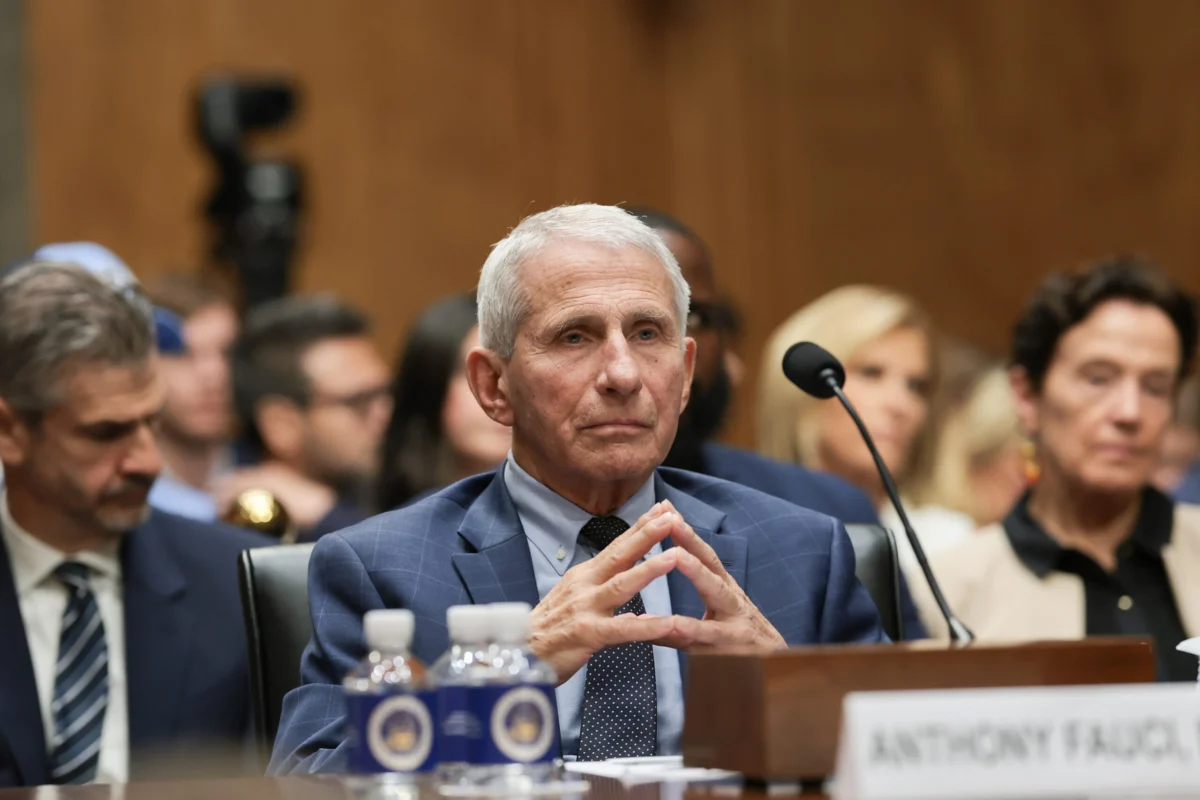
"Despite years of congressional scrutiny, a comprehensive public accounting of federal pandemic decision-making remains elusive, hindering future emergency preparedness and leaving key questions unanswered."
The refusal by Dr. Anthony Fauci to voluntarily appear before a second Senate panel examining the federal response to COVID-19 marks a significant juncture in the ongoing congressional inquiries. This latest development, detailed in a letter from his attorneys to Senator Ron Johnson, chair of the Permanent Subcommittee on Investigations, effectively stalls another parallel congressional investigation before it can yield public testimony. This situation underscores a broader challenge: while Congress has pursued extensive investigations into the pandemic’s origins and the government’s response, the absence of a consolidated, end-to-end public record of critical decisions leaves a void in accountability and preparedness for future crises.
Dr. Anthony Fauci, a central figure throughout the COVID-19 pandemic and former Director of the National Institute of Allergy and Infectious Diseases (NIAID), has declined a request for a voluntary, private, transcribed interview with Senator Ron Johnson’s Permanent Subcommittee on Investigations. The refusal, communicated by Fauci’s attorneys David Schertler and Danny Onorato in a letter dated Friday, asserts that Dr. Fauci has already provided extensive and transparent testimony across numerous congressional appearances and stands by all prior statements. The attorneys further argued that any attempt to compel a new appearance would constitute an "impermissible harassment or degradation of Dr. Fauci for political purposes." This stance comes in the wake of Dr. Fauci and his family reportedly facing harassment and death threats following a previous contentious hearing.
The immediate consequence for the public is a continued lack of a fully consolidated and easily accessible public record detailing the specific decisions that shaped crucial aspects of the pandemic response, such as school closures, the sequencing of vaccine rollouts, and federal public health guidance. While information exists within agency records and prior interviews, a comprehensive, publicly digestible accounting that allows for a complete end-to-end review of these pivotal decisions remains absent.
This refusal follows a tumultuous July 29 hearing before the Senate Homeland Security and Governmental Affairs Committee, where Dr. Fauci invoked his Fifth Amendment right against self-incrimination approximately 100 times when questioned about the pandemic’s origins and the government’s response. This led to an August 6 vote by the committee, along party lines, to hold him in contempt of Congress. Committee Chairman Rand Paul of Kentucky had argued that the Fifth Amendment protection was inapplicable, citing a preemptive pardon issued by President Biden that purportedly removed Fauci’s exposure to federal prosecution. However, Fauci’s legal team contested this reasoning, emphasizing that any pardon would not shield him from prosecution for conduct occurring after its issuance, including statements made in current testimony. Fauci’s attorneys characterized the contempt vote as a "crude political stunt intended to punish Dr. Fauci."
The current situation represents the collapse of a second, distinct investigative track. Senator Johnson’s subcommittee was pursuing a separate line of inquiry from the contempt proceedings, focusing on broader aspects of the federal pandemic response, including the safety and efficacy of COVID-19 vaccines. The refusal to testify means this specific avenue for public testimony has now been effectively shut down. While it is publicly unknown if Senator Johnson will resort to issuing a subpoena, reports indicate that Fauci’s attorneys have stated he would again invoke the Fifth Amendment if compelled to appear. This suggests that even a subpoena might not yield the desired testimony, further complicating the pursuit of a complete public record.
The underlying issue at the heart of this political conflict is the question of accountability. Congress has dedicated considerable time and resources to investigating Dr. Fauci’s role and decisions during the pandemic. However, the tangible outcomes have been a subpoenaed hearing marked by invocations of the Fifth Amendment, a contempt referral awaiting a prosecutorial decision, and now, an aborted second inquiry. While Johnson’s subcommittee has acquired documentary evidence, including Dr. Fauci’s government phone, the crucial element missing is a comprehensive public review of the decision-making processes during the pandemic. This is in stark contrast to the "after-action reports" typically generated following other national emergencies, which provide critical insights for future preparedness.
Both sides frame the impasse differently. Republican committee members view the refusals as obstruction of legitimate oversight, essential for holding officials accountable. Conversely, Dr. Fauci’s legal team asserts that these proceedings are politically motivated campaigns targeting an individual rather than genuine efforts to scrutinize policy. These competing claims regarding motive remain unadjudicated, and the ultimate responsibility for the absence of a complete public record is a subject of ongoing debate, with reasonable individuals holding differing perspectives on whether the fault lies with the witness, the committees, or the inherent structure of congressional oversight. What is not contested, however, is the factual reality: no such comprehensive public review currently exists.
The significance of this impasse extends beyond the confines of Washington, D.C., particularly concerning future emergency preparedness. A fundamental mechanism for improving emergency response lies in meticulously studying past events, identifying what worked and what did not. This requires a clear, documented record of who made what decisions, when, and based on what information. The decisions made during the pandemic, such as those concerning ventilator allocation, testing capacity, school reopening criteria, and vaccine distribution, were often made under immense pressure and profound uncertainty. The ability to distinguish between effective and ineffective strategies hinges on reconstructing the information available at the time of decision-making, a process that a completed oversight record is designed to facilitate.
It is important to distinguish these domestic accountability concerns from international investigations. For instance, the World Health Organization’s advisory group examining the virus’s origins has also cited a lack of access to critical records from China as a barrier to reaching firmer conclusions. While both situations involve information gaps, they are distinct issues. Conflating them can obscure the specific challenges and implications of each.
Crucially, none of these ongoing congressional proceedings or Dr. Fauci’s refusals to testify have led to any changes in current medical recommendations or public health guidance from agencies like the CDC or FDA. Individuals seeking information about vaccines, screenings, or treatments should continue to rely on current clinical guidance, which is based on a separate and evolving body of scientific evidence. The accountability debates and investigative processes are separate from the ongoing evaluation and dissemination of medical advice.
Looking ahead, the Department of Justice is now tasked with deciding whether to act on the contempt referral from the Senate Homeland Security and Governmental Affairs Committee. No definitive timeline for this decision has been announced. While Chairman Rand Paul bypassed a full Senate floor vote in referring the matter directly to the Justice Department, a deviation from typical practice, he has not ruled out pursuing a Senate vote at a later stage. Meanwhile, Senator Johnson’s office has remained silent on the possibility of issuing a subpoena to Dr. Fauci for his testimony before the Permanent Subcommittee on Investigations.
The legal ramifications of contempt of Congress are significant; it is a federal misdemeanor punishable by up to one year in prison and a fine of as much as $100,000. To date, Dr. Fauci has not been charged with any crime.
For readers seeking to engage directly with the primary source material rather than relying on secondary interpretations, congressional committee websites offer access to proceedings, letters, and resolutions. Reviewing these documents directly, alongside agency records, provides a more thorough and potentially more reliable understanding of the unfolding events, albeit a more time-consuming process than following media coverage. MedicalDaily will continue to monitor and report on any Justice Department decisions regarding the contempt referral, any subpoenas issued by the investigations subcommittee, and any developments that yield new documentary evidence pertinent to federal pandemic decision-making.
Key Questions Answered
What exactly did Fauci decline?
Dr. Fauci declined a request for a voluntary, private, transcribed interview with Senator Ron Johnson’s Permanent Subcommittee on Investigations, as communicated by his attorneys in a letter dated Friday.
Is this the same as the contempt vote?
No. The contempt vote originated from a different committee (Senate Homeland Security and Governmental Affairs) on August 6 and pertained to Dr. Fauci’s conduct during a July 29 hearing. The current refusal involves a separate inquiry by Senator Johnson’s subcommittee.
Has Fauci been charged with anything?
No. The contempt resolution was referred to the Justice Department, which has not announced a decision. Dr. Fauci has not been charged with any crime.
Does any of this change medical guidance?
No. No current guidance from the CDC or FDA has been altered as a direct result of these congressional proceedings. Medical recommendations remain based on current clinical evidence.
Can Congress still compel his testimony?
Potentially, through a subpoena. Senator Johnson’s office has not publicly stated whether a subpoena will be issued. Dr. Fauci’s attorneys have indicated he would invoke the Fifth Amendment again if compelled to testify.
What is the accountability concern here?
The core accountability concern is that despite years of congressional inquiry, a completed public review of federal pandemic decision-making, comparable to after-action reports from other national emergencies, has not been produced.
Where can readers find the underlying documents?
Primary documents, including hearing records, letters, and resolutions, are typically published on the websites of the respective Senate committees. Readers can review these directly for a more comprehensive understanding.
