
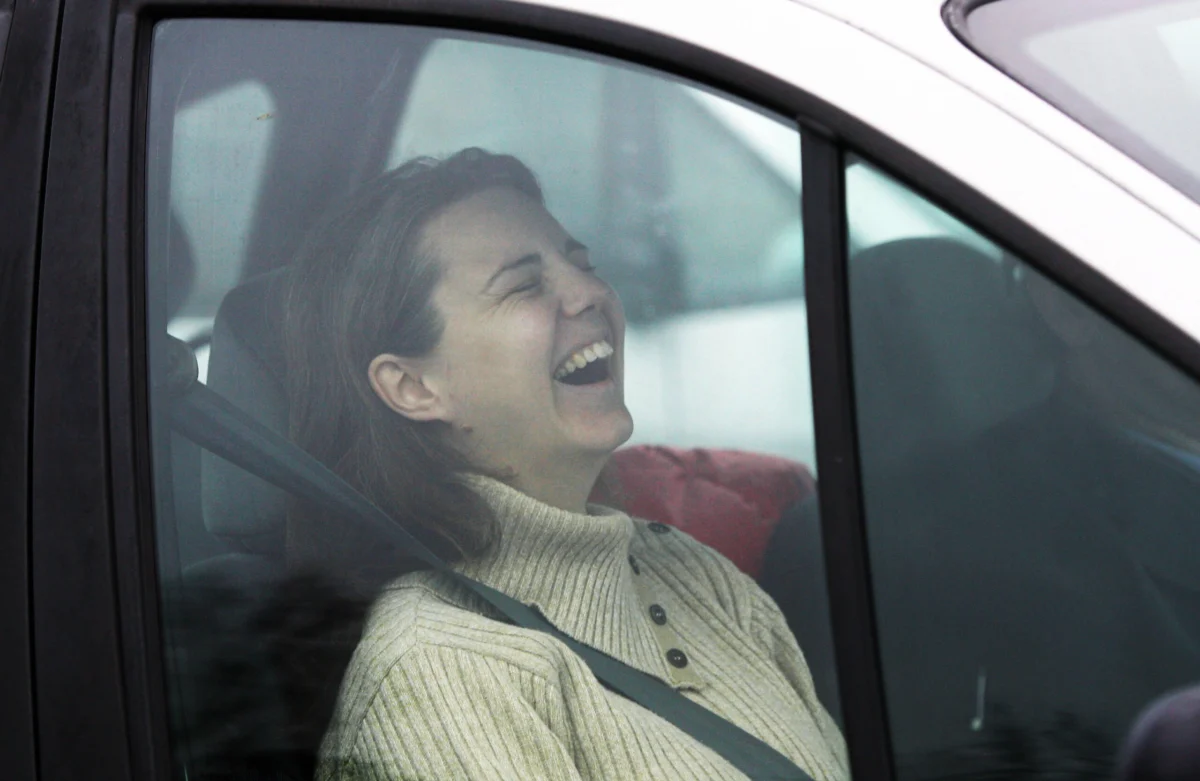
“A hearty laugh can be so powerful it causes a temporary loss of consciousness, a rare condition known as laughter-induced syncope. While the fainting itself is typically benign, the real danger lies in the circumstances, particularly when behind the wheel.”
A 57-year-old woman’s life took an unexpected turn during a moment of shared amusement with her daughter. As they erupted into hearty laughter in the car, she suddenly lost consciousness. Fortunately, her quick-thinking daughter intervened, grabbing the steering wheel and guiding the vehicle to safety, narrowly averting a potential disaster. The woman regained consciousness shortly after, with no recollection of the critical moments and a fractured left wrist. This was not an isolated incident; she had previously experienced a similar blackout at home during a laughing fit, the cause of which remained a mystery until now.
Referred to an urgent cardiology clinic by her general practitioner, the woman underwent a comprehensive evaluation. The diagnostic process, detailed in a case report published in Clinical Case Reports by Stephanie Abutu and colleagues from Kettering General Hospital and the University of Leicester, ultimately revealed a diagnosis that is both uncommon and often unfamiliar to many: laughter-induced syncope, also known as gelastic syncope. This intriguing condition highlights the complex interplay between our bodies’ reflexes and even the most common human expressions.
The diagnostic journey for syncope, or fainting, is often fraught with uncertainty. Many patients present with episodes of transient loss of consciousness, and in a significant number of cases, a clear precipitating cause is never identified. Establishing the trigger typically relies on the patient’s own recollection, a method that can be prone to inaccuracies or omissions, especially when the event is sudden and disorienting.
What makes this particular case so valuable from a medical perspective is the fortunate circumstance of the event being captured. Initial assessments, including a resting 12-lead electrocardiogram and an echocardiogram, revealed no underlying structural heart abnormalities or electrical disturbances such as QT prolongation, ST changes, or evidence of pre-excitation. Her heart was found to be structurally normal with preserved function. However, the crucial diagnostic breakthrough occurred during a 72-hour continuous heart monitoring period. During this time, the woman experienced another blackout episode, again triggered by laughter, while the monitor was actively recording. The data from this event was instrumental: it showed her heart rhythm was in normal sinus rhythm throughout the entire episode of unconsciousness.
This specific combination of findings – a normal cardiac rhythm during the loss of consciousness – is what ultimately led to the diagnosis. The absence of arrhythmias, which are often the primary suspects in cases of unexplained syncope, pointed towards a reflex-mediated mechanism rather than an electrical cardiac issue. Clinicians typically categorize fainting into three broad groups: reflex fainting (including vasovagal and situational syncope), orthostatic hypotension (a drop in blood pressure upon standing), and cardiac arrhythmias. Differentiating these categories is crucial, as each carries distinct implications for prognosis and management. Given the patient’s history of supraventricular tachycardia, an electrical cause was an initial and logical concern to rule out. The normal rhythm during the event effectively excluded this possibility, shifting the focus to reflex syncope.
The proposed pathophysiology behind laughter-induced syncope offers a fascinating glimpse into the body’s intricate reflex pathways. Mechanically, sustained laughter can be viewed as a form of forced expiration against a partially closed airway. This action increases intrathoracic pressure, which, in turn, reduces the volume of blood returning to the heart. The Leicester team hypothesizes that this may lead to an exaggerated vagal response or an inappropriate withdrawal of sympathetic tone, resulting in transient cerebral hypoperfusion – a temporary reduction in blood flow to the brain. While the exact mechanism remains a subject of ongoing research, a long-standing hypothesis suggests that when the heart contracts forcefully against a less-filled chamber, mechanoreceptors in the left ventricle may misinterpret the situation. This misinterpretation can trigger a reflex reduction in heart rate and blood pressure, leading to insufficient blood supply to the brain and subsequent loss of consciousness.
The condition is also referred to as gelastic syncope, derived from the Greek word for laughter. A notable case series published in Postgraduate Medicine, titled "Sitcom Syncope," described three individuals who experienced loss of consciousness during vigorous laughter. These patients underwent extensive testing, and all exhibited an abnormal response during head-up tilt-table testing, leading the authors to propose that gelastic syncope might be a variant of vasodepressor syncope. In some rarer instances, structural abnormalities have been identified as contributing factors. One documented case linked the trigger to vertebrobasilar artery hypoplasia, a condition characterized by narrowing of these critical arteries supplying the brain.
The presentation of laughter-induced syncope can sometimes lead to it being mistaken for neurological conditions, particularly a gelastic seizure. Gelastic seizures are a rare form of epilepsy where laughter itself is the manifestation of the seizure, rather than a trigger. These seizures typically originate from a brain lesion and are often accompanied by automatisms (repetitive, involuntary movements), impaired awareness, or a period of confusion following the event.
The medical team at Leicester carefully delineated the features that distinguished laughter-induced syncope from a gelastic seizure in their patient. The blackouts consistently occurred only during genuine, voluntary laughter, and importantly, there were no associated automatisms. Furthermore, the patient did not experience any postictal confusion (confusion after a seizure), and her recovery was immediate and complete. An additional point of caution highlighted by the authors relates to bystander accounts of fainting episodes. In this case, the daughter estimated the episode lasted two to three minutes. However, the authors emphasize that bystanders often overestimate the duration of such events, and in reality, the blackout was likely brief. Accurate temporal assessment is crucial for distinguishing between different causes of syncope.
While laughter-induced syncope itself is generally considered benign once cardiac and neurological causes have been definitively ruled out, the true danger lies in the circumstances surrounding the episode. The risk of injury arises from the fall itself, or more significantly, from losing consciousness while engaged in potentially hazardous activities. Driving stands out as a particularly high-risk scenario where this otherwise minor reflex can have severe consequences. In this specific case, the presence and swift reaction of the daughter were instrumental in preventing a potentially catastrophic motor vehicle accident.
The management of laughter-induced syncope typically does not involve pharmacological interventions. Instead, the recommended approach is a tailored, trigger-focused strategy that emphasizes patient education and behavioral modification. This involves helping the individual understand their specific triggers and developing strategies to avoid or mitigate them. The authors report that their patient experienced no further episodes at a six-month follow-up after diligently adhering to trigger avoidance. Interestingly, this patient’s profile – including obesity and a prior history of arrhythmia – does not align with the typical demographic for reported cases, which most frequently involves middle-aged men without underlying structural heart disease. This observation underscores the diverse presentations of this condition and the importance of individualized assessment.
For anyone who has experienced syncope, regardless of the identified trigger, a discussion with a healthcare professional regarding driving is essential. Licensing regulations and reporting requirements vary significantly by jurisdiction, and adherence to these rules is paramount for public safety. The broader lesson derived from this case, as articulated by the authors, underscores the critical importance of thorough history-taking in medical diagnosis. Even triggers that may initially seem unusual or absurd warrant careful consideration and precise description, as they can provide the vital clues needed to steer the diagnostic workup toward the correct and most effective outcome.
Key Questions Answered
What is laughter-induced syncope?
Laughter-induced syncope, also known as gelastic syncope, is a rare form of situational reflex fainting. It occurs when intense or prolonged laughter triggers a temporary reduction in blood flow to the brain, leading to a brief loss of consciousness.
Is it dangerous?
The fainting episode itself is typically harmless and self-limiting. The primary danger associated with this condition arises from potential injuries sustained during a fall or from losing consciousness while performing high-risk activities such as driving or operating heavy machinery.
How is it diagnosed?
Diagnosis involves a process of exclusion. Medical professionals work to rule out structural and electrical heart diseases, as well as neurological causes like epilepsy. Ideally, a diagnosis is confirmed by capturing an episode on cardiac monitoring, as was the case in this report, demonstrating a normal heart rhythm during the blackout.
How is it different from a seizure?
Gelastic seizures involve laughter as a symptom of the seizure itself and may be accompanied by automatisms, impaired awareness, or postictal confusion. In contrast, laughter-induced syncope follows genuine, voluntary laughter, and the individual recovers immediately and completely without any residual confusion.
Is there a treatment?
There is no established drug therapy for laughter-induced syncope. Management focuses on recognizing and avoiding triggers, along with counseling regarding high-risk activities.
Should people who faint stop driving?
The decision to stop driving after experiencing syncope depends on the underlying cause, the circumstances of the event, and local legal requirements. Anyone who has lost consciousness while driving must cease driving until a thorough clinical assessment has been completed by a healthcare professional.
