
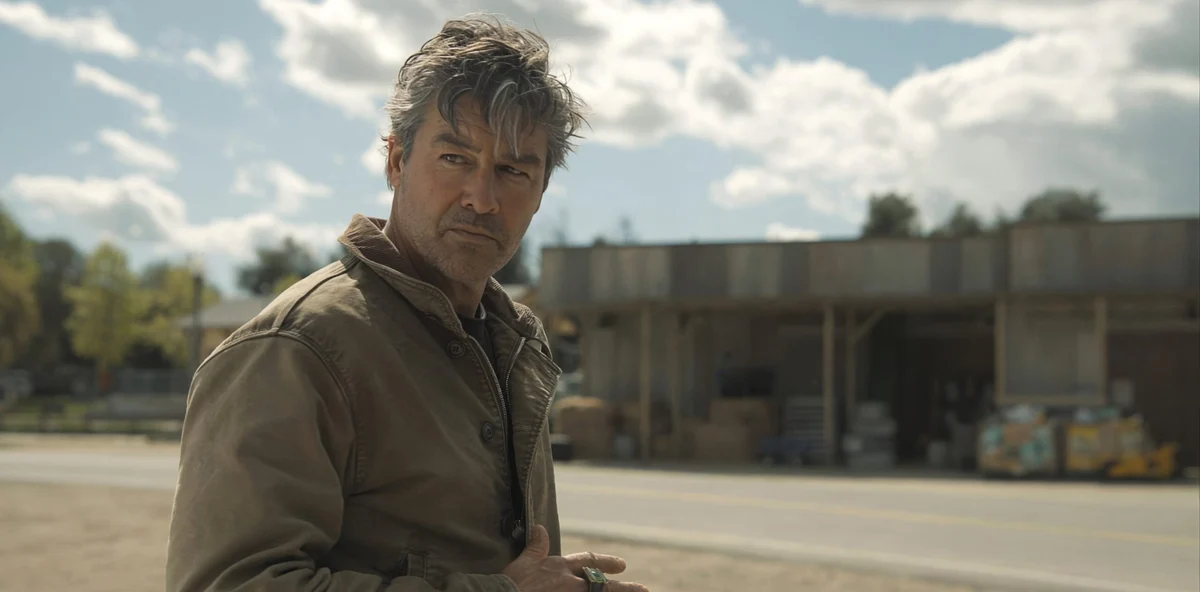
"By blending the gritty, non-linear DNA of prestige crime dramas with the cosmic stakes of the Green Lantern Corps, Lanterns signals a sophisticated shift for the DC Universe, anchored by a central mystery that transcends time and mortality."
The premiere of HBO’s Lanterns marks a definitive departure from the traditional superhero procedural, opting instead to embrace the "Southern Gothic" and "Prestige Mystery" templates established by groundbreaking series like True Detective. By grounding the high-concept science fiction of the Green Lanterns in a dusty, conspiracy-laden Nebraska town, the series invites both comic book aficionados and fans of dark investigative dramas to explore a narrative where the internal demons of the protagonists are as dangerous as the extraterrestrial threats they hunt.
The True Detective Influence and the Evolution of the Cop Genre
In 2014, HBO’s True Detective fundamentally altered the landscape of television. It took the well-worn trope of the "buddy cop" duo and infused it with philosophical nihilism, non-linear storytelling, and a sense of cosmic dread. This "prestige cable" style became a subgenre unto itself, spawning successors like The Outsider, Sharp Objects, and Mare of Easttown. With the premiere of Lanterns, James Gunn’s rebooted DC Universe (DCU) officially enters this arena.
Lanterns does not open with a galactic war or a display of neon-green constructs in deep space. Instead, it introduces us to Hal Jordan and John Stewart as "Space Cops" in the most literal, bureaucratic, and grounded sense. The series treats the Green Lantern ring not as a magic wand, but as a tool of the trade for officers patrolling Sector 2814. By focusing on a duo solving a singular, grisly crime across multiple time periods, the show leans into the "prestige mystery" aesthetic, proving that the DCU is willing to experiment with tone and format to distance itself from the "superhero fatigue" of previous years.

A Tale of Two Timelines: 2016 and 2026
The pilot episode, titled "Pilot," utilizes a dual-timeline structure to establish its central hook. The bulk of the narrative is set in 2016. Here, we meet Hal Jordan, played by Kyle Chandler with a weary, Texas-inflected charm. This version of Hal is not the cocky test pilot of his youth; he is disheveled, frequently hungover, and clearly burdened by years of "policing" the cosmos. He is the reluctant mentor to John Stewart (Aaron Pierre), a disciplined, focused recruit who represents the future of the Corps.
The 2016 timeline establishes the stakes in Rushville, Nebraska. What begins as a routine investigation into a localized signal quickly spirals into a conspiracy involving alien technology and local corruption. The presence of a local sheriff, Kerry Kane (Kelly MacDonald), alongside a suspicious lawyer husband (Jason Ritter) and a powerful patriarch (Garret Dillahunt), creates a web of small-town intrigue that feels more like a noir thriller than a comic book adaptation.
However, the episode’s most significant narrative pivot occurs in its final moments. The story jumps ten years into the future to 2026. We find a hardened John Stewart—notably without his power ring—reuniting with Kerry Kane. The tension between them suggests a decade of shared trauma and unresolved history. Their meeting leads to a chilling discovery: the body of Hal Jordan, frozen in the Nebraska snow, apparently dead and stripped of his ring.
Character Study: Hal Jordan and John Stewart
The success of Lanterns rests on the chemistry between its leads. Kyle Chandler’s Hal Jordan is a masterclass in the "weathered veteran" archetype. In the 2016 timeline, he embodies the flaws of a man who has seen too much. His teaching methods for John are unorthodox and often abrasive, reflecting a cynical view of the Guardians of the Universe and the "Space Cop" hierarchy.
Aaron Pierre’s John Stewart provides the necessary foil. In the comics, Stewart is often depicted as an architect or a Marine, professions that demand precision and structural integrity. Pierre captures this essence perfectly. His Stewart is a man of principle trying to find his footing in a world (and a galaxy) that doesn’t always reward honesty. The dynamic is classic "mentor and protégé," but with the added layer of cosmic responsibility.

The reveal of Hal’s death in 2026 raises immediate questions about the intervening decade. Why is John no longer a Lantern? Why was Hal in Rushville? The absence of the rings in the future timeline suggests a catastrophic fall from grace for the Corps or a personal choice by the protagonists to abandon their roles.
The Mystery of Rushville and the Wider DCU
While Lanterns functions as a standalone mystery, it is inextricably linked to the broader tapestry of the DCU. The series provides context for the "Green Lantern" role on Earth, explaining that there is traditionally only one ring assigned to the planet. This creates a "succession" tension between Hal and John.
However, fans of the DCU know that by the time of the 2025 Superman film and Peacemaker Season 2, the Green Lantern of Earth is Guy Gardner, played by Nathan Fillion. This adds a layer of meta-textual intrigue to the show. If Hal is dead in 2026 and John is ringless, how does Guy Gardner fit into the timeline? Fillion is confirmed to appear later in the series, suggesting that the "rule of one" may be challenged or that Gardner’s rise to power is linked to the failures of Jordan and Stewart.
The conspiracy in Rushville also hints at larger threats. The alien who self-destructs in the pilot isn’t just a random monster; it is a harbinger of a deeper infiltration. In Green Lantern lore, Earth has often been a "hidden center" of the multiverse. By setting the mystery in the American Midwest, the show suggests that the most significant threats to the galaxy aren’t always found in distant nebulae, but in the shadows of our own backyard.
Is Hal Jordan Truly Dead?
The "dead body" trope is a staple of the mystery genre, but in a superhero world, death is rarely the end. The image of Hal Jordan under the snow is a powerful visual, but several theories have already emerged.

- The Deception: As veteran Lanterns, Hal and John are experts in constructs and light manipulation. It is possible that the "death" is a ruse designed to draw out the true antagonist of the Rushville conspiracy.
- The Multiverse/Timeline Shift: With the DCU rebooting, the series could be exploring branching paths. However, given James Gunn’s emphasis on a singular, cohesive narrative, this is less likely than a linear progression.
- The Stakes of Mortality: If Hal is truly dead, it represents a bold creative choice. Killing off a "Mount Rushmore" DC hero in the first episode of his own series sets immense stakes. It signals that in this new DCU, no one is safe, and the consequences of the "Space Cop" lifestyle are terminal.
Furthermore, the fact that Aaron Pierre is confirmed to appear in the Superman sequel, Man of Tomorrow, while Kyle Chandler is not, lends weight to the theory that John Stewart is the long-term protagonist of the franchise, and Hal’s journey may indeed conclude—at least in the physical sense—within this limited series.
Conclusion: A New Standard for Comic Book Television
Lanterns succeeds by refusing to be "just another superhero show." It respects the source material while ruthlessly stripping away the camp associated with the Green Lantern brand. By grounding the narrative in the aesthetics of True Detective and focusing on a decade-spanning mystery, the series offers a mature, thought-provoking exploration of power, duty, and the cost of secrecy.
As the 2016 timeline continues to unfold, viewers will likely see the seeds of the 2026 tragedy being planted. The mystery of what happened to Hal Jordan—and why John Stewart walked away from the light of the Lantern—promises to be the engine that drives the DCU’s most ambitious television project to date. Whether Hal is truly gone or merely hiding in the shadows, the "Pilot" has successfully established Lanterns as a must-watch entry in the prestige TV landscape.
