
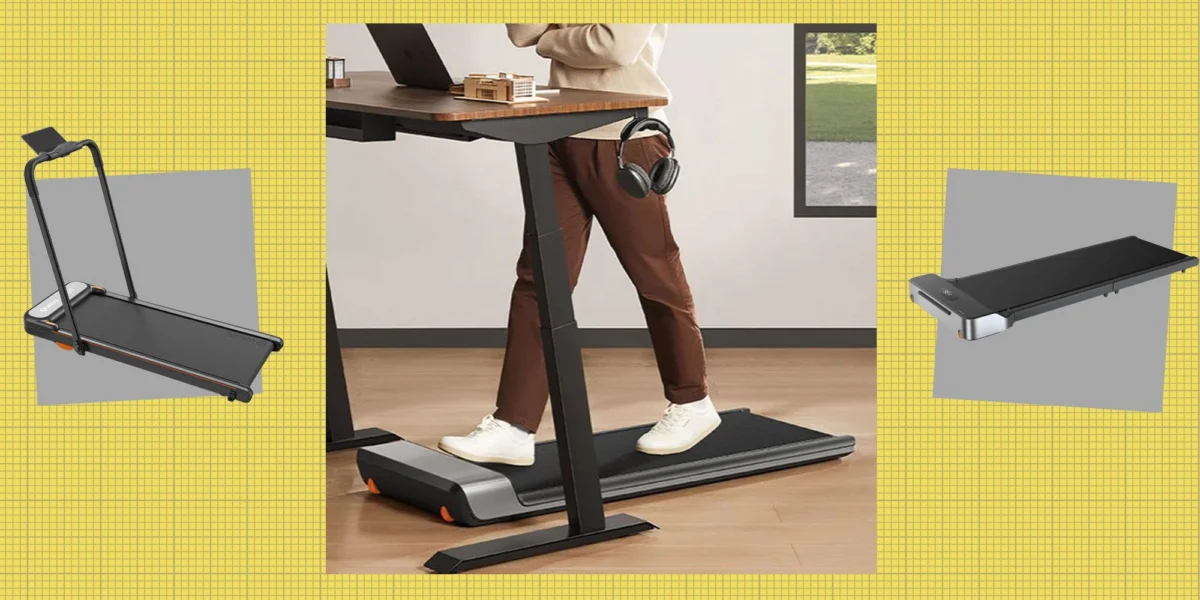
"Integrating movement into the workday through under-desk treadmills represents a fundamental shift from sedentary office culture to a lifestyle of continuous, low-impact activity."
As remote and hybrid work models become permanent fixtures of the modern economy, the health risks associated with prolonged sitting have moved to the forefront of ergonomic research. Under-desk treadmills, often referred to as "walking pads," have emerged as a primary solution for professionals seeking to mitigate the metabolic and cardiovascular downsides of a desk-bound existence. These devices are designed not for high-intensity training, but for Non-Exercise Activity Thermogenesis (NEAT), allowing users to accumulate thousands of steps while attending meetings, responding to emails, or performing deep-focus tasks.

The contemporary market for under-desk treadmills is diverse, spanning from ultra-portable, budget-friendly folding units to heavy-duty, commercial-grade machines designed for all-day use. Selecting the appropriate model requires a nuanced understanding of space constraints, weight capacities, and the specific mechanical trade-offs between speed and stability. For many, the goal is to find a balance between a machine that is quiet enough for professional environments and sturdy enough to handle the daily friction of a moving belt.
The Entry-Level and Mid-Range: Balancing Portability and Cost
For the majority of home-office users, the primary hurdles to adopting a walking desk are space and price. The WalkingPad Z1 serves as a benchmark for the mid-range category, emphasizing a "fold-and-stow" philosophy. Weighing approximately 51 pounds, the Z1 is engineered with a hinge mechanism that allows the unit to fold completely in half. This design is particularly advantageous for apartment dwellers or those with multi-purpose rooms, as it can be tucked under a bed or sofa when not in use. With a weight capacity of 242 pounds and a top speed of 4 mph, it accommodates a light power walk, though its 22-inch width may feel narrow for those with a wider natural gait.
In contrast, the Urevo 2-in-1 Walking Pad represents the budget-conscious end of the spectrum, frequently retailing for approximately $180 to $200. Despite its lower price point, it offers a surprisingly high weight capacity of 265 pounds and a speed range that reaches up to 6.2 mph. However, budget models often come with caveats regarding duty cycles. Real-world testing suggests that while these machines are resilient over years of use, they are best utilized in sessions of one hour or less to prevent the motor and belt from overheating. The thermal management in entry-level units is often less sophisticated than in premium models, making proper footwear and intermittent rest periods essential for the longevity of the machine.

Specialized Ergonomics: Incline and Compact Footprints
While most walking pads are flat, the Egofit Walker Pro introduces a 5% fixed incline into the under-desk category. This design choice is rooted in exercise science: walking at an incline increases the metabolic demand of the activity, allowing the user to burn more calories at lower speeds. This is particularly useful for professionals who find it difficult to type or focus while walking at 3 mph or higher. By keeping the speed low (the Egofit maxes out at 3.1 mph) but the intensity higher through the incline, users can achieve their fitness goals without sacrificing productivity. Furthermore, the Egofit is one of the most compact units available, with a deck length of only 34.25 inches, making it ideal for the smallest of standing desk setups.
The WalkingPad C2 offers another variation on the smart, compact theme. It mirrors the 4 mph top speed of the Z1 but emphasizes a low-profile aesthetic and integrated technology. Equipped with Bluetooth connectivity, the C2 allows users to sync their activity data with fitness apps, providing a digital trail of their workday movement. Its remote-control operation is a standard but necessary feature in this category, as bending down to adjust settings on a floor-level unit is both inconvenient and potentially disruptive to a workflow.
The Premium Standard: Commercial-Grade Engineering
At the apex of the market sits the InMovement Unsit Under Desk Treadmill. Retailing for approximately $2,595, this machine is not intended for the casual user but for the "power walker" who intends to spend the majority of their eight-hour shift in motion. The Unsit departs from the traditional long, narrow treadmill shape in favor of a wider, shorter deck. This provides 55% more usable walking space, which is a critical ergonomic factor. A wider belt allows for more natural lateral movement and reduces the psychological "tightrope" effect that can occur on narrower budget models.

The Unsit is also engineered for silence, described as "library quiet" to ensure that the hum of the motor does not interfere with professional audio during video calls. Its construction is significantly more robust than its peers, weighing 162 pounds and supporting a weight capacity of up to 400 pounds. Interestingly, its top speed is capped at 2 mph. This limitation is a deliberate design choice; InMovement argues that the Unsit is a piece of office furniture rather than gym equipment. At speeds above 2 mph, the cognitive load required to maintain balance and gait begins to interfere with complex tasks like typing and data analysis.
Technical Considerations and Maintenance
When integrating a walking pad into a workspace, technical specifications such as deck length and motor horsepower are more than just numbers—they dictate the user experience. A deck length of at least 40 inches is generally recommended for users of average height to ensure they do not "fall off" the back of the machine during a natural stride. For taller individuals, models like the WalkingPad Z1 or C2, which offer deck lengths of 47 inches or more, are preferable.
Maintenance is another factor that distinguishes these devices. Most under-desk treadmills require regular lubrication with silicone oil to reduce friction between the belt and the deck. Neglecting this maintenance can lead to motor strain and the "burning" smell often reported with budget units. Furthermore, users should be aware of the electrical requirements; while most run on standard 110V outlets, drawing consistent power for hours on end can occasionally trip sensitive AFCI breakers in newer homes.

The Psychological and Physiological Impact
Beyond the mechanical specs, the primary benefit of the under-desk treadmill is the cumulative impact on health. Research into sedentary behavior suggests that even regular gym-goers are at risk if they spend the remaining 23 hours of the day sitting. The "active couch potato" syndrome—where an hour of exercise is negated by ten hours of sitting—is a real concern. Walking pads address this by raising the baseline of daily activity.
Users often report an initial "learning curve" when trying to type while walking. Most find that speeds between 1.0 and 1.8 mph are the "sweet spot" for productivity. At these speeds, the heart rate remains low enough to avoid heavy breathing, and the body’s proprioception can handle the movement subconsciously. Over time, this consistent movement has been linked to improved mood, higher energy levels in the afternoon, and better sleep quality.
Conclusion: Choosing the Right Tool for the Job
The transition to an active workstation is a significant investment in long-term health, but the "best" treadmill depends entirely on the user’s environment and intentions. Those with limited space who only want to walk for an hour a day will find the WalkingPad Z1 or the Urevo to be more than sufficient. Those who prioritize data and aesthetics may lean toward the WalkingPad C2.

However, for the professional who views walking as a permanent replacement for sitting, the heavy-duty engineering of a model like the Unsit may be necessary to withstand the rigors of daily use. Regardless of the model chosen, the data is clear: the more we move, the better we function. The under-desk treadmill is no longer a niche gimmick; it is a vital tool for the modern professional navigating the challenges of a digital, sedentary world.
