
"A well-chosen belt serves as the definitive anchor of a man’s wardrobe, functioning not merely as a utility for fit but as a critical bridge between casual comfort and formal precision."

While often overlooked as a secondary accessory, the belt is one of the few items in a man’s sartorial arsenal that combines mechanical necessity with aesthetic expression. From the rugged texture of genuine leather designed for workwear to the high-performance stretch fabrics required for the golf course, the modern belt market offers a specialized solution for every environment. Understanding the nuances of leather grades, buckle mechanisms, and sizing requirements is essential for any consumer looking to invest in pieces that offer both longevity and versatility across diverse dress codes.
The Philosophy of Minimalist Leather: Fossil and Coach
In the realm of contemporary fashion, the "minimalist" aesthetic has moved from a trend to a standard. This is best exemplified by the Fossil Leather Belt, a staple that prioritizes a clean, unadorned silhouette. For many men, the challenge of dressing for a "cocktail reception" versus a "simple office fit" often requires two different sets of accessories. However, a high-quality, smooth leather belt with a slim profile eliminates this need. The Fossil iteration is noted for its soft yet durable leather, a characteristic of hide that has been treated to maintain flexibility without sacrificing structural integrity. This allows the belt to withstand the daily rigors of being cinched and uncinched, as well as the common habit of being tossed aside at the end of the day, without developing the premature cracking often seen in lower-quality bonded materials.

Taking this minimalist approach into the luxury tier, the Coach Harness Buckle Belt represents a "quieter" take on brand identity. In an era where "logomania" is being replaced by "quiet luxury," Coach has opted for a matte-shine finish on cow leather, detailed only with a singular, subtle signature "C." This move toward understated branding makes the accessory more versatile; it does not compete with the texture of a high-end wool suit or the casual drape of raw denim. The cow leather used here is selected for its grain consistency, ensuring that the belt retains a polished appearance over years of use.
Texture as a Style Tool: The Rise of the Braided Belt
For many men, a standard smooth leather belt can feel overly formal or, conversely, somewhat plain when paired with simple chinos and a button-down. This is where the braided leather belt, such as the Dockers Braided version, serves a vital role. Braiding adds "visual interest"—a design term for a texture that catches the eye without the need for loud colors or oversized hardware.

Beyond aesthetics, the braided design offers a functional advantage that traditional "hole-punched" belts cannot: infinite adjustability. Because the buckle’s prong can be inserted anywhere through the weave, the wearer is not limited to one-inch increments. This is particularly beneficial for maintaining comfort throughout the day as one moves between sitting, standing, and eating. However, consumers must be aware of the technical sizing requirements of these designs. Braided belts often have less "give" in their total length due to the density of the weave; consequently, experts recommend purchasing a size at least two inches larger than one’s standard pant waist size to ensure sufficient overlap at the buckle.
Engineering Versatility: Reversible Designs by Tommy Hilfiger and Steve Madden
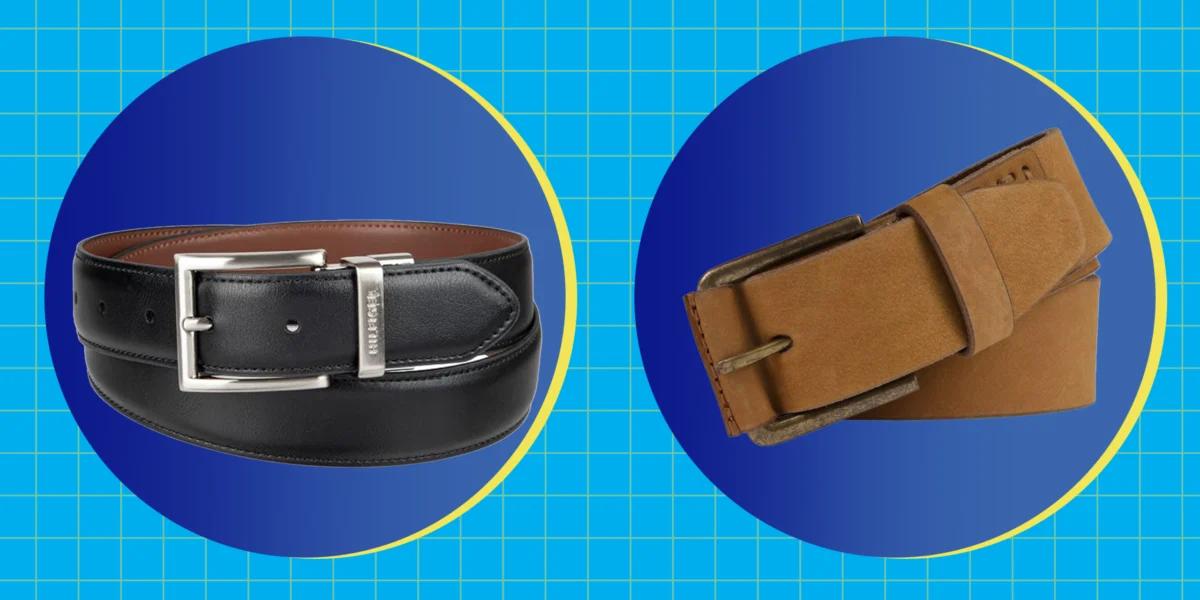
For the frequent traveler or the budget-conscious professional, the reversible belt is a masterclass in functional engineering. The ability to switch from a formal black strap to a casual tan or brown strap using a single buckle mechanism effectively doubles the utility of the item. Tommy Hilfiger’s reversible option utilizes a swivel hinge at the buckle. By pulling the hinge and rotating the strap, the user can transition from a look suited for a dark charcoal suit to one that complements weekend jeans and a tucked-in T-shirt.

Steve Madden offers a similar value proposition with its bonded-leather reversible dress belt. At a price point often under $20, it targets the entry-level professional who needs to match their belt to their dress shoes—a cardinal rule of formal menswear. While bonded leather (a process of heat-pressing leather scraps and polyurethane) does not possess the same aging potential as full-grain leather, it provides a sleek, uniform finish that is ideal for formal environments where a pristine, scuff-free appearance is paramount. The understated buckle ensures the accessory remains a background element, supporting the overall silhouette rather than distracting from it.
Performance and Athletics: The Nike Stretch Woven Belt
The intersection of sportswear and traditional accessories has led to the development of high-performance belts designed specifically for active use, such as golf. The Nike Stretch Woven Belt departs from traditional leather in favor of a blend of polypropylene, rubber, and leather accents. This material composition is engineered for elasticity. In a sport like golf, where the torso rotates significantly during a swing, a rigid leather belt can cause restriction or discomfort.

The stretch woven fabric moves in tandem with the body, providing tension without the "digging" sensation of a static strap. Furthermore, the inclusion of contrasting color flecks in the weave provides a sporty, textured aesthetic that pairs naturally with technical golf pants. The use of a gunmetal harness buckle with a subtle "Swoosh" logo reinforces the athletic pedigree of the piece, proving that functional equipment can still adhere to the visual standards of the clubhouse.
Rugged Durability and the "Patina" Effect: Timberland
At the opposite end of the spectrum from the polished dress belt is the casual, everyday leather belt. Timberland’s Classic Everyday Leather Belt is constructed from genuine leather with a focus on heft and sturdiness. Unlike the refined, painted edges of a dress belt, this style features rough, fibrous cut edges, signaling a more industrial, workwear-inspired origin.

One of the most prized characteristics of this type of leather is its ability to develop a "patina" over time. As the leather is exposed to sunlight, body oils, and physical wear, it undergoes a natural darkening and softening process, making each belt unique to the wearer. While "genuine leather" is a lower grade than top-grain or full-grain hide, its thickness in a Timberland build ensures it can handle the weight of heavier denim or utility pants. As with many leather goods, sizing is critical; ordering one size larger than the pant waist is the standard recommendation to account for the thickness of the material and the way it sits over the waistband.
Technical Insights: Sizing and Maintenance
To maximize the lifespan of any belt, regardless of price point, certain maintenance protocols should be observed. Leather is a biological material that can dry out and crack if not properly cared for. Periodically applying a leather conditioner can maintain the suppleness of the fibers, particularly for belts like the Fossil or Timberland models that are intended for long-term use.

Sizing remains the most common point of failure for consumers. A belt that is too short will put undue stress on the buckle and the leather holes, leading to stretching and tearing. Conversely, a belt that is too long results in an unsightly "tail" that can disrupt the lines of a suit. The general industry standard—confirmed by the specifications of brands like Dockers and Tommy Hilfiger—is to select a belt size that is exactly two inches larger than your measured pant waist. This ensures the prong fits comfortably in the center hole, allowing for minor weight fluctuations and providing the ideal amount of excess strap to tuck into the first belt loop.
Ultimately, the diversity of the current belt market reflects the multifaceted nature of the modern man’s life. Whether the requirement is for the elasticated comfort of a Nike golf belt, the two-in-one efficiency of a Tommy Hilfiger reversible, or the luxury minimalism of a Coach harness belt, the right accessory does more than hold up a pair of trousers—it completes the visual narrative of the outfit. By selecting a belt based on material integrity and specific environmental needs, consumers can ensure their wardrobe is both functional and stylistically cohesive.
