
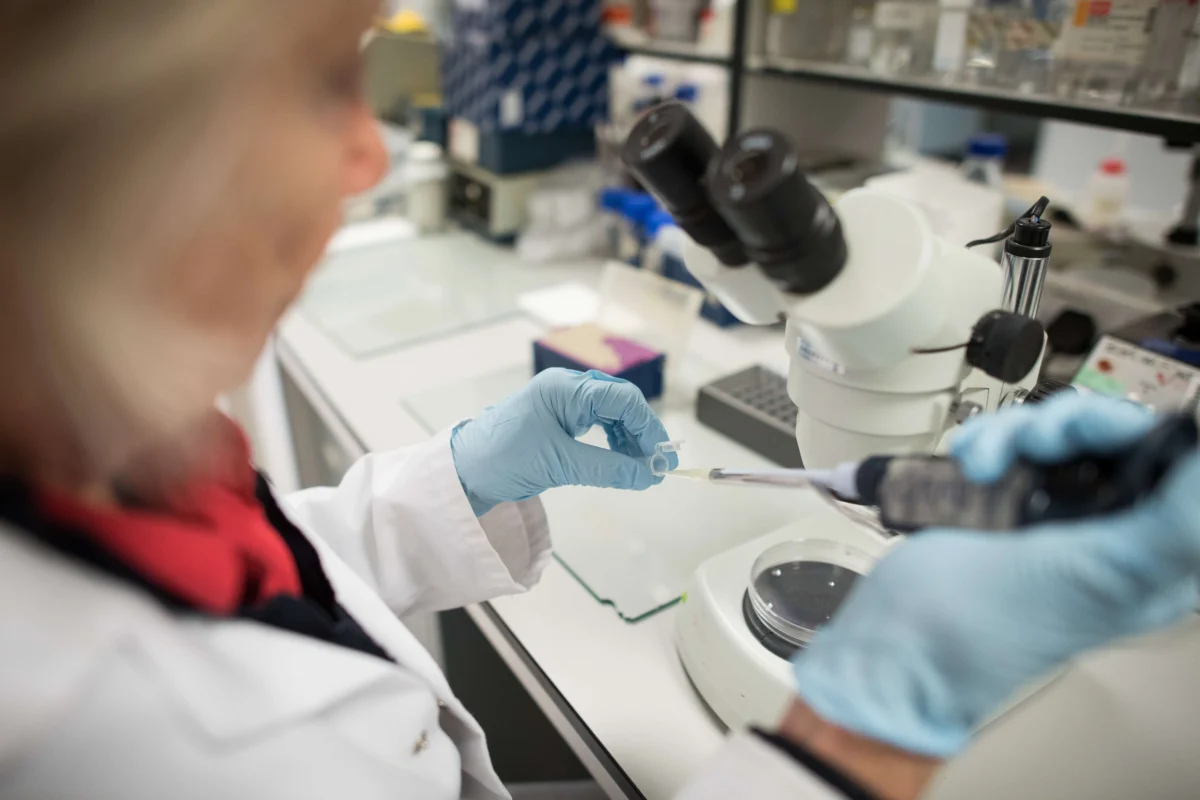
"For decades, researchers overlooked complex RNA molecules as mere ‘copying errors,’ but new discoveries reveal they can play crucial roles in normal physiology, even influencing disease severity and potentially offering insights into autoimmune conditions."
A groundbreaking discovery by researchers at the University of Virginia School of Medicine is poised to redefine our understanding of RNA biology and its impact on human health. For years, RNA molecules transcribed from two distinct genes – known as chimeric transcripts – were largely dismissed as evidence of cellular malfunctions, particularly in the context of cancer. However, this new research identifies a specific chimeric transcript, UBA1-CDK16, that is uniquely present in healthy women, originates from the normally inactive X chromosome, and appears to correlate with the severity of illness, most notably in COVID-19 patients. Published in the prestigious journal Science Advances, these findings not only challenge long-held assumptions about RNA but also open new avenues for exploring the complexities of the female genome, immune regulation, and the functional capacity of our genetic material.
The molecule at the heart of this discovery, UBA1-CDK16, is formed through a process called cis-splicing. This occurs when the cellular machinery responsible for transcribing genetic information runs past the designated end of one gene and continues into an adjacent one. While both the UBA1 and CDK16 genes are present and expressed in both males and females, the resulting chimeric transcript is not. The UVA team, under the leadership of Dr. Hui Li of UVA’s Department of Pathology and the UVA Comprehensive Cancer Center, meticulously analyzed RNA sequencing data from a substantial cohort of blood samples. Their initial screening of 425 whole-blood samples from a public genomics database led to the identification of UBA1-CDK16. This was subsequently validated in over 1,200 additional blood samples from a hospital-based population, confirming its presence and specificity.
A key to understanding the female exclusivity of UBA1-CDK16 lies in the unique chromosomal makeup of women. Females possess two X chromosomes, one of which is largely inactivated in each somatic cell to ensure dosage compensation with males, who have one X and one Y chromosome. The UVA researchers discovered that this specific chimeric transcript is produced by the inactive X chromosome. This finding is significant because it links the molecule directly to a fundamental aspect of female cellular biology. The biogenesis of UBA1-CDK16 is further facilitated by a specific chromatin loop at the junction site between the UBA1 and CDK16 genes. This loop physically brings the two gene regions into close proximity, a configuration that appears to be exclusive to female cells, thus enabling the unusual cis-splicing event. Evolutionary analyses suggest that this female-specific transcript has emerged through at least two independent evolutionary pathways in humans, underscoring its biological significance.
Dr. Li emphasized the paradigm shift this research represents, stating in a UVA Health press release, "Chimeric RNAs were once believed to be cancer-specific, but this work shows they ‘can also be part of normal physiology.’" This statement directly challenges the long-standing view that such hybrid transcripts are invariably indicative of genetic errors or disease. The traditional understanding was rooted in the fact that cancer is characterized by extensive genetic alterations, and chimeric transcripts could easily arise from chromosomal translocations or rearrangements common in cancerous cells. Consequently, the scientific community had largely relegated these molecules to the realm of tumor biology, overlooking their potential roles in healthy cellular processes.
Perhaps the most striking and immediately attention-grabbing observation from the UVA study pertains to the UBA1-CDK16 transcript’s correlation with COVID-19 infection severity. Dr. Li reported a notable pattern: the chimeric RNA was absent in approximately 50% of women who developed severe COVID-19, while it was readily detectable in women who remained asymptomatic or experienced only mild symptoms. Furthermore, a decline in the transcript’s levels was observed to correlate with the worsening of the infection. This correlation suggests a potential role for UBA1-CDK16 in modulating the immune response to viral pathogens.
The researchers hypothesize that this connection may involve neutrophils, a type of white blood cell that is among the first responders to sites of infection. Functional analyses indicated that UBA1-CDK16 is particularly enriched in the myeloid lineage, the developmental pathway that gives rise to neutrophils. This enrichment suggests that the transcript may play a role in regulating myeloid cell development and function. In female COVID-19 patients who tested negative for the transcript, altered neutrophil counts were observed. Given that neutrophil counts have already been established as a potential predictor of COVID-19 outcomes, this finding lends plausibility to the proposed link, although it is crucial to emphasize that this remains a correlation rather than a proven causal relationship.
It is imperative to acknowledge the limitations of these correlational findings. The absence of the transcript in severe cases could mean that its loss contributes to the heightened severity of illness, or conversely, that the severe illness itself leads to altered expression or degradation of the transcript. It is also possible that both phenomena are consequences of an underlying, yet unidentified, factor. The study, by its nature, does not definitively establish the direction of causality. Nevertheless, these observations provide a compelling starting point for further investigation into the transcript’s precise role in immune defense and disease pathogenesis.
Beyond the specific implications for infectious disease, the UVA study makes a broader and more profound claim about the inherent complexity of the human genome. The researchers argue that standard analytical methods have likely been discarding a significant amount of unconventional molecular activity as mere "noise." The human genome, while containing a gene count comparable to simpler organisms like fruit flies and worms, possesses remarkable functional plasticity. Mechanisms such as alternative splicing, RNA editing, and alternative polyadenylation are already well-established as ways to expand the repertoire of proteins and functional molecules derived from a fixed number of genes. Li and his colleagues propose that chimeric RNAs should be recognized as another crucial mechanism for expanding the functional genome without the need to invent new genes.
This idea has been gaining momentum within the scientific community for some time. Earlier research had already demonstrated that chimeric transcripts can arise in normal, non-cancerous cells through routine RNA processing, rather than solely from pathological chromosomal rearrangements. The significance of the UBA1-CDK16 discovery lies in its provision of a concrete, sex-specific example with a clearly identified biogenesis mechanism and a hypothesized function. An earlier preprint version of this work had already laid out these core findings, indicating a robust and consistent scientific progression.
Furthermore, Dr. Li suggests a potential role for UBA1-CDK16 as a natural regulator that may protect women from excessive autoimmune activity. Autoimmune disorders, where the immune system mistakenly attacks the body’s own tissues, occur significantly more frequently in women than in men. This disparity is particularly intriguing given that the X chromosome carries a disproportionately large number of genes involved in immune function. Therefore, a female-specific regulator derived from the X chromosome presents an appealing candidate for explaining this sex-based difference in autoimmune disease prevalence. Dr. Li is advocating for further research to explore this hypothesis, rather than presenting it as a conclusive answer.
Several important caveats accompany these compelling hypotheses. The functional aspects of the transcript are described by the authors themselves as "suggestive," employing cautious language regarding what it may regulate. A significant portion of the research relies on computational analyses and cell-based experiments. The connection to autoimmune disease, while biologically plausible, is a hypothesis generated by the data and has not been directly tested within the scope of this study. Moreover, the prospect of developing a blood test based on this molecule, floated as a potential application for identifying women at higher risk of adverse outcomes, is currently theoretical. No such test exists, nor has it undergone any form of validation in a clinical population.
The research was supported by a grant from the National Institute of General Medical Sciences (R01GM132128). UVA has stated that the scientists involved have no financial conflicts of interest related to this work, a disclosure that is particularly noteworthy given the researchers’ explicit consideration of biomarkers and therapeutic targets as future research directions.
Key Questions Answered:
What is a chimeric RNA?
A chimeric RNA is an RNA transcript that contains genetic sequences originating from two different genes. Historically, they were often considered to be byproducts of chromosomal rearrangements in cancer cells. However, recent research indicates that many chimeric RNAs can be generated through normal RNA processing mechanisms in healthy cells.
Why is UBA1-CDK16 found only in women?
The UBA1-CDK16 transcript is formed when the transcription process, which reads genetic information to create RNA, extends from the UBA1 gene into the adjacent CDK16 gene. This unusual event is facilitated by a specific chromatin loop structure that is present only in female cells. According to the UVA researchers, this molecule is produced by the inactive X chromosome in females.
What is the COVID-19 connection?
The study observed that the UBA1-CDK16 transcript was absent in about 50% of women who experienced severe COVID-19, whereas it was present in women who remained asymptomatic. Lower levels of the transcript were correlated with increased disease severity. It is important to note that this is an association, and the study does not prove a direct causal link.
Could this become a blood test?
The researchers have raised the possibility of developing a blood test based on the detectability of this molecule. However, no such test is currently available, and its diagnostic or prognostic utility has not been validated in any patient population.
How large was the study?
The UBA1-CDK16 transcript was initially identified using RNA sequencing of 425 whole-blood samples. Its presence was subsequently confirmed in over 1,200 additional blood samples from a hospital setting. The study also included laboratory-based functional experiments.
What does this say about autoimmune disease?
Dr. Li has hypothesized that this molecule may act as a natural mechanism to prevent excessive autoimmune activity in women, who are more prone to these conditions. However, this hypothesis was not directly tested in the study, and further research is needed to confirm this potential role.
