
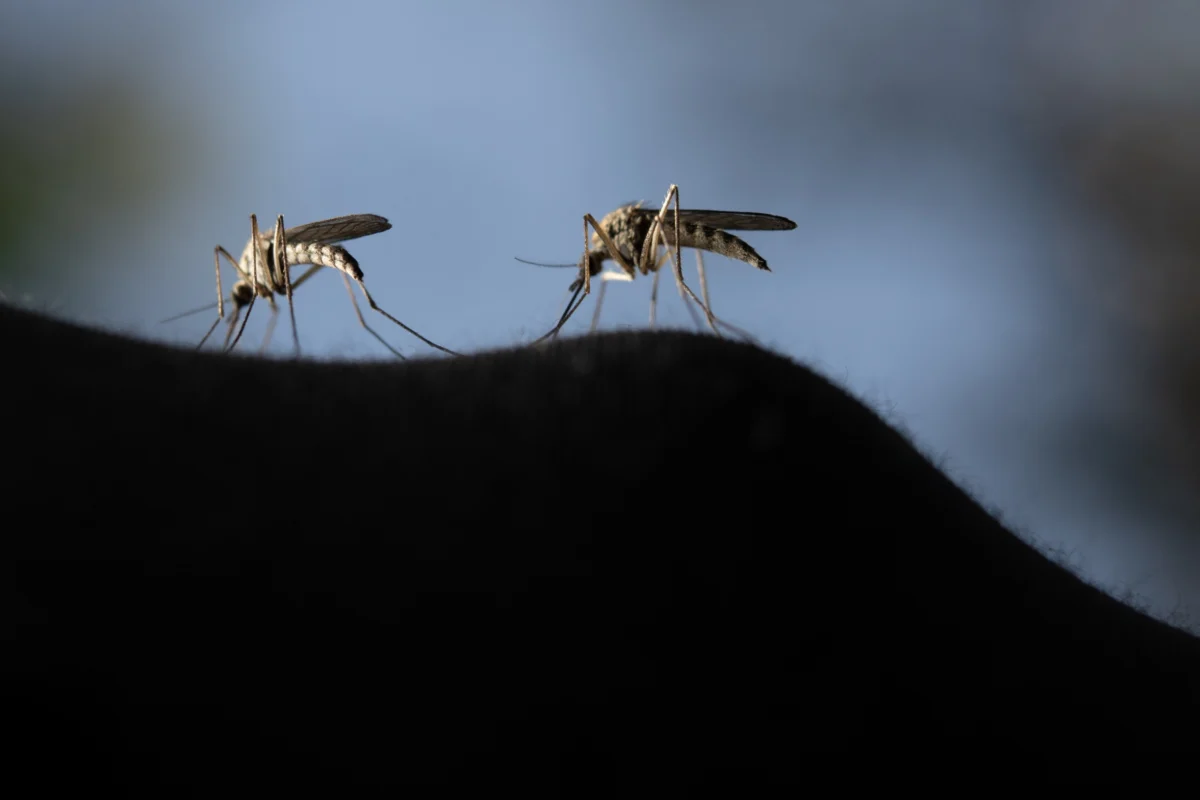
"This initial human case of West Nile virus serves as a crucial reminder that mosquito-borne illnesses are a year-round concern, even when symptoms are mild, and that public health surveillance provides a vital, albeit delayed, look at viral circulation."
Suffolk County has officially reported its first confirmed human case of West Nile virus (WNV) for the current season, a development that underscores the ongoing threat posed by mosquito-borne pathogens and the complex nature of public health surveillance. The affected individual, a resident of Brookhaven over the age of 50, developed symptoms consistent with WNV infection in late July. Notably, this individual did not require hospitalization, a detail that offers insight into the spectrum of illness associated with the virus. County health officials announced the confirmation on Wednesday, August 19th, bringing to light the significant time lag inherent in case reporting and confirmation processes. This case, while not representing a severe neuroinvasive event, is a critical data point for public health officials, emphasizing that WNV can cause clinically noticeable symptoms even in its less severe forms, and that a robust surveillance system is necessary to track its presence.
The announcement from the Suffolk County Department of Health Services serves as a timely reminder of the potential health risks associated with mosquito activity, particularly as the warmer months continue. Suffolk County Health Commissioner Dr. Gregson Pigott framed the report as a seasonal alert rather than an immediate crisis, stating, "It is a reminder that mosquitoes are not only a nuisance but can transmit serious diseases." This perspective highlights the dual nature of WNV: it is a prevalent environmental concern due to its mosquito vectors, and it represents a significant public health threat capable of causing a range of illnesses.
Understanding the nuances of WNV infection is crucial for appreciating the significance of this first confirmed case. Health officials estimate that approximately 20% of individuals infected with West Nile virus will develop clinically apparent symptoms. The spectrum of these symptoms can vary widely, from mild, flu-like presentations to severe, life-threatening neurological complications. At the milder end, symptoms may include fever, headache, body aches, a rash, and swollen lymph glands. However, in a more severe presentation, individuals can experience high fever, neck stiffness, disorientation, tremors, convulsions, muscle weakness, vision loss, and even paralysis. While WNV can be fatal, particularly in its neuroinvasive form, the majority of infected individuals experience either no symptoms or mild, self-limiting illness.
The distinction between symptomatic but non-hospitalized cases and severe neuroinvasive disease is particularly important when interpreting public health announcements. A patient who does not require hospitalization has almost certainly experienced what is commonly referred to as West Nile fever, a less severe manifestation of the illness. In contrast, neuroinvasive disease, which affects the brain and spinal cord or the membranes surrounding them, accounts for the vast majority of hospitalizations and fatalities. This severe form occurs in roughly one in 150 infected individuals. Therefore, a confirmed case without hospitalization is invaluable for surveillance purposes, indicating that the virus is circulating and that individuals are becoming infected, even if their illness is not severe enough to warrant intensive medical care.
The process of confirming a WNV case involves several critical steps, each contributing to the observed time lag between infection and official reporting. For a case to be counted, an infected individual must first experience symptoms significant enough to seek medical attention. A clinician must then consider West Nile virus as a potential diagnosis, which is not always a standard consideration in routine medical workups. This necessitates ordering specific laboratory tests, collecting appropriate specimens, and submitting them for analysis. Finally, the laboratory results must be reported to the relevant public health authorities. Each of these stages can introduce delays, meaning that a case announced today reflects transmission that likely occurred weeks earlier. This understanding is vital for interpreting county case counts, which function as a historical record rather than a real-time snapshot of viral activity.
The three-week gap between the onset of symptoms in late July and the official announcement on August 19th exemplifies this reporting pipeline. This duration encompasses the time from illness to a clinical visit, specimen collection, laboratory testing, and subsequent reporting. Consequently, a county reporting its first case is not indicating that the virus just arrived; rather, it is signaling that transmission events occurred a month or more prior. Furthermore, any infections that have occurred since those initial events are still progressing through the same reporting and confirmation process. This phenomenon is not unique to local health departments; national surveillance systems, such as those managed by the Centers for Disease Control and Prevention (CDC), also operate with a similar lag. The practical implication for the public is that preventative measures should be guided by broader indicators of mosquito activity and viral circulation, such as environmental surveillance data, rather than solely by human case totals.
Indeed, environmental surveillance efforts in Suffolk County had been signaling an increased presence of West Nile virus for weeks prior to the confirmation of the human case. As of the week preceding the announcement, 54 mosquito samples collected across various communities within Brookhaven Town had tested positive for WNV. These positive samples were identified in areas including North Patchogue, Port Jefferson Station, Farmingville, Mount Sinai, and Rocky Point. In addition to WNV, three mosquito samples tested positive for Jamestown Canyon virus, another mosquito-borne pathogen of concern. The surveillance net also extends to dead birds, which can act as amplifiers for WNV. Three dead crows found in Ronkonkoma in June and one in Nesconset in early August also tested positive for West Nile virus, further corroborating the widespread circulation of the virus in the local ecosystem.
This pattern of environmental detections preceding human cases is precisely what public health surveillance aims to achieve. Mosquito testing and bird surveillance are designed to provide early warnings to both households and vector control programs, allowing them to implement preventative measures while the virus is circulating in insect and bird populations, before it reaches humans in significant numbers. New York City, for example, had already identified over 1,000 positive mosquito pools across all five boroughs by mid-August, with the first detection occurring on June 16th. The city also reported its first human case on the same day as Suffolk County, highlighting regional trends in WNV activity.
Nationally, as of mid-August, the CDC had recorded 222 human cases of West Nile virus, with a concentration of cases in Arizona, Texas, and California. The peak transmission season for WNV in the Northeast typically runs through August and September, indicating that the season is far from over on Long Island. This continued risk necessitates ongoing vigilance and adherence to preventative strategies.
Given that there is no human vaccine for West Nile virus and no specific antiviral treatment, prevention is paramount. The primary defense against WNV infection lies in avoiding mosquito bites. This involves using EPA-registered insect repellents containing DEET, picaridin, IR3535, or oil of lemon eucalyptus, especially during dawn and dusk when WNV-carrying mosquitoes are most active. Wearing long sleeves and pants when weather permits, and ensuring that window and door screens are in good repair, also significantly reduces exposure.
A critical component of personal and community-level prevention is the control of standing water, which serves as breeding grounds for mosquitoes. Households can take direct action by emptying water from flower pot saucers, buckets, birdbaths, tarps, and children’s toys on a weekly basis. Swimming pools and ornamental ponds should be kept chlorinated, covered, or drained when not in use, as neglected swimming pools are frequently identified as major sources of mosquito breeding in residential areas. Suffolk County residents can report mosquito problems to the county’s Division of Vector Control at 631-852-4270. Similarly, dead birds, which are indicators of WNV presence, can be reported to the Bureau of Public Health Protection at 631-852-5999, contributing valuable data to the surveillance system.
Certain demographic groups face a higher risk of developing severe illness from West Nile virus. These include adults over the age of 50 and individuals with chronic medical conditions or compromised immune systems. This latter group can include those undergoing treatment for cancer, autoimmune diseases, or organ transplants, and who are taking immunosuppressive medications. Medical literature has highlighted the heightened risk of severe arboviral infections, including those transmitted by mosquitoes, in individuals on specific drug classes that suppress the immune system.
The cost of preventative measures is generally not a significant barrier. Insect repellents are widely available and affordable, and eliminating standing water is a free, actionable step for households. The most substantial potential expense might be screen repair, though some town and county programs offer assistance to older residents with home maintenance needs.
Individuals experiencing fever accompanied by headache or body aches during mosquito season should consult a clinician. It is important to mention any outdoor exposure, as West Nile virus testing is not part of a standard medical workup. The CDC provides comprehensive guidance on WNV signs and symptoms, and publishes current national activity data as it becomes available. Urgent medical evaluation is warranted for severe headache with neck stiffness, sudden confusion, tremors, muscle weakness, or vision changes.
Looking ahead, the trajectory of West Nile virus activity on Long Island will be influenced by two primary factors. Firstly, the continued processing of the reporting pipeline means that additional Suffolk cases are plausible, reflecting transmission that occurred in July and early August. Secondly, the arrival of the first hard frost will ultimately end the mosquito season. For context, Suffolk County recorded 21 human cases in 2024, and nine Suffolk residents have died from West Nile virus since the year 2000. Continued vigilance and proactive prevention remain the most effective strategies for mitigating the impact of this persistent public health threat.
