
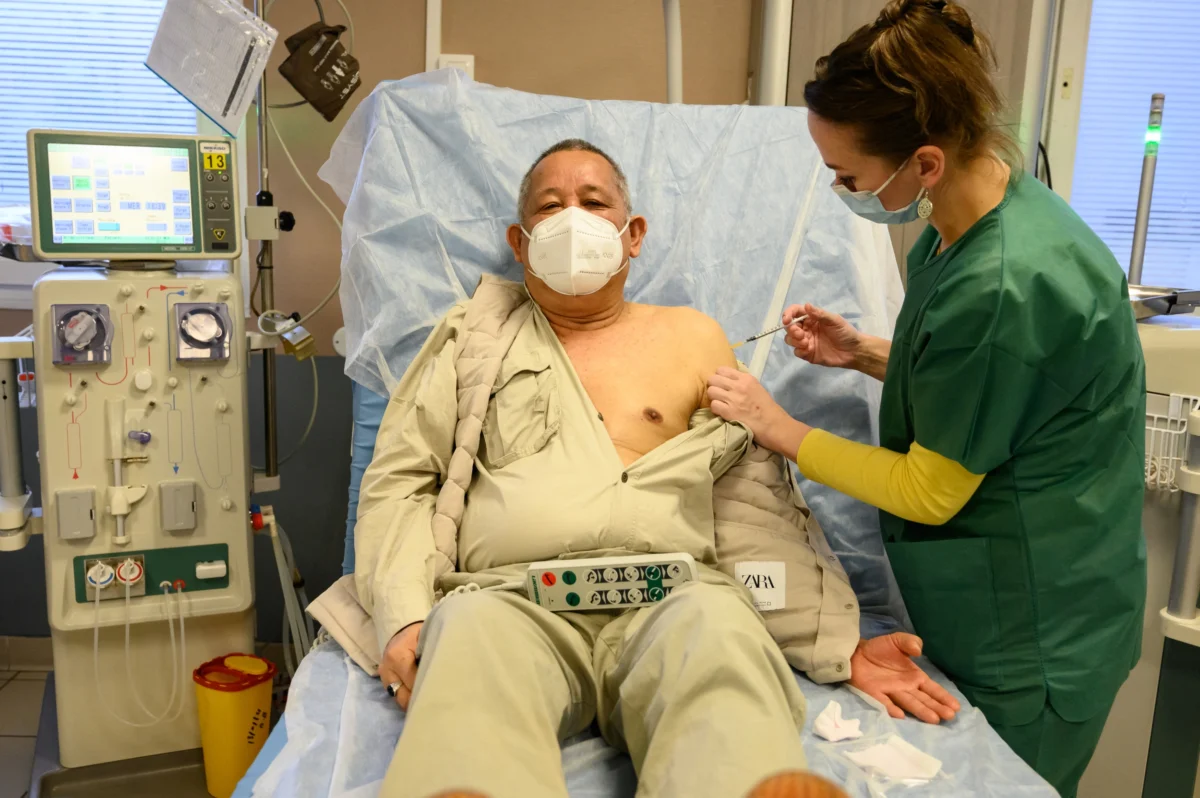
"While institutional distrust did not reliably predict COVID-19 vaccine refusal, the data underscore that access and personal relationships, particularly with healthcare providers, played a more significant role in vaccination decisions during the pandemic."
This insightful takeaway from a recent analysis of pandemic-era survey responses highlights a crucial nuance often missed in public discourse surrounding vaccine hesitancy. The study, which examined responses from over 13,000 American adults, reveals that factors like educational attainment, insurance status, and age were more strongly correlated with vaccination rates than overt distrust in government agencies or health organizations. Crucially, the findings emphasize the enduring trust individuals place in their own doctors, suggesting a pathway forward for public health messaging and vaccination campaigns. However, it is vital to note that these data were collected between November 2020 and November 2022, offering a snapshot of behavior during the height of the pandemic rather than a reflection of current vaccination trends.
Examining the Divides: Education, Insurance, and Age as Key Predictors of Vaccination
An in-depth analysis of 13,802 survey responses, published in the journal Vaccine, has illuminated significant demographic divides in COVID-19 vaccination rates during the pandemic. The study, conducted by researchers at Rush University College of Nursing and drawing from the Community Engagement Alliance Common Survey 2, found that adults without a high school degree were more than three times as likely to remain unvaccinated compared to those holding a graduate degree. Similarly, uninsured adults were over twice as likely to be unvaccinated as their insured counterparts. Across the entire surveyed population, 87.2 percent reported receiving at least one dose of a COVID-19 vaccine, but the underlying gradients reveal substantial disparities.
Breaking down these figures further, approximately 21 percent of individuals who had not completed high school were unvaccinated, in stark contrast to the 6.2 percent of those with graduate degrees. Age also emerged as a significant factor, with adults aged 65 and older demonstrating the lowest unvaccinated rates at 5.5 percent. Conversely, the youngest adult cohort, aged 18 to 24, exhibited higher hesitancy, with 17.5 percent not having received a dose.
Insurance status proved to be a potent indicator, mirroring the trends observed with education. A substantial quarter of uninsured participants reported being unvaccinated, compared to 11 percent of those with insurance. This disparity persisted even during a period when COVID-19 vaccines were available free of charge at the point of care, suggesting that factors beyond cost were at play. The implications of lacking insurance extend beyond financial barriers; it often signifies a lack of consistent access to a primary care physician who can recommend vaccination, reduced flexibility to take time off work for appointments, and fewer routine healthcare interactions where vaccination might be discussed and administered.
The study also captured variations in vaccination rates across racial and ethnic groups. Non-Hispanic White participants reported the highest vaccination rate at 91.8 percent, followed by Hispanic participants at 87.9 percent, and non-Hispanic Black participants at 81.8 percent. These figures, while indicating broad uptake, also point to areas where targeted outreach and engagement may be particularly important.
The Nuance of Distrust: Institutional Skepticism vs. Individual Action
Perhaps the most compelling and potentially transferable finding of the analysis challenges the often-simplified narrative that distrust in public health institutions directly translates into widespread vaccine refusal. While a significant portion of respondents, around 40 percent, expressed deep skepticism regarding the federal government’s ability to ensure vaccine safety for children, the relationship between this distrust and individual vaccination decisions was far from absolute.
Among participants who indicated distrust in various institutions as sources of COVID-19 information, vaccination rates still remained remarkably high, ranging between 72.4 and 83.8 percent. Even more telling, a substantial 52 percent of individuals who stated they did not trust the Food and Drug Administration (FDA) to ensure vaccine safety for adults had nonetheless received at least one dose of the vaccine. This suggests that while broad institutional skepticism exists, it does not necessarily preclude individuals from seeking out and accepting vaccination when influenced by other factors.
Furthermore, the study noted that only 8.5 percent of respondents expressed distrust in the FDA’s ability to ensure the safety of COVID-19 vaccines for adults, and critically, fewer than 5 percent reported a lack of trust in their own doctors as a source of information regarding COVID-19. This stark contrast between generalized institutional distrust and specific trust in personal healthcare providers is a critical insight. It implies that public commentary and media focus on broad governmental or agency distrust may not accurately reflect the factors influencing individual vaccine decisions. Separate research on vaccine conspiracy beliefs has also pointed to a similar pattern, linking such beliefs to a general distrust of government and mainstream media rather than to specific vaccine messages.
The motivations behind remaining unvaccinated were also explored, with stated reasons varying by demographic. Among the 1,772 unvaccinated participants, concerns about side effects, doubts about vaccine efficacy, and the belief that the vaccines did not work were commonly cited. The perception that vaccines were ineffective was most prevalent among adults aged 25 to 34, with 10.4 percent holding this belief, and this sentiment decreased with age, reaching only 2.7 percent among those over 65. This age-related divergence in perceived efficacy could reflect different life experiences, risk perceptions, or information consumption habits within these age groups.
Contextualizing the Data: A Snapshot of the Pandemic Era
It is imperative to contextualize these findings within the timeframe of data collection. The survey responses were gathered between November 2020 and November 2022, a period encompassing the initial rollout of vaccines, the emergence of new variants, and evolving public health guidance. Therefore, these figures represent pandemic-era behaviors and attitudes and are not a direct measure of how Americans are currently approaching vaccination in the fall of 2023 or beyond. The dynamic nature of the pandemic, including shifts in vaccine availability, policy changes, and public perception, means that extrapolating these specific percentages to the present day would be an oversimplification.
Moreover, the study acknowledges its limitations as an observational survey analysis. It describes existing patterns but does not inherently demonstrate the causal impact of any particular intervention on vaccination uptake. The self-reported nature of vaccination status, which was not independently verified against medical records, also introduces a potential for recall bias or social desirability bias.
The survey population was also drawn from a community engagement research network, rather than a purely random probability sample of the entire U.S. population. While this approach can yield valuable insights into specific communities, it may limit the extent to which the reported percentages can be directly generalized to the nation as a whole. Nevertheless, the consistent patterns observed across different demographic variables lend significant weight to the study’s conclusions regarding disparities.
The Enduring Power of the Clinician-Patient Relationship
The authors of the study draw a practical and actionable conclusion that stems directly from the findings on trust: there is "unrealized potential for doctors educating patients about vaccination." They argue that future public health campaigns and vaccination efforts should leverage and build upon the established role of clinicians in influencing individual healthcare decisions. The data strongly suggest that while broad-reaching public awareness campaigns are important, the personal recommendation and trusted counsel of a primary care physician or other healthcare provider may be a more effective driver of vaccine acceptance for many individuals.
This emphasis on the clinician-patient relationship offers a tangible strategy for addressing vaccine hesitancy. For individuals who are uncertain about vaccination, the most impactful conversation is likely to be with their own healthcare provider, who understands their medical history, personal circumstances, and specific concerns. For those who lack a regular clinician, the study points to accessible resources such as federally qualified health centers, which often operate on a sliding-scale fee basis, and county health department clinics, which can provide crucial points of contact for vaccination information and administration.
The findings also serve to identify specific populations that may be falling through the cracks in public health efforts. Younger adults, individuals with lower educational attainment, and those without health insurance represent key demographic groups that warrant targeted attention during any vaccine campaign, whether for COVID-19, influenza, or routine childhood immunizations. Proactive outreach and tailored communication strategies are essential to ensure these groups are reached and supported.
Ultimately, the insights gleaned from this pandemic-era survey do not alter existing vaccine recommendations. Individuals contemplating getting a fall COVID-19 or flu vaccine should base their decisions on current public health guidance and the personalized advice of their clinician, rather than on historical survey data. The availability of updated flu and COVID-19 vaccines, with expected insurer coverage for the fall season, has been confirmed by infectious disease specialists. These vaccines represent critical tools in public health, with studies estimating that COVID-19 vaccination alone prevented over 4,000 deaths in a single Washington county, underscoring the profound impact of widespread vaccination and the significance of addressing the coverage gaps identified by this survey. The analysis serves as a powerful reminder that while societal-level factors play a role, the deeply personal and trusted relationships within healthcare are often the most influential in shaping individual health decisions.
