
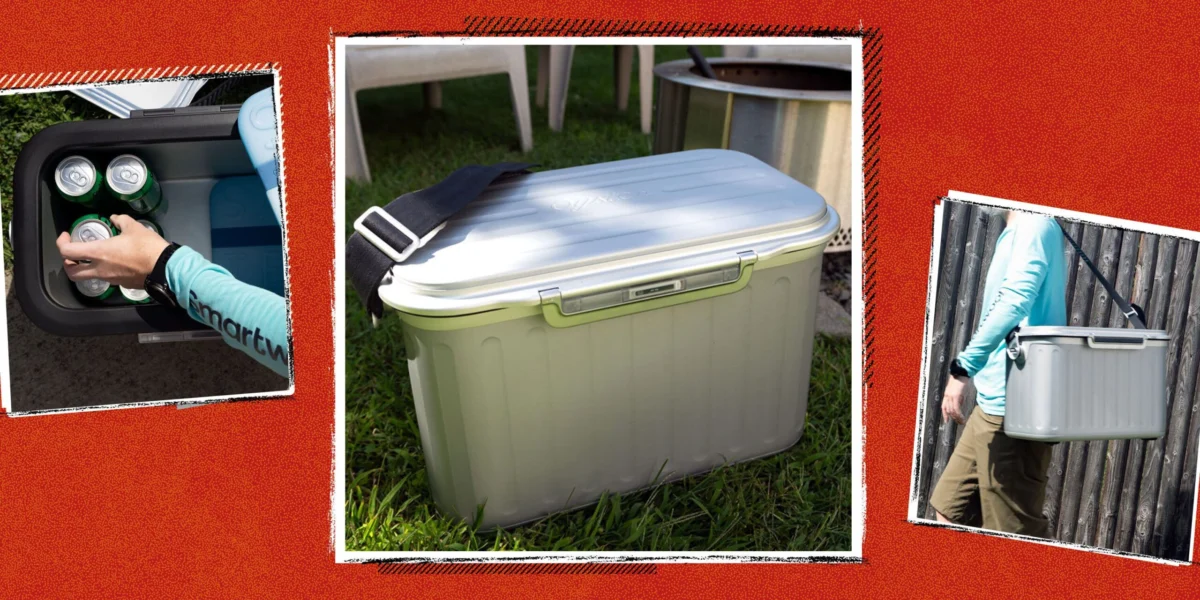
"By replacing traditional bulky foam insulation with high-performance vacuum-sealed aluminum, the Oyster Tempo Pro achieves superior thermal retention in a significantly smaller footprint, signaling a paradigm shift toward more efficient, ice-free outdoor technology."
The outdoor gear industry has long been dominated by the philosophy of "overbuilding" through heavy, rotomolded plastics—a trend popularized by brands like YETI over the last two decades. However, the emergence of the Oyster Tempo Pro represents a pivot toward precision engineering, utilizing vacuum insulation technology similar to that found in high-end thermal flasks to maintain internal temperatures without the need for traditional bags of ice. This approach not only maximizes usable internal volume but also challenges the assumption that durability must come at the cost of extreme weight and bulk.

For twenty years, the cooler market has operated under a relatively stagnant design language: thick walls of polyurethane foam encased in heavy-duty plastic. While effective, this design necessitates a trade-off where nearly half of a cooler’s internal capacity is often sacrificed to ice, and the exterior dimensions become cumbersome for solo transport. Norwegian newcomer Oyster disrupted this narrative in 2023 with the release of the original Tempo, an all-aluminum cooler that prioritized thermal efficiency through vacuum insulation. With the release of their flagship Tempo Pro, the company has refined this concept, adding integrated temperature monitoring and improved ergonomics to a package that seeks to render the traditional ice-filled chest obsolete.
The Physics of Vacuum Insulation vs. Foam
To understand why the Tempo Pro is priced at a premium $550, one must look at the thermal physics at play. Traditional premium coolers rely on thick rotomolded walls filled with closed-cell foam. While foam is a decent insulator, it still allows for conductive heat transfer over time. To combat this, users must "pre-chill" their coolers and sacrificial ice must be added to absorb the heat that inevitably leaks through the walls.
The Oyster Tempo Pro utilizes a vacuum-insulated power circuit. By removing the air between the inner and outer aluminum walls, Oyster eliminates the medium through which heat is conducted. This is the same technology that allows a small thermos to keep coffee hot for twelve hours, but scaled up to a 24-quart chest. Because vacuum insulation is exponentially more efficient than foam, the walls of the Tempo Pro can be significantly thinner while providing superior thermal barriers. This allows for a "small on the outside, big on the inside" design that traditional manufacturers cannot replicate with plastic and foam.

Design and Aesthetic: Scandinavian Minimalism
The Tempo Pro carries a distinct "retro-modern" aesthetic that draws heavy inspiration from the classic metal Thermos coolers of the mid-20th century. Developed in Norway, the design reflects Scandinavian minimalism—functional, sleek, and devoid of unnecessary flourishes. The construction utilizes a combination of wrought and cast aluminum, giving it a metallic sheen that stands out in a sea of pastel-colored plastic bins.
Functionality is baked into this aesthetic. The lid is double-sided, meaning it can be opened from either the left or the right, or removed entirely. This feature is particularly useful in tight spaces, such as the back of a packed SUV or a crowded boat deck, where a traditional hinged lid might be obstructed. Weighing in at 12.3 pounds empty, the Tempo Pro is remarkably light for its performance bracket. When compared to rotomolded competitors of similar internal capacity—which can often weigh 20 to 25 pounds before adding a single beverage—the ergonomic advantages become clear.
The "Ice-Free" Performance Metric
The most significant claim made by Oyster is the "ice-free" experience. In a traditional cooler, the user buys a 45-quart model but only gets about 25 quarts of usable space because the rest is occupied by ice. Oyster circumvents this by using specialized "Cryo Blocks" or "Ice Blocks." These slim, reusable thermal packs are designed to be placed at the bottom or sides of the cooler.

In field testing, the Tempo Pro demonstrated the ability to maintain food-safe temperatures (below 40°F) for over 48 hours in moderate summer conditions, provided the contents were pre-chilled. For beverages, where the safety threshold is higher, the cooler remained effective for more than three days. This performance is achieved without the mess of melting ice, meaning sandwiches stay dry and labels stay on bottles. The integrated temperature gauge on the Pro model allows users to monitor both the internal environment and the ambient outside temperature, providing real-time data on when food might be approaching the danger zone—a level of precision previously unavailable in non-electric coolers.
Durability: Aluminum vs. Rotomolded Plastic
While the Tempo Pro excels in thermal efficiency and weight, it introduces a different durability profile. Rotomolded coolers are essentially indestructible; they can be dropped from trucks or even withstand grizzly bear encounters (as certified by the Interagency Grizzly Bear Committee). Aluminum, while sturdy, is a malleable metal. It is prone to scratching and denting if subjected to heavy impact or rough handling.
For the average car camper, beach-goer, or tailgater, this is a minor trade-off. The patina of a well-used aluminum cooler can even be seen as a badge of honor, much like a well-traveled Rimowa suitcase. However, for industrial use or extreme expeditions where gear is routinely tossed and battered, the traditional plastic cooler remains the more resilient choice. Oyster backs their construction with a lifetime warranty against defects, signaling confidence in the long-term integrity of their vacuum seals and casting.

The Economic Equation: A "Buy Once, Cry Once" Investment
The $550 price tag is the primary barrier for most consumers. When one considers that the proprietary ice blocks cost an additional $60, the total investment exceeds $600. To justify this, one must view the Tempo Pro through the lens of a "buy once, cry once" product.
Traditional coolers often fail at the hinges, latches, or through the degradation of the internal foam. The Tempo Pro’s all-metal construction and lack of complex mechanical latches (it uses a friction-fit seal) suggest a multi-decade lifespan. Furthermore, there is a hidden "space tax" associated with cheaper coolers. If a consumer has to buy a larger vehicle or a roof rack just to transport a massive, foam-filled cooler, the smaller footprint of the Oyster may actually save money and logistics in the long run.
Market Alternatives and Context
For those who find the $550 price point untenable, the market offers several alternatives, though few match the Oyster’s specific combination of features:

- The Original Oyster Tempo: At $395, the original model offers the same vacuum technology and ice-free performance but lacks the integrated temperature gauge and the upgraded pro strap.
- Portable 12V Fridges: Brands like BougeRV offer portable compressors for around $350. These provide indefinite cooling but require a constant power source (car battery or solar), making them less versatile for beach days or short hikes.
- High-Efficiency Plastic: The RTIC 52-Quart Ultra-Light offers a middle ground, using lighter materials than YETI but still relying on traditional ice and foam.
The Verdict on the Future of Cold Storage
The Oyster Tempo Pro is a specialized tool for a specific type of user: the one who values space efficiency, appreciates high-end industrial design, and is tired of the "ice run" ritual. It represents the "premiumization" of outdoor gear, where the focus has shifted from raw ruggedness to thermal precision.
While it may not replace the rotomolded chest in the back of every pickup truck, it has successfully proven that the 20-year-old foam-and-plastic formula is no longer the only way to keep things cold. As consumers become more conscious of usable space and gear weight, the vacuum-insulated aluminum model pioneered by Oyster is likely to influence the next generation of outdoor storage solutions. For those willing to invest, the Tempo Pro offers a glimpse into a lighter, drier, and more efficient future of outdoor recreation.
