
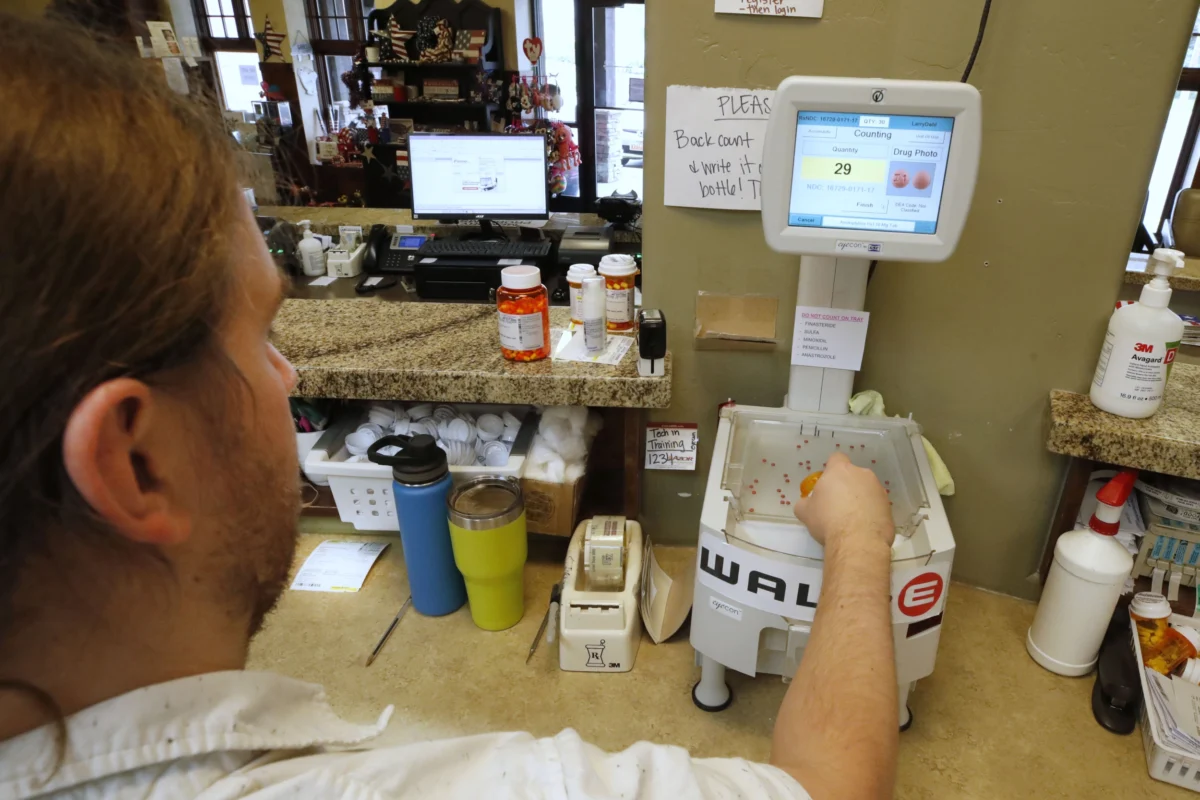
"This antitrust lawsuit alleges a deliberate conspiracy between two of the nation’s largest pharmacy benefit managers to suppress payments to independent pharmacies, potentially jeopardizing the viability of local drugstores and impacting patient access to essential medications."
Florida’s Attorney General has initiated a significant antitrust lawsuit against Express Scripts and Prime Therapeutics, two dominant forces in the pharmacy benefit management (PBM) landscape. The state’s complaint, filed in Polk County, alleges that these PBMs engaged in an illegal price-fixing agreement designed to drastically reduce the reimbursement rates paid to independent pharmacies for filling prescriptions. This legal action highlights a critical issue at the intersection of healthcare costs, pharmaceutical distribution, and the survival of community pharmacies, with potentially far-reaching consequences for patients across the state and beyond.
The lawsuit, officially filed on August 27th, centers on a collaboration announced between Express Scripts and Prime Therapeutics in December 2019. According to the state’s allegations, this partnership led Prime Therapeutics to adopt the lower reimbursement rates previously set by Express Scripts. This arrangement, which allegedly took effect in April 2020, has reportedly been extended multiple times and remains in operation. While these are currently allegations within a civil complaint, and neither company has been found liable by any court, the mechanism described in the filing has profound implications for the daily operations of neighborhood pharmacies and, by extension, the communities they serve.
Understanding the PBM Landscape: A Crucial Middle Layer
To grasp the significance of this lawsuit, it is essential to understand the role of pharmacy benefit managers (PBMs). These entities operate as intermediaries in the complex healthcare ecosystem, positioning themselves between health insurers, pharmaceutical manufacturers, and dispensing pharmacies. PBMs wield considerable power, performing a range of functions that include negotiating rebates with drug manufacturers, determining which medications are covered by insurance plans (formularies), setting the reimbursement rates for pharmacies, and establishing the networks of pharmacies that patients can use.
The power to set reimbursement rates is particularly critical and often functions as a survival threshold for independent pharmacies rather than a simple profit margin. A typical pharmacy purchases medications at wholesale prices, dispenses them to patients, and then seeks reimbursement from the PBM. If the reimbursement rate falls below the pharmacy’s acquisition cost plus the expense of dispensing, the pharmacy incurs a financial loss on that specific prescription. Crucially, pharmacies within a PBM’s network are generally obligated to fill these prescriptions, even at a loss, as declining to do so could result in their removal from the network, a move that could be devastating for their business.
Prime Therapeutics, based in Orlando, is owned by a consortium of Blue Cross and Blue Shield plans, while Express Scripts is a subsidiary of the insurance giant Cigna. Court filings assert that Prime Therapeutics holds a significant market share in Florida, identified as the largest PBM in the state with approximately 40 percent of the market. The complaint further alleges that prior to this alleged agreement, Prime Therapeutics had historically provided independent pharmacies with reimbursement rates that were about 20 percent higher than those offered to larger chain competitors.
The Specific Financial Impact Alleged in Florida’s Complaint
The Florida Attorney General’s complaint outlines specific financial repercussions allegedly resulting from the PBM collaboration. According to the state, after the agreement was implemented, reimbursement rates for approximately 80 percent of branded drugs and 70 percent of generic drugs saw a decline. The state has quantified the alleged financial impact, valuing the cost savings extracted from pharmacies during the first three years of this arrangement at a staggering $2.5 billion.
Attorney General James Uthmeier provided a concrete illustration of this alleged impact. He cited an example of a pharmacy located outside Orlando where the reimbursement for a single medication plummeted by roughly 45 percent. This significant reduction allegedly transformed a previously profitable prescription into a loss of $15.45 for each instance it was dispensed.
"Prime and Express Scripts colluded to fix prices and underpay those pharmacies," Uthmeier stated in a press release from his office. During a news conference, he elaborated on the alleged arrangement, emphasizing that it was not sustainable for the pharmacies involved and that it served to diminish competition within the market. The state’s legal filing asserts that this conduct constitutes a "per se" violation of the Florida Antitrust Act, meaning the alleged act of horizontal price fixing is inherently illegal without the need to prove specific harm. Additionally, the complaint alleges unfair methods of competition under the Florida Deceptive and Unfair Trade Practices Act, as well as common law unjust enrichment. The state is seeking a jury trial and is requesting remedies including an injunction to halt the alleged illegal practices, substantial civil penalties, disgorgement of profits gained from the arrangement, and damages exceeding $50,000. The National Community Pharmacists Association, a prominent advocacy group for independent pharmacies, promptly summarized the filing for its members the following day, underscoring the potential significance of this legal challenge.
The Ripple Effect: From Court Filing to Community Pharmacy Counter
The direct impact of this lawsuit on households is less about immediate changes at the pharmacy counter and more about the potential for pharmacy closures. When pharmacies are forced to operate at a loss due to unsustainable reimbursement rates, their ability to remain in business is severely compromised. The closure of a local pharmacy does not translate into savings for patients; instead, it results in the loss of convenient access, a trusted healthcare professional who knows their medical history, and, in many rural or underserved areas, the sole pharmacy within a reasonable driving distance.
The burden of such closures disproportionately affects vulnerable populations. Older adults managing multiple chronic conditions and relying on daily medications, individuals without reliable transportation, residents of rural communities where healthcare access is already limited, and those living in low-income neighborhoods where chain pharmacies may have already consolidated or withdrawn are particularly susceptible to the negative consequences of pharmacy closures. Patients in assisted living facilities or those who depend on prescription delivery services could also lose a vital service that lacks readily available local substitutes.
It is important to note that the direct impact on a patient’s out-of-pocket cost at the point of sale is less direct and should not be overstated. What a patient pays for a prescription is primarily determined by their insurance plan’s design, including deductibles, copayments, and coinsurance structures, rather than the amount the pharmacy receives from the PBM. Therefore, a lawsuit focused on reimbursement rates, while critically important for pharmacy viability, does not automatically alter a patient’s copay amount.
This case is being closely watched beyond Florida’s borders for several reasons. Notably, past attempts by states to regulate PBMs through legislation have frequently encountered federal preemption challenges, with courts often striking down such laws. However, this Florida lawsuit takes a different approach. Instead of directly regulating PBM practices or plan design, it leverages state antitrust laws to address alleged anti-competitive conduct between two private entities. This distinction in legal strategy may provide a more viable pathway for state-level action against PBMs.
Navigating the Current Landscape and Future Outlook
In the interim, patients can take practical steps to mitigate potential disruptions. If a familiar pharmacy has closed or is no longer in a patient’s network, it is advisable to contact their health plan to obtain an updated list of in-network pharmacies before a prescription refill is due. Patients may also request that their prescriptions be transferred to a new pharmacy rather than requiring a new prescription to be written. Inquiring about 90-day prescription fills can also reduce the frequency of pharmacy visits.
For individuals facing a coverage denial for a particular medication, engaging with their prescriber is crucial. They can explore options such as requesting prior authorization from the insurance company, filing an appeal, discussing alternative generic medications, or investigating manufacturer-sponsored patient assistance programs. Independent pharmacies that remain operational can often offer competitive pricing on generic medications through various discount programs, and it is always worthwhile to inquire directly about these savings rather than assuming higher costs.
A proactive habit for individuals with maintenance medications is to review their insurance plan’s network status at the beginning of each plan year, as pharmacy networks are typically revised annually. This allows patients to adjust their pharmacy choice before a disruption occurs at the point of service.
It is noteworthy that Express Scripts and Prime Therapeutics have faced previous legal scrutiny concerning similar network arrangements. A separate antitrust suit was filed by a pharmacy group in July, alleging price-fixing. In that instance, Prime Therapeutics defended its practices by arguing that the arrangement was instrumental in lowering prescription drug costs for both patients and payers. As of the reporting of the Florida lawsuit, responses from neither Express Scripts nor Prime Therapeutics were publicly available. Meanwhile, the Florida Attorney General’s office continues to investigate CVS Health regarding its treatment of independent pharmacies, having issued a civil investigative demand in June.
The immediate next steps in the Florida lawsuit will involve the companies filing their responses to the complaint and potentially filing early motions to dismiss. Until a court renders a decision, the claims remain allegations. For patients, the most practical immediate action is to confirm the network status of their preferred pharmacy to ensure continued access to their medications. This legal battle underscores the complex dynamics within the pharmaceutical supply chain and the critical role that independent pharmacies play in community healthcare access.
