
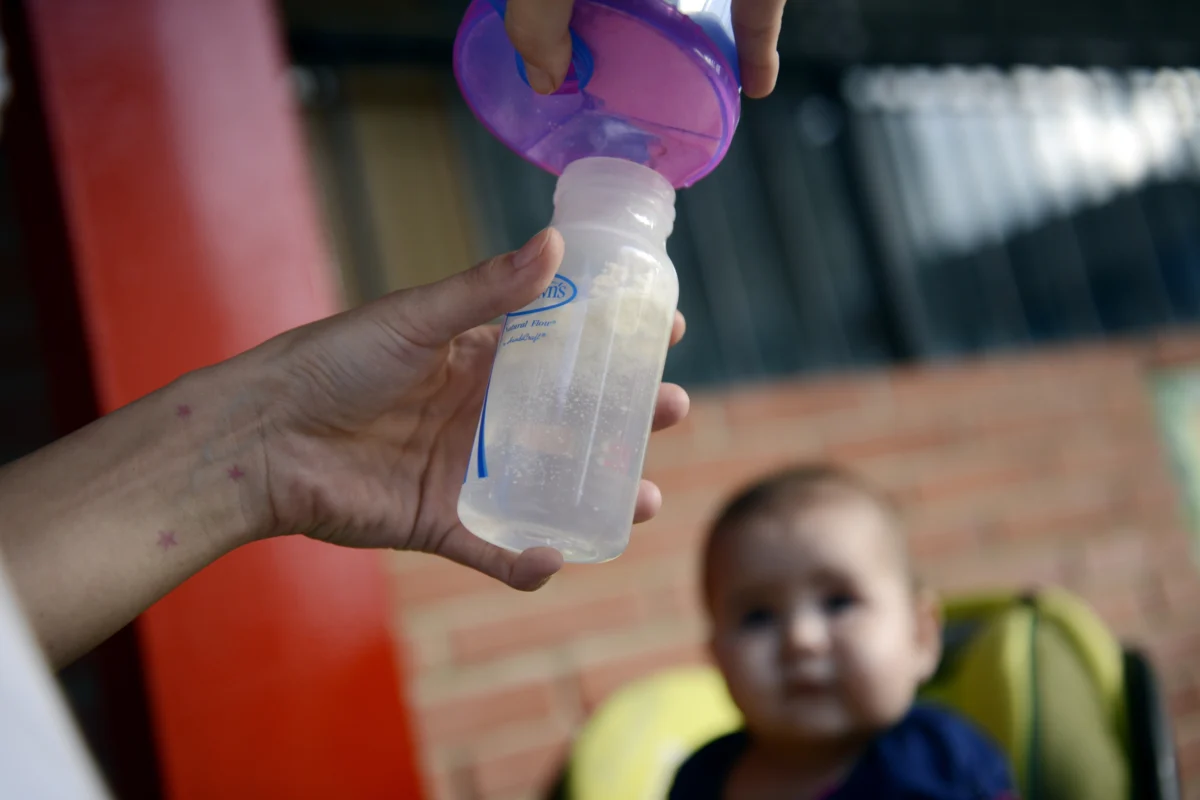
"A common source of contamination" links two infant formula outbreaks, exposing a systemic vulnerability that regulators are now scrambling to address, despite the current outbreak being declared over."
Federal health officials have officially closed their investigation into a multistate infant botulism outbreak that led to the hospitalization of four infants earlier this year. While the immediate crisis has passed, the investigation’s findings reveal a deeply concerning pattern: two separate powdered infant formula brands, months apart, appear to have been compromised by the same upstream contamination issue. This revelation raises significant questions about existing industry safeguards and the potential for future vulnerabilities in the infant formula supply chain.
Investigation Closed, Warning Remains: Recalled Formula Must Be Discarded
The Centers for Disease Control and Prevention (CDC) marked the investigation status as closed on August 27, confirming that the outbreak, which began in June and involved four hospitalized infants across California, Pennsylvania, and Washington, is now considered over. Crucially, no deaths were reported in connection with this specific outbreak. However, the closure of the federal file does not signal a complete end to concerns for households that may still possess the affected product.
The CDC used the closure notice to reiterate a critical caution: any recalled Nara Organics Whole Milk Organic Infant Formula still in homes should be immediately discarded and not administered to infants. Nara Organics initiated a voluntary recall of all lots of its product on June 13, 2024, following reports of potential contamination. The formula had been distributed through Target retail stores, Target.com, and Nara.com. Given the common practice of parents purchasing infant formula in bulk and storing it for extended periods, an unopened can from the spring recall could still be present in households long after the initial news coverage has faded. The recall notice, which remains active, encompasses every lot number and both available can sizes of the Nara Organics product.
For families who may have used the recalled formula, the CDC also advises thorough cleaning of any items and surfaces that came into contact with it. This includes washing with hot, soapy water or running through a dishwasher to eliminate any residual spores or toxins. The CDC’s dedicated outbreak page provides detailed guidance on decontamination procedures.
Understanding Infant Botulism: A Subtle but Serious Threat
The final tally for the Nara Organics-linked outbreak stands at four confirmed cases, all resulting in hospitalization, with zero fatalities. The affected infants, whose illnesses occurred between April and May, experienced toxin type A infections. While four cases may seem small for a national investigation, the severity of infant botulism and the subtle nature of its early symptoms underscore the importance of such inquiries.
Infant botulism occurs when infants ingest spores of the bacterium Clostridium botulinum. Unlike in adults, the immature digestive system of infants can allow these spores to germinate and produce a potent neurotoxin. This toxin interferes with nerve function, leading to progressive muscle weakness that can manifest in a variety of ways, most critically impacting the muscles responsible for breathing. If left untreated, infant botulism can lead to respiratory failure, requiring prolonged hospitalization and intensive medical support.
The insidious nature of infant botulism lies in its initial symptoms, which can be easily mistaken for common infant ailments. The CDC lists subtle signs such as poor feeding, a noticeable loss of head control, difficulty swallowing, and decreased facial expression. Often, the very first observable change parents notice is constipation, a symptom that, in isolation, does not typically signal an immediate emergency. This ambiguity is precisely why a small number of confirmed cases can warrant a significant federal investigation, as early detection and intervention are paramount to preventing severe outcomes.
Medical professionals are strongly advised to initiate treatment based on clinical suspicion alone, without awaiting laboratory confirmation. This proactive approach is crucial because delays in treatment significantly increase the risk of respiratory compromise. Fortunately, a specific treatment for infant botulism, known as BabyBIG (Botulism Immune Globulin), is available and recommended for all suspected cases. This treatment is accessible through the Infant Botulism Treatment and Prevention Program managed by the California Department of Public Health, which offers round-the-clock consultation services.
A Troubling Pattern: Shared Suppliers, Repeated Outbreaks
The most significant and concerning revelation from the Nara Organics investigation is the linkage to a prior, larger outbreak in 2025. Federal investigators concluded that data indicate a "common source of contamination" connecting the recent outbreak to a 2025 incident involving a different brand of powdered formula, ByHeart Whole Nutrition Infant Formula. That earlier investigation, which closed in February, identified 48 infants across 17 states who fell ill between late 2025 and early 2026.
The U.S. Food and Drug Administration (FDA), which spearheads such investigations, traced the Nara Organics lots linked to illness back to milk supplied by Organic West Milk and spray-dried by Dairy Farmers of America. These are the very same suppliers implicated in the ByHeart outbreak. While the CDC has been direct in its assessment of a shared source, the FDA has maintained a more cautious stance, stating that there is "not enough evidence to determine if this is the source" or the precise route of contamination, and that its root cause analysis is ongoing.
A critical detail emerged that sheds light on how a second outbreak could occur after the first: during the 2025 investigation, the FDA inquired about other formula manufacturers supplied by Organic West Milk. The company provided an incomplete customer list that notably omitted the manufacturers of Nara Organics formula. This omission was only disclosed during the subsequent investigation into the Nara Organics recall. This suggests a potential breakdown in supplier transparency and regulatory oversight, allowing a previously identified risk to persist undetected in another product line.
In response to these events, the FDA has outlined post-outbreak response activities aimed at strengthening oversight of the infant formula supply chain. The agency now categorizes Clostridium botulinum as an emerging risk in infant formula production. It has also engaged international scientific bodies to re-evaluate the presence and management of spore-forming pathogens in powdered formula. Furthermore, the FDA has issued a letter to the infant formula industry, urging heightened scrutiny of all ingredients and their sourcing. However, as of now, no new federal testing requirements have been finalized.
Looking Ahead: Monitoring, Costs, and Future Regulations
The incubation period for infant botulism can be lengthy, with symptoms potentially taking several weeks to manifest after exposure. The CDC advises parents whose infants may have consumed the recalled Nara Organics formula to monitor them for symptoms for a full month following their last feeding. For families who stopped using the product in June, this monitoring window has likely closed. However, for those who may have recently used stored formula, vigilance remains essential.
Parents are urged to seek immediate medical evaluation for any infant exhibiting signs of poor feeding, a weak cry, loss of head control, difficulty swallowing, or reduced facial expression. It is critical to emphasize that medical attention should be sought without delay, even before a definitive diagnosis can be made.
The financial implications of formula recalls can be significant for families, particularly those already facing economic challenges. Switching to a different brand mid-recall can incur substantial costs. For families enrolled in the Special Supplemental Nutrition Program for Women, Infants, and Children (WIC), local WIC agencies can provide information on approved formula substitutions. Additionally, pediatricians’ offices often maintain manufacturer samples that can assist families during recall periods. The CDC recommends that parents photograph the product label, lot number, and use-by date of any leftover recalled formula before discarding it, as this documentation can be helpful for refund and return processes.
While the investigation into this specific outbreak is closed, and the case count is finalized at four hospitalizations, the unresolved question is the extent to which federal testing expectations for powdered infant formula will evolve. The occurrence of two separate outbreaks within a single year, both traceable to the same suppliers, highlights a systemic vulnerability that regulators are now actively seeking to address. The coming months will be crucial in determining whether new federal testing mandates will be implemented to better safeguard the infant formula supply chain against such potentially devastating contamination events.
Key Questions Answered
Is the outbreak over? Yes. The CDC officially closed the investigation on August 27, declaring the outbreak concluded. The final count includes four cases, four hospitalizations, and no deaths across three states.
Should recalled formula still be thrown away? Yes. Due to the extended shelf life of powdered infant formula, the CDC strongly advises discarding any recalled Nara Organics formula remaining in homes rather than feeding it to an infant.
What connects this to the 2025 outbreak? The CDC’s findings indicate a common source of contamination between this outbreak and the 2025 outbreak linked to ByHeart formula. The FDA has traced both incidents to the same milk supplier and processor.
What are the symptoms of infant botulism? Early signs include poor feeding, loss of head control, difficulty swallowing, and decreased facial expression. Constipation is often the first observable change. Symptoms can take weeks to appear.
How long should parents monitor? The CDC recommends that parents monitor infants for symptoms for one month after their last consumption of the recalled product.
Is there a treatment? Yes. BabyBIG is the recommended treatment for all suspected cases of infant botulism and is available through the Infant Botulism Treatment and Prevention Program at the California Department of Public Health. Clinicians are advised to commence treatment based on clinical suspicion rather than waiting for laboratory confirmation.
Has federal testing policy changed? Not yet. The FDA now recognizes Clostridium botulinum as an emerging risk in infant formula production and has initiated discussions with international scientific bodies for reassessment. However, no new federal testing requirements have been finalized to date.
