
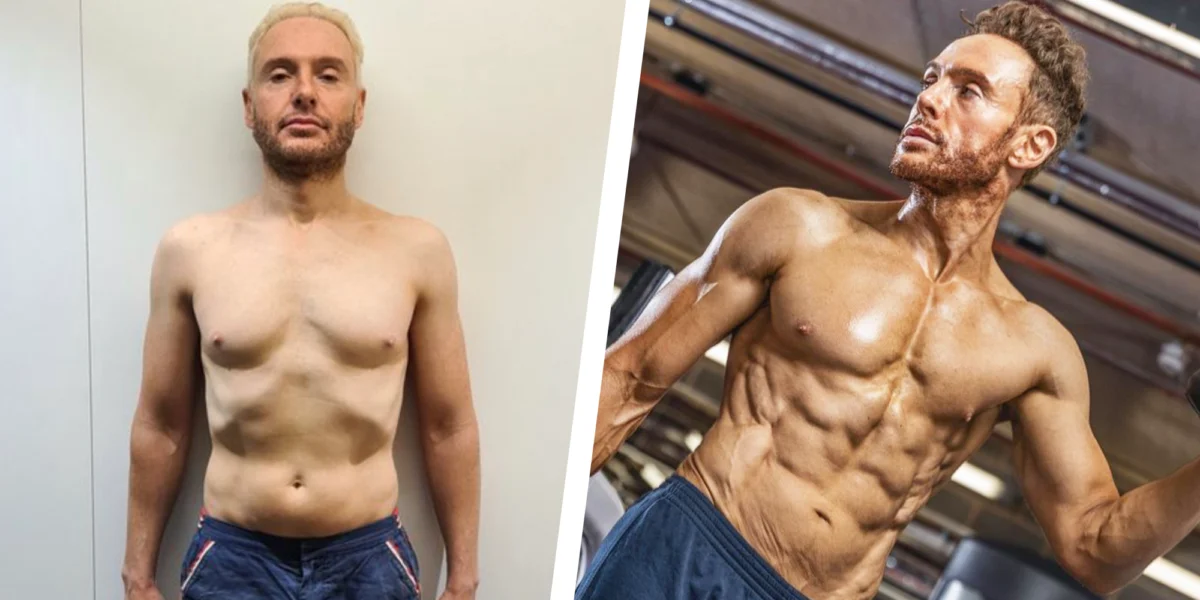
"True physical transformation is less about the hours spent in the gym and more about the mental discipline required to master nutrition and silence the inner saboteur."
The journey from casual fitness to a professional-grade body transformation requires a fundamental shift in both physiological understanding and psychological resilience. For actor Haydn Holden, this evolution was catalyzed by the unique pressures of the global pandemic, which underscored the critical link between physical health and mental well-being. By moving away from "blind" training and adopting a data-driven approach to nutrition and resistance training, Holden achieved a life-changing 18-week transformation that serves as a blueprint for sustainable health.
The Myth of the "Active" Gym-Goer
For many individuals, the barrier to achieving a desired physique is not a lack of effort, but a lack of direction. Haydn Holden, 42, had spent years as a regular gym member, working out four times a week. Despite this consistency, he found himself trapped in a common plateau: he was "active" but not "effective." This phenomenon often stems from a lack of progressive overload and a failure to address the nuances of body composition.
The onset of the COVID-19 lockdowns exacerbated these issues. For an actor, whose profession relies on physical presence and social interaction, the isolation of the pandemic was particularly damaging. Like many, Holden found that home workouts lacked the environmental triggers necessary for high-level motivation. As the arts industry shuttered, the resulting decline in mental health was mirrored by a decline in physical condition. Holden found himself gaining weight, specifically in the abdominal region—a common area for stress-induced fat storage. This "skinny-fat" profile, where a person may appear lean in clothes but carries significant visceral fat and "love handles," is a frequent frustration for men who exercise without a structured nutritional plan.

The Ultimate Performance Methodology
Seeking a professional intervention, Holden enrolled at Ultimate Performance (UP) in Manchester, a global fitness entity known for its rigorous, results-oriented transformations. He was paired with personal trainer Nathan Edmundson, and the partnership began with a crucial psychological contract: Holden committed to total compliance. This shift in accountability is often the missing ingredient in fitness journeys; by delegating the "thinking" to an expert, the trainee can focus entirely on "execution."
The transformation was structured as an initial 12-week program, which Holden eventually extended to 18 weeks. The process was not merely about lifting weights but about a total lifestyle overhaul that prioritized three pillars: meticulous nutritional tracking, progressive resistance training, and the management of non-exercise activity thermogenesis (NEAT).
The Nutritional "Rewiring" Phase
The most significant hurdle in any transformation is the initial metabolic and psychological adjustment. For Holden, the first three weeks were the "lowest point." This period required a total break from previous habits—specifically the convenience-based "grab-and-go" culture of supermarket sandwiches and high-sodium snacks like crisps.
The initial phase of the diet was intentionally restrictive, focusing on high-protein, high-fiber staples such as chicken and green vegetables four times a day. This serves several purposes: it stabilizes blood sugar, reduces systemic inflammation, and simplifies the process of achieving a caloric deficit. As Holden’s body adapted and his "brain rewired" to recognize true hunger versus emotional craving, the diet expanded.
The secondary phase of his nutrition plan introduced a wider variety of macronutrients, including low-fat yogurt, eggs, berries, rice, and sweet potatoes. The key to this success was the educational component provided by his trainer. Holden learned that no food is inherently "evil," but every gram must be accounted for within a daily allowance of fats, proteins, and carbohydrates. By measuring and tracking every meal, Holden removed the guesswork that had sabotaged his fitness for years.

Training for Hypertrophy and Resilience
Holden’s training regimen moved away from the aimless routines of his past and toward a structured, high-intensity program. A cornerstone of this was the "trap bar" deadlift. While Holden admitted to hating the movement, its inclusion was non-negotiable. The trap bar deadlift is a compound exercise that targets the posterior chain—the glutes, hamstrings, and lower back—while being more accessible and safer for the spine than a traditional barbell deadlift. Within two weeks of consistent execution, Holden noted visible changes in his back’s musculature, proving that the exercises we often avoid are the ones that yield the greatest aesthetic and functional returns.
As the program progressed, Holden’s capacity for work increased exponentially. Initially, he struggled with low energy between sets. To combat this and improve his cardiovascular efficiency, his trainer introduced 20-minute cardio sessions. This eventually evolved into a six-day-a-week commitment, combining three days of coached sessions at UP with three days of independent work focusing on arms and abdominals.
The results were statistically significant. Holden’s strength surged; he went from using 12kg (26 lbs) dumbbells to 36kg (80 lbs) for his lifts and achieved a personal best deadlift of 135kg (297 lbs). This increase in strength is a primary indicator of muscle tissue retention during a fat-loss phase.
The Weight-Loss Paradox and Body Composition
One of the most profound realizations for Holden was the "weight-loss paradox." He began the journey at 69kg (152 lbs) and dropped to 62kg (136 lbs) at his lowest point. To the uninitiated, losing weight when one is already relatively light may seem counterintuitive. However, the goal was not simply to be smaller, but to strip away body fat to reveal a foundation of lean muscle.
Once the "love handles" and abdominal fat were eliminated, the process of "filling out" with lean muscle began. This is the stage where the "transformation" becomes visible; the body appears more muscular and "toned" even if the scale weight remains lower than when the process started. This shift in body composition—rather than just weight—is what creates the "attainable body image" that Holden previously thought was out of reach.

Mental Health and the Actor’s Craft
While the physical changes were stark, the psychological impact was perhaps more profound. The arts industry was among the first to shut down and the last to reopen during the pandemic, leaving many professionals without a sense of purpose. For Holden, the gym became a sanctuary of control in an uncontrollable world.
He describes the "inner saboteur"—the voice that tells an individual that their goals are impossible or that they don’t deserve success. Overcoming this voice required more than just physical effort; it required mental preparation. The discipline of the 18-week program unearthed a determination that Holden believes will directly translate to his acting career. The ability to endure the "boring" parts of training, to stick to a plan when motivation wanes, and to push through physical discomfort are all traits that enhance an actor’s resilience and focus.
Legacy and Sustainability
As Holden transitioned back to a regular gym environment, he did so equipped with a new "toolkit." The transformation was not a temporary fix but an educational journey. He now understands the relationship between caloric intake and energy expenditure, the importance of form over ego in lifting, and the necessity of structure.
The role of the personal trainer in this process cannot be overstated. Beyond just counting reps, a high-level trainer like Nathan Edmundson acts as a strategist and an educator. By explaining the "why" behind every meal and every movement, the trainer ensures that the results are sustainable long after the 18-week program concludes.
Haydn Holden’s story is a testament to the fact that age—42—is no barrier to elite fitness. It serves as a reminder that the "mental hurdle" is often higher than the physical one. By acknowledging the need for expert guidance and committing to a data-backed approach, he managed to transform a period of global crisis into a personal renaissance, emerging with a physique and a mindset that are better than they were in his twenties.
