
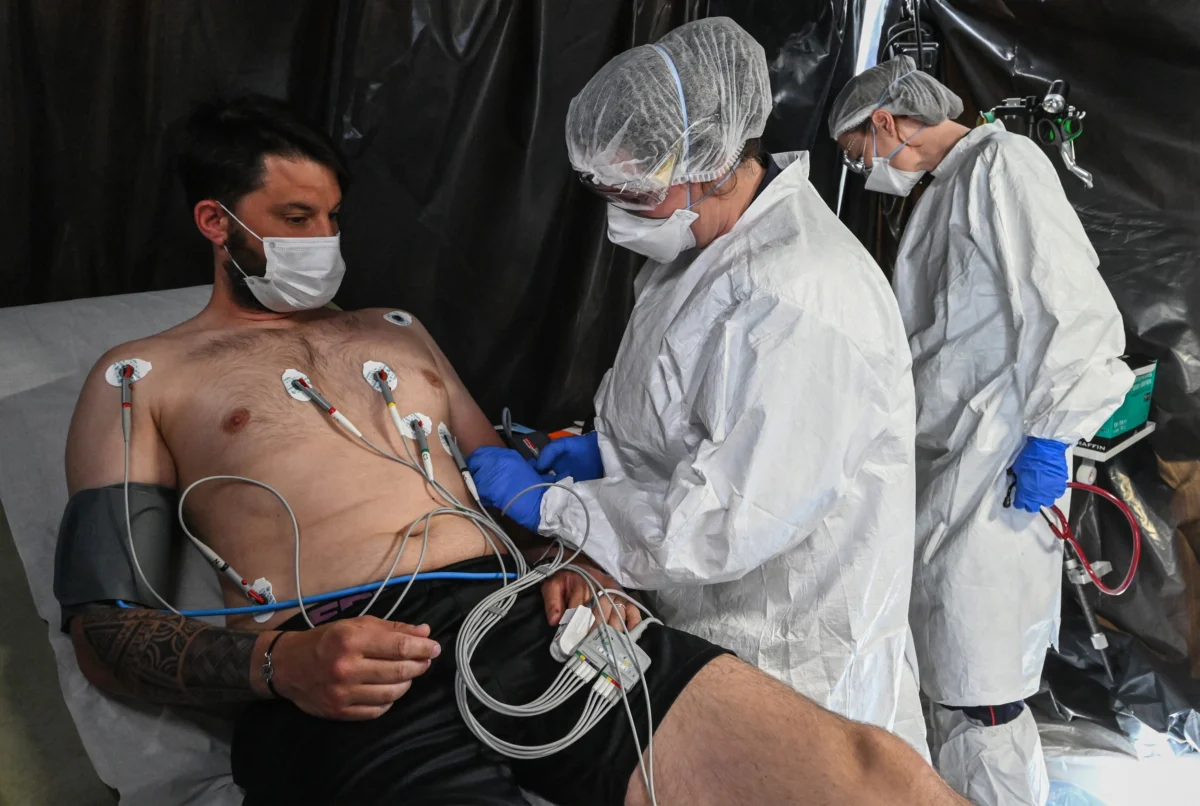
"For the first time, a comprehensive framework exists to guide clinicians in assessing and managing cardiovascular health for the nation’s four million tactical athletes, balancing individual well-being with mission critical public safety."
Cardiovascular disease stands as the primary medical cause of death in the line of duty for a critical segment of America’s workforce: firefighters, police officers, military personnel, emergency medical responders, astronauts, and pilots. Until now, healthcare providers serving these demanding professions have lacked specific, comprehensive guidance tailored to their unique circumstances. This gap has been addressed by a landmark joint scientific statement from the American College of Cardiology (ACC) and the American Heart Association (AHA). Titled Clinical Considerations for the Care of the Tactical Athlete With Cardiovascular Abnormalities, the document introduces a novel approach called Tactical Clinical Management. This framework compels physicians to consider not only an individual’s inherent medical risks but also the profound occupational demands, mission requirements, and the far-reaching public safety consequences should an individual become suddenly incapacitated.
The implications of this new guidance are significant, impacting an estimated four million Americans who currently serve in these vital roles. Published concurrently in the prestigious journals JACC (Journal of the American College of Cardiology) and Circulation, this statement is recognized by both sponsoring organizations as the first comprehensive document of its kind to address the cardiovascular health of this specialized population.
Four Million Americans Fall Under the New Framework
For years, established guidelines have existed to help evaluate competitive athletes with cardiovascular disease. However, the authors of the new statement contend that tactical athletes present a distinct set of challenges that existing documents fail to adequately address. Elizabeth H. Dineen, chair of the statement’s writing group, emphasized in an announcement by the American Heart Association that while guidance for competitive athletes has been available, "tactical athletes present a unique set of challenges that have not been adequately addressed." She further elaborated that a cardiovascular event impacting a firefighter, police officer, or service member carries implications that extend well beyond the individual, potentially jeopardizing the success of a mission and the lives of others. Benjamin D. Levine and Mark C. Haigney served as vice chairs of the writing group, lending their considerable expertise to this critical initiative.
The distinctions between tactical athletes and their competitive counterparts are substantial and multifaceted. Tactical athletes are frequently required to perform unpredictable, strenuous physical activity while bearing heavy loads, often in extreme environmental conditions such as intense heat or frigid cold, or at high altitudes. They may also be tasked with operating complex machinery like aircraft, engaging in underwater operations, or responding to high-stakes emergencies under immense psychological pressure. Each of these scenarios can dramatically elevate cardiac workload, placing unique stresses on the cardiovascular system. Furthermore, careers in these fields often span longer durations than those in professional sports, with individuals continuing to serve at older ages, potentially compounding age-related cardiovascular changes with occupational demands.
An ECG Recommendation That Turns on Age and Role
The statement, as detailed in its publication in JACC, underscores the critical importance of pre-participation screening for all tactical athletes, commencing with a thorough medical history and physical examination. Regarding electrocardiograms (ECGs), the guidance proposes a nuanced approach, drawing distinctions based on both age and the nature of an individual’s duties. An ECG is recommended for tactical athletes under the age of 40 who are exposed to significant cardiovascular strain or who hold mission-critical roles. For other tactical athletes, the statement suggests that an ECG is a reasonable consideration.
Crucially, the document emphasizes that fitness-for-duty determinations must extend beyond an individual’s personal health risks. They must also encompass the potential risks posed to fellow team members, the overall success of the mission, and broader public safety concerns. This ethical consideration is openly acknowledged within the framework, recognizing the inherent tension between safeguarding the public and potentially ending an individual’s career and livelihood.
The statement published in Circulation delves into the cardiovascular implications of specific medical conditions, including cardiomyopathies, arrhythmias, congenital heart disease, coronary artery disease, valvular disease, myocarditis, and the management of anticoagulation status. It strongly advocates for ongoing monitoring rather than a one-time clearance, recognizing that cardiovascular health can evolve over time. Additionally, the framework highlights the need to consider operational and environmental factors such as heat exposure, dehydration, altitude, diving and aviation environments, collision risks, and the immediate availability of emergency medical care.
Ordinary Risk Factors Do the Most Damage
Perhaps one of the most salient findings for individuals outside these demanding professions concerns the primary drivers of cardiovascular-related deaths. The authors highlight that traditional cardiovascular risk factors – including hypertension, hyperlipidemia, obesity, type 2 diabetes, and smoking – remain remarkably prevalent among tactical athletes. This observation is particularly striking given that this population is typically selected for high physical capability and is often required to maintain rigorous fitness standards. Yet, they carry the same everyday risk factors prevalent in the general public, which are then compounded by the inherent strains of their occupations.
The implications for families are direct and profound. A partner who successfully passes an annual fitness test may not be simultaneously screened for underlying conditions such as high blood pressure, lipid disorders, or diabetes. It is a critical distinction to understand that physical capacity and cardiovascular risk are separate measurements; excelling in one does not guarantee good health in the other. Cardiovascular care decisions, as stated by Dineen, must strike a delicate balance between preserving the health and safety of these individuals and ensuring their ability to fulfill their mission-critical and public safety responsibilities. A related perspective article published in Circulation further explores cardiovascular risk in military service members, covering similar ground.
Screening Cannot Catch Everything, So Plans Matter
The scientific statement is unequivocal in its assertion that screening alone cannot prevent all instances of sudden cardiac arrest. Consequently, it strongly recommends that organizations maintain robust Emergency Action Plans and ensure rapid access to automated external defibrillators (AEDs). This recommendation is not confined to firehouses and police precincts; it extends to all workplaces and public spaces. Survival rates from cardiac arrest are heavily influenced by the swift initiation of bystander cardiopulmonary resuscitation (CPR) and the timely arrival of an AED. These critical minutes are equally vital whether occurring in a burning building, a gymnasium, a school, or an office environment.
The authors also candidly acknowledge the areas where knowledge remains incomplete. They call for the establishment of registries, the development of improved screening strategies, and the creation of cardiovascular risk prediction models specifically tailored for these unique populations. This admission underscores that current risk assessment tools were not originally designed for individuals engaged in such demanding and specialized work.
It is important to note that a scientific statement does not constitute a mandate. Individual departments, agencies, and military branches retain the authority to set their own medical standards, and the adoption of these recommendations will likely vary across different jurisdictions. No specific timeline for widespread implementation has been announced. However, the document provides a crucial common reference point for clinicians who encounter a firefighter with an abnormal cardiac finding and must then render a decision regarding their fitness for duty – a decision that, until now, has largely relied on individual judgment.
Tactical athletes and their families who have specific questions about a particular cardiac finding should consult with a cardiologist who possesses expertise in occupational medicine, rather than relying on general guidance. It is also essential to understand that the issuance of this statement does not alter any individual’s current duty clearance status.
