
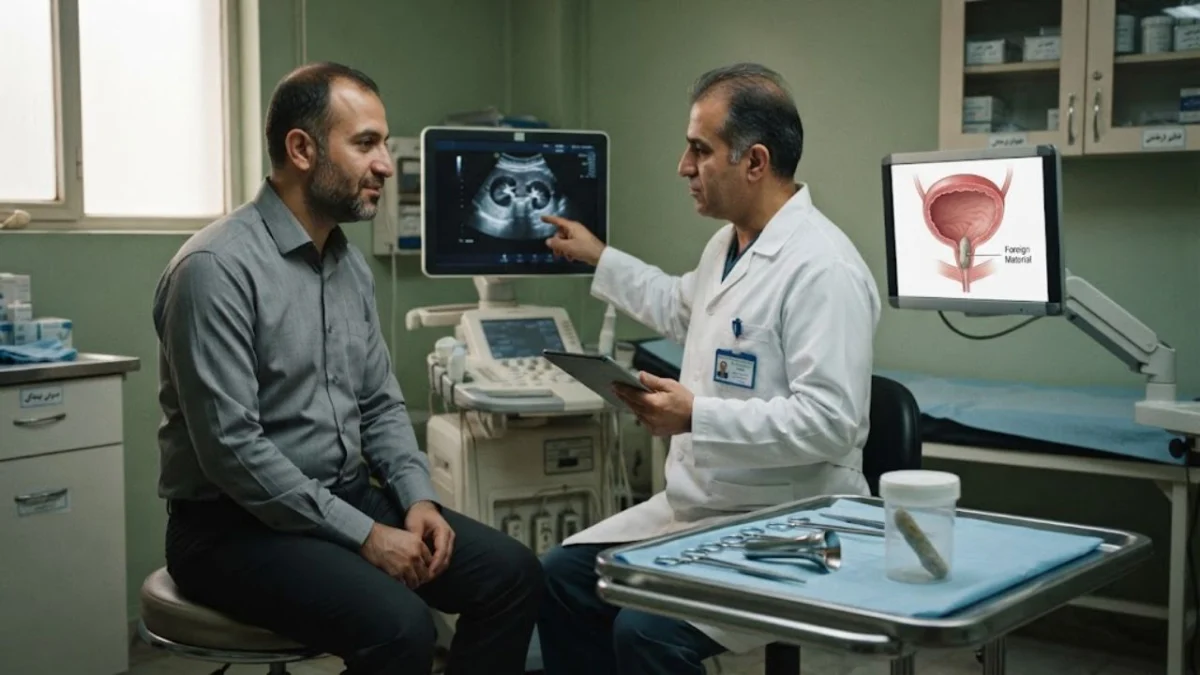
“Self-treating a urinary symptom with superglue, a substance designed to bond materials, highlights a dangerous gap in public health awareness regarding incontinence and the critical need for prompt medical attention.”
A striking case from northern Iran involving a 41-year-old married man who attempted to treat his urinary incontinence by repeatedly injecting superglue into his urethra has brought to light the extreme measures individuals may resort to when faced with untreated medical conditions, and the severe consequences that can follow. This incident, documented in the Caspian Journal of Internal Medicine, underscores the rarity of such self-inflicted urethral foreign bodies and the limited established protocols for their management. The case gained renewed attention this year with a medical review that sought to standardize the approach to these unusual and potentially life-threatening situations. The patient’s desperate, two-week home remedy resulted in a 10-centimeter rod of hardened glue obstructing his urinary tract, leading to excruciating pain, an inability to urinate, and ultimately, hospitalization with signs of kidney distress.
The clinical narrative of the 41-year-old man paints a picture of escalating desperation. Initially experiencing severe pain during urination, a weak urinary stream, and discomfort above the pubic bone, his condition rapidly deteriorated to complete urinary retention. His chosen method of self-treatment—applying superglue to his urethra—was a misguided attempt to resolve his symptoms of incontinence, which had persisted for approximately a month. The corrosive and adhesive nature of cyanoacrylate, the primary component of superglue, proved disastrous within the delicate confines of the male urethra. This chemical compound hardens rapidly upon contact with moisture, effectively sealing the passage. The patient’s repeated applications compounded the problem, creating a solid, rod-shaped block of dried glue, roughly 10 centimeters in length, rather than discrete fragments. This obstruction led to a dangerous backup of urine, causing mild swelling in both kidneys, as indicated by an abdominal ultrasound. Fortunately, the kidney tissue itself remained unaffected, and his laboratory results were within normal parameters, with no documented psychiatric history that might explain his extreme actions.
The motivation behind the patient’s self-treatment is particularly unusual. Typically, urethral foreign bodies are inserted for reasons of sexual gratification, driven by curiosity, or under the influence of intoxication. The act of using a potent adhesive to address a urinary symptom is exceptionally rare and was a primary factor in the decision to publish this case. The delay in seeking professional medical help, stretching over two weeks, is also a critical element of the case. The initial applications of glue likely did not cause immediate, dramatic symptoms, potentially leading the patient to believe his "treatment" was effective. However, the insidious nature of the accumulating adhesive meant that by day four, he was experiencing burning during urination and producing very little urine. The complete blockage two weeks later marked the crisis point.
When the patient finally sought medical attention, the severity of the blockage was immediately apparent. Standard procedures for removing urethral foreign bodies, such as the use of solvents like acetone, were deemed too risky. Acetone, while effective in dissolving cyanoacrylate, can cause significant irritation and damage to the delicate lining of the urethra. In fact, researchers have used acetone instilled into the bladders of rats to specifically induce irritation and reduce bladder capacity, highlighting its potential for harm in human tissues. Consequently, flushing the urethra with such a solvent was not a viable option.
The medical team faced a significant challenge: the opening of the urethra at the tip of the penis was completely obstructed by the hardened glue, preventing the insertion of a cystoscope, a slender, camera-equipped instrument used for examining the urinary tract. This failure of conventional endoscopic access necessitated a more invasive approach. Surgeons performed an urgent cystoscopy under general anesthesia. However, the blockage was so complete that the scope could not penetrate. In a critical intervention, a 2-centimeter incision was made in the glans penis to gain access. Following the incision, a substantial volume of saline solution—3 liters—was flushed into the urethra over approximately 15 minutes. This irrigation was meticulously applied, working the solution into the solid glue mass, gradually loosening its adherence to the urethral wall. Eventually, the entire block of dried glue was dislodged and removed in one piece using forceps.
This case’s resolution differs from other documented instances. In an earlier German case, the glue had bonded so firmly to the urethral lining that endoscopic removal was deemed impossible, leading surgeons to opt for an external urethrotomy, a surgical incision from the outside. The distinction between these failure modes is crucial, as it influences the initial surgical strategy and the likelihood of successful endoscopic intervention.
The rarity of superglue being intentionally instilled into the male urethra is underscored by the limited number of documented cases in the global medical literature. A recent review identified only six such instances. One such case, published in Case Reports in Urology last year, involved a 51-year-old German man who used superglue to repair a comb handle. Fragments of the adhesive were left behind in his urethra after the comb was removed. In this instance, rigid cystoscopy with forceps under local anesthesia successfully cleared the penile urethra and bladder within hours of the patient’s arrival at the hospital.
The German review was significant because it attempted to consolidate and analyze the existing cases, proposing a structured treatment approach. The authors advocated for early endoscopic extraction under local anesthesia as a primary strategy when the glue fragments are not severely adhered. This contrasts with older approaches, such as a case reported from the United Kingdom, where glue fragments were removed from a man’s bulbar urethra six months after his initial presentation, suggesting a period of waiting for the urethral lining to naturally shed the adhered material. However, with only six cases documented, the available evidence base is minuscule, leaving clinicians with a significant lack of established protocols and a need for individualized management plans.
The profound implications of this case extend beyond its sensational nature. It highlights a critical gap in public health awareness concerning urinary incontinence. Incontinence is a common condition affecting millions, yet it remains frequently underreported due to embarrassment and a lack of knowledge about available treatments. Established management strategies include pelvic floor rehabilitation, behavioral therapies, pharmacological interventions, and surgical options, tailored to the specific type and cause of incontinence. The patient’s recourse to a dangerous adhesive instead of seeking professional medical advice suggests a profound lack of awareness of these options or a perceived inability to access them.
The inherent risks associated with inserting foreign objects into the urethra are substantial. These include trauma to the delicate lining, introduction of infection, and the potential for scar tissue formation. Such scarring can lead to urethral strictures, a permanent narrowing of the passage, which can result in urinary problems more severe than the original complaint. This underscores the paramount importance of seeking medical evaluation for any new or persistent urinary symptoms, especially incontinence. Furthermore, a sudden and complete inability to pass urine is a medical emergency that requires immediate professional attention. The superglue incident serves as a stark reminder that desperate measures born from ignorance or fear can have devastating consequences, emphasizing the need for greater public education and accessible healthcare for all urological conditions.
